
700c vs 650b Gravel Bike Wheels: What Actually Changes?
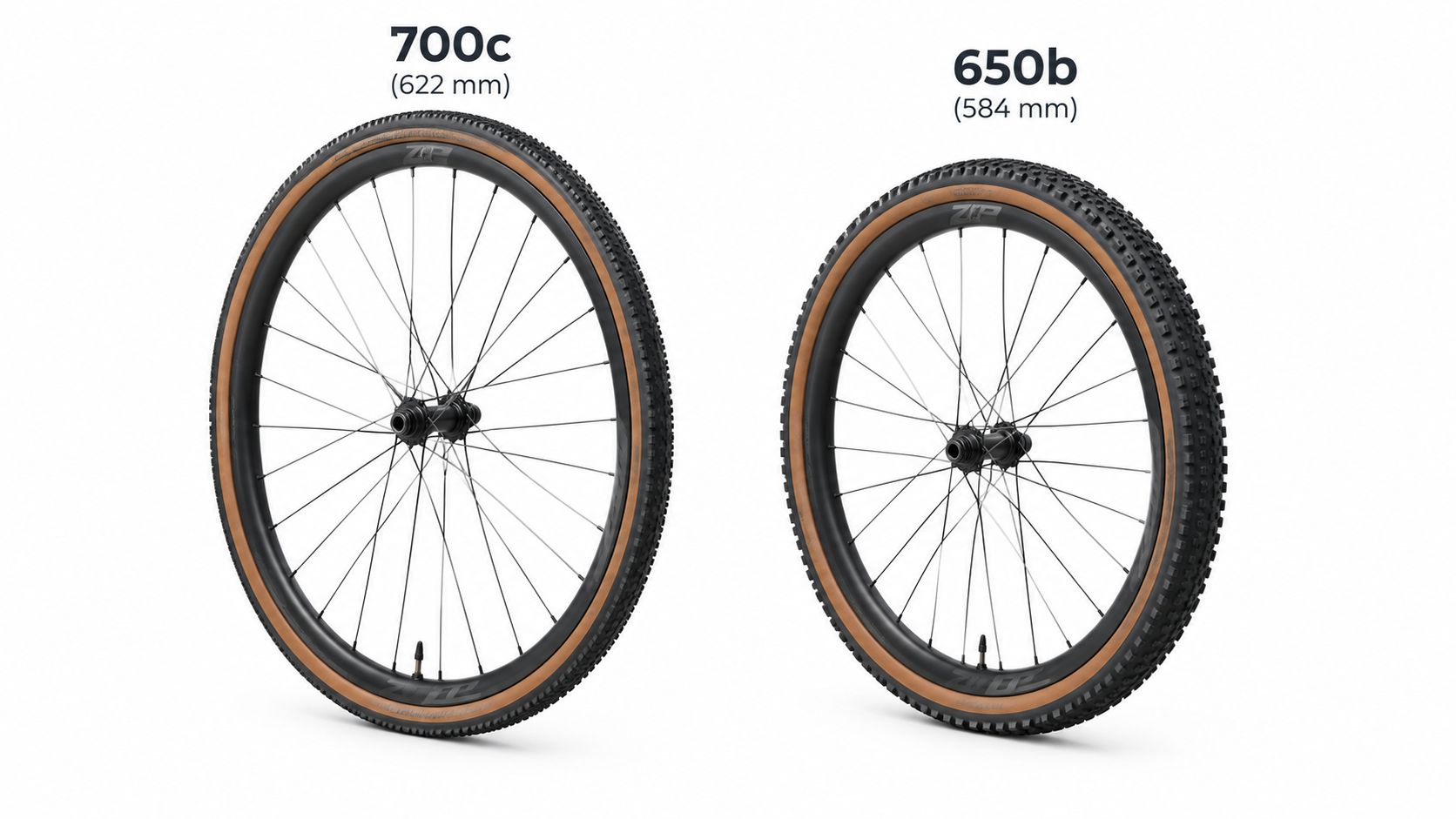
700c vs 650b gravel bike wheels is a question about two rim standards, not a shortcut to predicting speed, comfort, handling, or fit. The useful comparison is between the tires you can mount on a particular bike and the resulting wheel-and-tire dimensions.
| Specification | 700c | 650b |
|---|---|---|
| Bead-seat diameter | 622 mm | 584 mm |
| Alternate designation | 29-inch (same bead-seat diameter) | 27.5-inch (same bead-seat diameter) |
| Finished outside diameter | Depends on the mounted tire and rim | Depends on the mounted tire and rim |
| Frame clearance and compatibility | Model-specific | Model-specific |
Neither standard is a universal performance winner. Start with the frame manufacturer's approved configurations, then compare the actual tires, rims, and clearances involved.
Table of Contents
What 700c and 650b Actually Measure
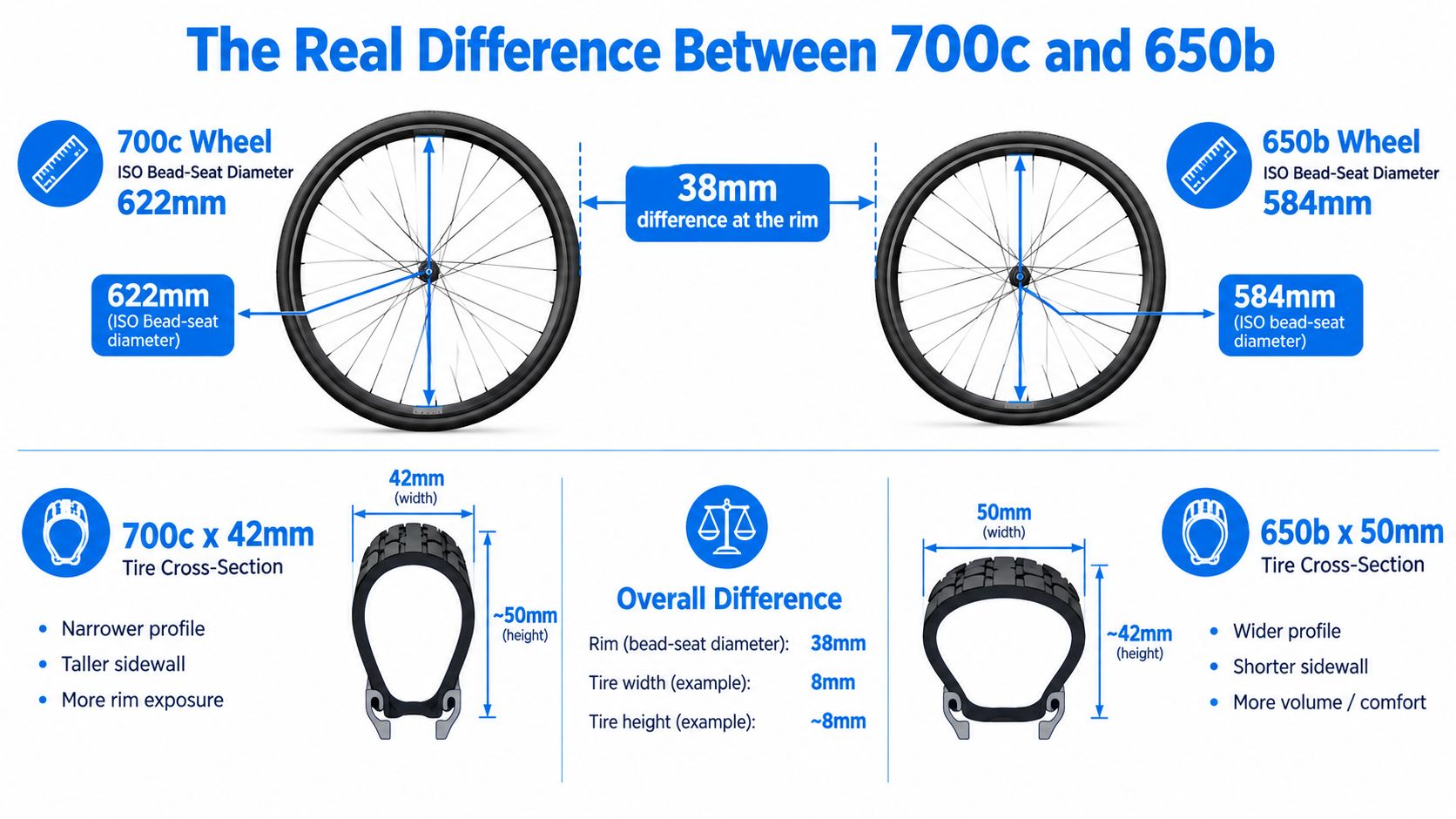
A 700c rim has a 622 mm bead-seat diameter, and a 650b rim has a 584 mm bead-seat diameter. The difference is 38 mm Cyclingnews. The corresponding 29-inch and 27.5-inch labels refer to the same respective bead-seat standards, not to fixed finished wheel diameters; 650b is also known as ISO 584 Bikepacking.com.
Mounted tires add height beyond the bead seat. In simplified geometry, if you use the labeled tire width as a rough illustration of tire height, 700c x 28 mm and 650b x 47 mm each work out to about 678 mm nominal outside diameter: 622 + 2(28) and 584 + 2(47). This is an illustration, not a measurement or a guarantee of matching mounted dimensions. Nominal tire width is not measured tire height. Actual tire shape and outside diameter depend on the specific tire, rim, inflation, and measurement conditions. Follow the tire, rim, and frame manufacturers' compatibility guidance rather than assuming two printed sizes are interchangeable.
The appeal of 650b on some gravel frames is that a smaller rim may leave room for a larger-volume tire. Whether it does depends on the particular frame and fork; a wheel swap cannot create clearance the manufacturer's limits do not allow. Bikes designed for both sizes illustrate the design choice, not a general conversion rule.
Comfort and Performance Depend on the Complete Setup

A wheel label does not establish how a bike will feel or perform. Tire casing, tread, pressure, actual mounted dimensions, and surface conditions all matter, as do the wheel and the bike carrying it. If a different wheel size lets a particular frame accept a different tire, the rider experiences the combined change, not rim diameter in isolation.
Published comparisons can help frame questions, but their results apply to the setups and conditions tested. For example, a comparison of 700c x 42 mm and 650b x 50 mm recorded vibration differences that varied by course; a separate test reported cases favoring 700c instead CyclingAbout. Those outcomes do not predict the comfort of another pair of tires, casings, pressures, or bikes. Likewise, a test using nominally identical 38 mm tires across wheel sizes is one published comparison, not proof that diameter can never affect performance Rene Herse Cycles.
When comparing two bikes, record the actual tire models, casing and tread, rim specifications, and pressures before attributing a difference to wheel size. There is no reliable watt, comfort, or terrain winner in the label alone.
What a Wheel-Size Swap Can Change in the Geometry
Swapping wheels in the same frame and fork does not change the frame's stack, reach, or bottom-bracket drop. It also does not change that fork's axle-to-crown length. Those are properties of the frame and fork, not of the installed wheel.
What can change is the bike's position relative to the ground. If the mounted outside radius changes, actual bottom-bracket height can change. Tire and wheel radius can also affect steering trail. How much either changes depends on the two completed setups and the bike's geometry; there is no universal trail-change or pedal-strike threshold. A published comparison reporting a trail difference between particular 700c x 40 mm and 650b x 47 mm setups is an example tied to its geometry and measured assumptions, not a conversion forecast for every bike RidingGravel.
Toe overlap and pedal clearance need model-specific evaluation, especially if a proposed setup changes tire outside radius. Neither a rider's height nor a rim label settles those questions. For the relationship between a frame's dimensions and its sizing, see how bike geometry changes between sizes. A wheel swap does not, by itself, resize the frame or determine rider fit or handling.
Clearance and Conversion Compatibility
Check the manufacturer's approved wheel sizes and separate front and rear tire limits first. A 650b wheel may permit a larger-volume tire on some frames, but not on all frames, and a printed tire size does not establish the mounted size or adequate space at every point.
For a proposed wheelset, confirm:
Wheel and frame interface: axle and hub dimensions, including spacing and axle type.
Drivetrain interface: freehub and cassette compatibility.
Brake interface: rotor attachment interface and rotor size, along with caliper compatibility.
Tire and rim: tire size, rim width, and the tire and rim makers' approved combinations.
Completed outside diameter and clearance: the mounted setup at the fork and frame, plus any fenders, following the manufacturer's clearance guidance.
Converting wheel size does not automatically change axle or rotor standards. They are separate specifications to check when choosing a replacement wheelset. Likewise, effective gearing and speedometer calibration change only if rolling circumference changes, not simply because a 700c or 650b label appears on the rim.
For a closer look at where to measure and what can limit the tire you can use, see bike tire clearance. Do not infer approval from a photo showing that a wheel appears to fit.
How to Verify a Used-Bike Listing
A used listing may describe the original build, the currently fitted wheels, or neither clearly. Ask the seller for:
The exact model, model year, and frame size, plus the original manufacturer specification or a link to it.
The currently installed front and rear wheel sizes and tire sizes, including rim models or specifications and tire models.
Any wheel-size conversion history and the components changed with it.
Manufacturer compatibility documentation for the proposed configuration, including tire limits where available.
Clear photos of the wheels and tire markings, fork and frame clearances, axles, rotors, cassette, and any fenders.
Compare the supplied details with the manufacturer's documentation and verify anything unclear before buying. Missing details mean the setup is unverified, not automatically unsafe. A seller's photo or assertion is not a substitute for compatibility documentation or an in-person mechanical check.
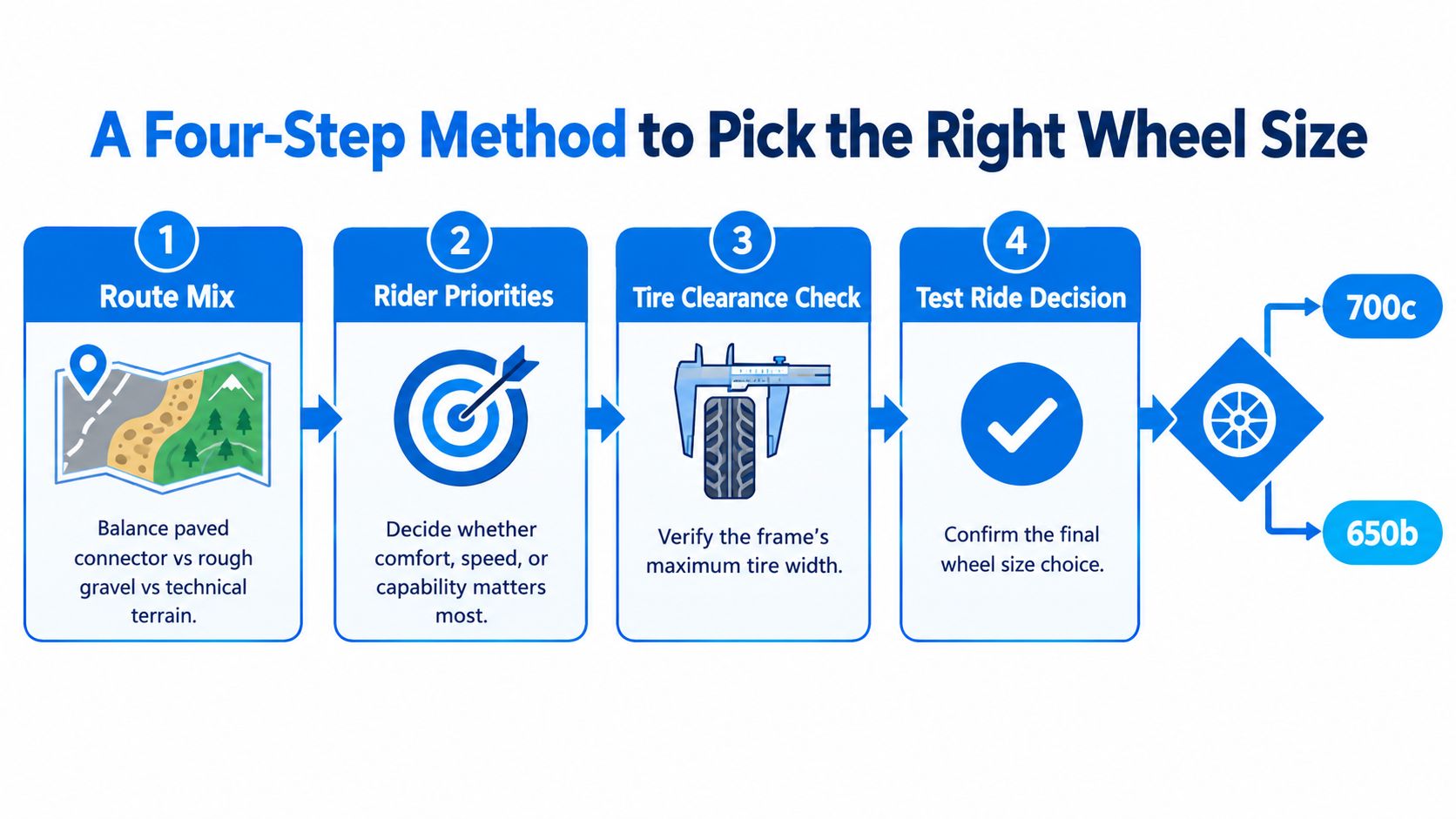
A Four-Step Buying Check
Identify the bike. Confirm the exact frame model, year, and size, then look up manufacturer-approved wheel configurations and front and rear tire limits.
Specify each complete setup. Note bead-seat diameter, rim model and width, tire model and labeled size, and any available measured mounted dimensions.
Check mechanical fit and geometry consequences. Verify axle, drivetrain, brake, and tire/rim interfaces; clearance; and whether a change in mounted outside radius affects bottom-bracket height, trail, toe overlap, or pedal clearance on that model.
Verify the listing. Ask for original specifications, conversion history, documentation, and detailed photos. Treat unanswered questions as items to investigate, not as proof of a bad bike.
If you are still selecting a frame size, start with what size gravel bike do I need?. Wheel compatibility is a separate check from whether the frame suits you.
How SYCLR Helps You Compare Listings
SYCLR compares road and gravel listings using fit signals, geometry signals, model-year context, price context, listing quality, condition signals where available, and confidence signals.
SYCLR does not perform a professional bike fit, physically inspect bikes, authenticate listings, verify ownership or seller claims, or guarantee fit or condition.
Use those comparisons to make a shortlist, then check each bike's wheel configuration against the manufacturer's documentation and the seller's answers. If you know your current-bike geometry, you can start at SYCLR's advanced fit details page. Otherwise, SYCLR can help you compare listings before you contact sellers. Neither a listing comparison nor a wheel-size label certifies component compatibility.