
Bike Standover Height Explained for Road & Gravel Fit
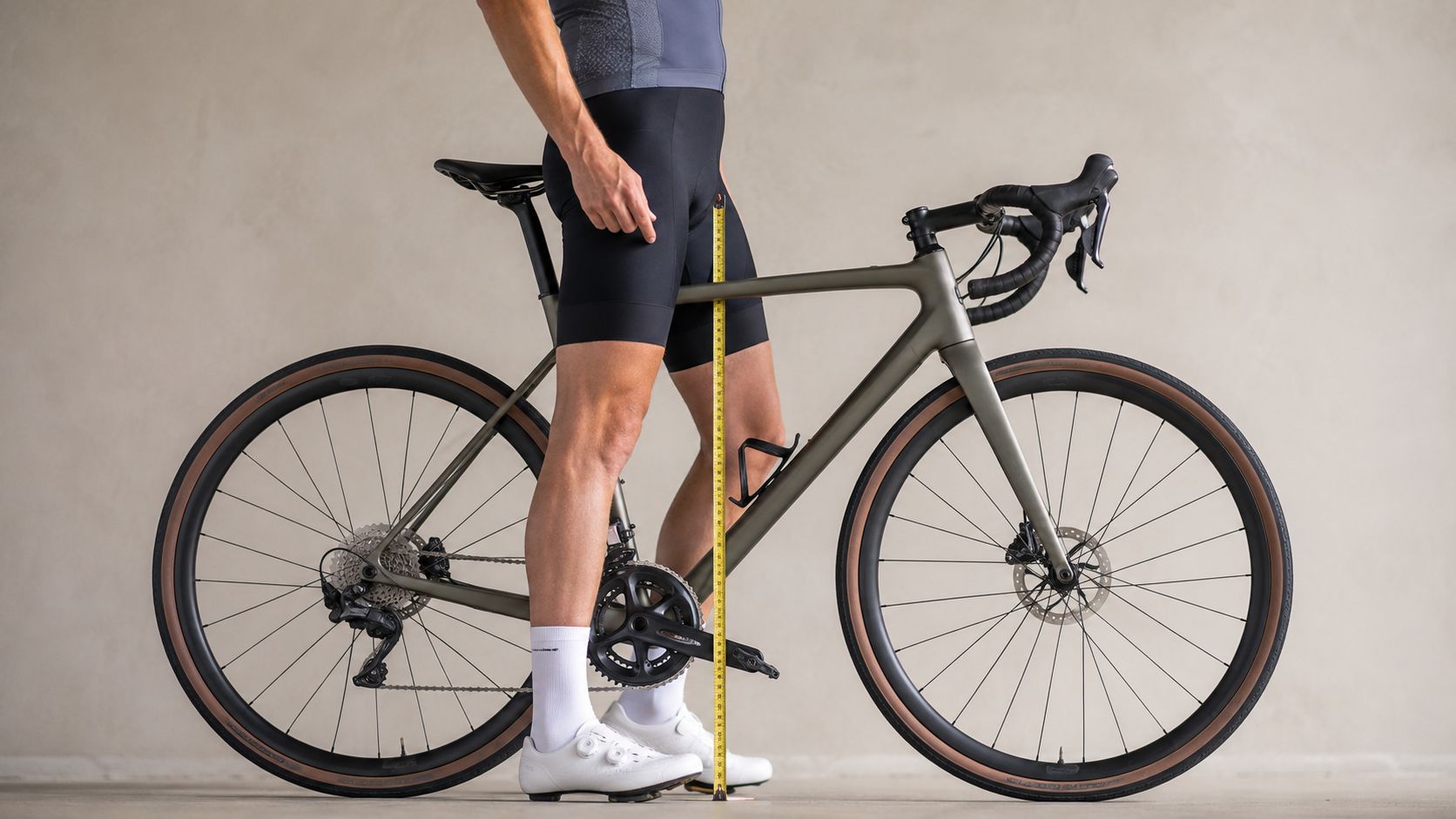
Bike standover height is the distance from the ground to the top of the bike’s top tube. Many road and gravel riders use about 1 to 2 inches of clearance as a practical starting point, but the right amount depends on bike type, top tube shape, terrain, shoes, rider confidence, and how the bike fits while riding.
That runs against a lot of old bike-shop advice. Riders still get told to judge fit by whether they can stand flat-footed over the frame and see daylight above the top tube. That matters, but it doesn’t tell you how the bike will feel once you’re riding. On modern road and gravel bikes, stack and reach usually matter more for comfort, posture, and confidence over time.
Shoppers frequently encounter a dilemma. A bike can look wrong on paper because standover clearance is tight, yet still be the better option if the front end and cockpit suit your body. Another bike can pass the standover test easily and still leave you stretched out, cramped, or unable to get the bars where you need them.
For road and gravel shopping, especially when you’re comparing used listings, the right way to think about standover is simple: treat it as a safety and confidence check, then use the rest of the geometry to judge actual fit.
Table of Contents
What Is Bike Standover Height and Why It Matters
Standover height gets more attention than it deserves in bike sizing, and less attention than it deserves in one specific moment: when you are standing over the bike at a stop. That is its primary function.
Bike standover height is the vertical distance from the ground to the top tube at a specified point on the frame. Brands do not all measure it in exactly the same spot, which is one reason the number can be confusing in listings and geometry charts.
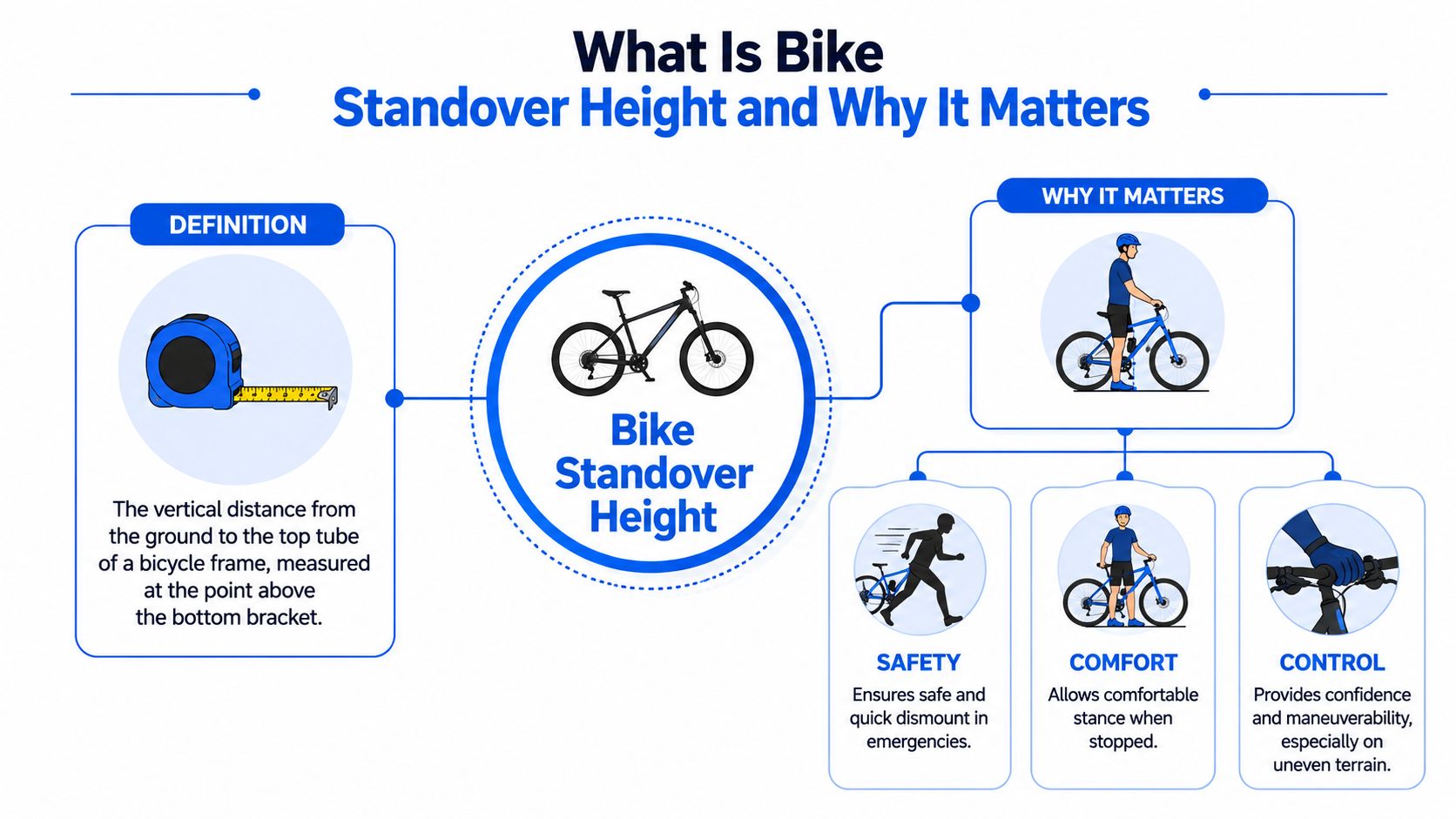
The easiest way to understand standover is to treat it as a clearance check, not a full fit check. It answers a narrow question: if you step off the saddle and straddle the bike, do you have enough room to do that comfortably and safely?
That matters more than some riders expect. If you stop suddenly on a gravel descent, put a foot down on an uneven shoulder, or shuffle forward off the saddle at a traffic light, minimal clearance can make the bike feel awkward and tense. A bike can fit beautifully once you are pedaling and still feel intimidating in those low-speed moments.
That is why standover matters for confidence as much as safety.
It still should not be the first number you use to choose between sizes on a road or gravel bike. Riding position comes mainly from the frame dimensions that place the front end relative to your body. If one bike gives you the right handlebar height and length but only modest standover clearance, you are looking at a trade-off, not an automatic rejection. A good bike size guide for road and gravel fit helps you judge that trade-off in context instead of chasing one number.
A few terms make this easier to sort out:
-
Frame size is the brand label, such as 54, 56, Small, or Medium.
-
Geometry is the set of frame measurements and angles that shape fit and handling.
-
Effective top tube describes frame length in a simplified way, but it does not capture front-end position as clearly as newer fit metrics.
-
Stack is the vertical distance from the bottom bracket to the top of the head tube.
-
Reach is the horizontal distance from the bottom bracket to the top of the head tube.
A practical comparison helps here. Standover is like checking whether a doorway is tall enough for you to pass through without ducking. Stack and reach are more like deciding whether the desk and chair are in the right place for hours of work. One prevents an immediate problem. The other determines how you feel for the whole ride.
For road and gravel riders, use standover to confirm you can straddle the bike with reasonable clearance. Then judge stack and reach to decide whether the bike is likely to be a better match once you start riding.
How to Measure Your Inseam and Check Bike Clearance
Bad standover decisions usually start with a bad inseam measurement. Riders often use their jeans inseam, estimate from overall height, or trust a listing that says “fits someone around 5’10”.” That is how two bikes with the same size label end up feeling completely different when you stop over them.
Measure your cycling inseam first
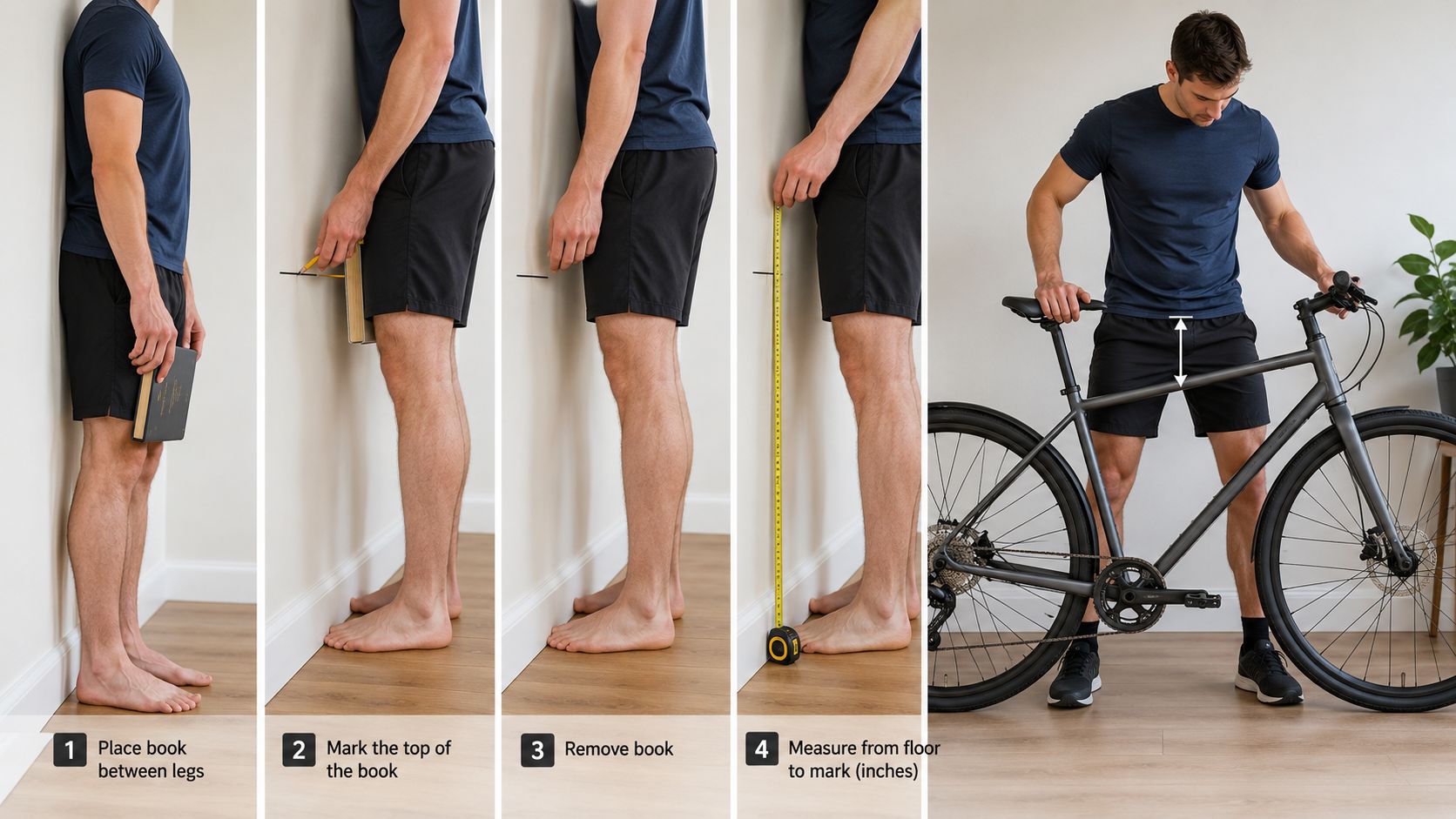
Use the book method. It gets closest to the contact point that matters when you are standing over the top tube.
-
Wear your cycling shoes. Shoe sole height changes the actual clearance you feel at a stop.
-
Stand with your back against a wall. Keep your feet flat and about the width you would use when straddling a bike.
-
Place a book between your legs and raise it firmly upward. Firmly matters here. The book should mimic the pressure of a saddle, not barely touch your shorts.
-
Mark the top edge of the book on the wall.
-
Measure from the floor to that mark. That number is your cycling inseam.
A jeans inseam is usually the wrong tool for this job. Clothing brands measure for pant length, not for the point where your body meets the bike.
Check the bike in person or from a listing
If the bike is in front of you, stand over it with both feet on the ground and look for clear space between your body and the top tube. For road and gravel bikes, a small but real gap is usually enough for safe stops and comfortable straddling. If you ride rough gravel, stop often on uneven surfaces, or want more margin, extra room can add confidence.
If the bike is online, compare your cycling inseam to the published standover height in the geometry chart. If the seller left that out, look up the manufacturer geometry for that exact model year. That last part matters. Brands can keep the same 54 or Medium label while changing the frame shape underneath it.
This is also where riders get stuck between two sizes. One frame may give you the stack and reach you want, but very little standover clearance. Another may offer more room over the top tube, but put the bars too high, too low, too far away, or too close. A bike size guide for road and gravel riders helps you judge that trade-off with the full fit picture in mind instead of treating standover as the only number that matters.
If you have never taken this measurement before, this video from Bike Insights demonstrates the process:
Two checks that people miss
-
Check where you will contact the frame. On a compact road or gravel frame, the published standover number may be taken at a different point than where your body meets the top tube. The chart is useful, but your real contact point matters more.
-
Check more than the size label. A used bike can be listed as “your size” and still miss the mark because of model year changes, unusual geometry, or a front-end height that does not suit your position.
Standover answers a narrow question: can you straddle the bike safely and confidently? That matters a lot. It still does not tell you whether the bike will feel right for the next three hours of riding.
Standover Clearance Guidelines for Road and Gravel Bikes
A “good” standover number depends on what happens when you stop, not just what appears on a geometry chart.
For many road and gravel riders, about 1 inch (2.54 cm) of clearance is a practical starting point. Mountain bikes often need more because riders are more likely to step off suddenly on steep or technical ground, according to LaCrose Bike’s standover height overview.
Recommended standover clearance by bike type
| Bike Type | Recommended Clearance | Primary Reason |
|---|---|---|
| Road bike | 1 to 2 inches | Safe stops, comfortable straddling, easier mounting and dismounting |
| Gravel bike | About 1 inch, sometimes toward the upper end of the road range depending on terrain | More room for uneven stops and quick foot dabs |
| Mountain bike | 2 to 4 inches | Unexpected dismounts and technical terrain demand more clearance |
Use those numbers as guardrails, not laws.
Road riding usually involves predictable stops on flat pavement. If you can stand over the bike without pressure from the top tube, you are usually in good shape. Gravel changes the situation a bit. Loose surfaces, off-camber shoulders, and awkward restarts make extra room more reassuring, even if the published recommendation looks similar to road.
That distinction matters most for riders choosing between two sizes.
A bike can have the stack and reach you want yet leave very little room over the top tube. If your riding is mostly pavement, that may be an acceptable trade. If you ride rough gravel, stop often on uneven ground, or want more confidence at low speed, a small increase in standover clearance can matter more than it would on a pure road setup. The key is to treat standover as a safety and confidence check, then weigh it against the riding position you need.
You may also see unusual advice about older level-top-tube frames and extremely tight clearance. For most modern road and gravel shoppers, that is not the standard to aim for. If clearance is so tight that every stop feels tense, the fit is not as strong as the stack and reach numbers suggest.
If the bike clears you cleanly and puts you in a good riding position, minimal clearance is not automatically a deal-breaker. If clearance is so tight that every stop feels tense, the fit is not as good as the stack and reach numbers suggest.
Beyond Standover: The Role of Stack and Reach
A bike can clear your body at a stop and still feel wrong for every mile after that.
That is why fitters treat standover as a checkpoint, not the main sizing tool. Once a frame gives you enough room to stop safely and step off without stress, the bigger question is where the bike puts your hands, shoulders, and hips while riding. That is what stack and reach describe.
What stack and reach mean on the road
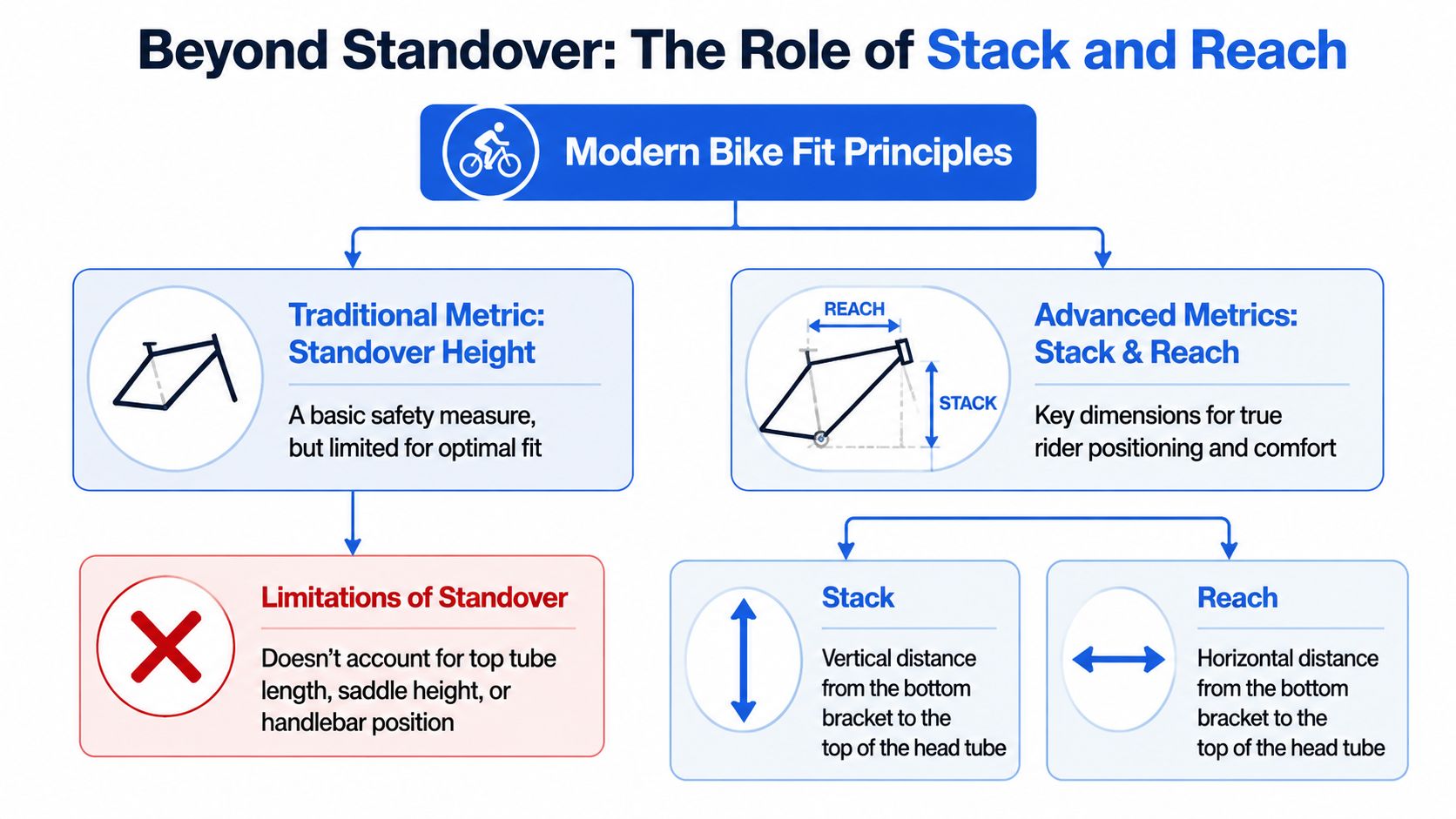
Stack is the vertical distance from the bottom bracket to the top of the head tube. It affects how high the front of the bike starts before spacers, stem angle, or handlebar shape enter the picture.
Reach is the horizontal distance from the bottom bracket to the top of the head tube. It gives you a cleaner view of how long the frame feels than top tube length alone, especially across different frame designs.
A simple way to separate these measurements is this: standover tells you how the bike meets you when you are standing still. Stack and reach tell you how the bike meets you when you are riding.
That distinction matters because road and gravel comfort usually breaks down at the front end first. If the bars sit too low, your back, neck, and hands notice. If the frame is too short or too long, your weight distribution changes, and the bike can feel cramped or stretched even if the top tube clears you perfectly.
Why a bike with tighter clearance can still be the better fit
Riders with a shorter inseam and longer torso run into this often. The smaller size may provide more space over the top tube, but the bars can end up too low or too close. The next size up may reduce clearance while improving posture, front-end height, and stability.
That is the trade-off. More room when straddling the bike versus a better position when pedaling it.
On a road bike used mostly on pavement, a frame with minimal but workable clearance can be the better choice if stack and reach are clearly closer to your needs. On gravel, the same decision deserves more caution because uneven stops and awkward remounts happen more often. The right answer depends on where and how you ride, not on one clearance rule taken in isolation.
Use standover to rule bikes out, then use stack and reach to choose between the survivors
A more practical sizing process looks like this.
-
If standover is so tight that stopping feels tense, the frame is a poor match.
-
If standover is adequate, compare stack and reach next.
-
If one size gives you a much better bar height and cockpit length, that size often rides better, even with less extra space over the top tube.
-
If two bikes are close, your riding style breaks the tie. Pavement riders can accept less clearance than riders who stop often on rough gravel.
Height charts miss this problem because two riders of the same height can have very different proportions. Inseam, torso length, arm length, flexibility, and riding goals all change which stack and reach numbers make sense.
If you want more context on comparing geometry without relying on size labels, SYCLR's bike buying guides on fit and frame comparison walk through the process in practical terms.
Common Standover Height Mistakes to Avoid
A lot of sizing mistakes start with a reasonable instinct. You straddle a bike, feel how much room you have over the top tube, and assume that more room must mean a better fit. That shortcut causes trouble because standover answers one question well, how safe and comfortable the bike feels when you stop, but it does not tell you how the bike will place your hands, hips, and weight once you are riding.
Used-bike shopping makes this harder. Sellers often list only the frame size, maybe one photo, and a vague line like “fits medium.”
Mistakes that cause bad sizing decisions
-
Letting standover decide everything
A bike can give you acceptable clearance and still put you in a poor riding position. If the front end is too low or the cockpit is too long, the bike may feel wrong for every mile you pedal, even though it feels fine standing over it in a driveway. -
Treating the published standover number as exact in every real-world moment
Standover is a snapshot, not the whole shape of the frame. On many modern road and gravel bikes, the top tube slopes, so the amount of room changes depending on where you stand. A catalog number can be useful for screening bikes out, but it is not a perfect prediction of what you will feel during a rushed stop. -
Choosing the smaller frame just to gain extra top-tube room
This is one of the most common overcorrections. Extra clearance can feel reassuring at first, but a frame that is too small often creates a different problem: too little stack, cramped reach, and a position that needs too many spacer, stem, or seatpost fixes to work well. -
Trusting size labels across brands or model years
A 56 in one brand is not the same as a 56 in another. Even within the same model line, geometry can change from one year to the next. The label is the name on the box. The geometry is the bike itself. -
Ignoring the way you ride
A road rider who stops on smooth pavement can often live with tighter but workable clearance. A gravel rider who dabs a foot on uneven ground needs a bigger margin for error. The same standover number can feel fine in one use case and sketchy in another. -
Getting distracted by a good deal
Price can make a borderline fit look tempting. If the bike leaves you tense at stops or forces compromises in bar height and cockpit length, it is still the wrong bike.
A better way to judge listings is to use standover as an early safety check, then compare the geometry that controls your riding position. That is usually stack and reach. If you want a clearer method for sorting through listings, SYCLR's fit and frame comparison buying guides explain how to compare bikes beyond the size sticker.
How SYCLR Helps You Compare Listings by Fit
General marketplaces show bikes. They usually don't tell you whether a listing makes sense for your body, your riding style, or your budget.

SYCLR works better as a decision-support tool for road and gravel bike shopping. Instead of treating frame size as enough, it helps you compare listings using rider details, bike type, budget, available geometry data, price context, listing quality, and confidence signals. That makes it easier to see when a bike has acceptable standover clearance but stronger overall fit signals because the stack and reach are closer to what you need.
If you're actively comparing sellers, model years, and frame sizes, SYCLR's bike search experience helps you shortlist smarter across multiple listing sources. You can use it to compare road and gravel bike listings by fit, price, and source confidence instead of relying on size labels and seller descriptions alone.
For advanced sizing questions, this is the practical next step. Already know your fit details? Use them to improve your recommendations. If you're still starting from scratch, compare road and gravel bike listings with SYCLR.
Frequently Asked Questions About Bike Standover Height
Is bike standover height the same as frame size
No. Bike standover height is the distance from the ground to the top tube. Frame size is the manufacturer's labeled size, such as 54 cm or Medium. Two bikes with the same frame size can have different standover heights.
How much standover clearance do I need on a road bike
Many road bikes work well with about 1 to 2 inches of clearance as a practical starting point. That gives you enough room to stand over the frame safely while still leaving room to choose the frame that gives you a better riding position.
Is standover more important on gravel bikes
It can be slightly more important on gravel than on smooth-road riding because stops may happen on uneven surfaces. But for most gravel shoppers, it's still a safety check first, not the main fit metric.
What if one bike has better stack and reach but tighter standover
If the bike still gives you adequate clearance, the better stack and reach are often more important for road and gravel riding. Tight but usable clearance can be acceptable. Unsafe clearance is not.
Can I ignore standover on a modern sloping-top-tube bike
No. Sloping top tubes often make bikes easier to straddle, but you still need to confirm clearance at the point where your body would contact the frame.
Does height alone tell me whether standover will work
No. Height is a useful starting point, but inseam matters much more for standover. Stronger sizing decisions come from inseam, stack, reach, current bike geometry, comfort preference, and riding goals.
Is a cheap used bike worth buying if the standover is okay
Not by itself. A used bike can pass the standover check and still be the wrong choice if the overall geometry, condition, or listing quality is poor.
If you're comparing road or gravel bikes and want to reduce guesswork before you contact a seller, start with your height, bike type, and budget in SYCLR. If you already know more about your position, use your fit details to get fit-aware recommendations backed by geometry signals, price context, listing quality, and confidence signals. SYCLR helps you compare options more clearly, but it does not replace a professional bike fit.