
Gravel Bike vs Road Bike: Which One Should You Buy?
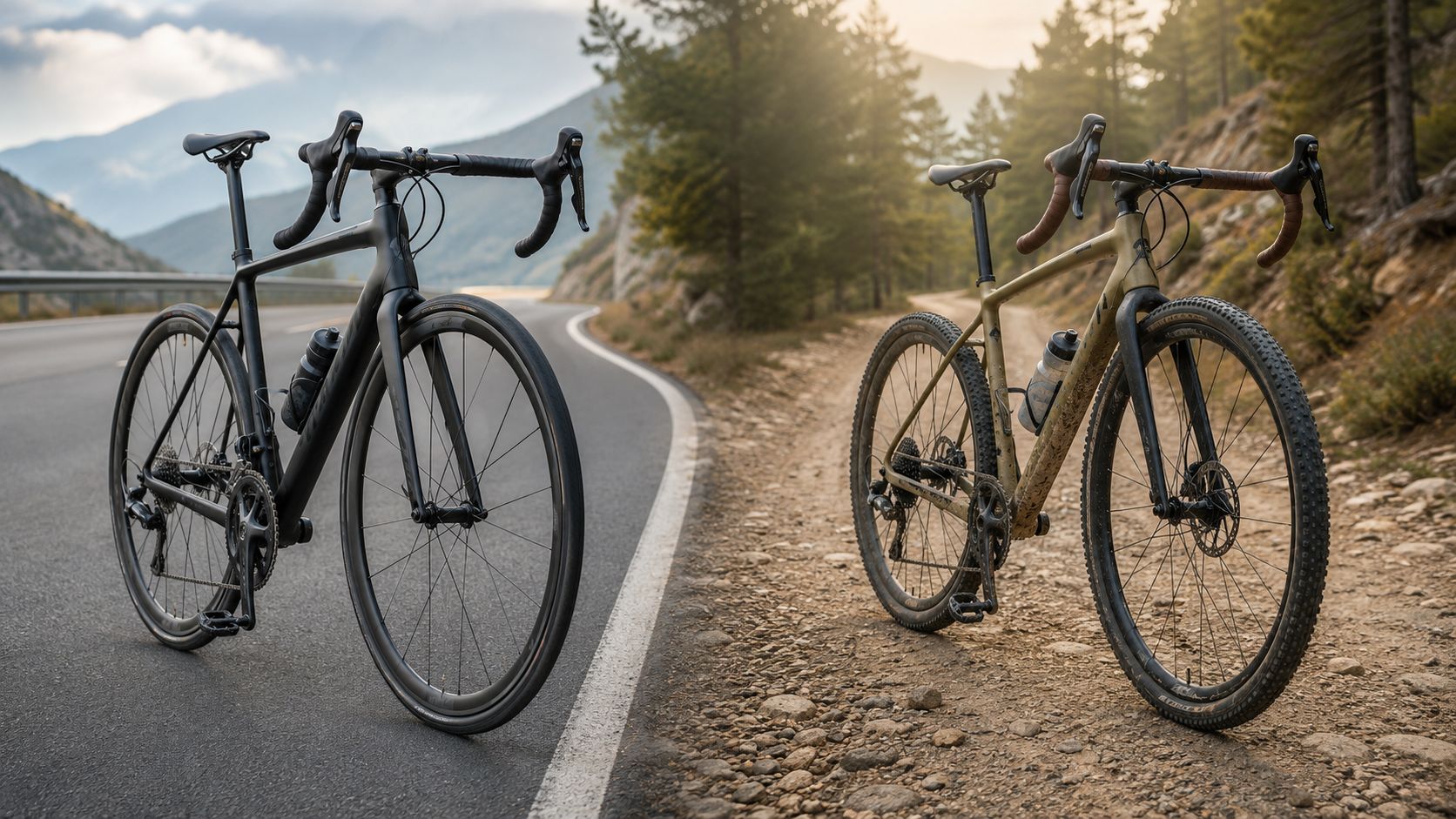
Choosing between a gravel bike and a road bike starts with a simple question: what kind of riding do you actually want to do most often? A road bike and a gravel bike can both be smart choices, but they solve different riding problems.
A road bike usually prioritizes pavement speed, efficiency, and sharper handling. A gravel bike usually adds tire clearance, stability, comfort, and mixed-surface confidence. The better choice depends on your terrain, fit preferences, geometry needs, budget, and the actual bikes available in your price range.
That last point matters more than many buyers expect. The decision is not only road vs gravel in theory. It is whether the specific road and gravel bikes you can actually buy match the way you ride, the fit you need, the surfaces you ride on, and the quality of the listing itself.
If you are comparing used or new bikes, SYCLR helps you move from broad category advice to real options. You can compare listings by fit, geometry, price context, and listing confidence so you can make a better decision before you buy.
Gravel Bike vs. Road Bike: At a Glance
This table breaks down the core design differences. While they may look similar, their geometry, tire clearance, and handling characteristics are designed for different kinds of riding.
| Feature | Road Bike | Gravel Bike |
|---|---|---|
| Primary Terrain | Smooth pavement | Pavement, gravel, dirt roads, light trails |
| Riding Position | More aggressive and aerodynamic | More upright for comfort and control |
| Handling | Quick, agile, and responsive | Stable, predictable, and confidence-inspiring |
| Tire Clearance | Narrow, typically up to 32mm | Wide, typically 40mm or more |
| Gearing | Focused on high-speed efficiency | Wider range for climbing steep or loose terrain |
| Core Strength | Maximum on-road speed and efficiency | Versatility and mixed-surface capability |
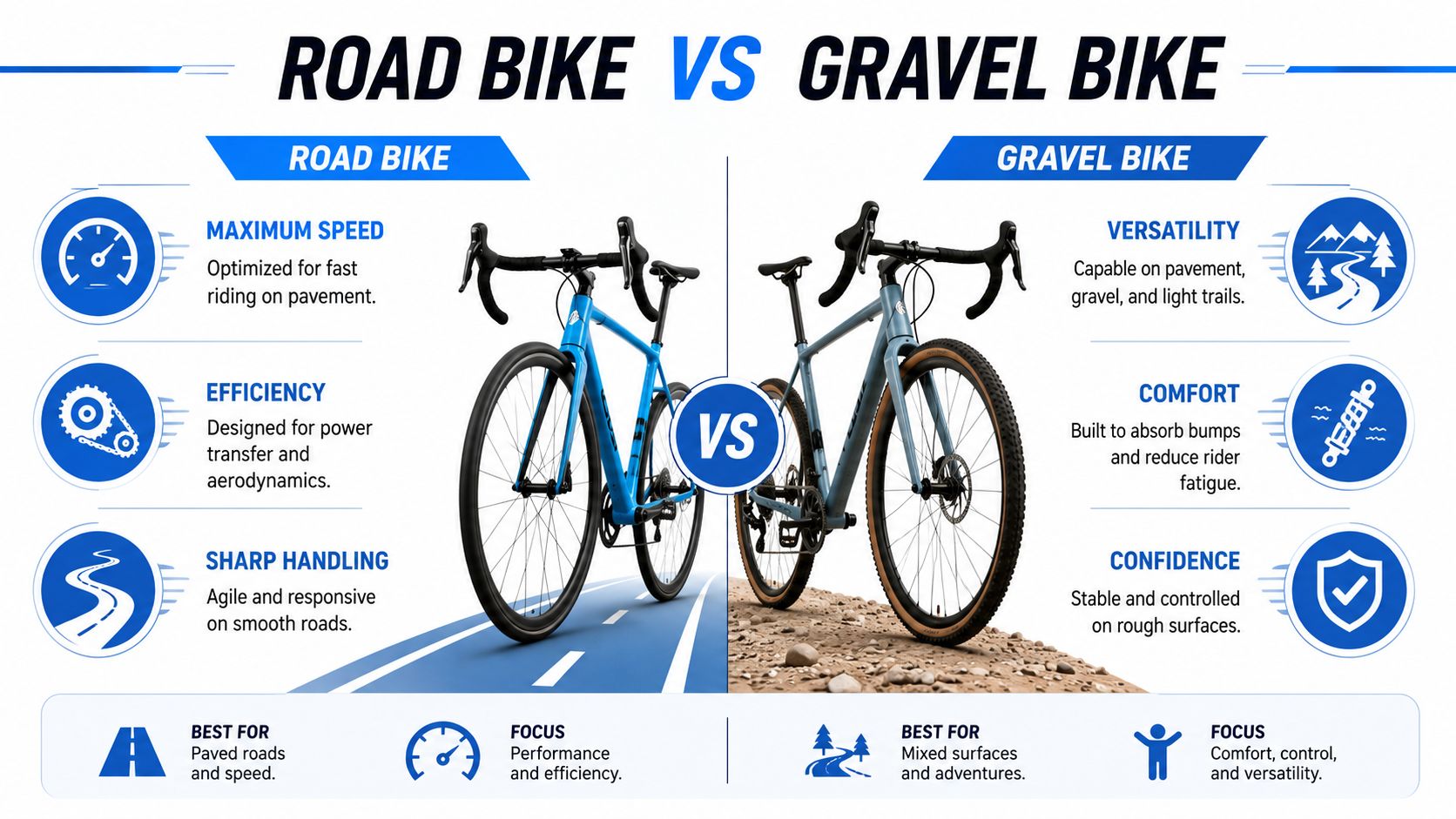
Understanding these differences is the first step. The real buying decision comes when you connect category, fit, geometry, budget, and real listings.
Table of Contents
Terrain and Riding Goals: Define Your Choice
When weighing a gravel bike against a road bike, the most useful question is: where will you actually ride? Not the dream route once a year, but the routes you expect to do every week.
If your cycling is built around smooth tarmac, fast-paced group rides, fitness riding, or road events, a road bike is usually the better tool. Its aerodynamics, lighter feel, and quicker handling are built for efficiency on pavement. An endurance road bike can add comfort, but it is still part of the road category.
If your rides regularly include broken pavement, rough shoulders, canal paths, crushed stone, dirt connectors, or winter roads in poor condition, a gravel bike starts to make more sense. Its wider tire clearance, calmer handling, and more forgiving geometry make those rides easier to control and easier to enjoy.
Where Does Your Ride Actually Go?
Think about what your usual riding week really looks like. Does it include:
-
Crushed stone paths or canal towpaths?
-
Dirt farm roads connecting your paved loops?
-
Poorly maintained streets with potholes or debris?
-
Winter riding on roads covered in grit, sand, or salt?
If so, a gravel bike's wider tires and more stable geometry can make a meaningful difference in comfort and confidence.
If your answers are mostly about smooth pavement, higher average speed, and road-focused riding, a road bike remains the more direct choice.
The All-Road Dilemma
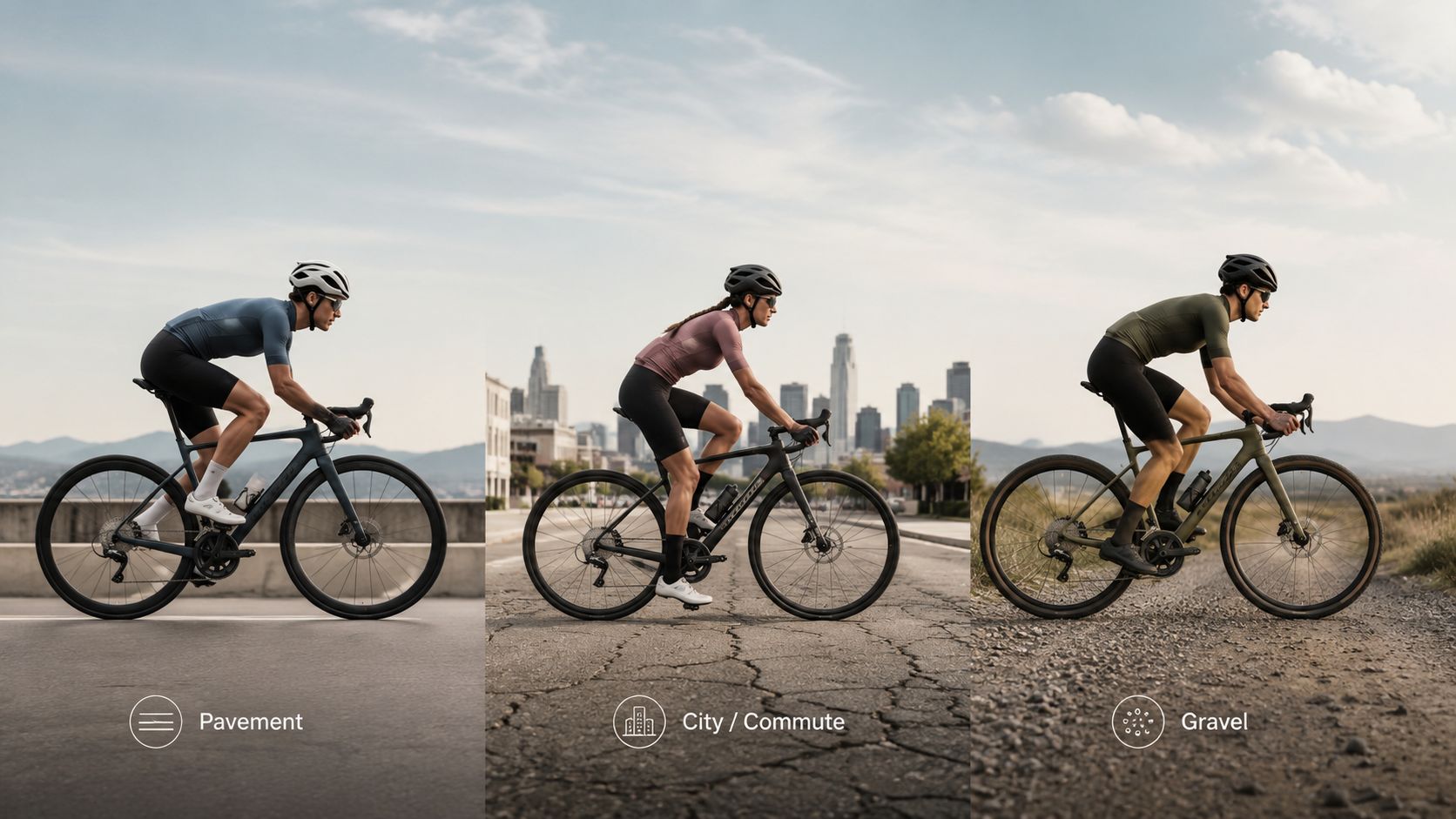
Many riders do not fit neatly into one category. They ride mostly pavement, but not perfect pavement. They want speed, but they also want comfort, confidence, and room for wider tires.
That is where the decision gets more interesting. Some riders who start by looking for a race-style road bike later realize an endurance road bike or a fast gravel bike is a better real-world match. Others start with the idea of buying a gravel bike, then realize they spend nearly all of their time on good pavement and would be happier on a road bike.
This is why comparing actual bikes matters early. The category gives you a starting point, but the real answer depends on the geometry, tire clearance, gearing, fit, and quality of the listings available in your budget. SYCLR helps you compare those details, not just labels, so you can start with your height, bike type, and budget and build a smarter shortlist.
Choose by Riding Scenario
If you are stuck between categories, start with your most common riding reality.
| Your riding reality | Better starting point | Why |
|---|---|---|
| Fast paved group rides | Road bike | More efficient position, sharper handling, narrower tires |
| Mostly pavement with rough roads | Endurance road or all-road bike | More comfort and tire clearance without going full gravel |
| Mixed pavement and crushed stone | Gravel bike | Wider tires and stable handling are useful |
| Winter roads and poor surfaces | Gravel bike | More tire volume and control |
| Road events or racing | Road bike | More specialized for speed |
| One bike for exploring | Gravel bike | More versatile across surfaces |
This framework helps narrow the category quickly, but the next step is still to compare actual road and gravel listings that fit your needs.
Decoding Geometry: The Numbers That Shape Your Ride
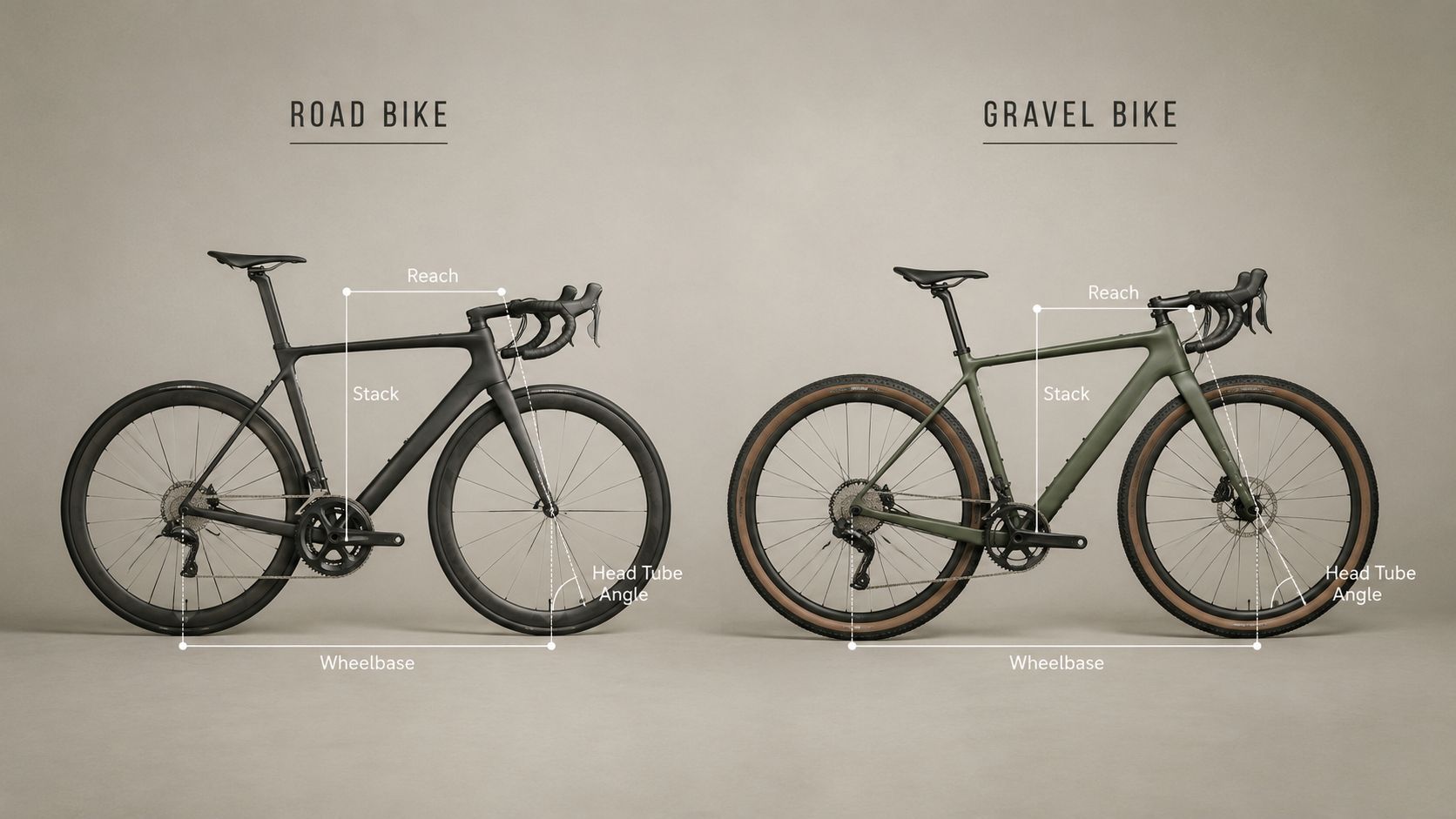
Frame geometry strongly influences how a bike feels. Road bikes and gravel bikes can look similar at a glance, but their geometry charts often point to different ride experiences.
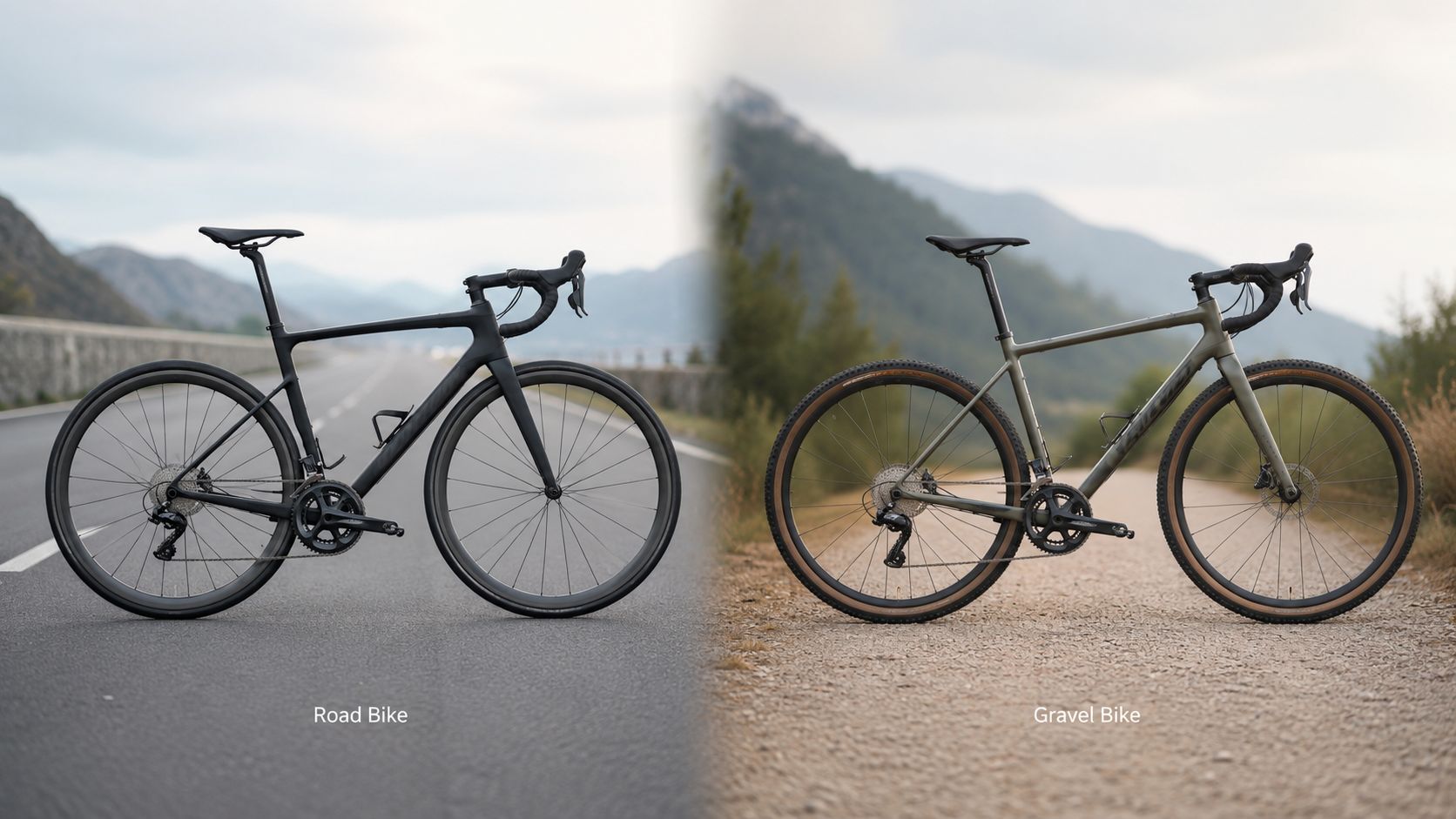
A road bike is built for fast pavement riding. A shorter wheelbase and steeper front-end geometry tend to create sharper, more responsive handling.
A gravel bike is usually designed for stability on mixed or loose surfaces. A longer wheelbase and slacker front-end geometry help the bike track more calmly over rough ground and feel less nervous when conditions get unpredictable.
Stack and Reach: The Numbers That Define Your Fit
This article is about category choice, not deep sizing theory, but two fit-related numbers still matter when comparing road and gravel bikes: stack and reach.
-
Reach is the horizontal distance from the bottom bracket to the head tube. More reach usually creates a longer, lower riding posture.
-
Stack is the vertical distance between those same points. More stack usually creates a higher handlebar position and a more upright posture.
In general, many road bikes have lower stack and longer reach relative to their gravel counterparts, which supports a more aggressive position. Many gravel bikes have higher stack and shorter reach, which supports comfort and control.
These are not rules without exceptions, but they are useful when you compare actual listings. If you want to understand those terms in more detail, our guide explains bike stack and reach more fully.
The Tire Clearance Factor
Tire clearance is one of the clearest practical differences between the two categories.
A road bike is usually built around narrower tires, often in the 28mm to 32mm range. That setup can feel fast and precise on good pavement, but it gives you less cushioning and less margin when the surface gets rough.
Gravel bikes are designed for much wider tires, commonly 40mm and up. Lower tire pressures can improve comfort, traction, and confidence on mixed surfaces. For a broader look at category differences, Canyon’s overview of gravel vs. road bike design offers a useful external perspective.
If you are buying from listings, tire clearance is one of the first specs worth checking. It can tell you a lot about the bike’s intended use and how adaptable it will be.
Not All Gravel Bikes Are the Same
Not all gravel bikes are built for the same job. Some are fast all-road bikes that feel close to endurance road bikes. Others are adventure-focused bikes with more tire clearance, longer wheelbases, and more mounting points. When comparing listings, look beyond the word “gravel” and check geometry, tire clearance, drivetrain, and intended use.
This matters because one gravel listing might suit a rider who mostly stays on pavement, while another is clearly meant for loaded backroads and bikepacking. Category labels help, but the bike’s details tell the real story.
An Honest Look at Speed and Performance
On smooth pavement, a road bike is usually faster. The lower riding position, narrower tires, and road-focused design help it maintain speed more efficiently on tarmac.
One head-to-head analysis found a road bike was 8.5% faster on a smooth, flat course, gaining over 1 kph at the same power output. You can review the comparison in road.cc’s detailed speed comparison.
Where the Speed Gap Narrows
That speed advantage shrinks once the roads become rough, broken, or inconsistent.
On rough pavement or mixed surfaces, a road bike rider may need to back off speed, choose smoother lines, or deal with more fatigue. A gravel bike’s wider tires and calmer handling can help preserve momentum and reduce the cost of bad surfaces.
So the useful question is not simply, which bike is faster? It is, which bike is faster for the roads I actually ride?
Performance Is More Than Just Speed
Real-world performance also includes comfort, control, versatility, and how confidently you can ride the routes you want.
-
A road bike is a specialist for pavement-focused performance.
-
A gravel bike is a more adaptable platform for riders who cross between surface types.
This is also where listing comparison matters. Two bikes can both be called fast, comfortable, or versatile, but the geometry, tire room, gearing, and components in the listing will tell you how they are likely to perform for your riding.
Budget and Value: Making a Smart Investment
Your budget should not choose the category for you. It should help you find the best version of the right category.
For many buyers, the decision starts in the $1,000 to $2,500 range. In that bracket, there are solid new and used options in both categories. The smarter move is not to ask which category is cheaper in the abstract, but which actual bikes in your budget match your terrain, fit preferences, and riding goals.
A higher-priced road bike can still be the wrong buy if you really need more tire clearance and stability. A gravel bike can also be the wrong choice if you mostly ride fast pavement and rarely leave smooth roads.
That is why value comes from context. The right bike is not just the one with the most impressive spec sheet. It is the one that best aligns with the riding you will actually do.
Listing Quality: Road Bikes Are Often Easier to Classify
Road bike listings are often easier to categorize because the model families are clearer: race, endurance, aero, climbing, or entry-level road. Gravel listings can require more interpretation. One gravel bike may be fast and road-like, another may be adventure-focused, and another may be built for bikepacking.
A strong gravel listing should include exact model year, tire clearance, wheel size, drivetrain details, geometry information, and clear photos. Without those details, the word “gravel” does not tell you enough.
This is one reason buyers should compare listings carefully instead of relying only on category names. Better listing quality leads to better buying decisions.
The Decision: Which Bike Should You Choose?
This table can help you make a final decision based on your priorities.
| Choose a Road Bike if… | Choose a Gravel Bike if… |
|---|---|
| You ride almost exclusively on paved roads. | You want to ride on pavement, gravel, and dirt. |
| Your main goal is speed and efficiency on tarmac. | You value versatility, comfort, and stability. |
| You do fast group rides, road events, or racing. | You want one bike for commuting, fitness, and exploring. |
| You prefer quick, responsive handling. | You want more control on rough or loose surfaces. |
| You prioritize aerodynamics and road-focused performance. | You need clearance for wider tires, often 40mm or more. |
How SYCLR Helps You Compare and Decide
Once you know the category that makes the most sense, the next challenge is finding the right bike inside that category.
That is where SYCLR becomes useful. Instead of browsing endless listings and guessing from incomplete descriptions, you can compare actual road and gravel bikes using the signals that matter most: fit, geometry, price context, and listing confidence.
SYCLR is built to help buyers make better decisions from real inventory, not just general advice. That means you can move from "I think I need a gravel bike" to "these are the gravel and road options in my budget that actually fit the way I ride."
From Theory to a Practical Shortlist
SYCLR helps you turn category advice into a practical shortlist.
-
Compare listings by fit and geometry: Look beyond labeled frame size and compare stack, reach, and other useful geometry signals.
-
See which category actually fits your riding: A road listing and a gravel listing at the same price can be very different in tire clearance, gearing, and posture.
-
Evaluate listing confidence: Clearer, more detailed listings usually reduce risk and make it easier to compare bikes accurately.
-
Stay grounded in your budget: A better shortlist is not just about the cheapest bike. It is about the best available match.
If you want a deeper explanation of how geometry affects comfort and position, read our comprehensive bike fit guide.
SYCLR helps you compare actual bikes for sale in your budget by analyzing fit, geometry, price context, and listing quality. That makes it easier to choose the right bike for the rides you actually want to do.
Ready to find your next bike? Use SYCLR to compare listings by fit, price, and confidence signals.
Frequently Asked Questions (FAQ)
Can I use a gravel bike as a road bike?
Yes. A gravel bike can work very well on the road. Many riders use a second wheelset or smoother tires to make it feel faster on pavement. It still will not usually match a dedicated road bike for pure speed or aerodynamics, but it can be a practical two-in-one setup.
What is the difference between an endurance road bike and a gravel bike?
The biggest differences are usually tire clearance, geometry, and intended terrain. An endurance road bike is built for comfort on longer paved rides and often allows slightly wider tires than a race bike. A gravel bike usually goes further with more tire room, more stable handling, and gearing that works better off pavement.
Is a road bike or gravel bike better for a beginner?
It depends on where the beginner plans to ride. A gravel bike can be a better first choice for riders who want comfort, stability, wider tires, and the option to explore rough pavement or light gravel. An endurance road bike may be better for beginners who expect to ride mostly paved roads and want a road-focused position and feel without going full race-bike.
Can a road bike be used on gravel?
A road bike can handle short sections of smooth, hard-packed gravel, but it is usually not ideal for regular gravel riding. Limited tire clearance and quicker handling can make loose surfaces feel harsher and less stable.
Is it worth having both a road bike and a gravel bike?
If you ride enough to justify the cost and storage, having both can make a lot of sense. A road bike gives you a more specialized tool for pavement speed, while a gravel bike gives you access to a wider mix of routes and surfaces.
Are gravel bikes slower than road bikes?
On smooth pavement, yes, gravel bikes are usually slower than road bikes because of wider tires, a less aggressive riding position, and often a bit more weight. A road vs. gravel bike speed test found the road bike was faster over an hour. But on rough pavement or mixed terrain, the difference can shrink and may even tilt the other way in real-world riding conditions.
Should I buy a gravel bike or a road bike in 2026?
The answer in 2026 is still based on the same factors: your terrain, goals, fit preferences, budget, and the kinds of listings available. Road bikes remain the better choice for pavement speed. Gravel bikes remain the better choice for mixed surfaces and broader versatility. The best buy is the bike category, and the specific listing, that best match the riding you actually plan to do.