
Bike Stack and Reach Explained for Road & Gravel Fit
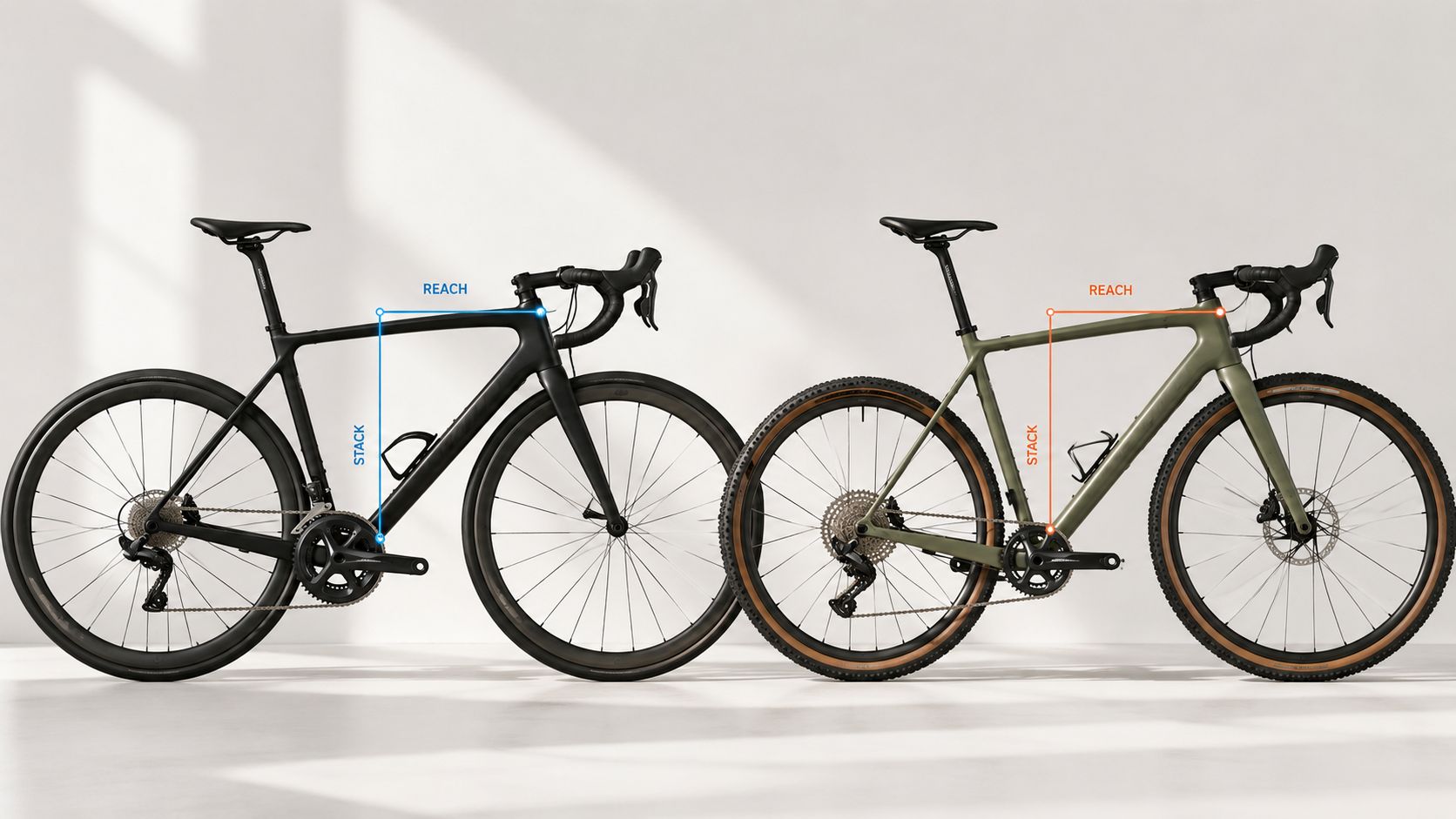
You’re comparing two bikes labeled 56cm. One feels tall, balanced, and easy to ride for hours. The other feels lower, longer, and more demanding from the first mile.
Quick answer: Stack is the vertical height of the front of the bike frame, while reach is the horizontal distance to the front of the frame. Stack affects how upright or low the bike feels. Reach affects how long or stretched the cockpit feels. Together, stack and reach are more useful than frame size labels when comparing road, gravel, endurance, and race bikes.
That gap is why stack and reach matter. They give you a clearer read on fit and riding posture than the size sticker on the seat tube. If you want a broader starting point before comparing geometry, our bike size guide for road and gravel bikes will help.
Table of Contents
The Sizing Problem: Two 56cm Bikes Are Not the Same
A rider walks into a shop convinced they need a 56. Then they try two bikes with that exact label and one feels natural while the other feels like a race bike built for someone else.
That is the limitation of traditional frame size. It helps narrow the rack, but it does not tell you how tall the front end will feel or how long the cockpit will feel once you are riding.
This is exactly why fit educators and manufacturers put so much emphasis on stack and reach. They give a clearer picture of rider position than seat-tube-based size labels alone, as explained in Canyon’s road bike geometry guide and MyVeloFit’s explanation of real-person bike geometry.
One of the clearest examples is this: a 54cm frame from one brand can have a stack of 560mm and reach of 380mm, while another 54cm can have a stack of 575mm and reach of 370mm, which makes direct comparison impossible without those geometry numbers, as shown in MyVeloFit’s explanation of real-person bike geometry.
What that means on the road
The first frame is lower and longer. The second is taller and shorter.
On the road, that usually means the first bike feels more stretched and more aggressive, while the second feels easier to settle into for long rides. Those are broad tendencies, not guarantees, but they are reliable enough to make stack and reach one of the best early filters when you are shopping.
Practical rule: If you’re comparing bikes by size label alone, you’re still guessing.
This gets even messier across categories. A road race bike, an endurance road bike, and a gravel bike can all sit near the same nominal size while delivering very different front-end height and cockpit length.
If you want a useful starting point before digging deeper into geometry, SYCLR’s bike size guide helps clarify why size labels and rider height are only the beginning.
The Core Concepts: What Are Stack and Reach?
Stack and reach matter because they describe the frame from the rider’s point of view.
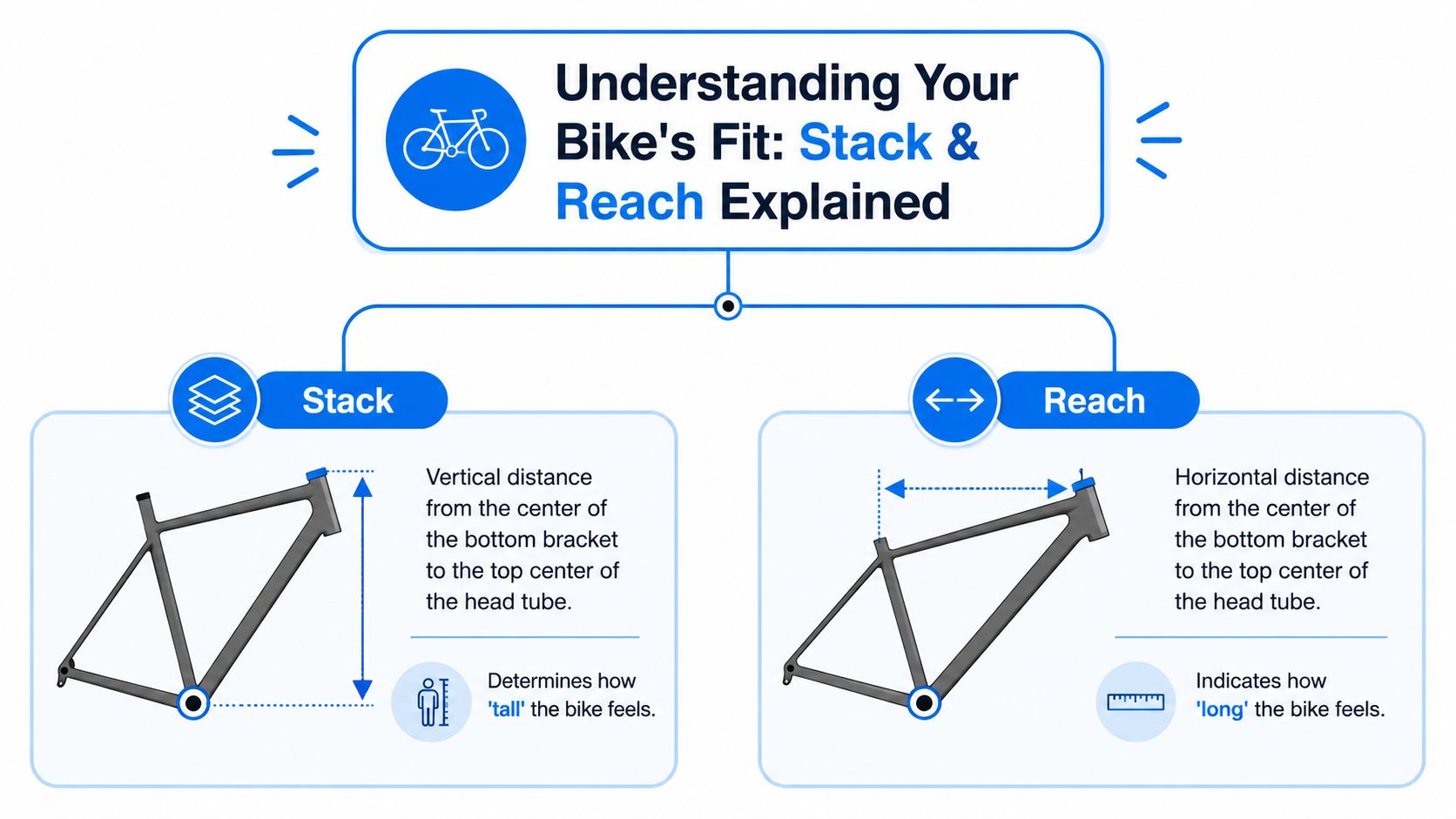
Stack is the vertical distance from the center of the bottom bracket to the top-center of the head tube area used in geometry charts. Reach is the horizontal distance from the center of the bottom bracket to that same reference point. Those definitions are standard across modern geometry charts and are widely used by brands and fit tools to compare frame shape and rider posture, as outlined by Canyon and The Pro’s Closet.
In practical terms, stack tells you how tall the front of the bike starts. Reach tells you how far forward that front end starts. Read together, they give you a fast, useful picture of how a road or gravel frame is likely to fit before you ever throw a leg over it.
Read the pair, not each number alone
A single number rarely tells the full story.
A bike with higher stack and shorter reach usually puts the rider in a more upright, less stretched position. That pattern is common on endurance road bikes and many gravel bikes built around comfort, control, and easier handlebar height. A bike with lower stack and longer reach usually points toward a lower, more committed posture, which is more common on race-oriented road bikes.
The useful part is the combination. A gravel bike can have moderate reach but extra stack, giving you more room to stay comfortable on rough surfaces. An endurance bike can look close to a race bike on paper until you notice the taller stack, and that front-end height is often the biggest fit difference.
What stack and reach tend to change
Higher stack usually makes it easier to achieve a comfortable bar height with fewer spacers. Lower stack usually suits riders who want a lower bar position or already know they ride well with more drop.
Longer reach usually creates a roomier cockpit and a more extended posture. Shorter reach usually creates a more compact position and can make a bike easier to settle into.
Here is the quick read:
| Metric | Higher or longer value | Lower or shorter value | Typical fit effect |
|---|---|---|---|
| Stack | Front end sits taller | Front end sits lower | More upright position vs. more bar drop |
| Reach | Cockpit feels longer | Cockpit feels shorter | More stretched vs. more compact |
One important caution: stack and reach describe the frame, not the complete bike setup. Stem length, spacer height, handlebar reach, hood position, and saddle setup still influence the final rider position. But if the frame starts far from what your body and riding style prefer, those parts only solve so much.
Why Stack and Reach Matter More Than Frame Size
You test ride two bikes labeled 56cm. One feels calm and natural within the first mile. The other feels low in front, long in the cockpit, and harder to settle into. That difference usually starts with stack and reach, not the size sticker.
Traditional frame size is a rough label. It helps narrow the options. It does not tell you how tall the front end sits, how much room the frame gives you between saddle and bars, or whether the bike trends endurance, race, or gravel in posture.
That is why frame size is best treated as the first filter and stack plus reach as the more useful fit check.
The size label hides the part you actually feel
Brands do not use size names in a perfectly consistent way. A 56cm from one brand can place you notably higher at the bars than a 56cm from another. Another bike with the same label can keep stack similar but add reach, which changes the feel from neutral to stretched.
A taller stack with moderate reach often points toward the feel riders expect from an endurance bike. You get handlebar height more easily, and the position often asks less from your hamstrings, lower back, and neck. A lower stack with longer reach usually points toward race geometry. The posture gets flatter, the weight shift moves forward, and the bike tends to feel sharper when you are riding hard. Gravel bikes sit in a wider range, but many combine enough stack for control on rough surfaces with reach numbers that support stable, all-day riding. Outside/Velo’s gravel geometry overview and Polygon’s gravel geometry overview both illustrate how category goals shape these numbers.
Why this matters when shopping
A rider shopping by frame size alone often compares bikes that look equal on paper and feel very different on the road.
Common examples:
-
Endurance road vs. race road: the listed size may match, while the endurance bike gives you a taller front end and the race bike asks for more bar drop.
-
Road vs. gravel: similar sizes can hide a gravel frame that feels more planted and easier to control on mixed surfaces because the rider position and handling goals are different.
-
Current bike vs. used listing: “Fits riders around your height” says very little if the stack and reach are far from the bike you already know works.
This is a frequent problem in secondhand shopping. Riders buy the same nominal size as their current bike, then need a pile of spacers, a short stem, or a bar swap to get close. Sometimes that works. Sometimes it creates compromises because the frame was never the right starting point.
A good bike purchase starts with the frame. The parts around it fine-tune the setup.
A better way to compare bikes
Start with a bike you know. If your current road, endurance, or gravel bike feels right on normal rides, use that geometry as your reference point.
Then compare in this order:
-
Check stack for front-end height. A meaningful increase usually signals a more upright position. A decrease usually signals a lower setup.
-
Check reach for cockpit length. More reach usually means more room in front of the pedals. Less reach usually means a more compact position.
-
Read the pair together. More stack and less reach tends to feel more relaxed. Less stack and more reach tends to feel more aggressive.
-
Use components as refinements, not rescue tools. Stems, spacers, bar reach, and saddle position can tune the final setup, but they do not change the frame’s underlying fit direction.
If you want more category-specific shopping advice after comparing geometry, SYCLR’s bike buying guides for road, endurance, and gravel bikes are a useful next step.
Where Stack and Reach Sit on a Geometry Chart
A geometry chart can look technical, but for shopping you do not need to decode every number at once. For the full walkthrough, see how to read a bike geometry chart. Start with the two measurements that most directly affect fit feel. Then layer in bike category and setup context.
Start with bike category
Before you compare numbers, decide what kind of position you want.
An endurance road bike usually aims for a more relaxed road posture. A race bike usually aims for a lower, more aggressive front end. A gravel bike usually balances stability, control, and comfort on mixed surfaces. Gravel bikes also commonly use geometry choices such as longer wheelbases, slacker front-end angles, and larger tire clearance to improve confidence off pavement, as explained by Outside/Velo and BikeRadar’s gravel geometry and sizing guide.
That category context matters because the same stack and reach story does not always mean the same use case.
For broader bike-shopping context beyond raw geometry, SYCLR’s bike buying guides are a helpful next reference.
Compare front-end height and cockpit length together
When comparing two bikes, the question is not whether one is better. The question is which one better matches the rider’s comfort preference, flexibility, riding goals, and current fit baseline.
A common comparison is an endurance road bike versus a race road bike in a similar nominal size. Reach can be relatively close, yet the endurance frame often carries more stack. That creates a more upright front end and usually feels easier for riders who value comfort, long rides, or a less demanding position. The race frame can feel more committed before you change a single part.
That is why stack and reach are so useful in search. They help you narrow bikes by fit direction before you spend time on the full listing.
Road and gravel fit patterns at a glance
| Bike type | Typical stack/reach pattern | Fit feel | Best for |
|---|---|---|---|
| Endurance road bike | Taller stack, manageable reach | More upright and stable | Long rides, comfort, mixed fitness riding |
| Race road bike | Lower stack, longer or more aggressive reach | Lower and more stretched | Fast group rides, racing, aggressive fit preferences |
| Gravel bike | Often taller stack, category-dependent reach | Stable and controlled | Mixed surfaces, rough roads, all-day comfort |
These are patterns, not hard rules. Individual bikes can vary a lot within each category, which is exactly why geometry-chart comparison matters.
What Is Stack-to-Reach Ratio and How Should You Use It?
Stack-to-reach ratio is a shorthand comparison between a frame’s vertical measurement and its horizontal measurement. A higher ratio generally suggests a taller, less stretched frame shape, while a lower ratio generally suggests a longer and more aggressive shape. The ratio is useful for comparison, but it should never replace the actual stack and reach measurements.
Two frames can have similar stack-to-reach ratios while still having very different absolute dimensions. A smaller frame and a larger frame may produce a similar ratio even though their actual stack and reach numbers would place the rider in very different positions.
The ratio also does not account for stem length, spacer height, handlebar reach, hood position, saddle position, rider proportions, or the intended bike category. Those factors continue to shape the final riding position after the frame measurements are compared.
Use stack-to-reach ratio as a directional comparison tool, not as a universal fit threshold. It can help you sort frames that trend taller and more relaxed from frames that trend lower and more aggressive, but it should not be used alone to declare that a bike fits.
How to Use Stack and Reach When Shopping Online
Once you know what stack and reach describe, you can turn them into a quick, repeatable check every time you compare a listing. The goal is not a perfect number — it is to reduce guesswork and shortlist better-fit bikes before you click through.
- Start from a known-good reference. If a current bike fits you well, note its stack and reach; if you have a fit report, use those figures. Our bike fit guide explains how to read them.
- Compare stack first. A taller stack lifts the front end and feels more upright; a lower stack drops the bars for a more aggressive posture.
- Compare reach next. A longer reach stretches the cockpit; a shorter reach feels more compact.
- Read the two together. Stack and reach interact, so judge them as a pair rather than either number on its own.
- Confirm the size label isn’t hiding a difference. Two frames with the same label can carry different geometry, so treat a road bike size chart or gravel bike frame size chart as a starting range, not a final answer.
- Check category, intended use, and clearance. Endurance, race, all-road, and gravel frames prioritize different proportions; a quick bike standover height check adds confidence before you commit.
- Put the exact model year and size side by side. The numbers are easier to trust when you compare bike geometry across listings directly.
- Treat the cockpit as fine-tuning, not a fix. Stems and spacers adjust position within a range; they cannot rescue a frame whose stack and reach are fundamentally wrong for you.
Here is what that looks like in practice. Both bikes below are labeled 56 cm, but their stack and reach would place the rider differently:
| Metric | Bike A (56 cm) | Bike B (56 cm) | Why it matters |
|---|---|---|---|
| Frame label | 56 cm | 56 cm | Same nominal size |
| Stack | 575 mm | 595 mm | Bike B sits taller at the front |
| Reach | 385 mm | 375 mm | Bike A is longer in the cockpit |
| Likely riding position | Lower and longer | Taller and shorter | Same label, different fit feel |
Neither bike is “wrong.” A rider seeking a more upright position may find Bike B closer to that goal, while a rider seeking a lower, longer position may find Bike A closer to that goal. These figures are illustrative, not a universal rule — always compare the actual geometry of the specific bikes you are considering.
Compare with your own numbers
Already know your stack and reach?
Use those measurements in SYCLR to sharpen your recommendations and compare better-fit road and gravel bikes.
Use Your Fit DetailsCommon Pitfalls and Real-World Fit Considerations
Many riders learn stack and reach, then fall into a second trap: turning two useful numbers into one oversimplified decision.

Why ratio alone falls short
The stack-to-reach ratio can help you spot whether a frame trends taller and shorter or lower and longer. What it cannot do is tell you exactly how the full bike will feel once it is built and adjusted.
That is one reason Bike Insights’ discussion of stack-to-reach ratio limitations is useful. Ratio hides details that matter in practice, including stem length, bar reach, hood position, saddle setback, and even category-specific handling choices.
A ratio can point you in the right direction. It should not make the final decision by itself.
Frame fit vs. final riding position
Frame stack and reach describe where the frame ends. Riders do not hold the frame. They hold the bars.
That is why it helps to separate frame geometry from final riding position. The frame gives you the starting point. Spacers raise the cockpit. Stem length changes how far the bars sit in front of you. Handlebar reach, hood placement, and saddle setup also influence the position you actually ride. Canyon makes a similar distinction with its expanded cockpit-based measurements in its road bike geometry explanation, and MyVeloFit’s real-person geometry explanation shows why rider contact-point position can differ meaningfully from frame numbers alone.
The practical takeaway is simple: use frame stack and reach to narrow the shortlist, then evaluate whether the build can be dialed in without extreme spacer stacks or unusual stem choices.
A short video can help make that distinction easier to visualize.
What to watch in used-bike photos
Used-bike shopping adds another layer. The geometry chart tells you the platform. The seller’s photo tells you how the bike is currently set up.
When evaluating a used road bike or used gravel bike, check these details:
-
Spacer stack: A tall spacer pile can suggest the rider needed more front-end height than the bare frame provided.
-
Stem length: A very short or very long stem can indicate the fit was being corrected.
-
Bar shape: Compact or short-reach bars can make a frame feel more manageable.
-
Overall side-on posture: Even imperfect seller photos can reveal whether the bike was set up unusually high, low, short, or long.
There is also a subtler point advanced shoppers should know. Static frame reach does not tell the whole story because front-end design and overall geometry affect how the bike presents in space. Sage Titanium’s discussion of bike design and stack and reach notes that changes such as slacker front-end geometry can alter how a bike feels without changing the published frame reach number itself.
How SYCLR Helps You Shortlist Bikes by Fit
A common buying mistake looks like this: a rider finds a race bike in their usual size, then spots an endurance bike and a gravel bike in that same size range. On paper, all three look plausible. In practice, one may put them too low and stretched, one may feel balanced, and one may need too many setup fixes to make sense.
The problem usually is not the size label. It is that geometry comparison gets scattered across retailer pages, used listings, screenshots, and brand charts.
A practical way to compare listings
SYCLR is most useful once you know the kind of fit you want and need a faster way to compare actual bikes for sale.
Instead of bouncing between tabs and trying to remember which listing looked taller, longer, or closer to your current bike, you can use SYCLR to organize listings around fit, geometry, price context, and listing quality in one place. That makes it easier to narrow your shortlist before you start contacting sellers or planning test rides.
This matters most when categories overlap:
-
an endurance road bike with more stack and moderate reach may suit the rider who wants long-ride comfort without relying on a tower of spacers
-
a race bike with lower stack and longer reach may suit the rider who already knows they prefer a lower front end
-
a gravel bike may sit between those two or trend taller and shorter for control and all-surface comfort
If you already have a bike that fits well, the next step is simple: use those numbers as your baseline and compare listings against them in SYCLR’s bike search tool for comparing bike listings by fit. If you are ready to start sorting live listings now, you can go straight to the SYCLR app.
When to use fit details inside SYCLR
Early in the search, broad filters still help. Height, bike category, and budget can narrow the field quickly.
The better shortlist comes later, once you add the details that actually change riding feel: current bike geometry, fit report numbers, inseam, flexibility, comfort preference, and intended use. A rider choosing between endurance, race, and gravel bikes does not just need a bike that is technically their size. They need one whose geometry points toward a position they will want to ride.
That is where fit details become useful. Already know your stack, reach, current bike geometry, or fit measurements? Use SYCLR’s fit-details path to improve your recommendations and compare road and gravel bike listings with stronger fit signals.
Frequently Asked Questions About Stack and Reach
Is stack or reach more important?
Both matter, but they answer different questions. Stack helps describe how tall the front end feels. Reach helps describe how long the cockpit feels. Most riders need to interpret them together.
Can two bikes with similar reach still feel very different?
Yes. Similar reach with different stack can create a very different riding posture. That is common when comparing endurance and race road bikes.
What if a used bike listing doesn’t show geometry?
Start with the exact model and model year, then look for the manufacturer’s geometry chart. If you still cannot verify stack and reach, confidence drops and the listing becomes harder to assess accurately.
Does height alone tell me my stack and reach?
No. Height is a useful starting point, but stronger sizing decisions come from inseam, torso length, arm length, flexibility, current bike geometry, comfort preference, and riding goals.
Is stack-to-reach ratio enough to choose a bike?
No. It can help you sort bikes quickly, but it is too simplified to serve as a final fit decision on its own.
Can I measure stack and reach on my current bike?
You can estimate them if you know the exact frame and model year, then use the published geometry chart. Direct frame measurements are possible, but published geometry is usually the cleaner reference when available.
Are stack and reach the only geometry numbers that matter?
No. They are the best starting point for fit comparison, but head tube angle, wheelbase, trail, fork offset, bar setup, stem choice, and intended bike category also influence riding feel and handling.
SYCLR helps road and gravel cyclists make more informed buying decisions by organizing listings around fit, geometry, budget, price context, and confidence signals. If you’re comparing bikes and want to reduce guesswork before you buy, start with your current bike or your height, bike type, and budget in SYCLR.