
How to Identify a Bike Groupset from Photos: Quick Guide
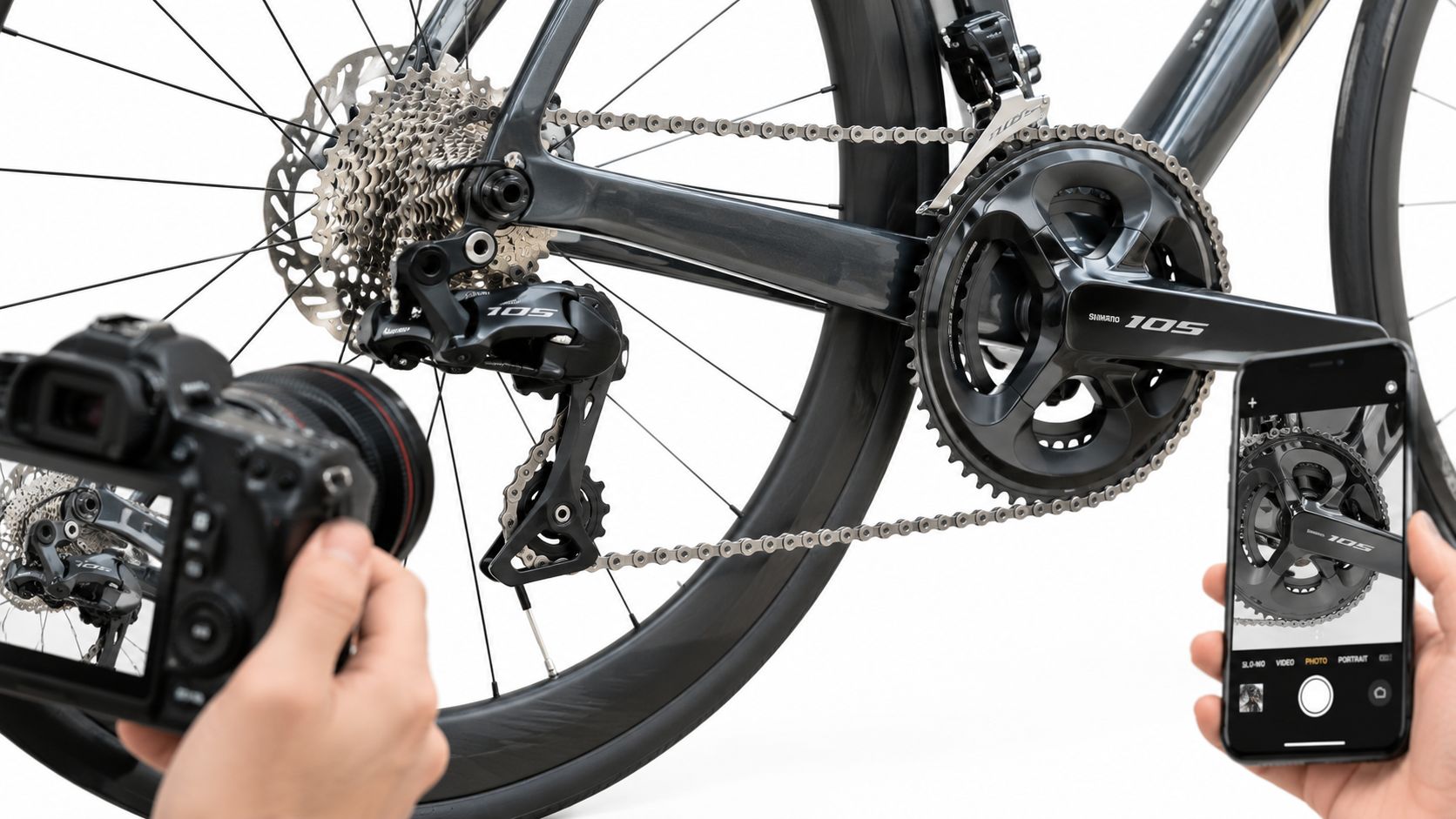
You're staring at a used bike listing that says “Shimano group set, good condition,” and the photos are just clear enough to raise questions. The frame size might work, the price might be fair, and the drivetrain could be anything from a tidy matching setup to a mixed build. Learning how to identify a bike groupset from photos helps you turn those images into evidence, so you can describe the visible components with the right level of confidence.
Photos can identify visible components with varying confidence, but they cannot prove parts are original to the bike.
Table of Contents
- The Online Bike Listing Problem
- Evidence Priority for Photo Identification
- Brand-Specific Visual Identification
- Speed Count, Actuation, and Generation Clues
- Mixed Builds and Calibrated Uncertainty
The Online Bike Listing Problem
A used-bike listing can call a bike “105” while the photos show only one visible Shimano component, an unclear cassette, or a crank from another family. In many listings, the label describes one part, a past upgrade, or the seller's best guess, not the complete bike as photographed. For a buyer, that affects compatibility, expected maintenance, resale value, and confidence in the listing.
Treat each photo as a separate piece of evidence. A visible logo can suggest a manufacturer, but a logo alone does not confirm a complete groupset. One component may come from a different family, tier, speed system, or generation. That is why the photos should be read component by component, then cross-checked across the drivetrain and controls.
Practical rule: a visible component can identify that component, but it does not prove the complete groupset or factory originality.
If useful, you can keep originality as a separate question and compare your findings with a dedicated component-originality article on SYCLR. Visual identification does not prove factory originality.
What to record from the first look
Exact readable model code: note any code stamped or printed on the derailleur, crank, shifter, brake, or cassette.
Manufacturer and family markings: record Shimano, SRAM, or Campagnolo, plus any visible family name.
Cassette sprocket count: count the rear sprockets from the clearest available photo.
Mechanical or electronic clues: note cables, wires, batteries, charging ports, or wireless hardware.
Visible mismatches: flag parts that appear to belong to different families, tiers, or generations.
Photo limitations: record glare, blur, shadows, or missing angles that prevent a firmer identification.
This gives you a structured record of what the photos actually support.
Evidence Priority for Photo Identification
When you identify a groupset from photos, not all clues carry the same weight. Use the strongest visible evidence first, then cross-check the rest of the bike.
Exact readable model code
Manufacturer documentation
Cassette sprocket count
Mechanical or electronic clues
Family markings
Visual shape or style
Seller description
Exact codes outweigh logos or silhouettes. If a clear code conflicts with a vague seller description, trust the code and verify it against official documentation.
Start with the clearest exact model code
Begin with the clearest component that shows an exact model code. That may be the rear derailleur, crank, shifter, brake, or another visible part. The rear derailleur is often a useful starting point, but it is not a required first step.
A readable code gives you the strongest photo-based identification because it can be checked directly in manufacturer documentation. If one photo clearly shows a code and the other parts are less readable, anchor your identification there and then test whether the rest of the drivetrain is consistent with it.
Cross-check the drivetrain
Once you identify one visible component, compare it with the cassette, crank, shifters, front derailleur, and brakes if those parts are shown. Ask whether the visible evidence points to the same family, speed system, and actuation type.
A listing may show one clearly identifiable part and several unclear ones. In that case, keep the confirmed identification narrow. Identify what you can see, then label the rest as probable or unverified rather than stretching one good clue into a complete groupset claim.
Use seller descriptions last
Seller descriptions can be useful context, but they should sit below visible evidence. Listing titles often simplify a build, repeat an old specification, or use a well-known family name as shorthand. The photos and the manufacturer documentation should do the real work.
Brand-Specific Visual Identification
Brand recognition matters, but exact markings matter more. The goal is not just to spot Shimano, SRAM, or Campagnolo. The goal is to identify the visible component as precisely as the photos allow, then check that identification against manufacturer documentation.
| Brand | Strongest evidence in photos | Secondary evidence | Weakest evidence |
|---|---|---|---|
| Shimano | Exact model code and family marking | Cassette count and actuation clues | General silhouette alone |
| SRAM | Exact model code, AXS or other system marking | Cassette count and actuation clues | Shape alone |
| Campagnolo | Exact model code or named family marking | Lever and drivetrain details cross-checked with documentation | Logo or styling alone |
Shimano model codes and family markings
Shimano often provides useful model-code prefixes and family markings when they are visible. Codes on derailleurs, shifters, cranksets, brakes, and cassettes can be more informative than a family name by itself. Family markings such as 105, Ultegra, Dura-Ace, Tiagra, or GRX can help, but the exact code is stronger evidence.
If you can read a Shimano code, verify it against official Shimano documentation before drawing a broader conclusion about the bike.
SRAM and Campagnolo need exact markings too
For SRAM and Campagnolo, prioritize exact visible markings and official documentation over shape or styling. Family names, wireless hardware, lever design, and derailleur layout can support an identification, but they should not outweigh a readable code or system marking.
If the visible evidence is limited to a logo or a general silhouette, keep the conclusion modest. That is enough for a probable family in some cases, but not enough for a confirmed component.
Speed Count, Actuation, and Generation Clues
Photo-based groupset identification becomes more reliable when you cross-check the visible component codes with cassette speed count and actuation clues.
Count the cassette sprockets
Count the cassette sprockets from the clearest rear-wheel photo available. This is direct visible evidence and often helps narrow the plausible families or generations.
Count carefully. Poor angles, deep shadows, spoke overlap, and reflections can hide one sprocket. If the image is not clear enough for a confident count, mark the count as uncertain rather than estimating from cassette width.
Different GRX generations and series can use different speed counts and actuation types. Confirm the exact visible model code in Shimano documentation.
Mechanical and electronic clues
Visible shift cables can support a mechanical identification, while electronic-system markings, wires, batteries, or wireless hardware can support an electronic identification. Confirm with the exact model code when possible.
This matters because actuation type affects compatibility, charging or battery needs, replacement parts, and resale value. It also helps you avoid combining clues from different systems into one incorrect conclusion.
Use generation clues carefully
Generation clues can support identification, but styling and approximate era are secondary evidence. Exact model codes and manufacturer documentation should carry more weight.
Approximate era can still be useful when the visible parts are partly obscured. For example, a crank shape, shifter body, brake format, or derailleur layout might suggest a likely period. But those clues should support the identification, not lead it.
Mixed Builds and Calibrated Uncertainty
Many used bikes use mixed or replacement components, and the listing may not describe those changes clearly. That does not make them bad bikes. It just means the photos should be described carefully, with enough uncertainty to match the evidence.
How to describe what the photos actually show
Build your answer from separate evidence fields. Record the identified derailleur, crank, shifters, cassette count, brakes, and actuation clues separately before you summarize the build.
If identified components belong to different families, tiers, or generations, describe the bike as a mixed build rather than a complete matching groupset.
A mixed build is not automatically bad. It may reflect sensible replacement parts, crash repairs, upgrades, or a practical maintenance choice. The important point is to describe what is visible without overstating certainty.
Confidence labels for photo identification
Use confidence labels that match the evidence in the photos:
Confirmed component: exact readable model code matched to manufacturer documentation
Probable component/family: strong visual evidence, no exact code
Unverified component: insufficient evidence
Mixed build: identified components span different families, tiers, or generations rather than forming the single complete groupset claimed by the listing.
These labels work better than forcing a full groupset claim from incomplete evidence.
Overall verdicts for the listing
After checking the visible parts, use one of these broader verdicts:
Groupset-consistent: major visible drivetrain/control components align with the claimed family or generation
Partial identification: some components can be identified, but the photos do not support a complete conclusion
Mixed build: identified parts do not all match the same claimed family or generation
Unverified: the photos do not provide enough evidence for a reliable identification
This approach keeps the conclusion tied to the photos instead of the listing headline.
If you're comparing used road or gravel bikes, SYCLR compares listings using fit signals, geometry signals, model-year context, price context, listing quality, condition signals where available, and confidence signals. SYCLR does not perform a professional bike fit, physically inspect bikes, authenticate listings, verify ownership or seller claims, or guarantee fit or condition.