
Road Bike Frame Weight Comparison | SYCLR
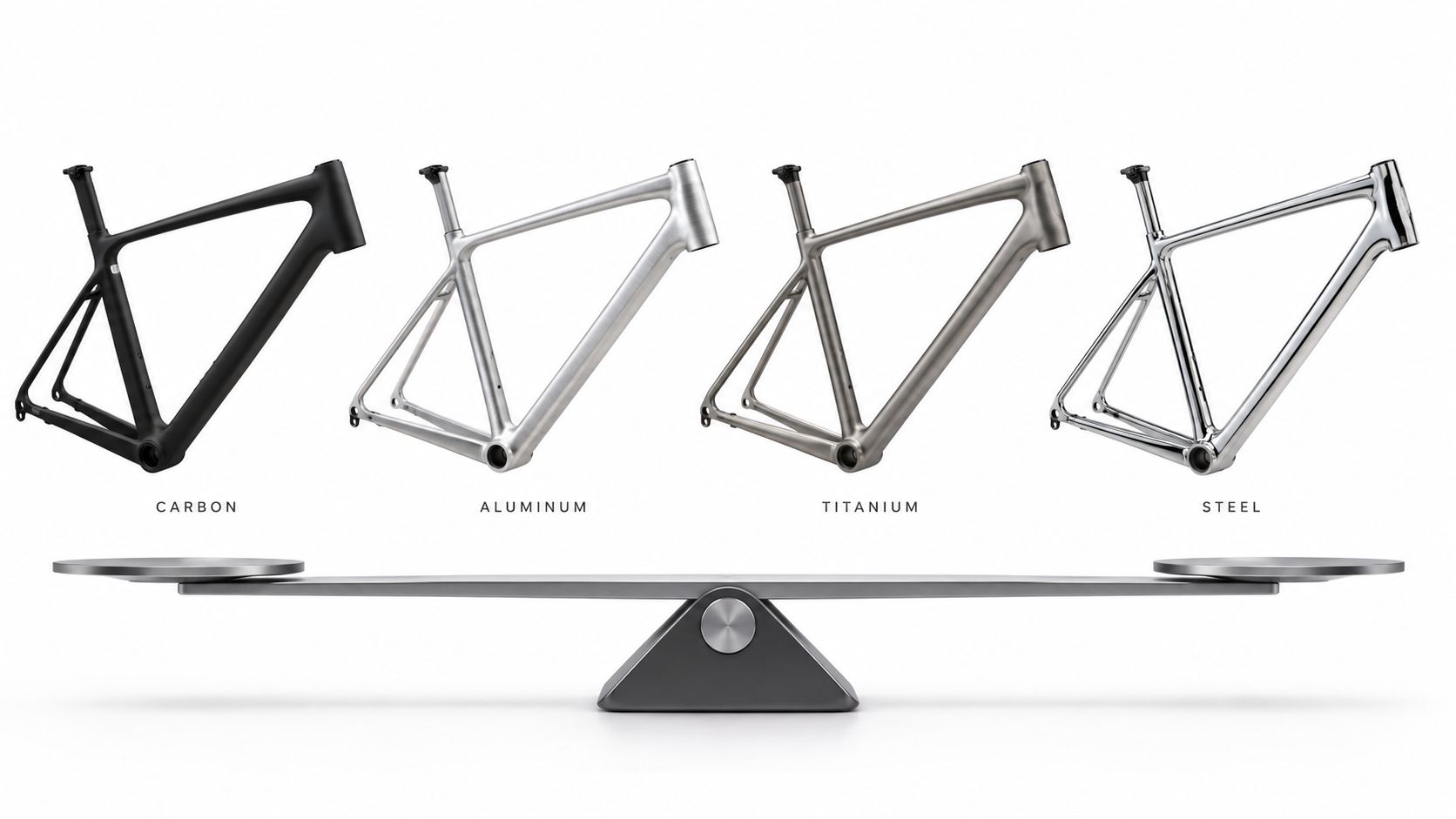
Road Bike Frame Weight: How to Compare Frames Fairly
A fair road bike frame weight comparison starts by confirming the exact model and year, size, whether the number is frame-only or frameset, whether the fork is included, what paint and hardware are counted, whether the number is claimed or measured, and what complete-bike specification sits around the frame. Without that context, a lower published weight can describe a different version of the bike rather than a genuinely lighter like-for-like frame.
That is the central problem with a road bike frame weight comparison. Listings often mix frame-only and frameset weights, compare different sizes, omit small hardware, or repeat manufacturer claims without stating measurement conditions. A number can be accurate in isolation and still be poor evidence for comparison.
For buyers, frame weight is useful only when it is tied to fit, specification, model year, and listing confidence. The goal is not to chase the smallest published number. It is to compare equivalent configurations and understand what the number actually includes.
Table of Contents
- Understanding Road Bike Frame Weight Variables
- How to Compare Road Bike Frame Weights Fairly
- Material Labels Do Not Create a Fair Comparison
- Weight, Complete Build, and Real Riding
- Reading Road Bike Listings for Accurate Weight Data
- Using Fit and Geometry Data to Shortlist Bikes
Understanding Road Bike Frame Weight Variables
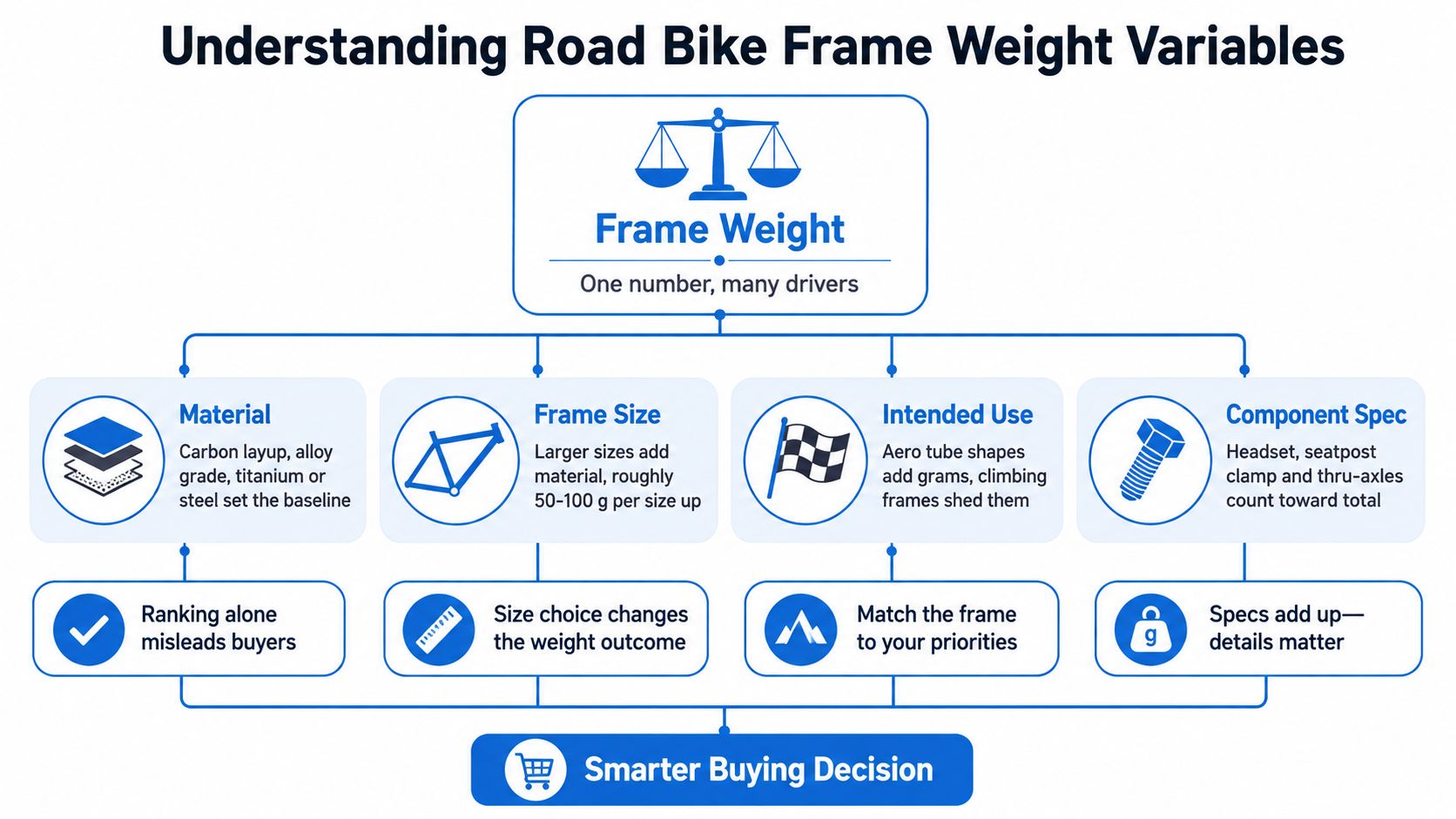
Published frame weights are easy to misread. A quoted number can be accurate and still be misleading if the listing does not show what was weighed, in which size, and with which attached parts. Frame mass matters, but its meaning changes once measurement conditions and complete-bike specification enter the picture.
Frame-only and complete-bike weight
A frame-only weight usually refers to the frame without the fork and often without small fittings. A frameset weight usually includes the frame and fork, but brands do not always count headset parts, axles, seat hardware, or small accessories in the same way. A complete-bike weight adds wheels, tires, drivetrain, cockpit, brakes, pedals if supplied, and any included accessories.
That distinction matters because a lighter frame does not guarantee a lighter complete bike; wheels, tires, drivetrain, cockpit, brakes, pedals, and accessories all contribute to total mass.
The variables hidden in listings
Published weights become hard to compare when sellers leave out the conditions behind the figure:
-
Exact model and year: small production changes can affect frame, fork, hardware, and paint.
-
Frame size: the same model rarely weighs the same across the size range.
-
Measurement scope: frame-only, frameset, and complete-bike figures are not interchangeable.
-
Fork included or excluded: this can change the number substantially.
-
Paint and finish: prototype, raw, thin-finish, and full production paint can differ.
-
Hardware and axles: thru-axles, hangers, seat hardware, cable guides, and headset parts are not always counted consistently.
-
Claimed versus measured: a catalogue number and a scale reading are different types of evidence.
-
Complete-bike specification: stock builds can differ even when the frame model name is the same.
Practical rule: Compare frame weights only after confirming model year, size, measurement scope, included parts, and whether the number was claimed or measured.
A very precise weight without those details is weaker than a rounded figure with full measurement context.
How to Compare Road Bike Frame Weights Fairly
The fairest comparison is not material versus material. It is the same type of number, measured on the same basis, for bikes you could actually buy in your size.
Model year and size come first
Start with the exact model and year. Brands can revise a frame without changing the main product name, and those revisions can affect layup, tube dimensions, fork design, axle standard, cable routing, hardware, and paint.
Then confirm size. A published figure from a smaller frame should not be compared directly with a measured figure from a larger one. If the listing does not state size, the weight is incomplete as comparison data.
Forks, paint, and hardware change the result
A frame-only number and a frameset number are different measurements. Even within frameset listings, the included parts may vary. One seller may include fork, headset top cover, spacers, thru-axles, seatpost clamp, derailleur hanger, and small fittings. Another may exclude some or all of them.
Paint and finish can also change what reaches the scale. A lightly finished sample and a full production paint scheme are not necessarily equivalent. The same applies to replacement hardware, aftermarket axles, and non-original fittings.
Claimed versus measured weights
A claimed weight tells you what a manufacturer says a product weighs under stated conditions. A measured weight tells you what one real sample weighed in a particular configuration. Both can be useful, but they are not the same form of evidence.
Before treating a number as comparable, confirm:
-
Exact model and year
-
Exact size
-
Frame-only, frameset, or complete bike
-
Whether the fork is included
-
What paint, hardware, and axles are included
-
Whether the number is claimed, seller-measured, or independently tested
-
What complete-bike specification applies if the bike is sold built
A low number without measurement conditions is not strong comparison data.
Material Labels Do Not Create a Fair Comparison
Material labels are often overused in weight discussions. Material alone does not determine finished frame weight or overall frame behavior. Tube dimensions, layup or alloy, wall thickness, reinforcement, joints, geometry, hardware, and design targets all matter.
Why material alone is not enough
Two frames made from the same material can differ meaningfully because they were designed to meet different priorities. Likewise, frames made from different materials can overlap once size, fork specification, joints, reinforcements, tube shapes, and measurement scope are accounted for.
That is why universal material rankings are weak buying guidance unless they come from a clearly defined, consistently measured sample of actual frames. Material can be part of the description, but it is not a fair comparison method on its own.
What to compare instead
Instead of starting with a material hierarchy, compare:
-
exact model and year
-
exact size
-
frame-only versus frameset
-
fork included or excluded
-
paint and finish
-
hardware and axles included
-
claimed versus measured source
-
complete-bike specification
That moves the comparison from assumptions to like-for-like evidence.
Weight, Complete Build, and Real Riding
Frame weight matters, but it is only one part of the bike you ride.
Complete-bike weight matters
A frame can look light in isolation and still sit inside a heavier complete build. Complete-bike comparison is often more useful than frame-only comparison when the bike will be ridden as sold.
A lighter frame does not guarantee a lighter complete bike because wheels, tires, drivetrain, cockpit, brakes, pedals and accessories contribute to total mass.
Climbing and total system mass
Lower total system mass reduces the gravitational work required on climbs. A frame-only difference contributes to that total, but should be considered alongside complete-bike and rider mass.
That is why a frame-only claim should not be treated as a complete climbing verdict without looking at the full build.
Aerodynamics changes the trade-off
At higher speeds, aerodynamic drag can outweigh modest mass differences. The trade-off depends on speed, gradient, rider position and complete-bike setup.
That does not create a universal rule. It means a fair comparison should consider the complete bike and the conditions in which it will be ridden, rather than treating frame mass as a standalone performance answer.
Reading Road Bike Listings for Accurate Weight Data
Most bad weight comparisons come from comparing unlike measurements. The useful number is the one documented on the same basis as the bikes you are considering.
Start by checking what has actually been weighed. A frame-only figure, a frameset figure, and a complete-bike figure can differ enough to mislead a shortlist even when the model name is the same. Size and model year matter too, because a brand may change the fork, layup, paint, cockpit, or axle standard without changing the headline description.
A practical listing check
Use the listing to build a comparison record, not just a price check:
-
Exact model, year, and size: confirm the weight belongs to the bike being sold.
-
Measurement scope: frame-only, frameset, or complete bike.
-
Fork status: included or excluded.
-
Paint and finish: original production finish, repaint, or refinished frame.
-
Hardware and axles: note what is included in the weight.
-
Specification: record wheels, tires, drivetrain, cockpit, brakes, pedals, and accessories.
-
Evidence quality: a scale photo is stronger than a copied catalogue number.
-
Condition history: repairs, replacement hardware, and non-original parts can affect both weight and confidence.
Small omissions can distort a comparison more than the headline number suggests.
Ask the seller the right questions
For a used road bike, ask:
-
What is the exact model, year, and size?
-
Is the stated weight frame-only, frameset, or complete bike?
-
Does it include the fork, headset parts, axles, seat hardware, pedals, and accessories?
-
Was the number measured on this bike or copied from a manufacturer listing?
-
Has the frame been repainted, repaired, or modified?
-
What complete-bike specification is included in the sale?
Those answers usually tell you more than the raw number itself.
Using Fit and Geometry Data to Shortlist Bikes
A lower frame weight is only useful if the bike fits and the listing is credible.
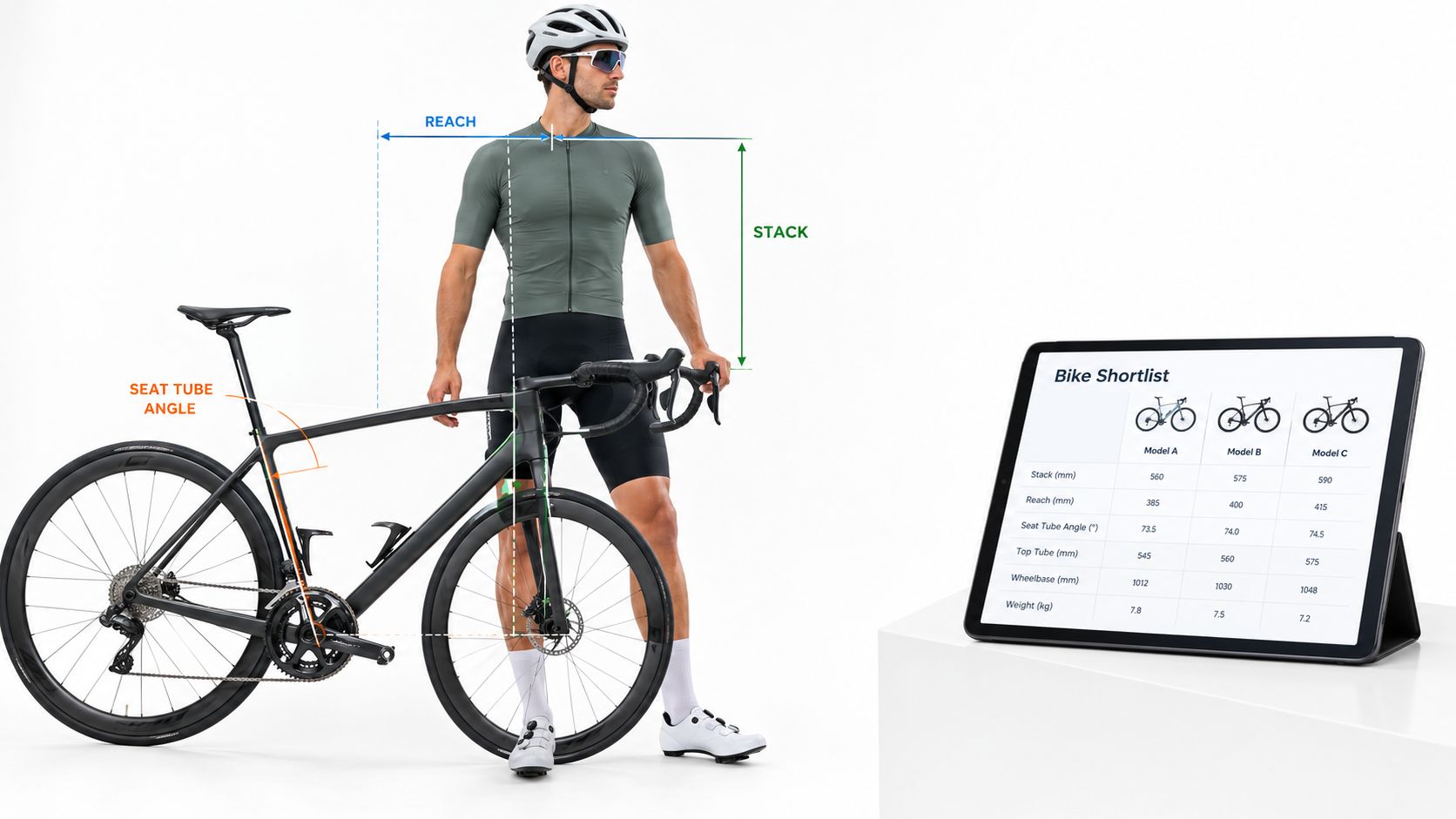
Use fit and geometry information alongside weight:
-
Exact model, year, and size: the starting point for any valid comparison.
-
Primary frame coordinates: stack and reach.
-
Supporting frame geometry: seat-tube angle, front-center, wheelbase, and other model-specific dimensions where relevant.
-
Cockpit/contact-point details: stem length, spacer stack, handlebar setup, saddle position, and related component information.
-
Known-good reference: your current bike or a fit report can anchor the shortlist.
-
Specification: fork, wheels, tires, gearing, cockpit, and component compatibility.
-
Condition and listing confidence: repairs, wear, service history, seller transparency, and documentation.
That approach avoids a common mistake: treating a lower published frame weight as more important than verified size, fit coordinates, and a well-documented specification.
SYCLR compares road and gravel listings using fit signals, geometry signals, model-year context, price context, listing quality, condition signals where available, and confidence signals.
SYCLR does not perform a professional bike fit, physically inspect bikes, authenticate listings, verify ownership or seller claims, or guarantee fit or condition.
Riders who already know stack, reach, current-bike geometry, or fit-report details can enter those through the advanced fit details view.
Use SYCLR to compare road and gravel listings using fit signals, geometry signals, model-year context, price context, listing quality, condition signals where available, and confidence signals. Start with height, bike type, and budget, then compare frame weight only after confirming the measurement basis.
Frequently asked questions
How do I compare road bike frame weights fairly?
Start with the exact model and year, then confirm size, frame-only versus frameset, whether the fork is included, paint and finish, hardware and axles, whether the number is claimed or measured, and the complete-bike specification. If those do not match, the comparison is weak.
Is frame weight or complete-bike weight more useful?
They answer different questions. Frame weight helps only when measurement conditions are clear. Complete-bike weight is often more useful for real purchase decisions because it reflects the bike you will actually ride.
Does material tell me which frame will be lightest?
No. Material alone does not determine finished frame weight or ride quality. Tube dimensions, layup or alloy, wall thickness, reinforcement, joints, geometry, hardware, and design targets all matter.
Why does frame size affect weight?
Different sizes use different tube lengths and may use different reinforcement or hardware choices. A claimed figure from one size should not be compared directly with a measured figure from another.
Does the fork count in road bike frame weight?
Sometimes yes, sometimes no. Some listings report the frame alone, while others report a frameset that includes the fork. That is why frame-only and frameset numbers should not be treated as interchangeable.
Is 6.8 kg a legal minimum for every road bike?
No. The 6.8 kg minimum in the UCI regulations is a competition equipment rule for bicycles used in UCI events, not a general consumer legality or safety threshold. The current UCI Equipment Regulations set a minimum weight of 6.800 kg for the bicycle as ridden in competition. See the UCI Regulations, Part 1 General Organisation of Cycling as a Sport, Equipment section.
What should I ask a seller about a claimed bike weight?
Ask for the exact model, year, and size, whether the figure is frame-only, frameset, or complete bike, whether the fork and hardware are included, whether the number was measured on that bike, and what complete specification is being sold.