
1x vs 2x Gravel Bike: Which Drivetrain Should You Choose?
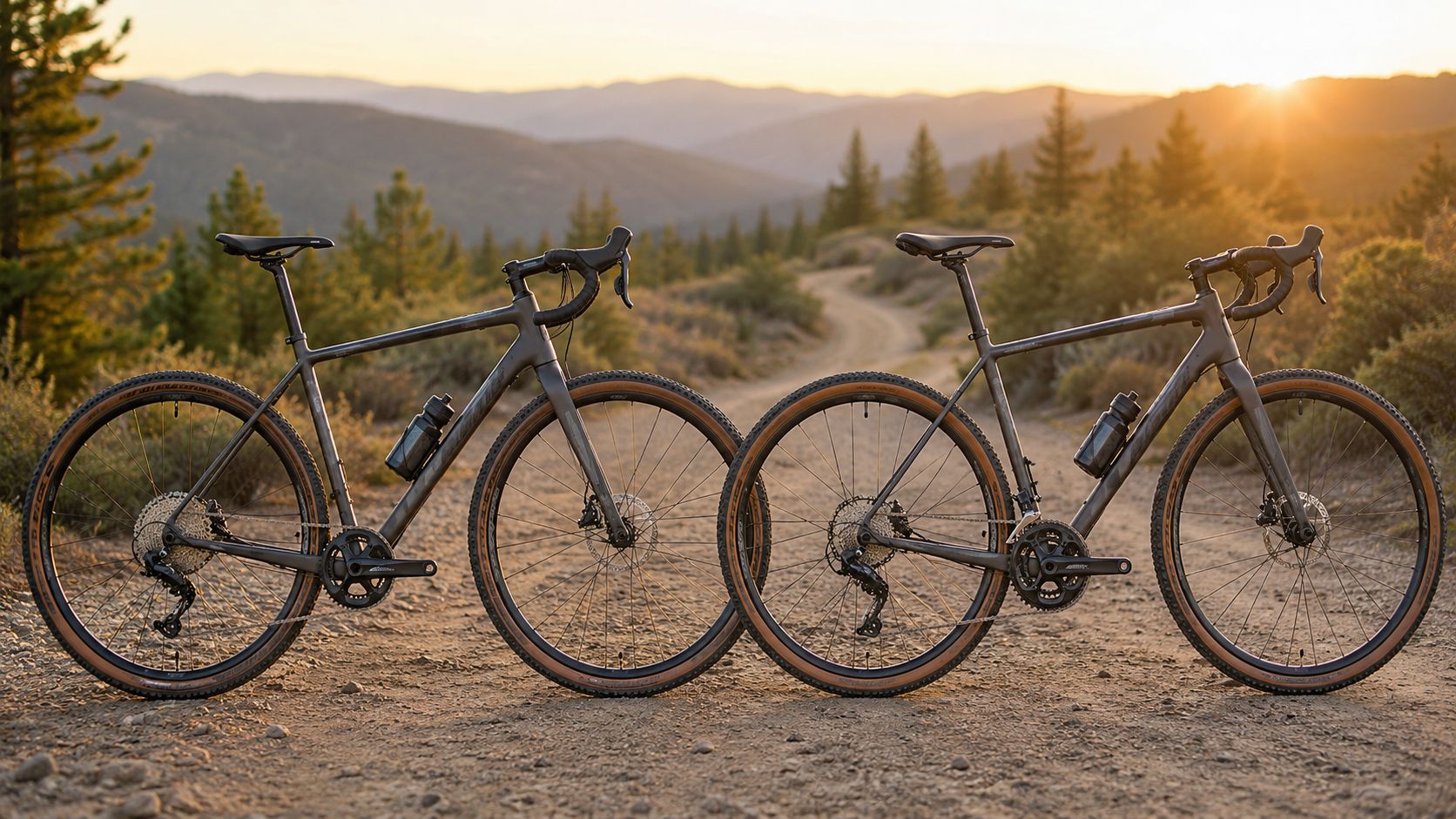
2x gravel bikes still deliver about 436% gear range, while typical 1x gravel setups deliver about 420%. That 16-percentage-point gap is real, but it's no longer large enough to make “2x means wider range” the whole story for most riders.
The bigger question now is how you ride, because cadence steps, surface mix, and efficiency often matter more than the headline range number.
Table of Contents
1x vs 2x Gravel Bike at a Glance
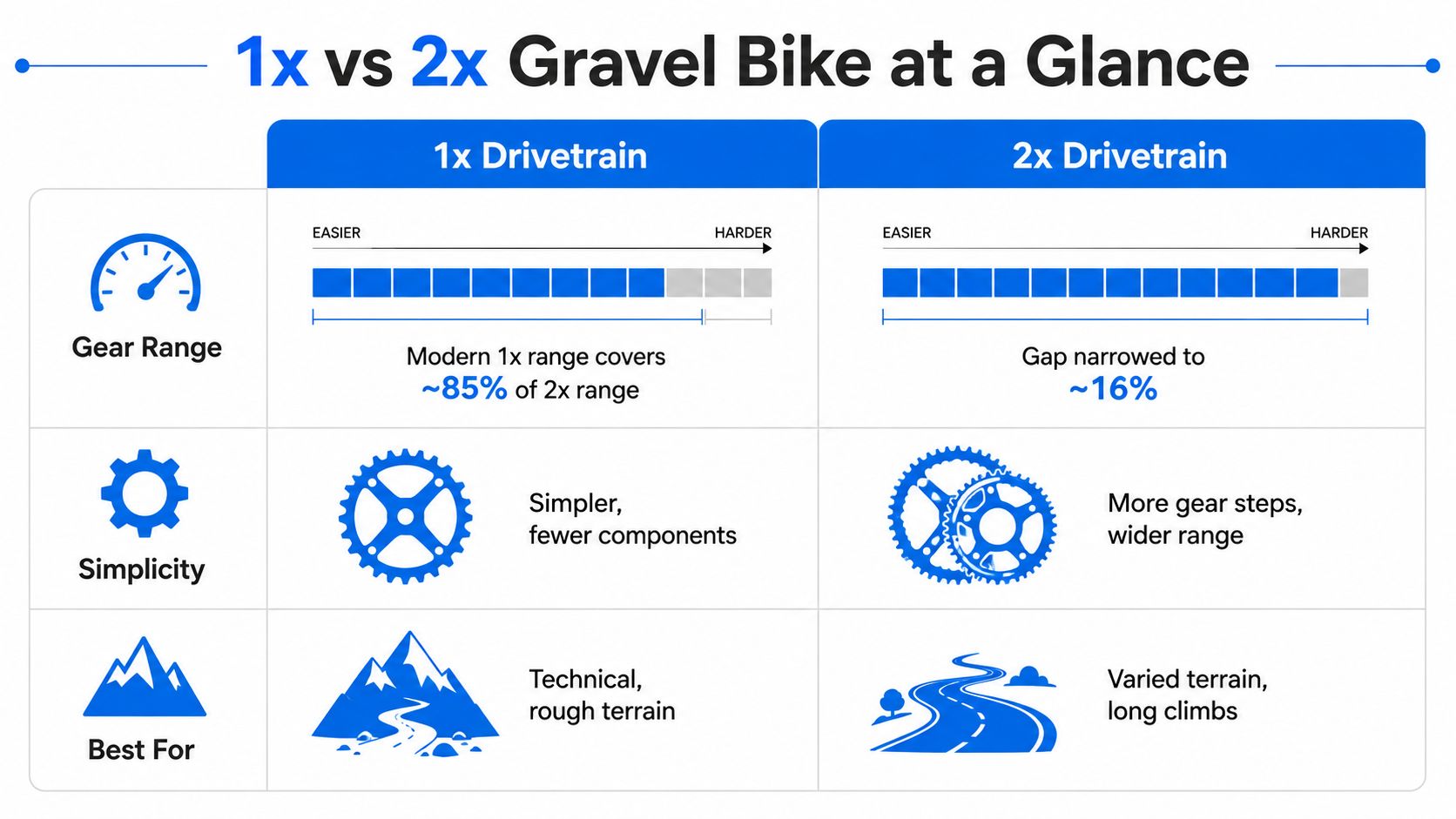
1x is not automatically the cleaner choice, and 2x is not automatically the wider one anymore. The gap has narrowed enough that the better setup usually comes down to where you ride and how steady you want your cadence to feel. A typical 2x gravel setup with 50/34T chainrings and an 11–34T cassette gives about 436% range, while a typical 1x setup with a 42T chainring and 10–42T cassette gives about 420% range. That is a 16-point difference, smaller than many riders expect.
| Decision factor | 1x gravel drivetrain | 2x gravel drivetrain | Better choice when |
|---|---|---|---|
| Front chainrings | One | Two | Simplicity or ratio flexibility matters more |
| Total gear range | Depends on chainring and cassette | Depends on chainrings and cassette | Compare the exact configuration |
| Gear spacing | Often wider between some ratios | Often closer across road-like speeds | Cadence precision matters |
| Lowest gear | Can be very low with a wide cassette | Can also be very low with suitable chainrings and cassette | Steep or loaded riding is common |
| Highest gear | Depends on chainring and smallest sprocket | Often offers more high-speed options | Fast road connectors or group riding matter |
| Shift controls | No front shift | Includes front and rear shifting | Simplicity or finer control is preferred |
| Chainline | Can become more angled at cassette extremes | Can provide straighter chainlines in more ratios | Efficiency and wear at the extremes matter |
| Maintenance | Fewer front-shift components | More parts and adjustment points | Simpler setup or broader ratio control matters |
| Tire clearance | Frame dependent | Frame dependent | Verify the exact frame and drivetrain design |
| Best use case | Rough terrain, simplicity, broad single-ring range | Mixed road and gravel, close spacing, broad ratio selection | Match the system to terrain and cadence preference |
Range figures and cadence-step ranges reflect the comparison examples shown by Yoeleo, Polygon Bikes, and Yoeleo.
Practical rule: if you spend real time on pavement between gravel sections, cadence spacing matters more than the range headline.
For a buyer, the decision starts with surface mix and cadence preference, not with a spec-sheet reflex. If your rides stay mostly on rough gravel, a clean 1x setup can make sense. If you ride long road connectors, fast group pacing, or rolling terrain where small cadence changes matter, 2x still has a clear feel advantage even when the overall range looks close on paper.
How 1x and 2x Gravel Drivetrains Work
A 1x drivetrain uses a single front chainring. That removes the front derailleur and the left-hand shifter, which simplifies the cockpit and eliminates one whole shift system from the bike (YouTube explanation). A 2x drivetrain uses two front chainrings, so the rider shifts between two front options and then fine-tunes with the rear cassette.
The mechanical difference that changes everything
That front chainring choice does more than change the number on the spec sheet. It changes how the bike creates its gear ratios, how often you shift, and how tightly the bike can hold cadence across changing terrain. With 1x, the rear cassette has to cover almost everything by itself. With 2x, the load is shared between two chainrings and the rear cassette, which is why the steps between gears can stay smaller.
For the rider, the result is simple. 1x feels cleaner and more direct, because there's less hardware to manage. 2x feels more precise, because the bike offers more closely spaced options when you want to hold a steady rhythm on rolling ground or pavement.
A front derailleur isn't just another part. It changes the way the whole drivetrain is organized.
Tire clearance and frame design can also come into play. Some frames leave more room for a single-ring setup because there's no front derailleur cage to contend with, while other frames are designed to support both styles. That doesn't mean every 1x bike has more clearance or every 2x bike is crowded, it means the frame's hardware layout matters as much as the drivetrain itself.
The practical takeaway is that 1x and 2x aren't just different amounts of gears. They're different ways of dividing the gear range, and that division affects how the bike feels every time the terrain changes. Once you understand that, the rest of the choice becomes about riding style, not marketing language.
Gear Range, Cadence Control, and Efficiency Trade-offs
The part people miss is that modern gravel gearing is no longer separated by a huge range gap. The divide now is how each setup handles cadence, especially when the surface keeps changing under you. Range still matters, but the feel between shifts matters more than spec-sheet bragging rights.
Gear steps matter more than total range
A 2x drivetrain gives you smaller jumps between gears, while 1x leaves larger gaps that you notice most on paved connectors, smooth gravel, and fast group rides. That is where cadence control starts to matter. On a mixed-surface ride, 2x lets you stay closer to your preferred rhythm with fewer awkward surges in effort.
That difference shows up on rolling ground. With 2x, a small shift often keeps pressure and spin feeling steady. With 1x, the next ratio can land a little too easy or a little too hard, especially when the grade changes just enough to matter but not enough to call for a dramatic shift.
Efficiency is a real trade-off at the extremes
Drivetrain efficiency varies with chainline, sprocket size, chain condition, lubrication, load, and the exact gear being used. A 1x drivetrain may use more extreme chain angles at the largest and smallest cassette sprockets, while a 2x system may allow the rider to select a chainring that keeps the chainline straighter.
The practical effect should not be reduced to one universal watt figure. Riders should focus on whether the available ratios match their terrain and whether the drivetrain can avoid spending excessive time at inefficient or noisy cassette extremes.
| Metric | 1x | 2x |
|---|---|---|
| Typical gear steps | 15–20% (Polygon Bikes) | 10–13% (Polygon Bikes) |
| Efficiency at extremes | Can be 1 to 6 watts less efficient (The Pro's Closet summary of testing) | Better at extreme chain angles |
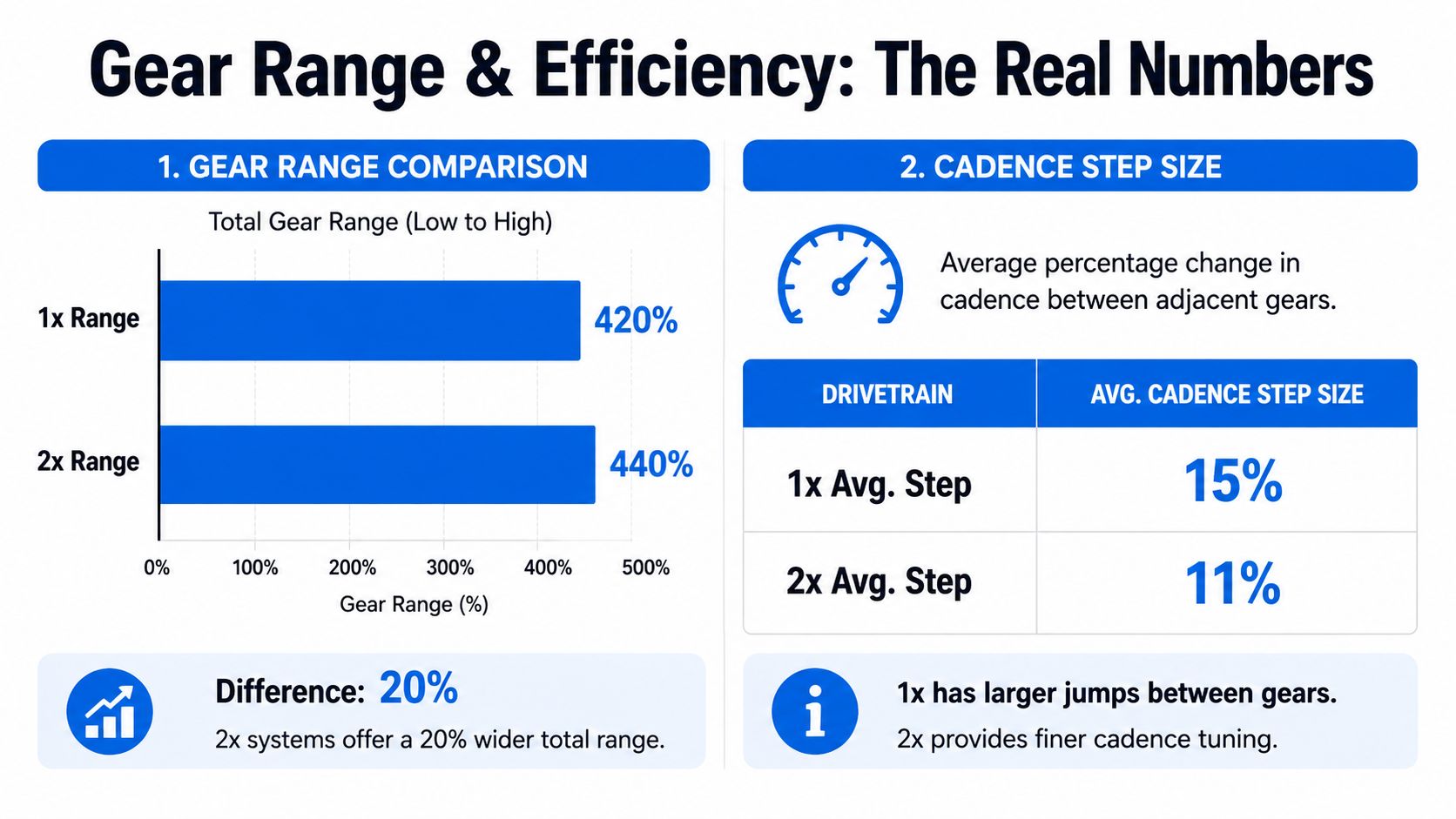
The range gap got small. The cadence gap did not.
That is the decision point now. If you are fine with wider jumps and want a drivetrain that feels simple under rougher riding, 1x still makes sense. If you are sensitive to cadence drift, or your gravel rides include a lot of smooth surface, 2x still feels more controlled. For a broader terrain-by-terrain breakdown, the comparison at best gravel bike type for your terrain helps frame the choice around where you ride.
Which Setup Matches Your Riding and Terrain
The cleanest way to choose is to look at the surface mix, not the label on the groupset. A rider who spends half the ride on pavement and the other half on smooth gravel has different needs than someone pointing the bike at rough, loose routes with short steep pitches. That's why the same drivetrain can feel perfect in one use case and clumsy in another.
Representative rider profiles
A 2x drivetrain may suit riders who spend substantial time on pavement, smooth gravel, rolling terrain, or group rides where closely spaced ratios help maintain cadence.
A 1x drivetrain may suit riders who prioritize simple controls, fewer front-shift components, and a wide cassette for variable or rough terrain.
Neither terrain type automatically determines the drivetrain. Compare the lowest gear, highest gear, spacing between commonly used ratios, shifting preferences, and the exact route profile.
The simpler controls are easier to manage when the surface is broken up, and the bike setup usually feels less fussy when you're seated, standing, and reacting to short grade changes.
If you do fast unsupported rides, the choice gets more personal. 2x offers tighter control when the route includes long stretches of pavement or steady headwinds. 1x removes some cockpit complexity and can be easier to live with if you value simplicity over perfect cadence matching.
For a broader terrain-by-terrain breakdown, the comparison at best gravel bike type for your terrain is a useful companion page.
Tire choice and frame design still matter
Drivetrain choice doesn't happen in a vacuum. Tire width, wheel size, chainstay space, and frame design all influence what the bike can practically do. A rider who wants more comfort and grip from wider tires may lean toward frames and builds that leave more room around the drivetrain. A rider building for speed on smoother terrain may care more about compact gearing and a tighter cockpit.
The best drivetrain on the wrong frame still makes a bad buy.
That's the buyer consequence people miss. A bike can have the “right” drivetrain and still be the wrong purchase if the geometry doesn't match the rider's body or the frame doesn't suit the intended terrain. Fit-aware comparison is what keeps the drivetrain choice from swallowing the bigger decision.
Maintenance, Compatibility, and Hidden Costs
A 1x drivetrain removes the front derailleur, front chainring shift, and related controls, which can reduce the number of components requiring adjustment. A 2x drivetrain adds front-shift hardware but may provide closer ratios and more chainline options.
Maintenance cost and wear depend on chain condition, cassette size, sprocket use, lubrication, riding conditions, component quality, and replacement-part pricing. Do not assume 1x is always cheaper or that 2x is always more difficult to maintain.
Fewer parts, different wear pattern
Maintenance cost and wear depend on chain condition, cassette size, sprocket use, lubrication, riding conditions, component quality, and replacement-part pricing. Do not assume 1x is always cheaper or that 2x is always more difficult to maintain.
The weight story is real, but it is still a small part of the decision. The more important point is that simpler hardware can mean fewer things to tune and fewer small issues to diagnose before a ride. On the other hand, if a rider values a front derailleur's tighter steps between gears, the extra hardware may be worth keeping in place.
Compatibility can limit swaps
Not every frame supports both setups equally well. Some bikes are built to take either configuration, while others are much happier in one form than the other. Changing between 1x and 2x may require a compatible frame, front-derailleur mount, cable or electronic routing, crankset, bottom bracket, shifters, rear derailleur, cassette, chain, freehub body, chainline, and adequate tire and chainring clearance.
Some conversions are straightforward, while others are expensive or impractical. Verify the complete drivetrain ecosystem before valuing a used bike around a planned conversion.
That matters when you are shopping used. A listing can look attractive on drivetrain alone, but if the frame was not designed for the setup you want, the hidden conversion cost can erase the savings. That is why a careful look at used gravel bikes deserves more scrutiny than a quick marketplace browse.
Do not assume a drivetrain swap is just a small parts change. On the wrong frame, it becomes a compatibility project.
The hidden cost is time as much as money. A rider who wants to move a bike from 1x to 2x later may need more parts and more setup work than expected. A rider who wants to simplify an existing 2x bike still has to check whether the frame and wheel setup accept the new parts cleanly. Local shop access matters here, because the best setup is the one you can keep running without drama.
How to Choose Your Drivetrain and Find a Better-Fit Bike
The drivetrain choice should sit underneath fit, not above it. A bike that doesn't match your body, riding position, and intended terrain is still the wrong bike, even if the spec sheet looks smart. That's why the right order is surface mix, cadence preference, geometry signals, then listing quality.
A practical decision order
Start with the riding you do. If most of your mileage is rough gravel or mixed off-road, 1x belongs near the top of the list. If your rides include smooth road sections, fast group pacing, or long climbs where cadence precision matters, 2x stays in play.
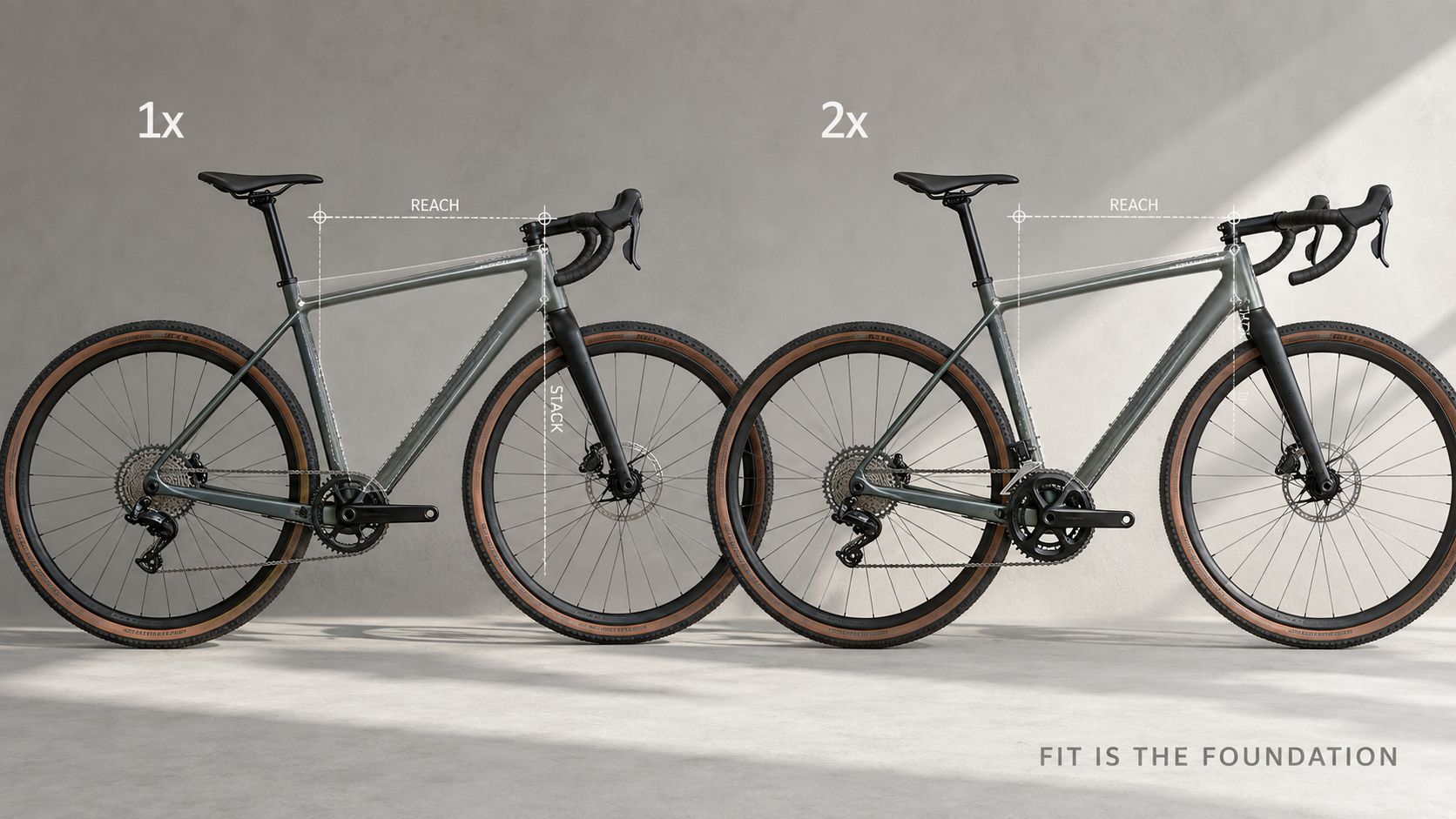
Then compare the bike's geometry against your body measurements. Stack, reach, and standover tell you more about how the bike will feel than drivetrain choice does. If you already know your fit numbers, use them. If you don't, start with height, bike type, and budget, then narrow from there.
A better buying sequence looks like this:
Surface mix first: Decide how much of your ride is road-like versus rough gravel.
Cadence second: Ask whether small gear steps matter to your legs.
Geometry third: Check stack, reach, and clearance against your position needs.
Listing quality last: Look at photos, component consistency, and condition signals.
For riders comparing road-plus and gravel use cases, one bike for road and gravel is the right adjacent topic to keep open in another tab.
How SYCLR fits into the decision
SYCLR helps riders compare road and gravel listings with fit signals, geometry signals, model-year context, price context, listing quality, condition signals, and confidence signals. It doesn't replace a professional fit or a mechanical inspection, but it does reduce guesswork when you're comparing bikes that look similar on paper and very different in practice. Use SYCLR as a comparison tool rather than a final verdict. Fit, drivetrain condition, compatibility, and mechanical inspection still need to be evaluated before purchase.
Frequently Asked Questions
Can you swap a bike from 1x to 2x or the other way around?
Sometimes you can, but only if the frame and parts were built with that kind of change in mind. A frame with the right mounts, routing, and clearance is a much better candidate than one that was designed around a single setup. On a used bike, include conversion parts and labor in the total purchase cost, because the frame alone does not tell you how easy the swap will be.
Is 1x fast enough for road-connected gravel rides?
Often, yes, if your paved miles are mixed into a larger gravel ride and you do not care much about tiny cadence changes. If you spend a lot of time on smooth roads and want to hold a very steady rhythm, 2x usually feels better because the gear steps are smaller. That difference may become more noticeable when a route repeatedly shifts between fast pavement and smoother dirt. If the ride is more variable and you value a simpler cockpit, 1x still handles it well.
Does tire width affect the drivetrain decision?
It can, but the bigger issue is frame clearance and how the bike was spec'd from the start. Wider tires, chainline, front derailleur space, and frame design all interact, so the drivetrain choice is never completely separate from the frame choice. Shop the bike as a complete build, not as a drivetrain first and a tire question later.
What should I check on a used gravel bike with 1x or 2x?
Confirm the chainring, cassette, rear derailleur, shifters, chain, freehub body, crankset, and brake controls are mutually compatible. Mixed-generation parts are not automatically problematic, but the combination should be documented and function correctly.
Also inspect chain wear, cassette wear, chainring teeth, derailleur alignment, shift quality, clutch function where applicable, cable condition, and any electronic battery or wiring components.
Does the choice change by model year?
Model year can affect cassette capacity, freehub standards, electronic versus mechanical shifting, derailleur compatibility, chainring limits, brake controls, frame routing, and replacement-part availability.
Newer does not automatically mean better. Compare the exact drivetrain generation and verify that replacement parts remain available.
Which setup is better for first-time gravel buyers?
Neither setup wins by default. Pick the one that fits your terrain mix and your tolerance for bigger gear jumps. If you are unsure, compare fit, geometry, and the routes you ride most often before you worry about the drivetrain label. A first gravel bike that fits your body and your roads will matter more than the badge on the drivetrain.
Can the frame's tire clearance decide the drivetrain choice for me?
It can influence the choice, but it does not decide it by itself. Some frames are designed only for 1x, some support both systems, and others have limits involving chainring size, front-derailleur clearance, chainstay shape, and tire space.
Check the manufacturer’s drivetrain compatibility, maximum chainring sizes, tire-clearance specification, routing, and exact model year before choosing or converting a setup.
What matters more, drivetrain choice or fit?
Fit matters more every time. A bike with the wrong reach, stack, or riding position will feel off no matter whether it is 1x or 2x. Once the fit is close, drivetrain choice becomes about how you ride, how steady your cadence needs to be, and how much surface variety sits on your normal route. That is where the difference between the two setups starts to matter in real use.
If you are comparing 1x and 2x gravel bikes, start with your height, bike type, terrain, cadence preferences, and budget in the SYCLR app. Compare available fit signals, geometry signals, drivetrain details, model-year context, price context, listing quality, condition signals, and confidence signals before building your shortlist.
Already know your stack, reach, current-bike geometry, or fit-report details? Use the advanced fit entry to improve your recommendations.