Best Gravel Bike Type for Your Terrain
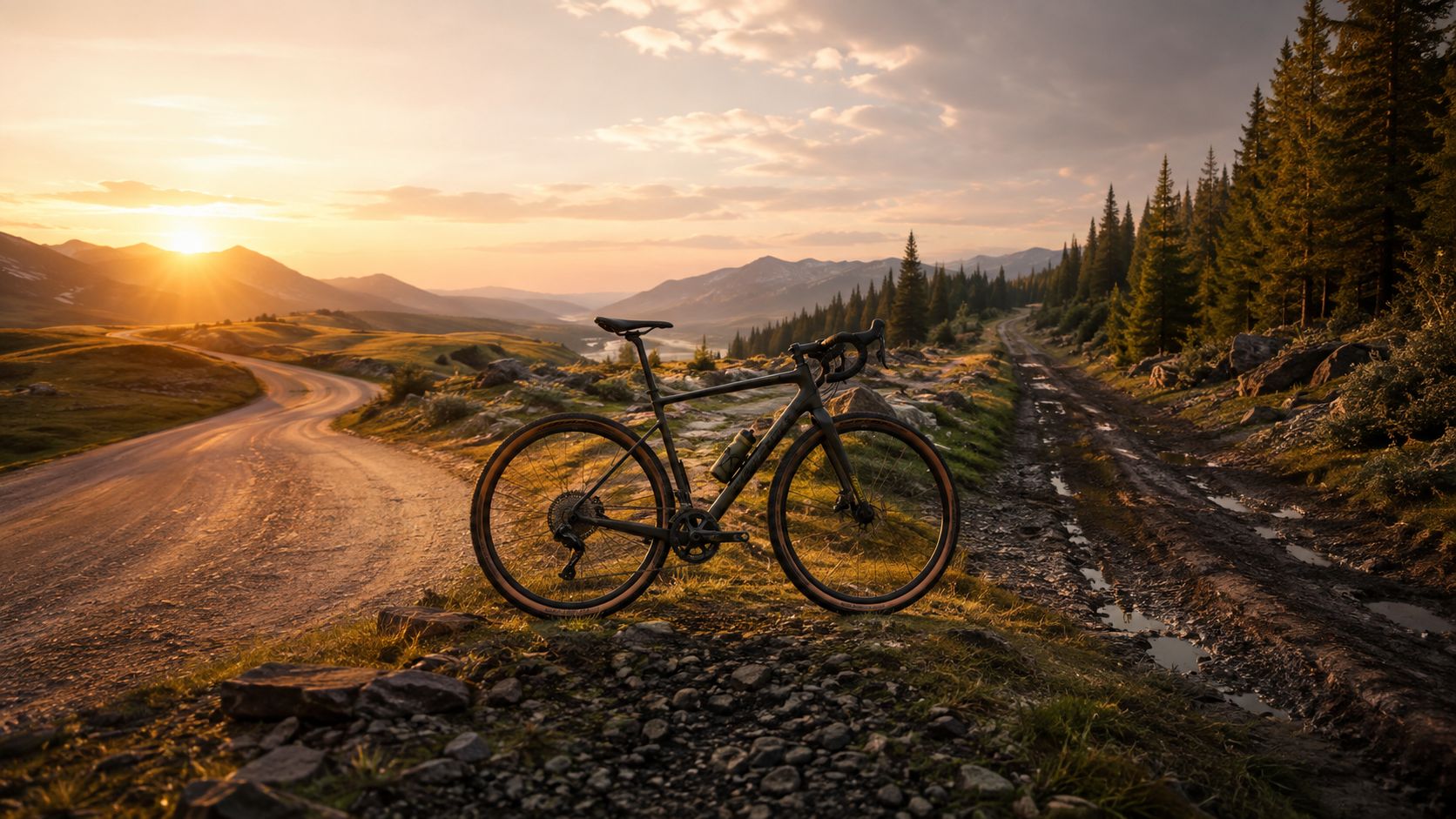
You're standing in a shop or scrolling listings, trying to decide whether you need a faster gravel bike, a more stable one, or just a frame that won't fight your body on long rides. The right answer starts with terrain, not hype. For smooth hardpack, mixed-surface routes, chunky gravel, rutted forest roads, singletrack, sand, mud, and steep climbs, the best gravel bike type for your terrain is the one whose clearance, gearing, and geometry match where you ride most.
Table of Contents
Which Gravel Bike Type Fits the Way You Actually Ride
If you're staring at two or three listings and one says race gravel, another says adventure, and a third looks like a fast all-road build, don't start with the paint or drivetrain. Start with the terrain you ride most, then match that to clearance, gearing, and fit. That's the only way to avoid buying a bike that feels quick in a parking lot and wrong on the first rough climb.
The direct answer: smooth hardpack points to a race-leaning or mixed-surface bike, chunky gravel and washboard point to endurance or adventure, rutted forest roads reward stability and low gearing, singletrack and rough trails call for the widest clearance and the calmest handling you can find, and sand or mud demand the most tire volume and the easiest gears. If your rides mix several surfaces, choose the bike that handles the largest share of your riding without making the second-largest share miserable.
Modern gravel categories overlap more than their labels suggest. Some race gravel bikes now offer generous clearance, while some adventure bikes retain quick handling and relatively light builds. That makes the exact model, size, year, geometry, gearing, and official tire clearance more useful than the category name alone.
Practical rule: the rougher and looser the surface, the less you should care about race-day looks and the more you should care about clearance and climbing-friendly gearing.
SYCLR is built around that logic. If you start with terrain instead of brand, you shortlist smarter and waste less time on bikes that can't support the tires or fit you need.
The Main Gravel Bike Types and What Each One Is Built For
Gravel bikes aren't one category in practice. They split into different jobs, and the job changes the frame shape, tire room, and gearing you should expect. Treating every drop-bar bike with knobby tires as interchangeable is how buyers end up on the wrong side of a compromise.
Race, endurance, adventure, bikepacking, and mixed-surface
Race gravel bikes emphasize competition, acceleration, efficient positioning, and speed on faster courses. Some use lower positions and responsive handling, but geometry and clearance vary substantially by model.
Endurance gravel bikes emphasize longer rides and broader mixed-surface use. They may provide a more adaptable position, greater tire capacity, or calmer handling, but “endurance” is not a standardized geometry formula.
Adventure gravel bikes emphasize rougher terrain, route flexibility, wider tires, lower gearing, and carrying options. Some include extensive mounts, while others remain relatively minimalist.
Bikepacking-oriented bikes are designed or configured for self-supported travel. They may prioritize cargo compatibility, lower gearing, durable wheels, wider tires, and predictable loaded handling. A bikepacking bike can also be a gravel, touring, or mountain bike.
All-road or mixed-surface bikes remain road oriented while adding capacity for rough pavement, hardpack, and light gravel. They often overlap with endurance road and road-oriented gravel bikes.
Use these categories as starting points only. Compare the exact fit, geometry, clearance, gearing, wheel compatibility, mounts, and model year before assigning a bike to a terrain.
| Gravel-bike type | Common design emphasis | Terrain it may suit | Verify before buying |
|---|---|---|---|
| Race gravel | Speed, acceleration, efficient positioning, competition | Smooth hardpack, fast gravel, maintained dirt roads, racing | Fit, official clearance, gearing, cockpit adjustment |
| Endurance gravel | Longer mixed-surface rides and adaptable handling | Washboard, chunky gravel, rough backroads, varied routes | Stack, reach, wheelbase, tires, gearing |
| Adventure gravel | Rough-terrain capability and route versatility | Forest roads, loose surfaces, long mixed routes | Clearance, wheel compatibility, mounts, low gearing |
| Bikepacking oriented | Cargo compatibility and loaded travel | Multi-day routes, remote roads, loaded rough terrain | System-weight limits, mounts, heel clearance, wheels, brakes |
| All-road or mixed surface | Road efficiency with light off-pavement ability | Pavement, chipseal, hardpack, light gravel | Tire clearance, road fit, gearing, surface limits |
If you want a sharper comparison between race and adventure builds, SYCLR's race gravel bike vs adventure gravel bike page is the right place to separate speed intent from rough-road intent.
Matching Each Terrain Profile to the Right Bike Setup
Smooth hardpack
Smooth hardpack often suits a race gravel, all-road, or mixed-surface bike when speed and road efficiency remain important. Tire construction, tread, pressure, rider position, and wheel choice may affect pavement performance more than unused frame clearance alone. If a cyclocross bike is also on your shortlist, compare cyclocross bike vs gravel bike to see where the categories overlap and where they diverge.
Shortlist: race gravel, all-road, or road-oriented gravel. Verify that the fit is sustainable and that the official clearance supports the tires needed for the roughest parts of the route.
Chunky gravel and washboard
Once the surface gets rough and repetitive, the bike should stop fighting the terrain. Endurance gravel and adventure frames make more sense here, especially when you want room for larger tires and enough comfort to stay loose over broken ground. The bigger the tires a gravel bike accepts, the more places you can easily go, as noted in Bicycling.
Washboard can expose limitations in tire volume, pressure, wheel setup, and handling. A race-oriented setup may still work, but endurance or adventure gravel bikes often provide more configuration options for repetitive rough surfaces.
Shortlist: endurance or adventure gravel. Compare official clearance, tires, pressure range, wheelbase, cockpit position, and handling rather than assuming the category guarantees comfort.
Rutted forest roads and rough backroads
Ruts and broken shoulders reward stability more than flickability. You want a bike that tracks straight, accepts enough tire volume to stay composed, and does not force you to muscle it through every loose turn. A slightly longer, steadier feel helps when the surface keeps changing under the tire.
Gearing starts mattering more than marketing copy on this kind of ground. Easier climbing ratios make real sense when the road turns broken, especially if you want to stay seated and keep traction instead of grinding in a hard gear. For a side-by-side look at how geometry affects handling, use this geometry comparison guide before you compare listings. Shortlist this type: endurance or adventure with stable handling and easy climbing gears.
Singletrack and rough trails
Singletrack pushes a gravel bike toward the edge of its intended use. Suitability depends on trail difficulty, tire volume, casing strength, wheel durability, gearing, braking, handling, rider skill, and the presence of drops or technical obstacles.
Adventure or bikepacking-oriented gravel bikes may offer useful clearance and calmer handling, but a gravel bike is not automatically the best tool for every trail. On highly technical terrain, a mountain bike may be the stronger category.
Shortlist: adventure gravel or a bikepacking-oriented platform for relatively smooth, nontechnical trails. Compare the exact route and bike rather than choosing solely by maximum tire clearance.
Sand, mud, and steep climbs
Sand, mud, and steep loose climbs can increase the value of greater tire volume, suitable tread, lower pressure, and easier gearing. The correct lowest gear depends on gradient, surface, rider strength, wheel size, tire size, cargo, and trip duration.
Do not use one universal gear-ratio threshold. Compare the chainring, cassette, derailleur capacity, and actual lowest gear on the exact bike.
Shortlist: adventure or bikepacking-oriented gravel when loose surfaces and steep climbs dominate. Verify tire clearance, tread options, gearing, and the route’s severity.
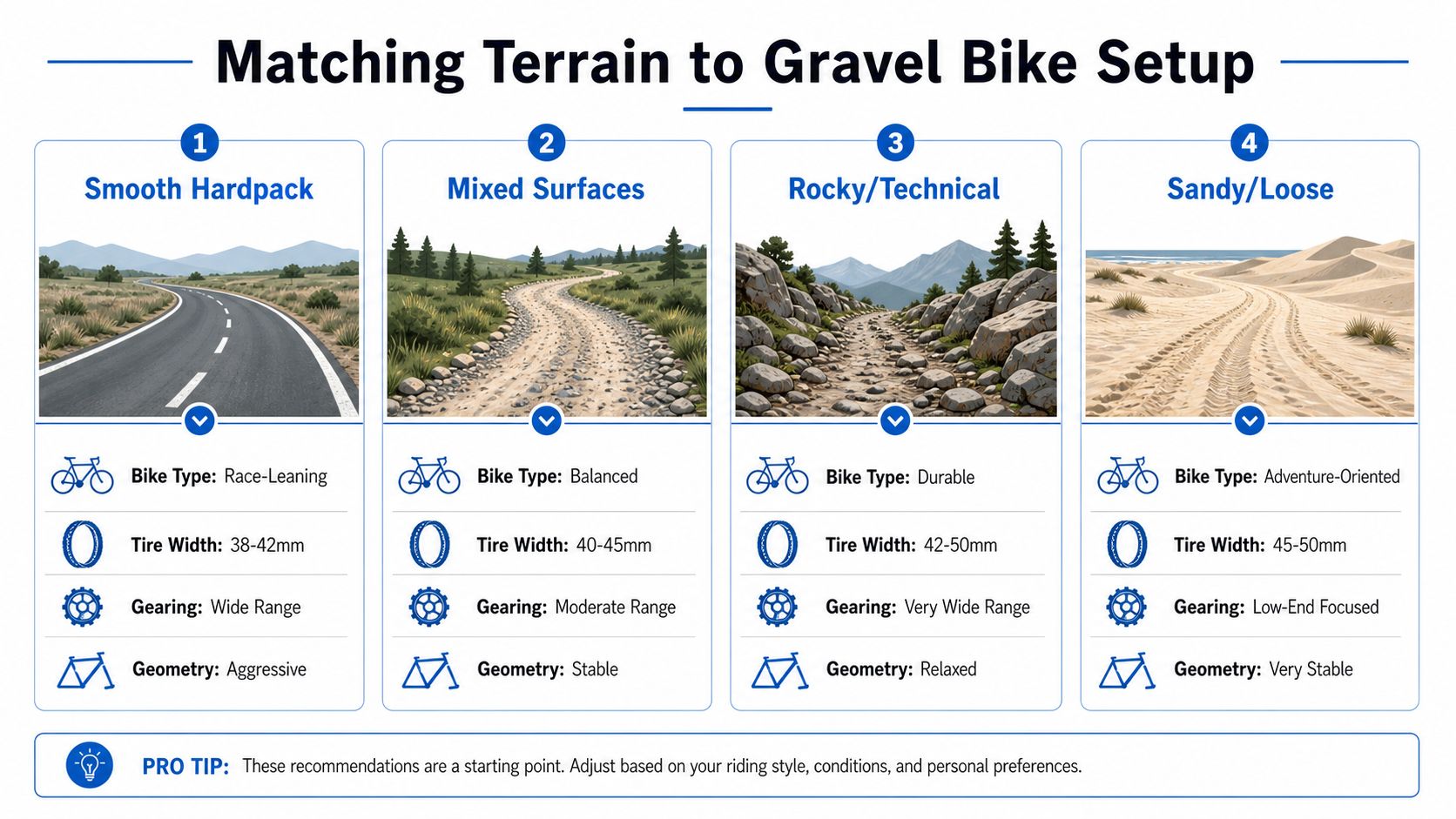
Loose surfaces punish optimistic setups. If your local routes include mud, sand, or steep broken climbs, buy the frame that gives you room to run bigger tires and easier gears.
Translating the Terrain Match into Real Bike Specs
What to check in listings
The category label creates a starting point. The listing and manufacturer specifications determine whether the bike can support the intended terrain.
Check:
-
exact brand, model, size, and model year
-
stack and reach
-
wheelbase, front-center, trail, and chainstay length
-
official front and rear tire clearance
-
wheel-size and rim compatibility
-
gearing
-
brake system
-
cockpit adjustment
-
mounts and published cargo limits
-
component changes
-
condition and listing completeness
Tire volume can influence traction and rough-surface capability, but wider is not automatically better. Fit and handling must also match the rider and route.
Geometry, brakes, and frame material
Handling depends on the complete geometry rather than one head-tube angle or chainstay measurement. Compare head-tube angle, fork offset, trail, wheelbase, front-center, tires, cockpit, and rider weight distribution together.
Disc brakes are common on modern gravel bikes because they support broad tire clearance and consistent braking across varied conditions. Brake suitability still depends on condition, rotor compatibility, maintenance, terrain, total system weight, and rider needs. An older rim-brake bike is not automatically a bad purchase, but its tire clearance, wheel compatibility, braking surfaces, and intended terrain require careful review.
Frame material does not determine terrain suitability by itself. Carbon, aluminum, steel, and titanium can all be used for capable gravel bikes. Compare fit, construction, complete-bike weight, condition, component specification, repair considerations, price, and intended use instead of treating one material as universally smoother, lighter, tougher, or better for beginners.
For a side-by-side look at geometry fields, SYCLR's bike geometry comparison page is useful when two listings look similar but feel very different on paper.
Buyer consequence: a bike can be “a gravel bike” and still be wrong for your routes if the clearance is too tight, the gearing is too hard, or the fit keeps you too stretched out to stay comfortable.
Height alone doesn't solve that. Stack, reach, and standover tell you whether the frame matches your body and your position, and those fit signals matter as much as the terrain signal.
Choosing One Bike Type When Your Terrain Mixes
Most riders don't live in one terrain bucket. They commute on pavement, sneak onto hardpack, and then spend weekends on rougher routes. In that case, the best choice is the bike that handles the biggest share of your riding without making the rest feel awful.
Best single-bike rule: choose for the surface you ride most often, then make sure the next-most-common surface is still comfortable enough that you won't avoid it.
A rider who combines commuting with occasional weekend gravel may start with an all-road, mixed-surface, or endurance-oriented gravel bike. The correct choice depends on the pavement-to-gravel ratio, official tire clearance, gearing, fit, and carrying needs. A gravel racer who occasionally hits forest roads can stay on a race gravel bike, as long as there's a small clearance reserve for dirt that isn't perfectly smooth.
A rider planning rough backroads, longer travel, or loaded routes may benefit from an adventure or bikepacking-oriented platform. Verify fit, cargo limits, mounts, wheels, gearing, tires, and loaded handling instead of treating the category as a guarantee. If carrying gear is becoming a primary requirement, compare a gravel bike vs bikepacking bike before deciding how far toward a bikepacking-focused setup you really need to go.
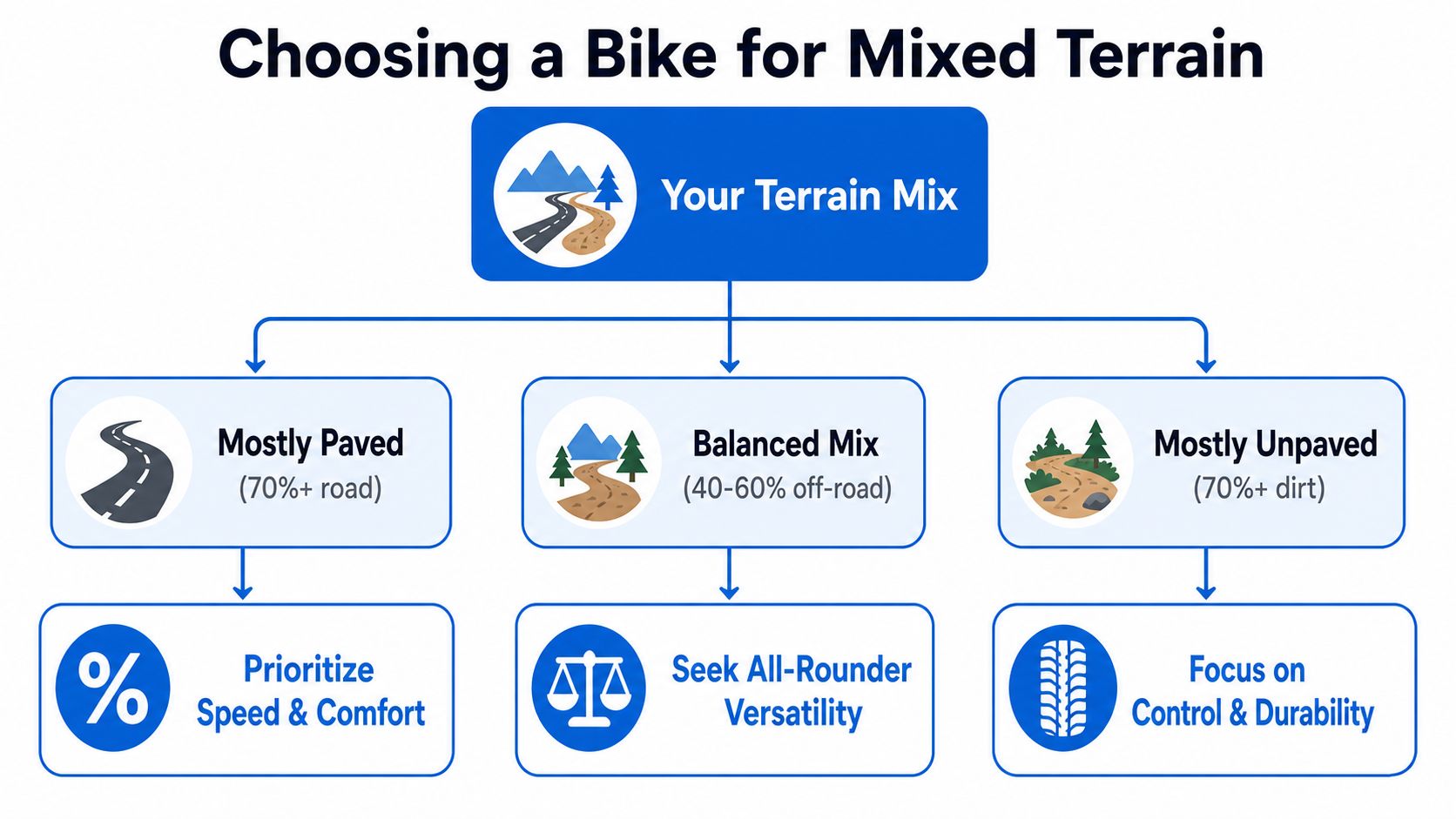
Here's the hard truth. No gravel bike type handles every surface well. A bike that feels fast on paved connectors can feel skittish in mud, and a bike that feels planted on rough backroads can feel slow on smooth miles. If your surface mix is unclear, start with the dominant terrain and keep one backup option in mind. SYCLR's one bike for road and gravel guide is a useful next step when your rides straddle both worlds.
How SYCLR Helps You Shortlist the Right Gravel Bike
The fastest way to use SYCLR is to start with height, bike type, and budget, then sort for listings that already fit the terrain you ride most. That first pass removes bikes that are clearly wrong for the job, especially frames that will not give you the tire room or riding position your terrain demands.
Give SYCLR more fit detail if you have it. Stack, reach, current-bike geometry, or a fit-report entry sharpens the shortlist and cuts guesswork fast. Two bikes can carry the same label and still fit very differently, and the fit signals often tell you more than a polished listing photo ever will.
SYCLR also lets you compare model-year context, price context, listing quality, and confidence signals across road and gravel listings. It does not replace a proper fit check or an inspection, and it does not promise condition or value. It does give you a clearer read on whether a listing matches the rider, the terrain, and the asking price.
Start with your height, bike type, terrain priorities, and budget in the SYCLR app. Compare available fit signals, geometry signals, model-year context, price context, listing quality, and confidence signals before building your shortlist.
Already know your stack, reach, current-bike geometry, or fit-report details? Use the advanced fit entry to improve your recommendations.
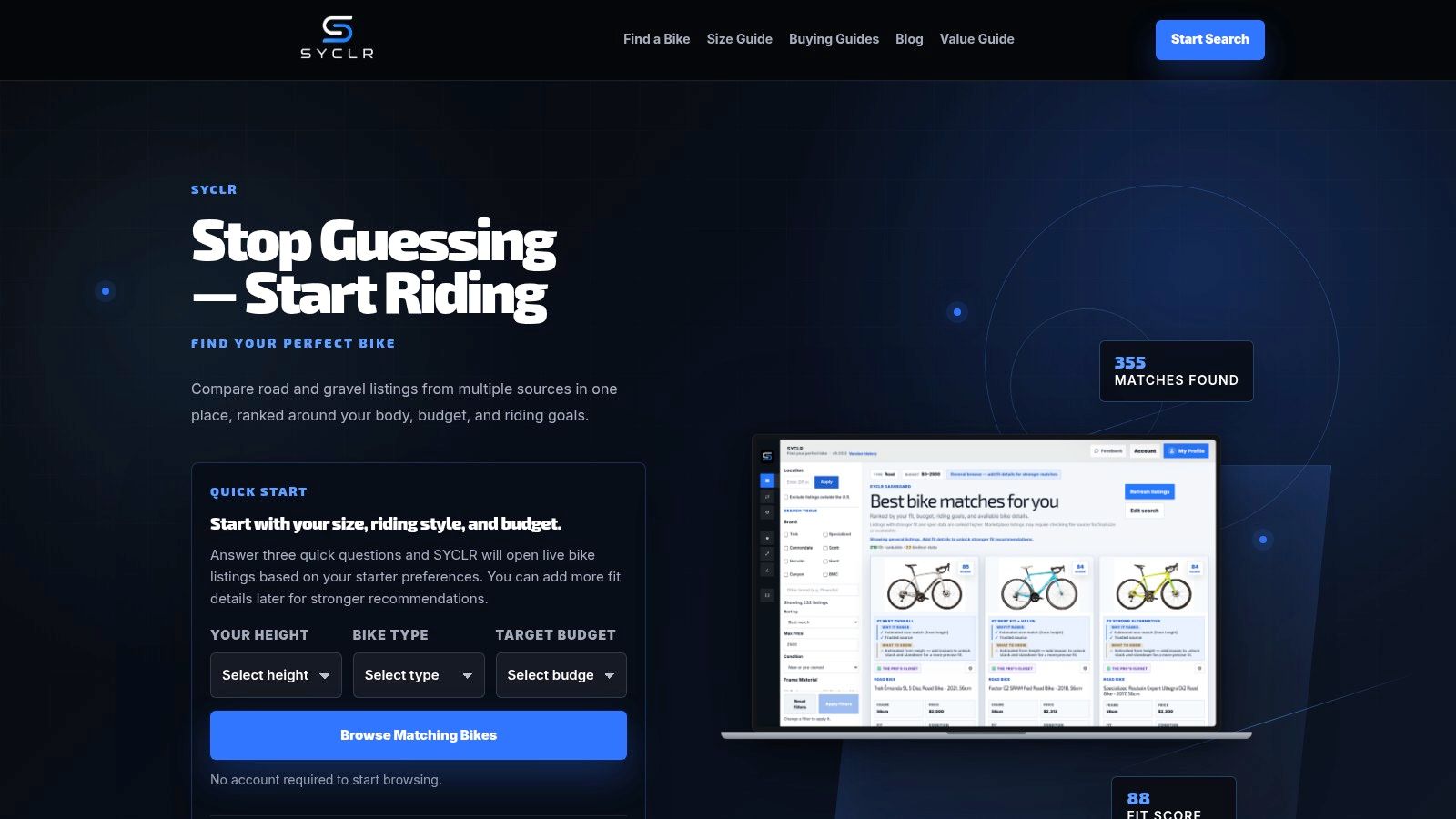
If you already know your stack, reach, or current-bike geometry, the advanced fit entry point at SYCLR's fit details is the quicker route. It is built for riders who want to compare better-fit options instead of sorting listings by brand name alone.
Gravel Bike Type and Terrain FAQs
Can a gravel bike handle singletrack?
A gravel bike can handle some relatively smooth singletrack, but suitability depends on trail difficulty, tires, wheels, gearing, brakes, geometry, and rider skill. Technical trails with large rocks, drops, or demanding features may be better suited to a mountain bike.
Is an all-road bike better than a true gravel bike?
An all-road bike may be the stronger match when pavement dominates and unpaved sections remain smooth. A gravel bike may offer more useful clearance, gearing, and rough-surface capability when loose or broken terrain appears regularly. Compare the exact models rather than treating either category as universally better.
Should I choose 1x or 2x gearing?
Choose based on the required lowest gear, preferred spacing between gears, terrain, maintenance priorities, and riding speed. Neither 1x nor 2x is universally better for a terrain category.
Are 650b wheels better than 700c for rougher surfaces?
Not automatically. A 650b setup may allow greater tire volume on some compatible frames, while 700c may offer different rollover and wheel-choice advantages. Verify frame compatibility, measured tire size, gearing effects, pedal clearance, and the intended terrain.
Is a used gravel bike a good first gravel bike?
It can be, if the fit, model year, condition, and listing confidence make sense. Check the geometry and the clearance first.
What model-year signals should I watch?
Check changes in frame generation, geometry, tire clearance, axle standards, brakes, wheel compatibility, drivetrain routing, mounts, and proprietary components. Confirm the exact model year rather than relying on the seller’s category description.
Where should I go if I still don't know my size?
Start with SYCLR's gravel frame size chart and bike stack and reach pages, then compare the numbers against a real listing.
If you are choosing a gravel bike for your terrain, start with your height, bike type, dominant surfaces, and budget in the SYCLR app. Compare available fit signals, geometry signals, model-year context, price context, listing quality, and confidence signals before building your shortlist.
Already know your stack, reach, current-bike geometry, or fit-report details? Use the advanced fit entry to improve your recommendations.