Best Road Bikes Under $2000: Fit-First Buyer Guide
The worst advice about best road bikes under $2000 is still one of the most common: buy the nicest groupset you can afford. At this budget, that logic often leads buyers in the wrong direction. A road bike that misses your fit needs by frame size, front-end height, reach, or cockpit starting point can feel expensive for all the wrong reasons. A less flashy build that matches your body, riding posture, and roads usually makes more sense.
Buy the bike that suits your fit and use case first. Then judge the spec.
Table of Contents
- Why the Best Road Bike Under $2000 Is Not Always the Highest Spec
- What $2000 Realistically Buys in the Current Road Bike Market
- Six Current Road Bikes Worth Comparing Under $2000
- How to Use Stack, Reach, and Geometry to Narrow Your Frame Range
- New vs Used Road Bikes at the $2000 Budget
- How SYCLR Helps You Shortlist Better-Fit Road Bikes
- Common Questions About Road Bikes Under $2000
Why the Best Road Bike Under $2000 Is Not Always the Highest Spec
A flashy parts list does not solve a bad size choice or a poor geometry match. The biggest mistake in this category is treating drivetrain tier as the main decision while giving too little attention to frame fit, rider position, handling goals, and tire clearance. A bike with numbers that work for your body and roads is usually easier to live with than a higher-spec bike that starts from the wrong place.
That matters even more near the $2,000 ceiling. Tires, contact points, and some cockpit parts can be changed later. The frame's basic fit range cannot. If the bike's geometry asks too much compromise from the start, better components do not fix the underlying mismatch.
Fit matters more when the frame is wrong for you
A good buyer starts with the complete bike, not a drivetrain badge. Complete-bike suitability means the bike lines up with your proportions, flexibility, preferred posture, and riding surfaces. Fit is not one number, and it is not solved by brand size labels alone.
That is also why used-bike shoppers need discipline. At this budget, there is not much room to buy a questionable fit and then spend more trying to tune around it. It is usually cheaper to start with a better frame match than to correct a poor one later.
Real value depends on the complete bike
A road bike under $2,000 becomes a better purchase when the frame range, fit potential, and component package line up cleanly with your actual use. The best road bike under $2000 is not the one with the most attention-grabbing parts list. It is the one that makes sense for your body, your roads, and your budget.
What $2000 Realistically Buys in the Current Road Bike Market
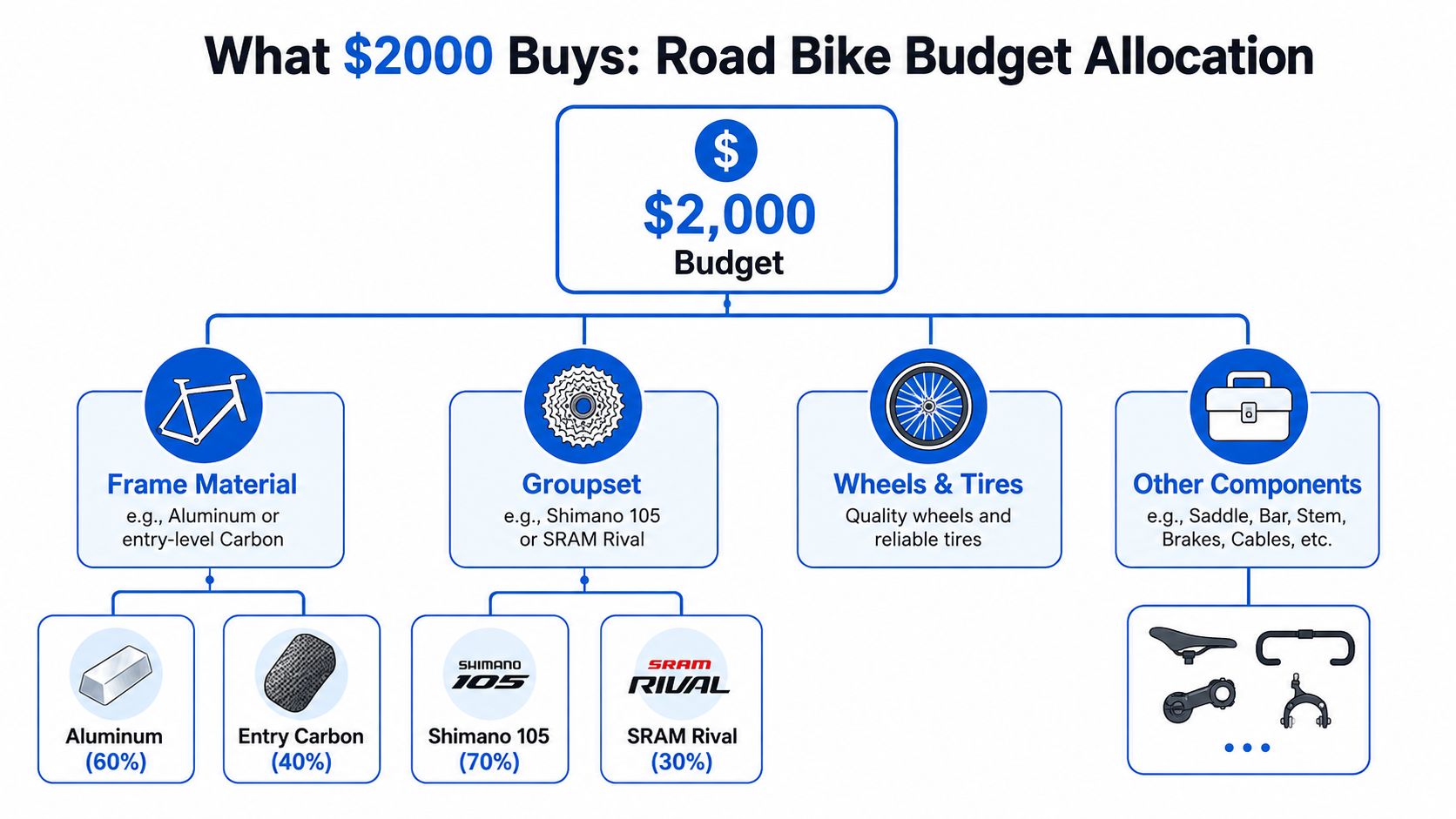
At $2,000, the market is less about chasing a single perfect spec line and more about understanding tradeoffs. Brands allocate this budget across the frame, fork, drivetrain, brakes, wheels, tires, and finishing kit, and they do not all prioritize the same things. Two bikes can sit a few hundred dollars apart and still feel very different in purpose.
Where manufacturers tend to spend the budget
In this price range, one brand may put more value into a stronger drivetrain while another emphasizes tire clearance, hydraulic braking, frame mounts, or the fork and wheel package. Some use the same frame across multiple builds and vary the drivetrain and finishing kit. Others preserve the drivetrain headline while trimming wheels, tires, or cockpit components.
That matters because buyers do not ride a spreadsheet. They ride the complete package. A lower-tier drivetrain on a bike whose geometry and clearance suit your needs may still be the stronger buy than a higher-tier build that starts from the wrong fit assumptions.
The practical move is simple: find the frame and geometry range that suit you, then compare how each brand spends the rest of the budget inside that range.
Why similar prices can hide very different priorities
The current shortlist under $2,000 shows this clearly. Some models put more budget into a 12-speed drivetrain. Others direct value toward broader tire clearance, all-road versatility, or hydraulic discs paired with simpler gearing. None of those priorities is automatically right for every rider.
What matters is whether the total package fits your intended use. If your roads are rough, tire room may matter more than drivetrain tier. If your local terrain demands tighter cadence steps, gearing may matter more. If your target is a stable all-round road setup with predictable fit options, geometry may outrank both.
Six Current Road Bikes Worth Comparing Under $2000
These six bikes are all current, U.S.-market examples with pricing and specs verified from manufacturer sources.
Quick comparison table
| Model | U.S. Price | Frame/Fork | Drivetrain | Brakes | Max Tire Clearance | Notes |
|---|---|---|---|---|---|---|
| Trek Domane AL 5 Gen 4 | $1,999.99 | Aluminum frame, carbon fork | Shimano 105 2×12 mechanical | Hydraulic disc | 38 mm | Current U.S. Trek listing (Trek) |
| Trek Domane AL 4 Gen 4 | $1,599.99 | Aluminum frame, carbon fork | Shimano Tiagra 2×10 mechanical | Hydraulic disc | 38 mm | Current U.S. Trek listing (Trek) |
| Specialized Allez Shimano CUES | $1,599.99 | E5 aluminum frame, carbon fork | Shimano CUES mechanical | Hydraulic disc | 35 mm | Current U.S. Specialized listing (Specialized) |
| Specialized Allez Sport Shimano Tiagra | $1,599.99 sale / $1,799.99 regular | E5 aluminum frame, carbon fork | Shimano Tiagra 2×10 mechanical | Hydraulic disc | 35 mm | Current U.S. Specialized listing (Specialized) |
| Giant Contend AR 3 | $1,450 | Aluminum frame, carbon fork | Shimano CUES mechanical | Tektro mechanical disc | 38 mm | Current U.S. Giant listing (Giant) |
| Canyon Endurace AllRoad | $1,499 — coming soon | Aluminum frame, carbon fork | Shimano CUES U6020-10 | Hydraulic disc | 40 mm | Current U.S. Canyon listing (Canyon) |
Trek Domane AL 5 Gen 4 and AL 4 Gen 4
The Trek Domane AL 5 Gen 4 sits at $1,999.99 in Trek's current U.S. range with a 100 Series Alpha Aluminum frame, carbon fork, Shimano 105 2×12 mechanical drivetrain, Shimano 105 hydraulic disc brakes, and 38 mm max tire clearance (Trek).
The Trek Domane AL 4 Gen 4 comes in at $1,599.99 with the same model family, an aluminum frame, carbon fork, Shimano Tiagra 2×10 mechanical drivetrain, hydraulic disc brakes, and the same 38 mm max tire clearance (Trek).
For buyers comparing the two, the key question is not which one wins in the abstract. It is whether the AL 5's higher drivetrain spend is worth the jump for your priorities, or whether the AL 4 leaves more room in budget for pedals, tires, shoes, or a fit session while keeping the same general frame platform and tire room.
Specialized Allez Shimano CUES and Allez Sport Shimano Tiagra
The Specialized Allez Shimano CUES is listed at $1,599.99 in the U.S. with an E5 aluminum frame, carbon fork, Shimano CUES drivetrain, hydraulic disc brakes, and 35 mm max tire clearance (Specialized).
The Specialized Allez Sport Shimano Tiagra is currently listed at $1,599.99 sale with a $1,799.99 regular price. The current U.S. Specialized page shows an E5 aluminum frame, carbon fork, Shimano Tiagra 2×10 drivetrain, hydraulic disc brakes, and the same 35 mm max tire clearance within the current Allez platform (Specialized, Specialized Allez category page).
This pair is useful because it shows how brands can create different value cases at similar price points. If the Tiagra Sport remains on sale, it changes the comparison. If it returns to regular pricing, the tradeoff changes again. Buyers should compare the live listing, the exact drivetrain and brake spec, and the geometry they are actually considering in their size.
Giant Contend AR 3 and Canyon Endurace AllRoad
The Giant Contend AR 3 is listed at $1,450 in Giant's current U.S. range with an aluminum frame, carbon fork, Shimano CUES drivetrain, Tektro mechanical disc brakes, and 38 mm maximum tire clearance. (Giant).
The Canyon Endurace AllRoad is currently listed at $1,499 in the U.S., although Canyon presently marks this configuration as coming soon. Its current specification includes an aluminum frame, carbon fork, Shimano CUES U6020-10 drivetrain, hydraulic disc brakes, and 40 mm max tire clearance (Canyon, Canyon Endurace range).
Together, these bikes show why equal-looking budgets require a component-level comparison. The Giant currently costs slightly less and uses mechanical disc brakes, while the Canyon pairs CUES with hydraulic discs and 40 mm tire clearance. Compare those differences alongside geometry, fit, availability, and your intended surfaces rather than treating either specification as universally better.
Already know the type of road bike and fit range you're shopping for? You can also browse current retailer sale inventory as a secondary shopping path.
SYCLR may earn a commission from qualifying purchases made through some retailer links, at no additional cost to you.
See Current Competitive Cyclist SalesBuyer's takeaway: this six-bike group gives you multiple ways to spend a sub-$2,000 road budget. Compare the exact frame range, stack and reach, tire clearance, braking, drivetrain, and total cost to finish the bike for your needs.
How to Use Stack, Reach, and Geometry to Narrow Your Frame Range
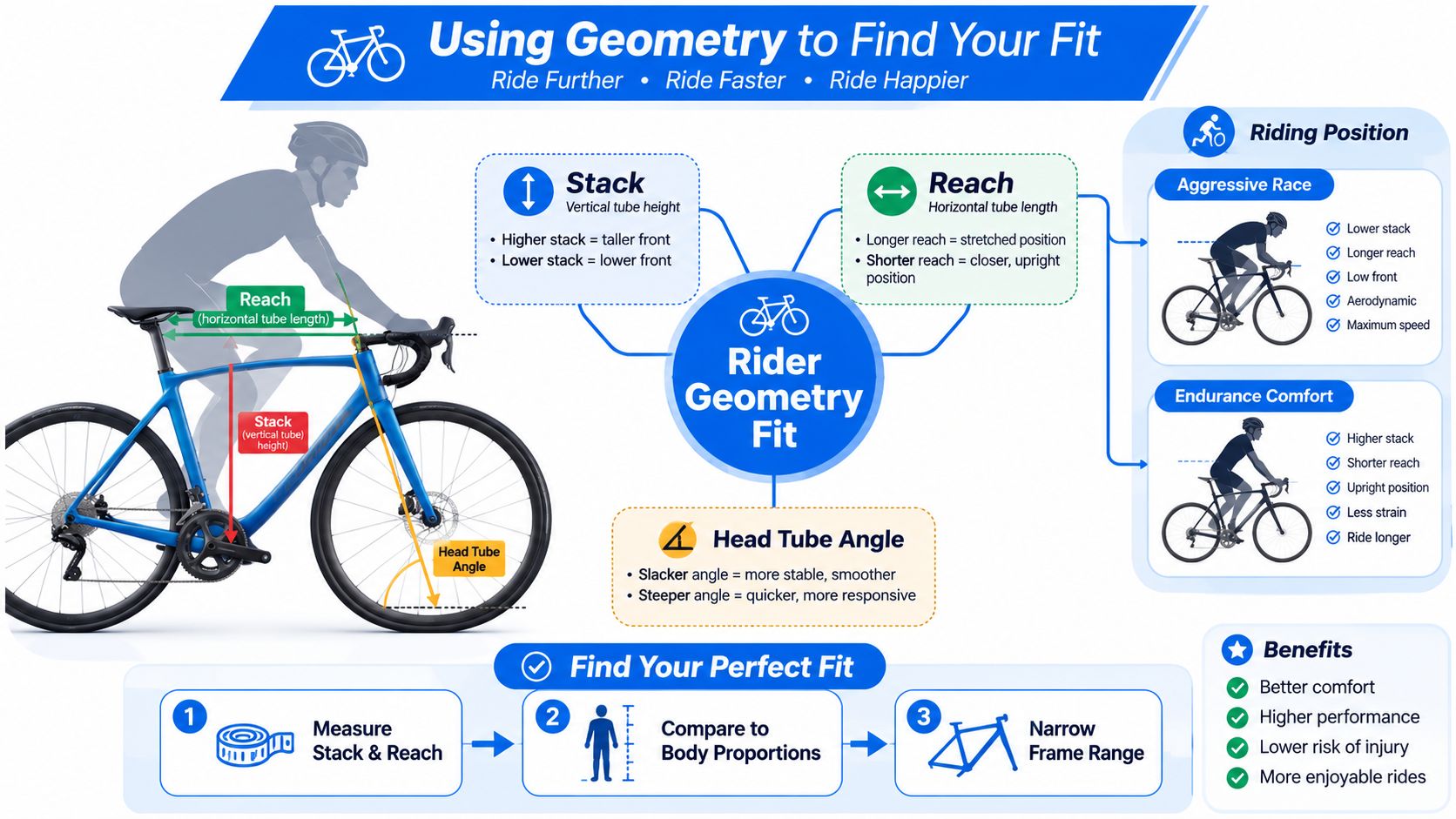
Stack and reach are useful starting signals because they help describe how a frame places the front end relative to the bottom bracket. Stack is the vertical distance from the bottom bracket to the top of the head tube. Reach is the horizontal distance between those same points, as explained in our stack and reach guide.
They matter, but they are not complete fit on their own. Saddle height, saddle setback, crank length, bar shape, hood setup, spacer stack, stem choice, rider mobility, and intended posture all influence the final position.
What to compare before you fixate on parts
Start with a bike that already works reasonably well for you, if you have one, and use it as a reference point. If you do not, use stack, reach, effective top tube, head tube length, wheelbase, and stated tire clearance to narrow the field before getting distracted by drivetrain tier.
A frame label is only a label. One brand's medium can place a rider very differently from another brand's medium. The goal is not to find one magic number. It is to identify a manageable frame range where the bike is at least plausible for your body and intended position.
Simple filter: if a bike's geometry sits well outside the range you know tends to work for you, it deserves extra scrutiny before it deserves your money.
Use standover and cockpit as context checks
Standover and cockpit details still matter, but they work best as context checks rather than universal pass-fail rules. A seller's claimed size should line up with the published geometry, your inseam reality, and the way the bike is actually configured.
The cockpit matters too. Bar width, bar reach, hood position, stem length, and spacer setup all change how a bike feels. Those details can refine a workable frame choice, but they should be considered alongside the underlying geometry rather than as proof that any frame can be made to fit anyone.
New vs Used Road Bikes at the $2000 Budget
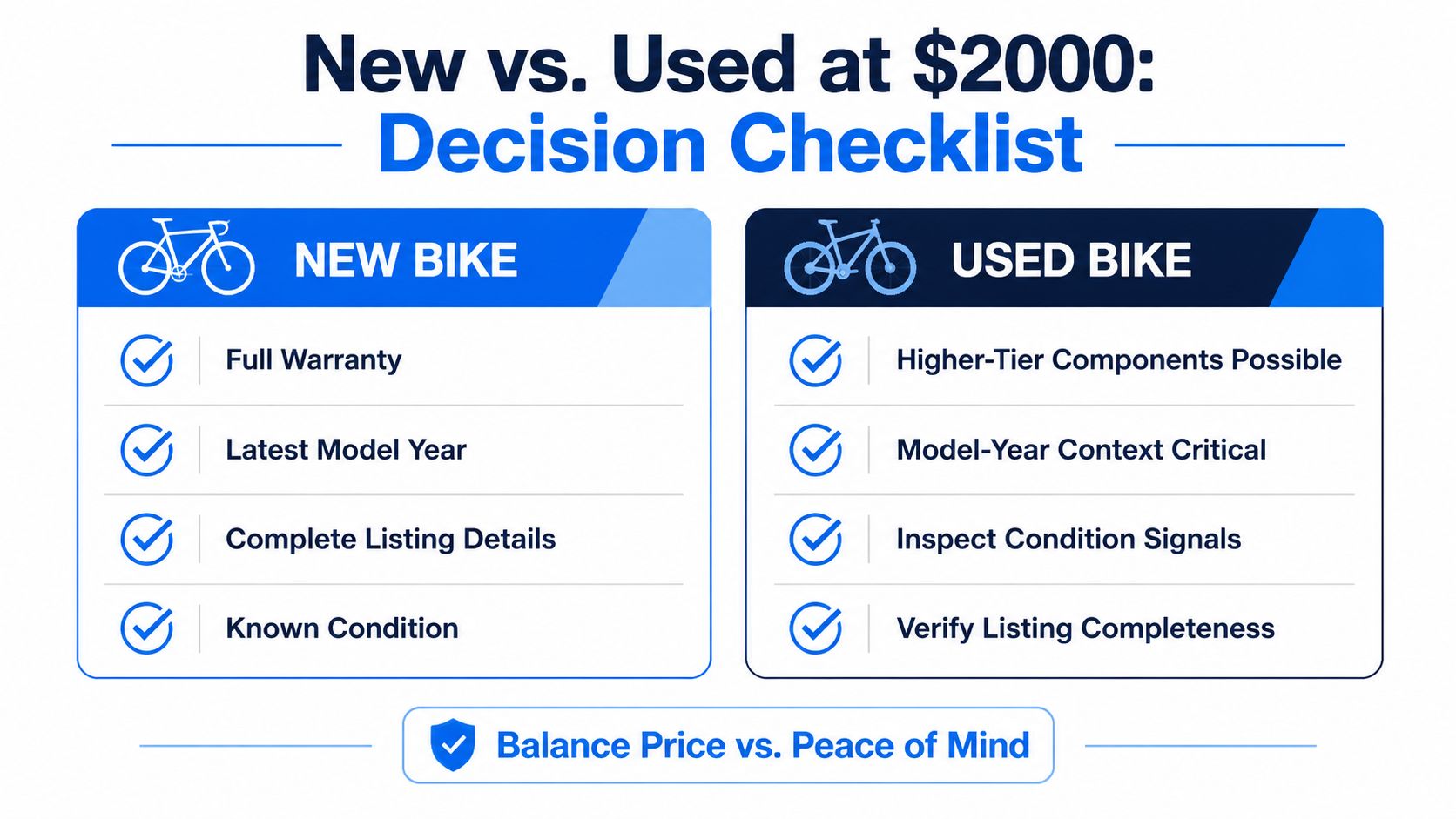
At this budget, the new-versus-used decision can change the whole value equation. A new bike gives you known spec, warranty support, and cleaner condition certainty. A used bike may open access to a stronger frame, a different geometry option, or a component mix that is hard to find new at the same price. The tradeoff is inspection risk.
If you want to evaluate that tradeoff in more detail, the used-bike buying framework on SYCLR's used road bikes page is a useful starting point.
Inspect the bike before trusting the deal
A used bike should be checked as a system, not just as a headline bargain. Confirm the exact model year if possible, compare the actual bike against the manufacturer's original spec, and look closely for changes that affect fit or compatibility, such as crank length, cassette range, wheel standard, rotor size, seatpost type, or cockpit swaps.
For drivetrain wear, use the guidance for the specific system and the manufacturer's service instructions where available. Different chains and drivetrains do not always share one universal replacement threshold, and a listing should never be judged by a one-line rule alone. Ask for clear photos, maintenance records, and any recent replacement history for chain, cassette, brake pads, rotors, tires, and bearings.
Check frame and fork condition carefully, inspect wheels for damage or obvious trueness issues, verify braking performance, and make sure the bike's current setup still matches the published frame and component standards. A low asking price stops being attractive if the bike needs immediate compatibility fixes or hidden service work.
How to think about offer value
Use a simple framework: comparable value minus condition risk minus fit uncertainty minus compatibility risk minus listing uncertainty.
That is more useful than a generic depreciation formula. A bike with clean service history, original-spec clarity, and geometry that overlaps your fit range deserves a different valuation from a bike with vague photos, uncertain wear, odd part swaps, or standards that limit future upgrades.
Model year can matter, but not because newer is automatically better. What matters is whether a given bike's exact frame, standards, geometry, and condition fit your needs now. An older bike with the right sizing and clean maintenance can be a smarter buy than a newer bike that creates fit or compatibility headaches.
How SYCLR Helps You Shortlist Better-Fit Road Bikes
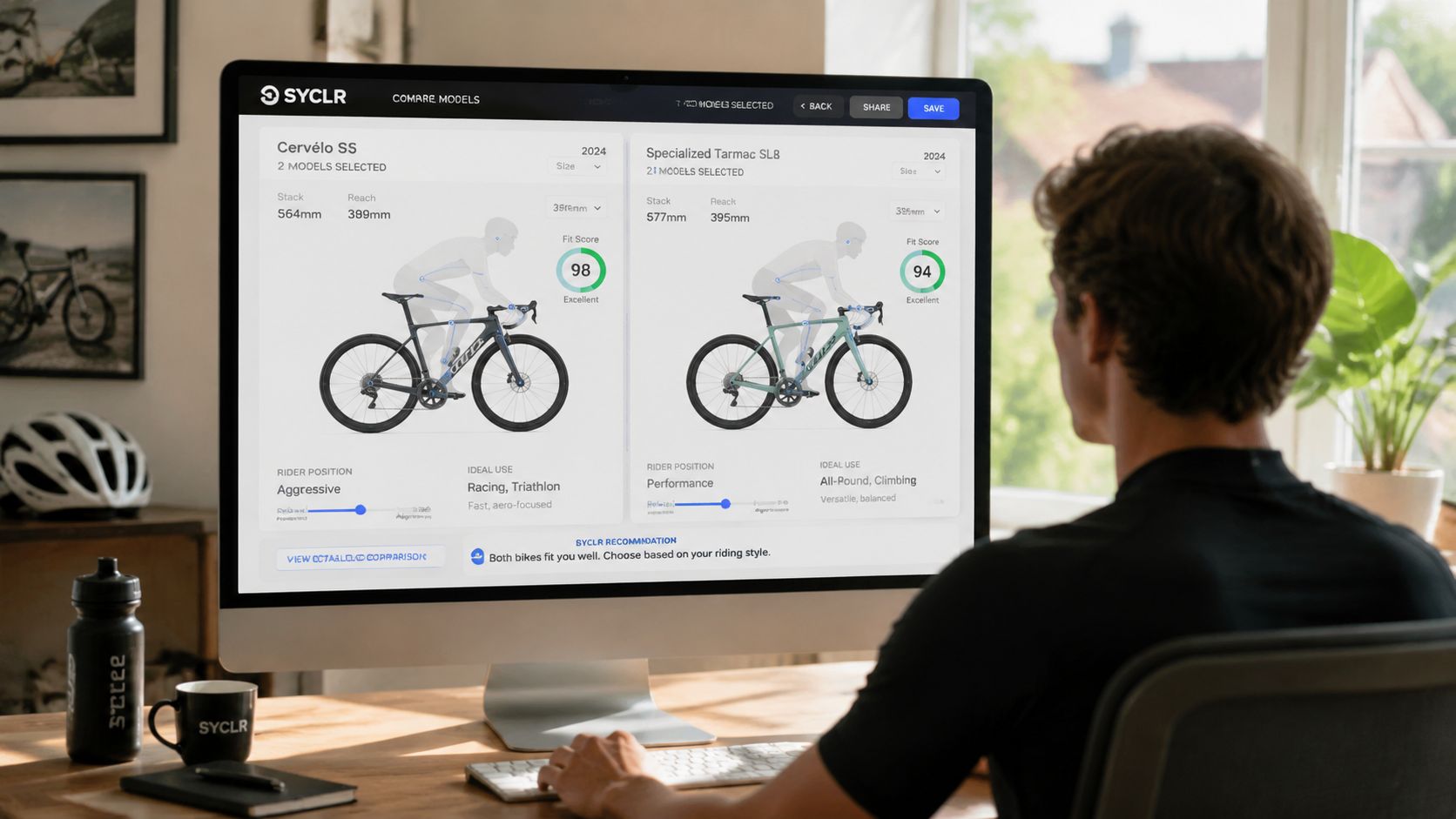
SYCLR helps riders compare road and gravel listings using fit signals, geometry signals, model-year context, price context, listing quality, condition signals where available, and confidence signals. That matters because marketplace inventory by itself does not explain whether a bike is likely to suit your position, your budget, or your roads.
Start broad, then get specific
If you are early in the process, start with height, bike type, and budget in SYCLR. That is enough to build a useful first shortlist. If you already know your geometry references, refine the search with the advanced fit details workflow so you can filter more precisely.
The platform does not replace a professional fit or a mechanical inspection. It helps you narrow the field earlier, so you spend more time on listings that look plausible before you contact a seller or compare checkout options.
What a better shortlist looks like
A stronger shortlist at this budget usually includes more than one type of option. You might compare one bike with more tire room, one with a higher drivetrain spend, and one that sits closer to your current geometry reference. Then you can judge stack, reach, standover context, tire clearance, brake type, total cost, and listing quality together.
Use SYCLR to compare road and gravel listings, start with your basic filters, then narrow by fit and geometry signals. If you already know your frame references, go deeper with advanced fit details in SYCLR.
Common Questions About Road Bikes Under $2000
Is aluminum a compromise at this price?
Not necessarily. At this budget, a good aluminum frame from a reputable brand often makes more sense than stretching for another material while giving up too much elsewhere in the package. Fit, geometry, braking, tire clearance, and the total build still matter more than frame material alone.
Is Shimano 105 always worth stretching for?
No. Shimano 105 can be a strong value target, but it is not automatically the best use of extra budget. A Tiagra or CUES-equipped bike with geometry and clearance that better match your needs may still be the smarter purchase.
Is endurance geometry always more comfortable than race geometry?
No. Category labels can be helpful shorthand, but comfort depends on the rider's proportions, flexibility, setup, and intended position. Stack, reach, wheelbase, head tube length, bar shape, and saddle setup all contribute to the result.
When does used make more sense than new?
Used makes more sense when the frame range suits you, the condition is verifiable, the standards and parts are compatible with your needs, and the asking price reflects the real risk. If documentation is vague or the fit case is weak, new is often the safer option.
How much should fit matter compared with spec?
Establish a plausible fit range before optimizing the specification. A road bike whose frame and cockpit are poorly matched to your position can remain a weak purchase regardless of its drivetrain. Once you have narrowed the field to plausible-fitting bikes, compare drivetrain, brakes, wheels, tire clearance, condition, and price.
What should I compare before I buy?
Compare stack, reach, effective top tube, head tube length, tire clearance, brake type, drivetrain spec, wheel and axle standards, and the bike's current cockpit setup. For used listings, add condition history, replacement needs, and compatibility risk.
Use SYCLR to compare available road-bike listings using fit signals, geometry signals, model-year context, price context, listing quality, condition signals where available, and confidence signals. If you already know your current-bike geometry or fit-report details, use the advanced fit entry to narrow the shortlist further.