
Bike Handlebar Width Fit and Sizing Guide
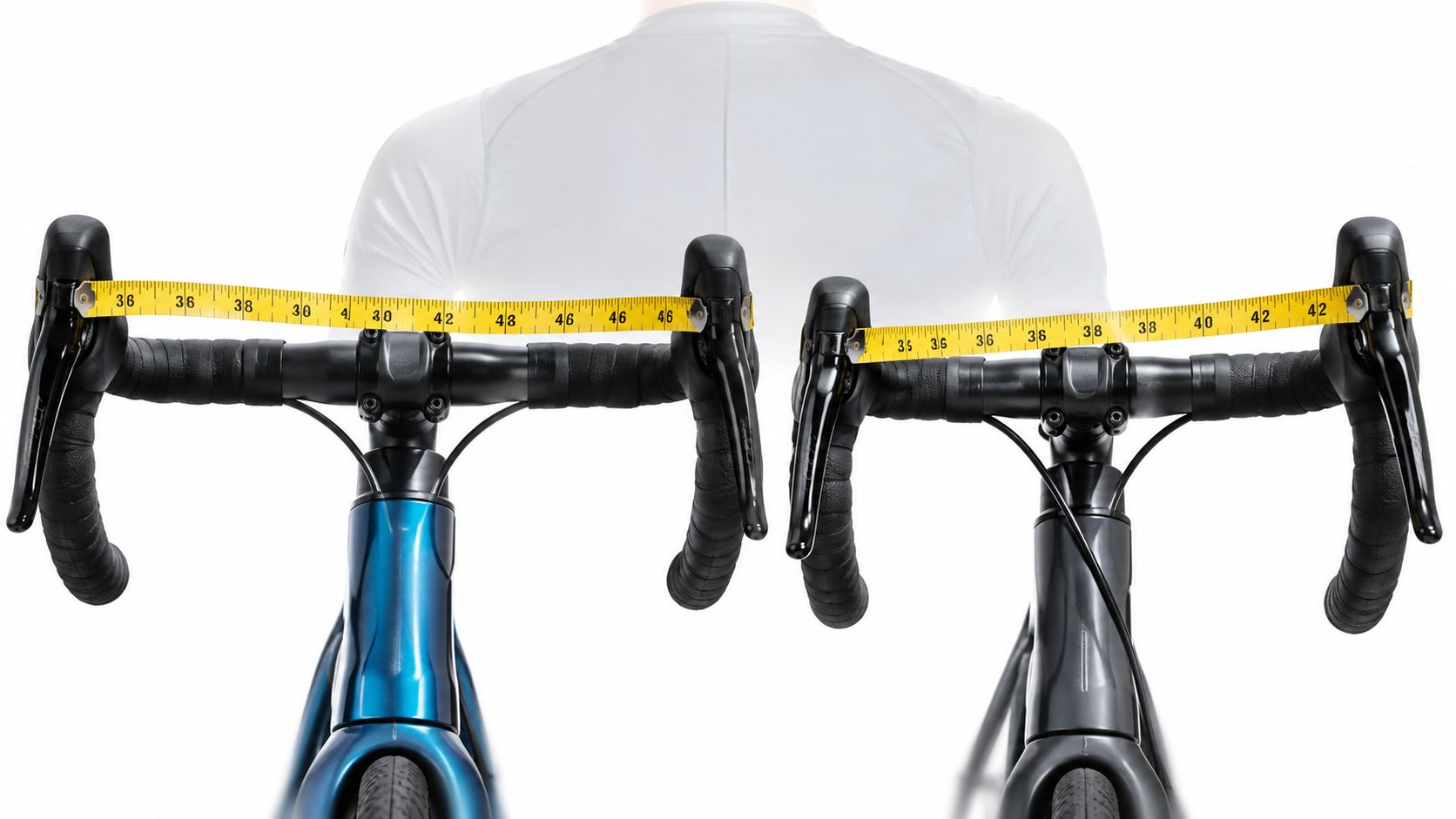
"Narrower is always faster" is one of the most repeated shortcuts in road cycling, and it's incomplete advice. Bike handlebar width only makes sense when the measurement convention, bar shape, hood position, rider reference, and complete cockpit setup are understood in context. A narrow bar can reduce frontal area in some positions, but it can also change the rider's hand spacing and steering leverage in ways that may or may not suit the setup. A wider or flared bar can change hand spacing, steering leverage, and the relationship between hood and drop positions, yet still be the wrong comparison if the published measurement does not describe the same point on the bar.
For online buyers, the first problem appears before fit advice even begins. A listed 42 cm handlebar may not mean the same physical width across brands, because manufacturers use different measurement conventions and may publish width at different locations. If you compare the number without checking how and where it was measured, you may be comparing unlike components.
Table of Contents
- Decoding Handlebar Measurement Standards
- Using Shoulder Width as One Reference
- Aerodynamics, Leverage, and Bar Shape
- Navigating UCI Equipment Regulations
- Evaluating Cockpit Specs in Online Listings
- How SYCLR Simplifies Fit-Aware Comparisons
- Frequently Asked Questions About Handlebar Fit
- Does flare change the effective handlebar width?
- What changes when I switch to a different handlebar width?
- Will a narrow bar automatically feel twitchy?
- Are integrated aero cockpits worth the fit compromise?
- Can shoulder width alone choose my final bar?
- What should I ask a used-bike seller?
- Can a handlebar swap solve every cockpit problem?
Decoding Handlebar Measurement Standards
Drop-handlebar width figures need context. Bicycle handlebar sizing references show why published widths can vary by convention and by measurement point: some manufacturers report width center-to-center, while others report it outside-to-outside, and some bars also differ between the hoods and the drops.
Center-to-center measures from the centerline of one tube to the centerline of the other. Outside-to-outside measures between the outer edges. Those numbers are not universally interchangeable, because the difference depends on tube dimensions, bar shape, and the exact measurement points used.
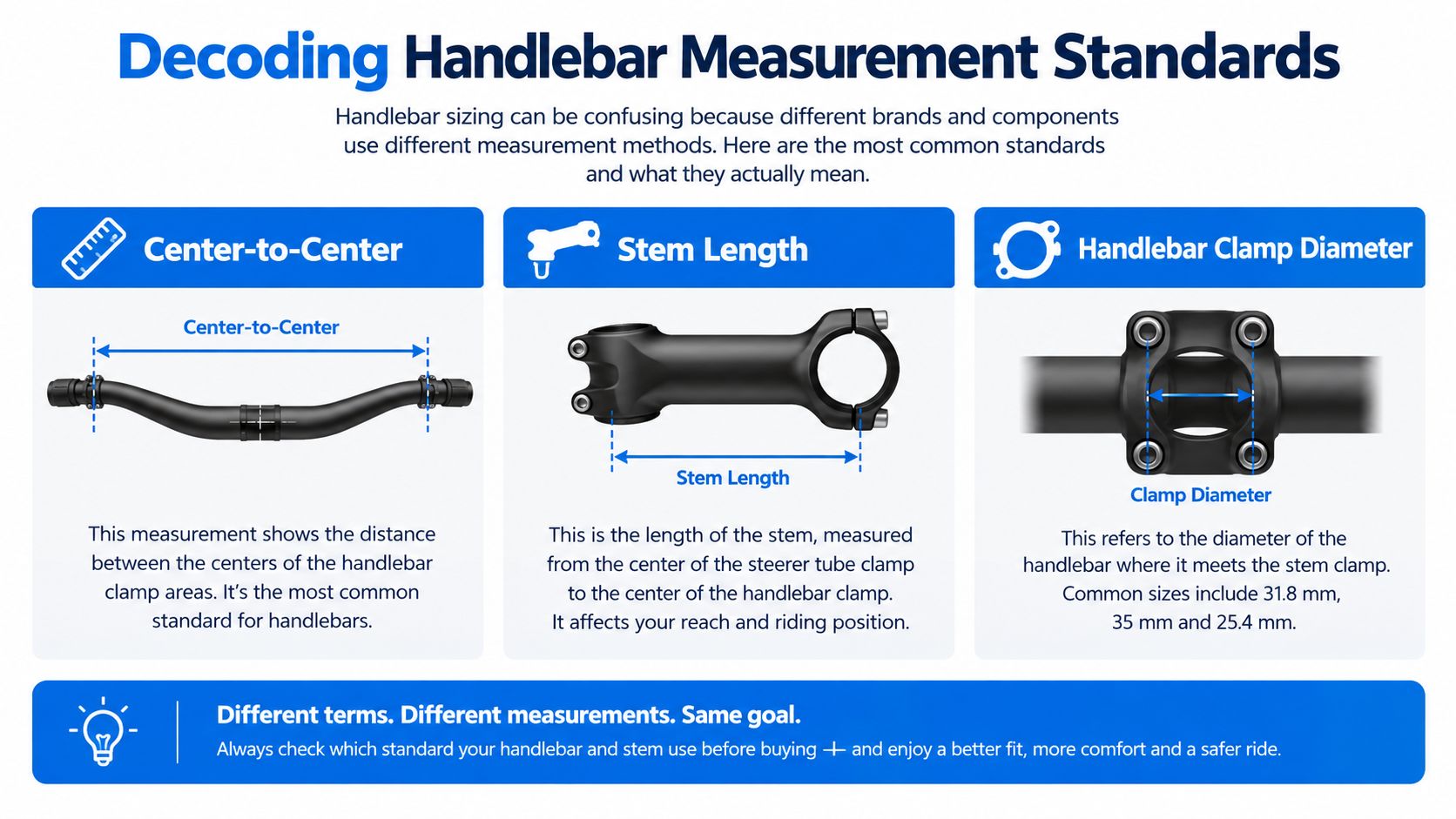
Read the number with its convention
A nominal "42 cm" bar could describe different physical widths, depending on whether the brand measured center-to-center or outside-to-outside, and whether the width was taken at the tops, hoods, or drops. The effective hand position may also change with handlebar shape, hood placement, and flare. That's why two listings both marked "420 mm" should not automatically be treated as equivalent.
The same caution applies to a complete bike listing. A manufacturer may specify the original bar, while a previous owner has replaced it with a different width or shape. The frame size might be unchanged, but the rider's contact points are not.
Practical rule: A width number is incomplete unless the manufacturer's measurement convention and measurement location are known.
Before buying, ask three questions:
Is the width measured center-to-center or outside-to-outside?
Is the stated width taken at the tops, hoods, or drops?
Has the bar been replaced, rotated, or fitted with a flared shape?
Those answers matter more than the printed number alone.
Using Shoulder Width as One Reference
Shoulder width can be recorded as one rider reference, but it does not translate directly into a single correct handlebar number. That distinction gets missed all the time in online listings, especially when one seller means center-to-center and another means outside-to-outside. The result is a cockpit that looks equivalent on paper but represents a different physical hand position.
Bi-acromial breadth, the distance between the acromion processes at the outer top of the shoulders, is one anatomical measurement sometimes used as a reference when discussing handlebar width. That measurement gives one anatomical reference for hand spacing. It does not replace checking how the handlebar itself was measured.
Bi-acromial breadth can be recorded as one rider reference, but there is no universal shoulder-width-to-handlebar-width formula.
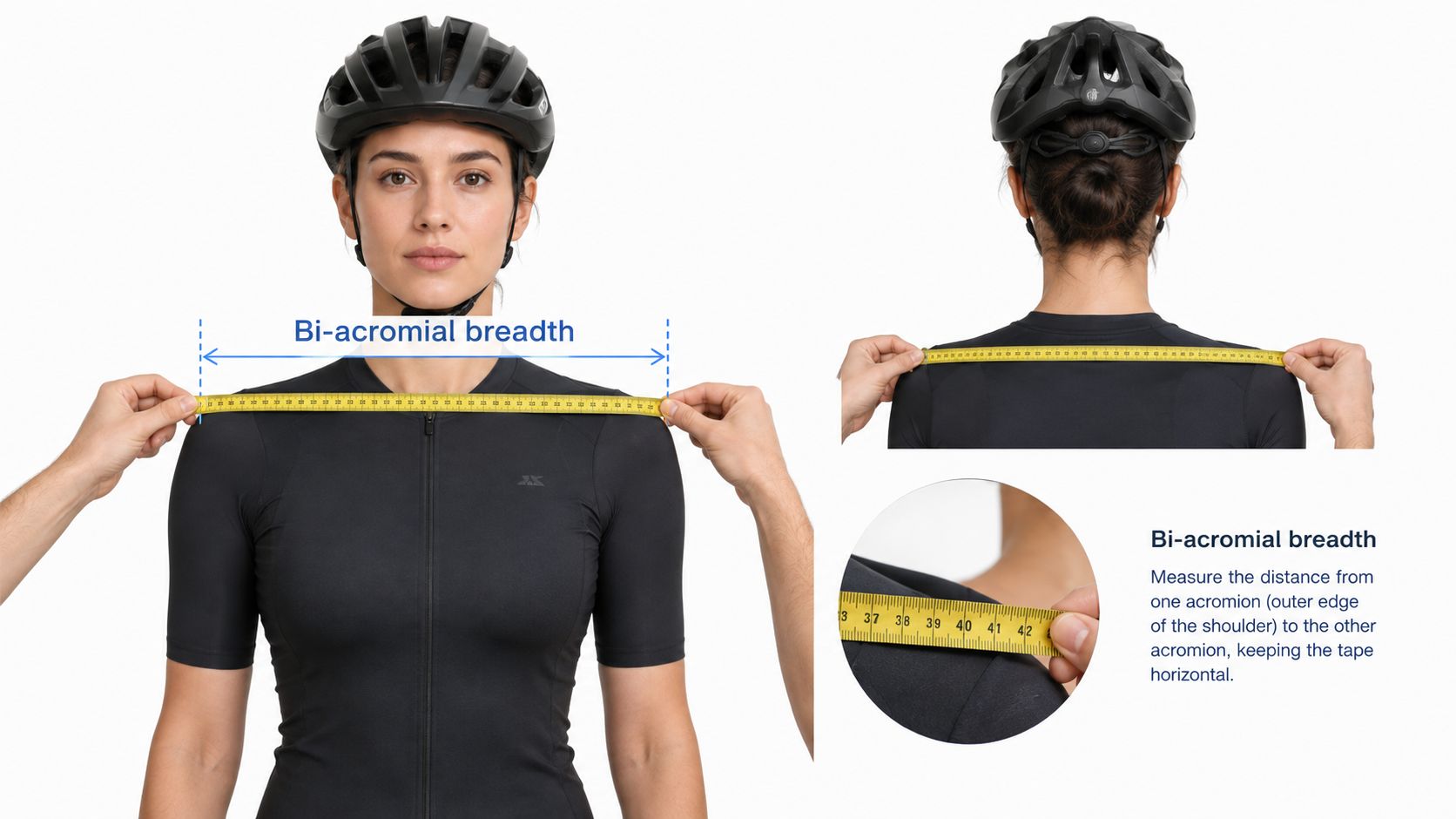
Stand in a relaxed posture and have another person find the center of each acromion. Measure from point to point. Then keep that number separate from any stated bar width, because the shoulder measurement is anatomical and the handlebar number may follow a different convention or a different measurement location.
What the physiology does and does not show
A 2023 experimental study tested handlebars set at shoulder width and at plus or minus 4 cm relative to that width. In 24 recreationally active adults, the researchers found no significant differences in ventilation, gas exchange, efficiency, spirometry, or reported comfort during moderate-power lab cycling. Read the study and its experimental setup
That finding is useful because it shows that moderate-power laboratory outcomes did not meaningfully separate these tested widths in that group. It does not create a universal width recommendation, and it does not establish what will happen in sprinting, rough descending, prolonged outdoor riding, or individual fit complaints.
A separate 2025 study involving 10 women under controlled laboratory conditions found differences in some muscle activation and kinematic measures across tested handlebar widths. Peer-reviewed research on shoulder breadth and handlebar fit That result is relevant to how width can change rider mechanics, but it should not be generalized into universal comfort, injury, fatigue, or width prescriptions.
Width is only one cockpit variable. Use this bike handlebar reach guide alongside width, because reach, drop, hood placement, and bar shape can also change the rider's hand position and cockpit experience.
The following walkthrough shows the acromion measurement technique in real time.
Aerodynamics, Leverage, and Bar Shape
Handlebar width is where fit theory collides with riding reality. Narrower hand positions may reduce frontal area in some setups, but that does not establish the correct width for every rider or riding category. What matters is the whole position: hood angle, bar shape, clothing, posture, and whether the rider can maintain the position consistently.
Width changes the steering leverage available at the hands. That does not mean one direction is always better. It means a change in width can alter how much input the rider can apply through the cockpit, how the front end feels in different hand positions, and how the bike responds to the rider's upper-body movement.
Reported testing found that changing from 42 cm to 36 cm, together with posture changes, lowered drag area in one setup. The reported wind-tunnel and athlete testing details That is useful as rider-specific, setup-specific evidence, not as a universal watts claim or a width prescription.
Flare adds another layer of confusion for buyers comparing bikes online. The hoods may be one width, the drops another, and sellers often list only a single figure. The testing context and limitations are discussed by TOUR Magazin That is why two bikes both described as "42 cm" can feel nothing alike.
If the front end already feels low, long, or heavy on the hands, check stack versus handlebar height before using width as a workaround. Width changes hand position and available leverage, but it cannot correct every cockpit problem.
Navigating UCI Equipment Regulations
For applicable 2026 UCI road and cyclo-cross mass-start events, current technical guidance specifies a 400 mm minimum overall handlebar width measured outside edge to outside edge, a 280 mm maximum inner measurement between the brake hoods, and a 65 mm maximum flare per side. See the current UCI regulations hub and clarification here: UCI Regulations, UCI safety and equipment measures for 2026, and UCI Clarification Guide of the Technical Regulation, 20260101.
The hidden problem is still the measurement method. A bar listed as "38 cm" might be measured center-to-center, and it might be taken at the hoods or at the drops. UCI compliance, by contrast, depends on the rule's specified measurement points. That mismatch is exactly why online comparisons go wrong, especially on used race bikes where the installed cockpit may not match the original spec.
For everyday riding, a narrow or wide cockpit can still be a sensible fit if it suits the rider and the complete cockpit setup. Regulated racing is different.
Before buying a high-end used race bike or swapping to an integrated cockpit, verify:
The bar's overall outside width using the rule's stated measurement method
The inner spacing at the brake levers or hoods
The amount of flare, if any
Whether the listed width refers to the tops, hoods, or drops
Whether the current component is original, modified, or replaced
Do not accept "UCI legal" as a complete answer. Photograph the cockpit, record the measurements, and recheck the current UCI and event-specific rules before racing.
Evaluating Cockpit Specs in Online Listings
Online listings often document frame size more reliably than cockpit details. That creates a problem for buyers who need to compare not just the bike's geometry, but also the component that determines hand position.
Start with the specification page, then inspect the photographs. Look for a width marking near the stem clamp, a model name on the bar, and visible flare in the drops. A photograph can suggest whether a bar is narrow or wide, but perspective makes visual estimation unreliable. Treat an estimate as a prompt for verification, not as confirmed data.
A practical listing workflow
Ask for the measurement method. Request center-to-center or outside-to-outside dimensions, and ask where the seller measured the bar.
Confirm the installed component. The original specification may not match the current bar, especially on a used bike.
Check hood and drop width. Flared bars can have a narrower hood position and a wider drop position.
Identify the stem interface. The bar must match the stem's clamp diameter and faceplate shape.
Review routing and integration. Internal cable or hose routing can turn a simple swap into a more involved workshop job.
Keep uncertainty visible. If the listing omits the bar model, width, or routing details, treat the cockpit information as incomplete rather than assuming equivalence.
The handlebar clamp diameter is a separate dimension from width. A replacement can have the correct published width and still be incompatible with the stem. Integrated cockpits add another layer because the stem and handlebar may be a single system, limiting adjustment and increasing replacement complexity.
| Measurement | What it describes | What to verify |
|---|---|---|
| Center-to-center width | Distance between the bar centerlines at the stated measurement point | Confirm where the maker measured it, such as tops, hoods, or drops |
| Outside-to-outside width | Distance between the outer edges at the stated measurement point | Confirm the exact point used and whether the published figure is the maximum width |
| Hood width | Width measured around the hood or lever region | Check hood setup, hood rotation, and whether the bar shape changes hand position |
| Drop width | Width lower on the bar, often affected by shape and flare | Confirm whether the drop measurement differs from the published main width |
| Flare | How much the drops angle outward relative to the upper section | Verify the maker's flare definition and whether the listed width refers to hoods or drops |
The table describes common measurement categories, not a universal component standard. Conventions vary by manufacturer, model, and bar shape. For a deeper explanation of the surrounding cockpit dimensions, see bike cockpit length explained.
A vague description such as "standard road bars" is a listing-quality issue. So is a photograph showing a different component than the written specification. Ask for close-up images, the bar model, the measurement convention, and confirmation that the visible cockpit is the one included in the sale.
How SYCLR Simplifies Fit-Aware Comparisons
Handlebar width is rarely the only uncertainty in an online bike purchase. A listing can omit the bar measurement while also leaving the model year, frame geometry, condition, or component history unclear. Comparing the printed frame size alone will not resolve those gaps.
SYCLR compares road and gravel listings using fit signals, geometry signals, model-year context, price context, listing quality, condition signals where available, and confidence signals.
You can begin with height, bike type, and budget, then add more detailed information through advanced fit details, such as known measurements, current-bike geometry, or fit-report data. Height remains a starting point, not a complete handlebar prescription.
The useful comparison is not just "which listing has the cheapest price?" It is closer to:
Is the listed cockpit width known, inferred, or missing?
Has the component likely been changed?
How much uncertainty remains around fit, condition, and listing completeness?
What cockpit, integration, or compatibility questions still need verification?
SYCLR does not perform a professional bike fit, physically inspect bikes, authenticate listings, verify ownership or seller claims, or guarantee fit or condition.
Its value is reducing guesswork before you spend time and money investigating a candidate.
When you're ready to compare options, start with SYCLR and build a shortlist around your rider details, bike type, budget, and the cockpit information each listing provides.
Frequently Asked Questions About Handlebar Fit
Does flare change the effective handlebar width?
Yes. Flare is one of the main reasons bar-width comparisons go wrong, especially in online listings. A bar can feel narrow on the hoods and much wider in the drops, so one quoted width does not tell the full story. Check hood width and drop width separately whenever possible, and confirm whether the stated number is measured center-to-center or outside-to-outside. Without that, two bars labeled the same size may not fit the same at all.
What changes when I switch to a different handlebar width?
Changing width can alter hand spacing, the steering leverage available at the hands, and how the front end feels in different riding positions. It can also change the practical effect of hood placement, reach, and drop if the new bar has a different shape. Riders often blame width alone when the full change actually came from bar geometry, hood setup, or a new integrated routing arrangement.
Will a narrow bar automatically feel twitchy?
No. Width changes the steering leverage available at the hands, but perceived steering response also depends on front-end geometry, stem length, tires, hand position, and rider input. Judge handling as a system, not as a single number on the bar.
Are integrated aero cockpits worth the fit compromise?
Integrated cockpits can reduce adjustment and replacement flexibility because the stem and handlebar may function as a single system, often with routing constraints and fewer easy swap options. That can matter on both new and used bikes. Ask for the exact cockpit model, available size options, routing details, and replacement compatibility before you assume future changes will be simple.
Can shoulder width alone choose my final bar?
No. Shoulder width is one rider reference, not a complete answer. Bar shape, measurement convention, measurement location, hood setup, reach, drop, and the rest of the cockpit all affect what the listed width actually means in use.
Shopping mistakes happen here. One seller may list a bar by center-to-center width at the hoods, another by outside-to-outside at the drops. If you compare those numbers as if they mean the same thing, fit decisions get distorted fast.
What should I ask a used-bike seller?
Ask for the bar brand and model first. Then ask the stated width, how that width was measured, whether the bar is flared, the width at the hoods and drops if applicable, and whether the cockpit is original or has been replaced. Also ask if cable housing or hydraulic hoses were changed during the swap.
If the seller cannot answer those points clearly, treat the cockpit as unverified.
Can a handlebar swap solve every cockpit problem?
A bar swap can help, but it does not override frame geometry. Width, reach, drop, hood angle, stem length, spacer height, saddle position, and frame dimensions all interact. If the main limitation comes from frame geometry or the available cockpit-adjustment range, changing bar width alone may not resolve it. Change one variable at a time when possible, and get a full fit assessment if the issue keeps coming back.