
Can Stem Length Fix Bike Fit? a Practical Guide
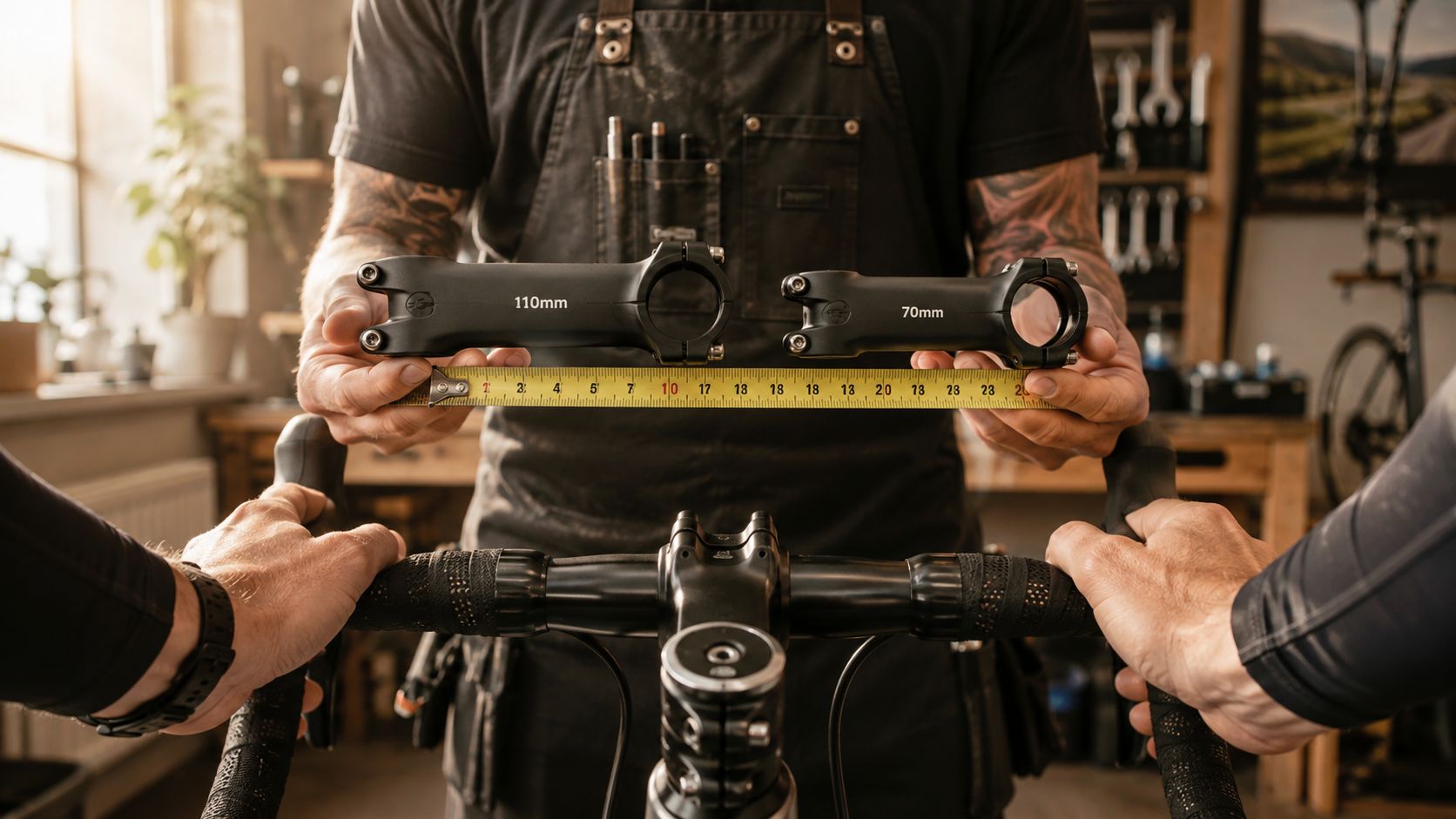
A stem can make meaningful hand-position adjustments, but it cannot by itself compensate for a frame and cockpit combination that cannot achieve the rider’s intended position. Fit depends on the full front-end setup and the rider's established position, including stack, reach, spacers, stem angle, handlebar reach, hood placement, and saddle position.
A lot of riders discover this while comparing used-bike listings. The size label looks close, the price is right, and the bike seems like a smart buy until the first ride feels stretched, cramped, or awkward on the hoods. That is where stem length can help, but only as one part of a complete setup review.
Table of Contents
- What Stem Length Actually Changes
- Why Frame Stack and Reach Matter More Than Labels
- When Changing the Stem Can Actually Help
- Check the Complete Setup Before Changing the Stem
- Using Geometry Signals to Reduce Stem Dependency
- Decision Checklist for Stem Length Changes
What Stem Length Actually Changes
Stem length changes where the handlebar clamp sits relative to the steerer, which affects where your hands end up once the bar and hoods are installed. That is why a stem change is usually most noticeable at the hoods, where stem geometry, handlebar reach, hood placement, and the rider’s established position combine to determine hand location.
Changing stem length moves the bar clamp, but the horizontal and vertical change depends on stem length, stem angle, steerer/head angle, spacers and orientation.
Bar shape and hood placement then affect where the hands actually land. For that reason, stem length should be understood as one part of hand-position setup, not as a simple one-to-one reach number.
Why hand position matters more than the stem alone
Two bikes can use the same nominal stem length and still place the rider very differently. One may have more spacers, a different stem angle, a shorter-reach handlebar, or hoods rotated farther forward. Another may have a lower stack and a bar shape that puts the hoods farther out. The rider does not interact with stem length in isolation. The rider interacts with the final hand position.
Practical rule: treat stem changes as fine tuning within a complete cockpit setup, not as a shortcut around a poor frame match.
Why Frame Stack and Reach Matter More Than Labels
Size labels do not tell you how the bike places the front end in space. Stack and reach locate the top of the head tube relative to the bottom bracket, stack vertically and reach horizontally. If you are comparing listings, those numbers tell you more than a vague size tag about the frame's basic front-end proportions before the stem, bar, and hoods are configured.
What stack and reach can and cannot tell you
Stack and reach are important because they describe the frame itself, but they do not by themselves determine how stretched or upright a bike will feel once built. Spacer stack, stem angle, stem length, handlebar reach, hood placement, and the rider's established saddle position all affect the final result.
That matters for buyers because two bikes with the same nominal size can still land you in different positions once the cockpit is assembled. A listing that only shows the size label leaves out too much. A listing with clear geometry, model-year details, and visible setup gives you a much better chance of understanding what the bike can realistically become.
A stem can refine a workable setup. It cannot erase a frame and cockpit combination that asks for too many compromises.
When Changing the Stem Can Actually Help
A stem change makes sense when the bike is already close and you are trying to improve hand position within a setup that is otherwise workable. That usually means the frame is plausible, the saddle position is already established for pedaling, and the remaining question is how the front end should be arranged.
What a stem can fix well
If the bars feel slightly too near or too far once the rest of the setup is sensible, a stem change can be an efficient way to move the bar clamp and refine cockpit length. It can also be useful when you are comparing two otherwise similar setups and trying to preserve a known good hand position from a current bike.
Stem length changes hand position and steering leverage, but no universal stem length predicts better handling or proves frame fit.
That is why a stem change works best as part of a complete review of bar height, hood placement, and hand position, rather than as a standalone fix.
When to reconsider the frame or full setup
If achieving the intended hand position requires an impractical combination of spacer stack, stem angle, hood placement, or other cockpit changes, stem length alone is unlikely to resolve the setup. The same is true if the bike only seems workable after multiple changes that pull the setup away from a clean, repeatable build.
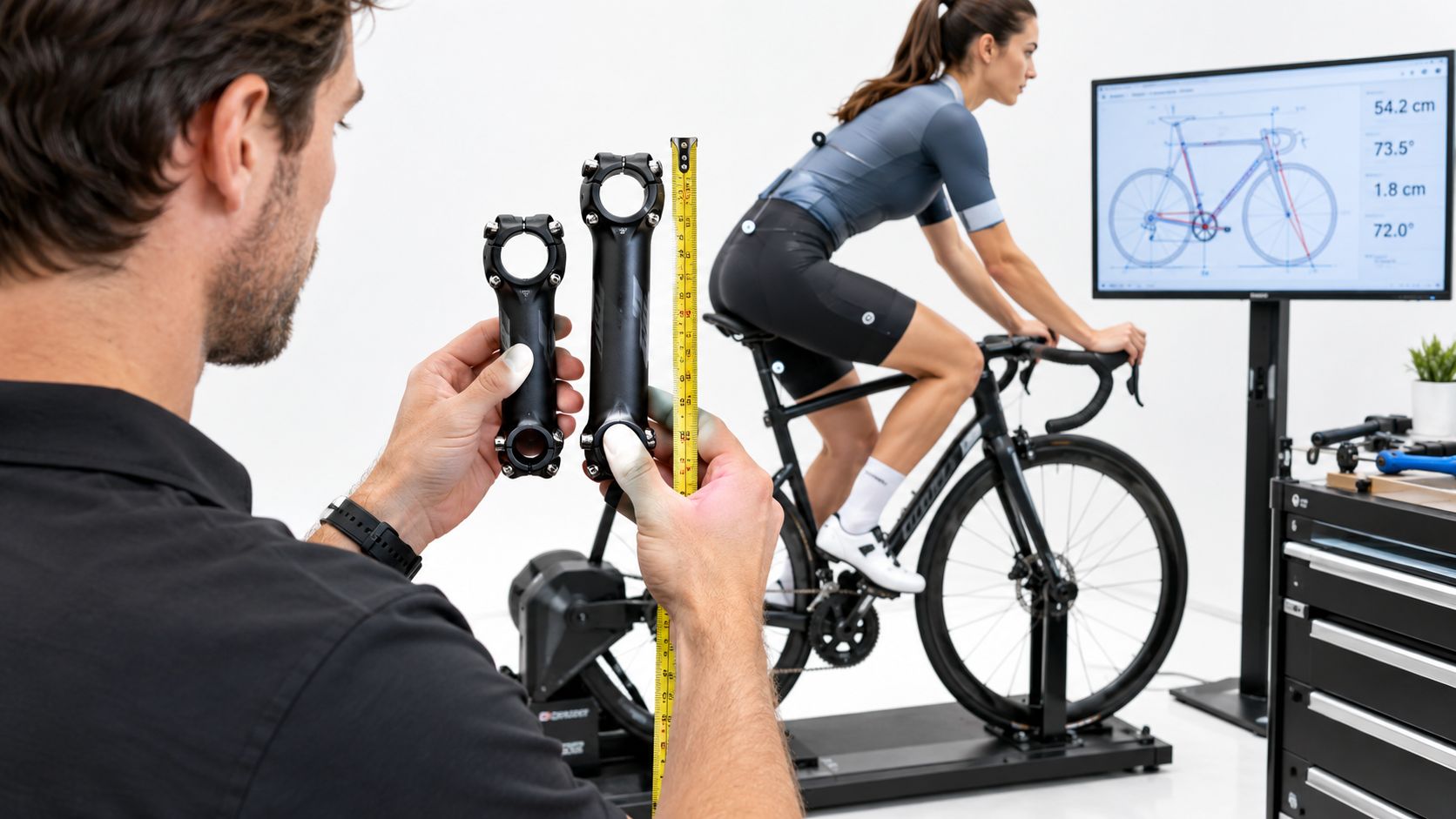
At that point, the better question is not which stem length solves the issue. It is whether the frame and complete setup are still sensible for the position you are trying to achieve.
Check the Complete Setup Before Changing the Stem
Before changing the stem, review the whole front-end system around an established saddle position. Saddle position should primarily support pedaling position, not compensate for excessive cockpit reach. Once saddle position is set for how you pedal, the remaining front-end adjustments can be evaluated more clearly. Bike fit guide
How the main adjustments interact
| Adjustment | Primary role |
|---|---|
| Saddle fore-aft | Pedaling/contact-point position relative to the bottom bracket |
| Spacers/stem angle | Bar-clamp height and fore-aft position |
| Handlebar reach | Distance from bar clamp toward the controls |
| Hood placement | Final hand/contact-point position |
| Stem length | Changes bar-clamp position and steering leverage |
This is why a bike that feels long or short is not always a stem problem. The issue may be bar height, stem angle, a long-reach handlebar, hood placement, or a frame whose stack and reach make the full setup hard to reconcile.
If you change several variables at once, it becomes much harder to tell which change actually solved the problem.
For used-bike buyers, this matters because a seller may mention a different stem as if that settles fit. It does not. The question is whether the whole setup can achieve a sensible hand position without relying on a chain of compromises.
Using Geometry Signals to Reduce Stem Dependency
The cleanest way to avoid stem-only fixes is to start with bikes that already match your fit and geometry signals. That means confirming the exact model, year, and size, then comparing geometry and listing details before assuming a small cockpit change will make everything work. SYCLR helps compare road and gravel listings using fit signals, geometry signals, model-year context, price context, listing quality, condition signals where available, and confidence signals.

The practical workflow is simple. Start with the exact bike details you can verify, then compare the geometry and listing context against a position you already know works well, if you have one. That helps you filter out bikes that only seem close because of the size label or seller description.
What to compare before you get attached to a listing
Exact identity: confirm the model, model year, and size before drawing fit conclusions.
Fit and geometry: compare stack, reach, and the overall setup potential, not just the size label.
Listing quality: clear photos and complete details make it easier to judge what has been changed and what is missing.
Condition: worn parts or incomplete cockpit details can hide extra cost and uncertainty.
Price and confidence: a low price is less attractive if fit, setup, or condition confidence is weak.
For road and gravel buyers, this reduces guesswork early. A bike that matches your fit and geometry signals usually needs fewer compensating changes than one that only looks close in a listing. Seat tube angle explained
Decision Checklist for Stem Length Changes
Start with one blunt question: is the bike close enough that cockpit refinement makes sense, or are you trying to force a position that the frame and setup do not support cleanly.
Use this sequence
- Confirm exact model/year/size.
- Decide whether a known-good current or professional-fit position is worth preserving.
- Compare stack and reach.
- Establish saddle position for pedaling, not reach correction.
- Check spacers, stem angle, bar reach, hood position and stem length.
- Change one variable at a time.
- If the required setup becomes impractical or exceeds component/manufacturer limits, reconsider the frame.
Short version: a stem can help refine hand position, but it is only one variable in the complete cockpit and frame setup.
For buyers, that is where geometry beats hope. A lower price does not resolve uncertainty about whether the frame and cockpit can support the position you are trying to achieve. If you are comparing road or gravel bikes right now, use SYCLR to compare fit-aware listings, start with height, bike type, and budget, and shortlist bikes using fit, geometry, model-year, price, listing-quality, condition, and confidence signals before you contact the seller.