
Head Tube Length vs Stack: What’s the Difference?
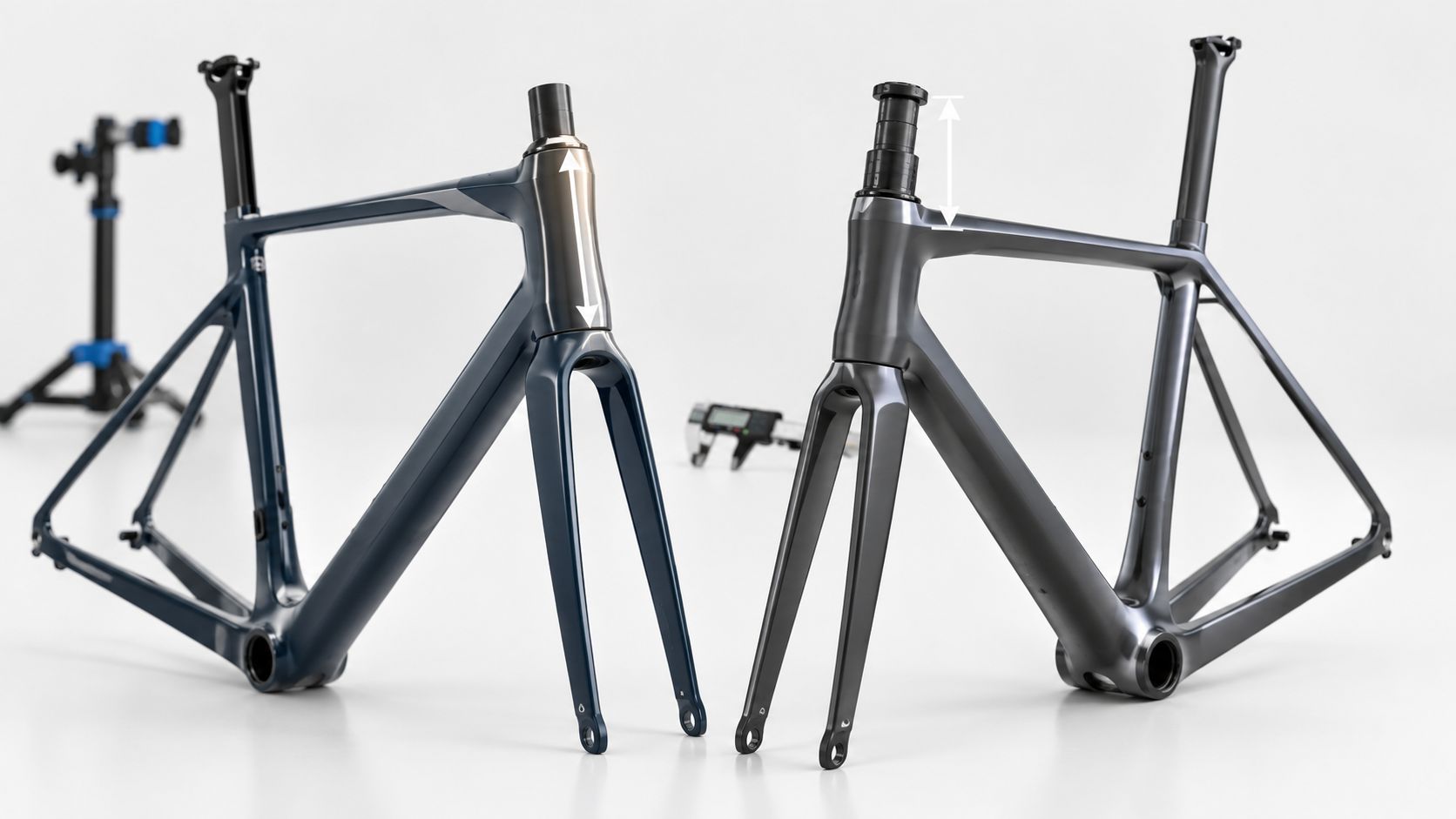
The popular advice is too loose. Head tube length is not a stand-alone sizing metric, it is a physical frame-tube dimension recorded under the manufacturer's convention. If you're comparing two used road or gravel frames across brands, stack is the primary frame-level vertical comparison, while head tube length helps explain how that front-end coordinate is built into the frame. Use stack as the primary frame-level vertical comparison, with head tube length as supporting construction context.
| Dimension | Head Tube Length | Stack |
|---|---|---|
| What it measures | The physical length of the head tube under manufacturer convention | The vertical BB-relative frame coordinate to the manufacturer's upper head-tube reference point |
| Best use | Supporting construction context | Primary frame-level vertical comparison across brands |
| What it does not tell you | Final hand position by itself | Finished handlebar or hood height by itself |
| Buyer takeaway | Useful secondary context | Write this down first when comparing listings |
Table of Contents
- Why Head Tube Length Misleads Road and Gravel Buyers
- What Head Tube Length and Stack Actually Measure
- Side by Side: How the Two Metrics Differ
- Frame Stack vs Finished Handlebar Height
- Worked Example: Two Same-Size Frames With Different Front Ends
- Reading Used Listings With Stack First and Head Tube Second
- How SYCLR Uses Stack and Head Tube Length for Better Fit
- Buyer FAQs and Your Next Step
Why Head Tube Length Misleads Road and Gravel Buyers
A longer head tube does not automatically mean a higher finished handlebar position. Two bikes can share a similar head tube length and still begin from different vertical frame coordinates because stack is defined from the bottom bracket to the manufacturer's upper head-tube reference point. That distinction is why stack and reach became the standard frame coordinates for comparison across brands, rather than relying on tube lengths alone (Bike Dynamics).
What to ignore first
If a listing hides stack but highlights head tube length, do not read the tube dimension as a substitute for the frame's vertical coordinate. Head tube length is useful context, but by itself it does not tell you whether the bike will reproduce your known-good contact-point height.
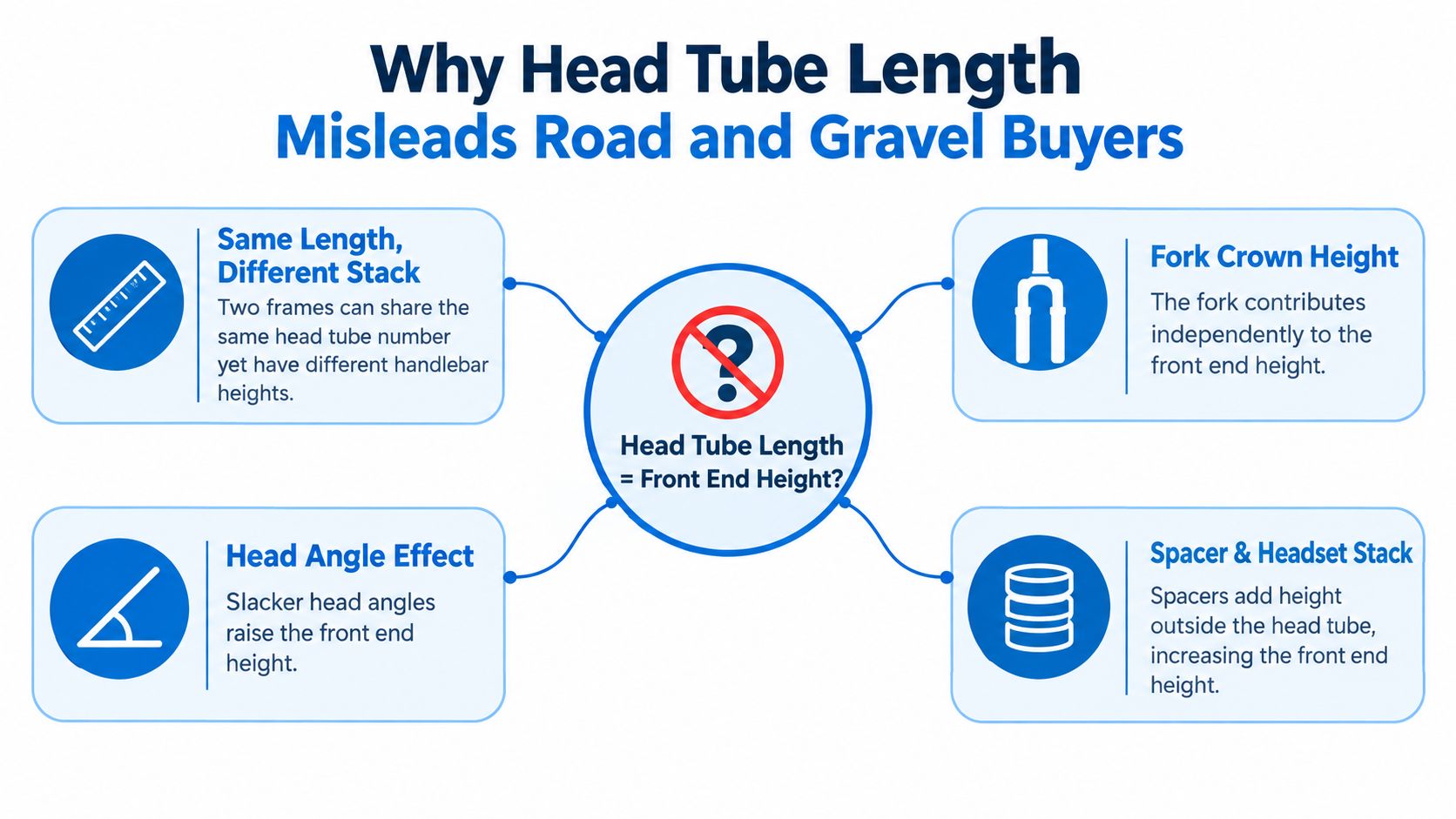
Practical rule: write down stack first, then note head tube length as supporting context. If a seller only gives you one of those two numbers, the listing is incomplete for frame-level comparison.
For used-bike shoppers, this matters because the same nominal size can hide real geometry differences. A road frame and a gravel frame with similar labels can still start from different frame coordinates once you compare the published geometry. If you want a fast screening rule, use stack as the primary frame-level vertical comparison, with head tube length as supporting construction context.
What Head Tube Length and Stack Actually Measure
Head tube length is the physical length of the head tube itself, measured under the manufacturer's convention. Stack is a vertical measurement from the bottom-bracket center to the manufacturer's upper head-tube reference point. They're related, but they're not interchangeable. SYCLR's bike stack and reach guide uses that same distinction because buyers need frame coordinates that translate across brands, not just a tube length shown in isolation.
The reference points matter
Head tube length tells you how much head tube is built into the frame. Stack tells you where the frame's upper head-tube reference point sits vertically relative to the bottom bracket. That is why stack is the more useful benchmark when you're comparing two used listings across brands.
A useful way to think about it is this:
Head tube length is a physical frame-tube dimension.
Stack is a vertical BB-relative frame coordinate.
Reach is the matching horizontal frame coordinate.
Finished handlebar/contact-point height is a separate measurement affected by headset cover, spacers, stem, bar, and hood setup.
Head tube length still has value. It helps describe frame construction, but it does not tell you final hand position on its own. Stack also is not a complete fit metric. Stack and reach are the primary frame coordinates, not the final hand position.
Side by Side: How the Two Metrics Differ
Stack is the metric to compare first when you want the frame's vertical coordinate relative to the bottom bracket. Head tube length only tells you the physical length of the tube. It can support interpretation, but it cannot replace stack when you compare frames across brands.
What each metric hides
Head tube length does not capture the full frame geometry behind the published stack number. Stack is more useful for cross-brand frame comparison, but it still does not tell you your actual hand position once cockpit parts are installed. I do not treat either number as a full fit answer. I use stack as the primary frame-level vertical comparison, with head tube length as supporting construction context.
| Dimension | Head Tube Length | Stack |
|---|---|---|
| Main job | Describes the tube itself | Describes the frame's vertical coordinate in frame geometry |
| Good for | Construction context | Cross-brand frame comparison |
| Bad for | Direct hand-position judgments | Predicting finished handlebar height by itself |
| Buyer use | Secondary diagnostic | Primary frame-level vertical comparison |
Frame Stack vs Finished Handlebar Height
Frame stack already describes the bottom-bracket-relative upper head-tube coordinate. That is useful, but it is still not the same thing as finished handlebar height. Once you move from frame stack to actual hand position, you also need to account for the headset cover, spacers, stem geometry, bar shape, and hood setup. If you want that distinction in more detail, see /stack-vs-handlebar-height/.
Head angle and the frame’s geometry are part of why head tube length and stack do not track each other directly. Stack already describes where the manufacturer’s upper head-tube reference point sits vertically relative to the bottom bracket. Fork and cockpit details become relevant when the comparison moves from frame coordinates to the assembled front end and finished hand position.
The parts riders need to account for
Headset cover: adds to the distance above the frame before the stem begins.
Spacers: change finished cockpit height within the allowed setup range.
Stem geometry: stem angle and length affect where the bar clamp sits.
Bar shape: handlebar reach and rise affect the contact point.
Hood setup: hood placement changes where your hands actually land.
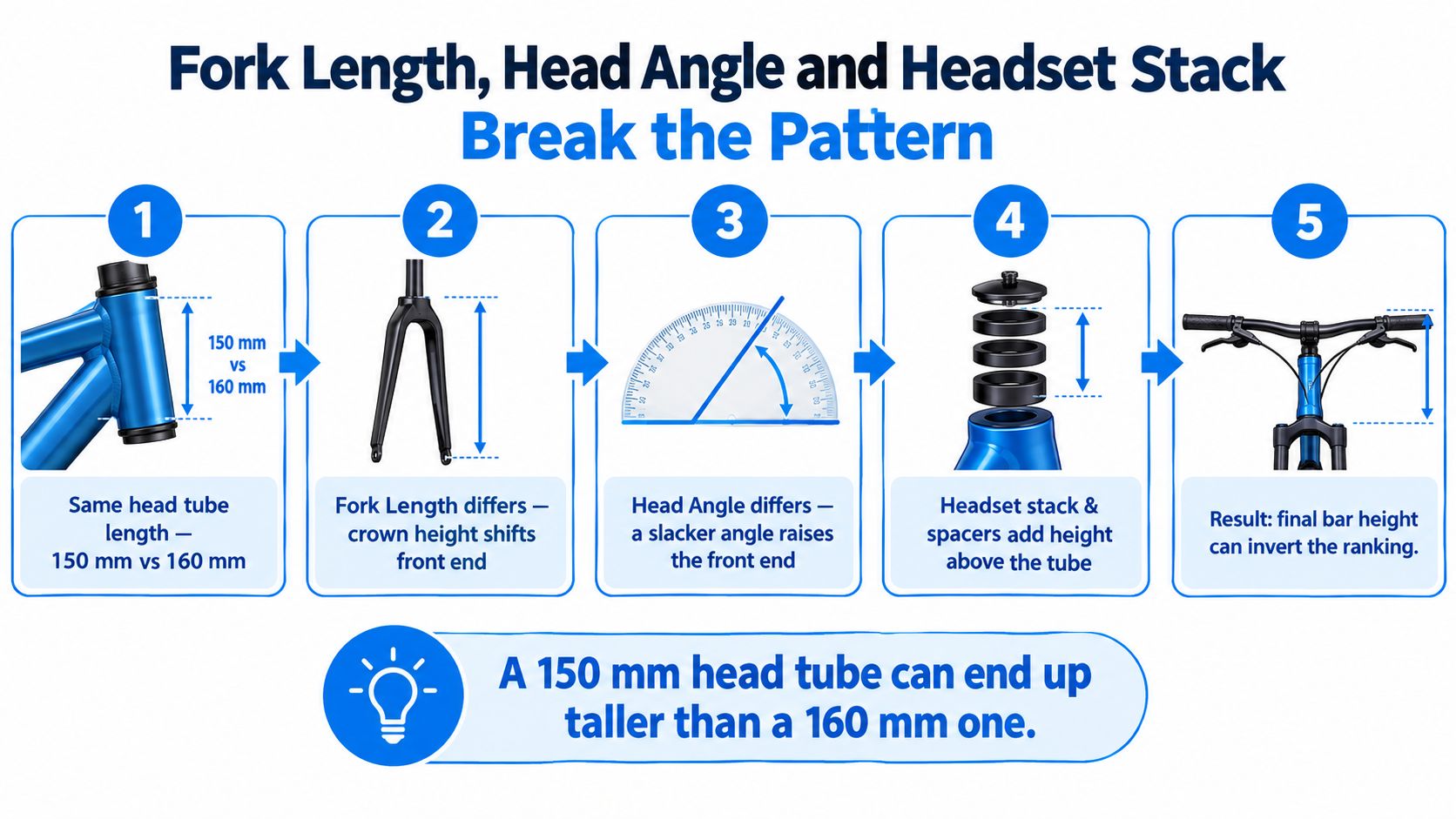
The mistake is assuming a frame number settles the contact-point question by itself. It does not. Published stack is a frame coordinate. Finished handlebar height is a separate outcome created by the frame plus the cockpit parts and their allowed configuration.
Worked Example: Two Same-Size Frames With Different Front Ends
Take two representative frames with similar reach. One has lower published stack and the other has higher published stack. They begin from different vertical frame coordinates, even before you consider cockpit parts.
The number that matters is the configured position
That is the part most listings skip. A frame can look close on paper and still miss a rider's known-good contact-point position once the actual cockpit is considered. Another frame can begin from a different stack number and still work if the available configuration supports the intended outcome.
If two frames have similar reach but different stack, they begin from different vertical frame coordinates. Whether either can reproduce a known-good contact-point position depends on the available cockpit configuration and intended component limits.
What changes when stack changes
The vertical frame coordinate differs: the frames do not start from the same BB-relative height.
Comparison to known-good geometry changes: each frame needs to be checked against the rider's reference bike or fit coordinates.
The path to the intended contact point may differ: available cockpit configuration matters.
Final hand position still depends on cockpit components: frame numbers alone do not finish the calculation.
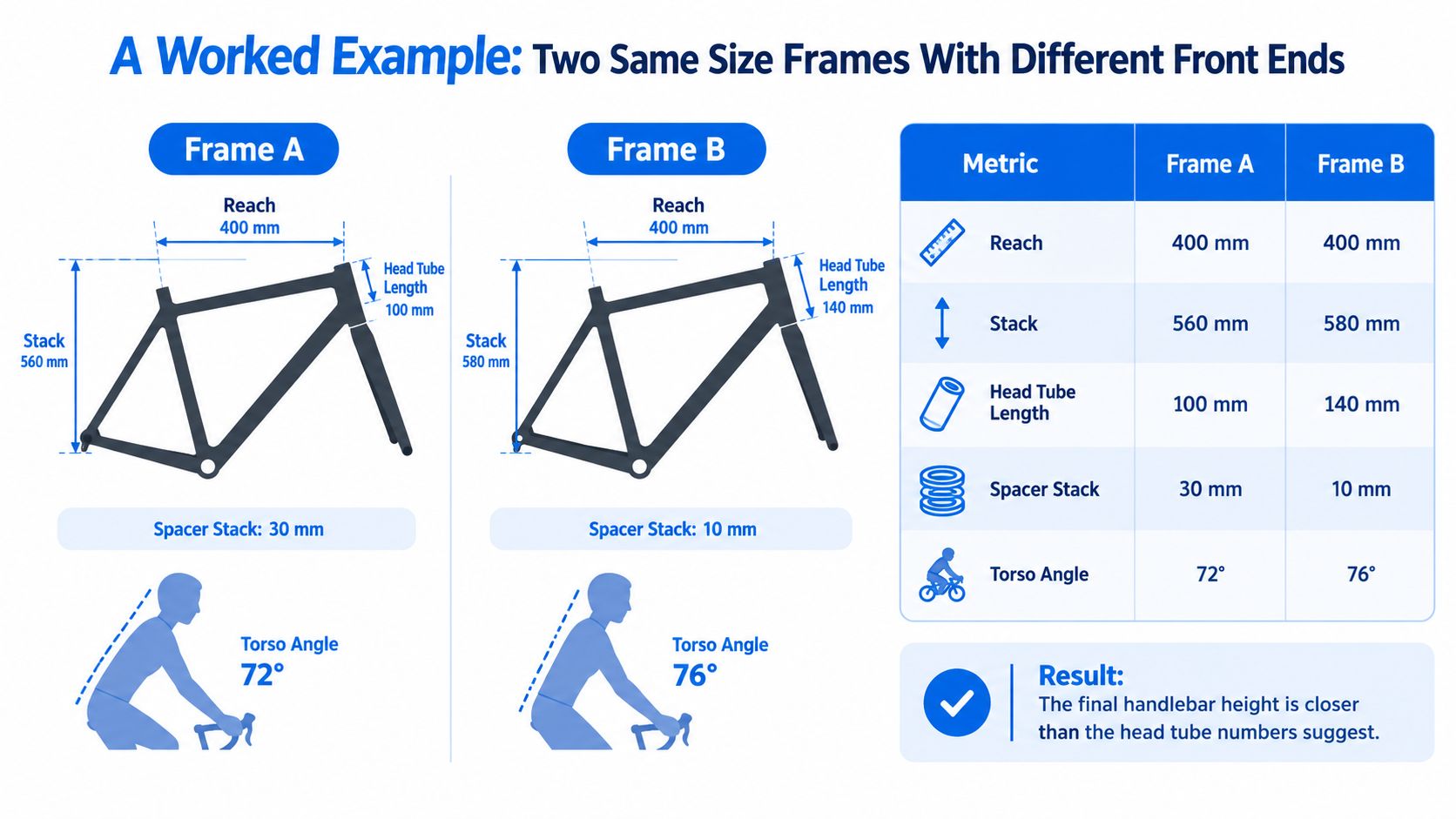
Whether a stack difference is meaningful depends on the rider's known-good reference, frame reach, available cockpit configuration, and manufacturer/component limits.
Reading Used Listings With Stack First and Head Tube Second
A used listing can look complete and still leave out the frame coordinates that matter most. If the seller gives you only a nominal size or only a head tube length, treat that as incomplete information for geometry comparison.
If the seller gives you only “size 56,” treat it as a sticker, not geometry. A real comparison starts from the published frame coordinates and then considers the cockpit parts that determine finished hand position.
What to watch for
Start with stack: use it as the primary frame-level vertical comparison.
Add reach with it: stack and reach are the primary frame coordinates, not final hand position.
Use head tube length as context: it helps describe frame construction, but it is not interchangeable with stack.
Look for the full geometry chart: without it, your comparison is incomplete.
Check cockpit details separately: finished handlebar height depends on the parts above the frame.
Buyer rule: if a listing omits stack, treat it as incomplete for frame-level comparison.
Some listings will show combinations of stack and head tube length that seem unintuitive at first glance. That does not make them a red flag by itself. It demonstrates why the dimensions are not interchangeable.
For used-bike shopping, I care about whether the published frame coordinates and cockpit constraints line up with the rider's known-good reference. Head tube length still helps, but only as supporting context. Stack tells you more about the frame's BB-relative vertical coordinate.
How SYCLR Uses Stack and Head Tube Length for Better Fit
SYCLR compares road and gravel listings using fit signals, geometry signals, model-year context, price context, listing quality, condition signals where available, and confidence signals.
That matters because a raw marketplace view usually shows inventory, not interpretation. SYCLR helps riders compare better-fit road and gravel listings, start with height, bike type, and budget, then use geometry signals and listing context to shortlist faster. If you already know your stack, reach, or current-bike geometry, the advanced fit entry can be a cleaner starting point for more precise comparisons.
SYCLR does not perform a professional bike fit, physically inspect bikes, authenticate listings, verify ownership or seller claims, or guarantee fit or condition.
Buyer FAQs and Your Next Step
Should I prioritize stack or head tube length? Prioritize stack first as the primary frame-level vertical comparison. Then use head tube length as supporting construction context only.
How do I compare a road frame and a gravel frame fairly? Compare stack, reach, and the cockpit parts that affect finished hand position. Tube length alone will mislead you.
What if a used listing omits stack? Treat that listing as incomplete. Measure your current bike's stack and compare it to the seller's geometry chart, or ask for the full chart before you spend time on the frame.
Can I fix a low front end with spacers? Spacers can change finished cockpit height within fork-steerer, headset, stem and manufacturer limits, but they do not change frame stack.
Is head tube length useless? No. It is useful supporting context about front-end construction, but it only tells part of the story.
If you are comparing used road or gravel frames right now, open SYCLR and start with height, bike type, and budget. Compare fit and geometry signals first, then shortlist the bikes that make sense on paper before you message a seller.