
Why Bike Sizes Differ Between Brands and How to Compare
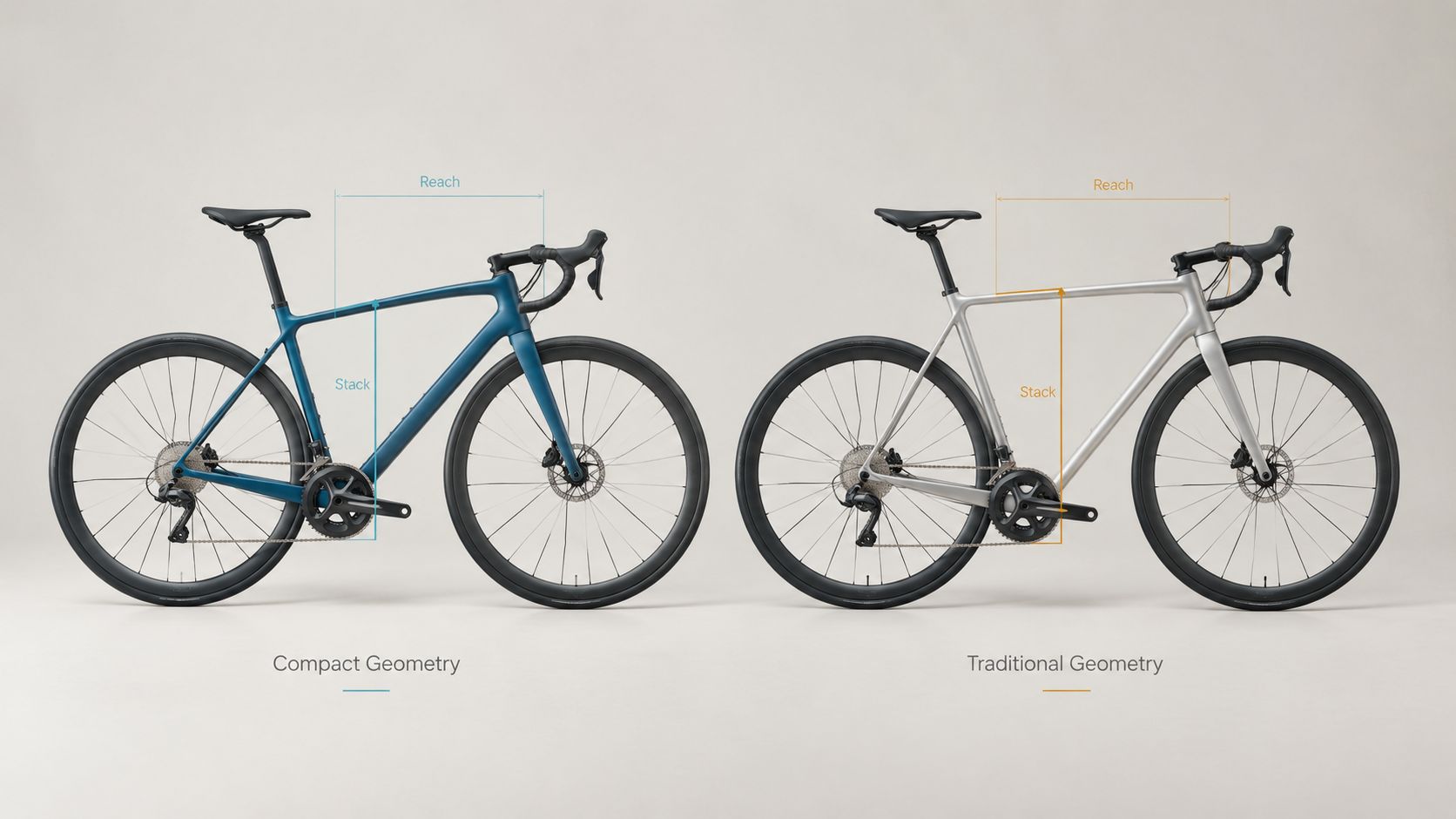
You've found two bikes with the same nominal size, perhaps a 54 cm road bike or a Medium gravel bike, and the labels suggest an easy choice. Then you compare the actual geometry and realize the two frames may place the rider very differently despite sharing the same nominal size. That happens because size labels are internal brand and model labels, not universal rider positions or universal dimensions.
The practical answer to why bike sizes differ between brands is straightforward: manufacturers use different frame geometries, sizing conventions, model-year updates, and intended riding positions. The most reliable workflow is simple: label -> exact model and year -> stack and reach -> supporting geometry -> cockpit -> known-good fit reference. Height can help narrow the search, but labels alone cannot tell you whether two bikes will fit the same.
| What to compare | Why it matters |
|---|---|
| Size label | Useful for locating the correct row in a brand chart, but not comparable by itself |
| Exact model and year | Confirms which geometry chart actually applies |
| Stack | Frame-level signal for front-end height |
| Reach | Frame-level signal for horizontal length |
| Supporting geometry | Adds context for how the frame is built and positioned |
| Cockpit setup | Stem, spacers, saddle position, and handlebar shape affect actual hand position |
| Known-good current-bike or professional-fit reference | A current bike that fits well or a professional-fit report can provide a stronger comparison reference |
Table of Contents
- Why Sizes Vary Across Brands
- Understanding Key Geometry Measures
- How Frame Geometry Changes Between Models
- Translating Sizes Across Brands in Practice
- Why Model Geometry Matters More Than Brand
- Pitfalls When Comparing New vs Used Listings
- How SYCLR Helps You Compare Fit-Aware Listings
- Bike Size Comparison FAQs
- Does a proprietary label such as S1 or S2 translate across brands?
- Should I choose a different frame or change the stem?
- Is inseam enough to choose a bike?
- Why can two Medium gravel bikes feel different?
- Should used-bike shoppers compare the model year?
- What if I'm between two sizes?
- Can a size chart replace a test ride?
Why Sizes Vary Across Brands
Two bikes carrying the same 54 cm label can use meaningfully different stack, reach, and cockpit dimensions across brands or even across models within the same brand. Neither label is necessarily wrong. The labels are simply not universal measurements across brands.
Historically, brands used multiple seat-tube measurement conventions, so even the basic meaning of a number was not consistent. Compact geometry then introduced sloping top tubes and shorter visible seat tubes, which further weakened the old assumption that a 52 cm bike from one maker should match a 52 cm bike from another. A compact frame with a 52 cm seat tube can fit very differently from a classic-geometry frame with a larger labeled seat tube, as explained in BikeInsights' explanation of bike size conventions.
Compact-frame designs became increasingly common, further weakening the usefulness of seat-tube length as a cross-brand sizing reference. Stack and reach provide more consistent frame-level reference points for cross-brand comparison than nominal seat-tube labels. Brands still use names such as Small, Medium, and 54 cm, but those names function as indexing systems inside a product range, not as universal dimensions.
Practical rule: Treat the size label as the starting point. Treat the geometry chart as the evidence.
A rider switching between brands should read the manufacturer's chart, identify the correct model year and frame row, and compare the actual geometry. SYCLR's manufacturer geometry methodology is useful background when a listing, archive, or retailer page presents size information inconsistently.
Understanding Key Geometry Measures
A geometry chart can look intimidating, but a short list of measurements answers most of the pre-purchase questions that matter. Start with stack and reach, then use the other figures to understand the rest of the frame context.
| Metric | Description |
|---|---|
| Stack | Vertical distance from the bottom bracket to the top of the head tube. It is a frame-level signal for front-end height. |
| Reach | Horizontal distance from the bottom bracket to the top of the head tube. It is a frame-level signal for frame length. |
| Effective top tube | Horizontal top-tube reference that can help compare some frames, but it is less direct than reach when seat-tube angles differ. |
| Seat-tube length | The frame's seat-tube measurement. It helps identify the labeled size, but different conventions limit cross-brand usefulness. |
| Head tube length | Adds context for front-end structure and can help explain why two frames with similar labels present differently. |
| Wheelbase | Adds context for overall frame layout when comparing exact models. |
| Cockpit length | Practical saddle-to-handlebar distance, shaped by frame reach, saddle position, stem, spacers, and handlebar dimensions. It is not a single universal frame number. |
Start with stack and reach
Stack and reach are useful primary frame-level signals because they use common reference points and are more comparable across brands than nominal size labels.
Use them to compare the frame itself, not the final hand position in isolation. Actual hand position also depends on the cockpit and saddle setup, including spacer height, stem length, handlebar reach, handlebar shape, and saddle setback.
Use the remaining numbers as context
Effective top tube and seat-tube length are especially useful when looking at older listings or classic geometry, but they should not override stack and reach on modern frames. Head tube length, wheelbase, and other chart values help explain how a frame is configured once you have already identified the correct model, year, and size.
For a practical guide to reading every field without confusing frame measurements with cockpit parts, use SYCLR's bike geometry chart guide.
How Frame Geometry Changes Between Models
A rider can keep the same printed size label and still end up on a substantially different bike. That is true across road, gravel, race-oriented, and more comfort-oriented models. The reason is not the label. The reason is the actual frame geometry used for that exact model and year.
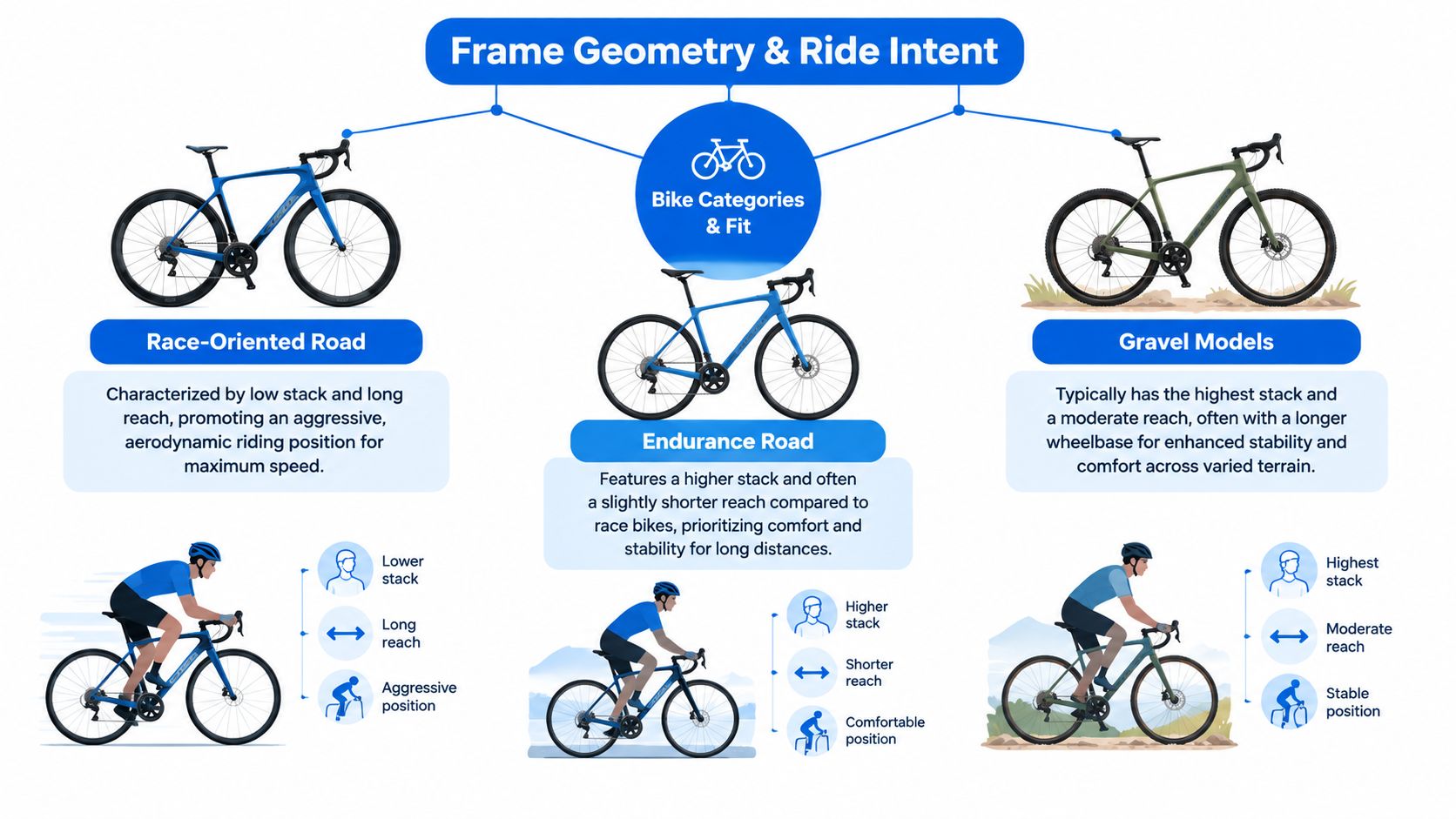
Labels do not standardize frame shape
A label such as 54 cm or Medium does not standardize stack, reach, front-end height, or cockpit layout. It tells you where that frame sits inside a specific range from a specific brand. To compare bikes accurately, you need the exact model, the exact year, and the manufacturer's geometry chart for that frame.
That is why comparison should follow a fixed order: start with the label only to find the correct chart row, then verify the exact model and year, compare stack and reach, review supporting geometry, and finally account for cockpit setup.
Use exact-model comparisons, not category assumptions
In the cited Venge-versus-Roubaix geometry comparison, the size-54 S-Works Venge is listed at 534 mm stack and 387 mm reach, while the size-54 S-Works Roubaix is listed at 585 mm stack and 375 mm reach. Those numbers show why same-label comparisons can fail, even within one brand. The figures reported in the geometry comparison make the difference clear: the Roubaix is 51 mm taller at the front and 12 mm shorter in reach, despite sharing the same label.
Use that example as a reminder to compare exact models, not as a universal rule for all race bikes, endurance bikes, or gravel bikes.
Translating Sizes Across Brands in Practice
The most reliable translation method starts with a known reference, not a preferred size label. If your current bike’s position works well and is worth preserving or deliberately changing, use it as a comparison reference. If you have a professional fit report, that can be an even stronger reference.
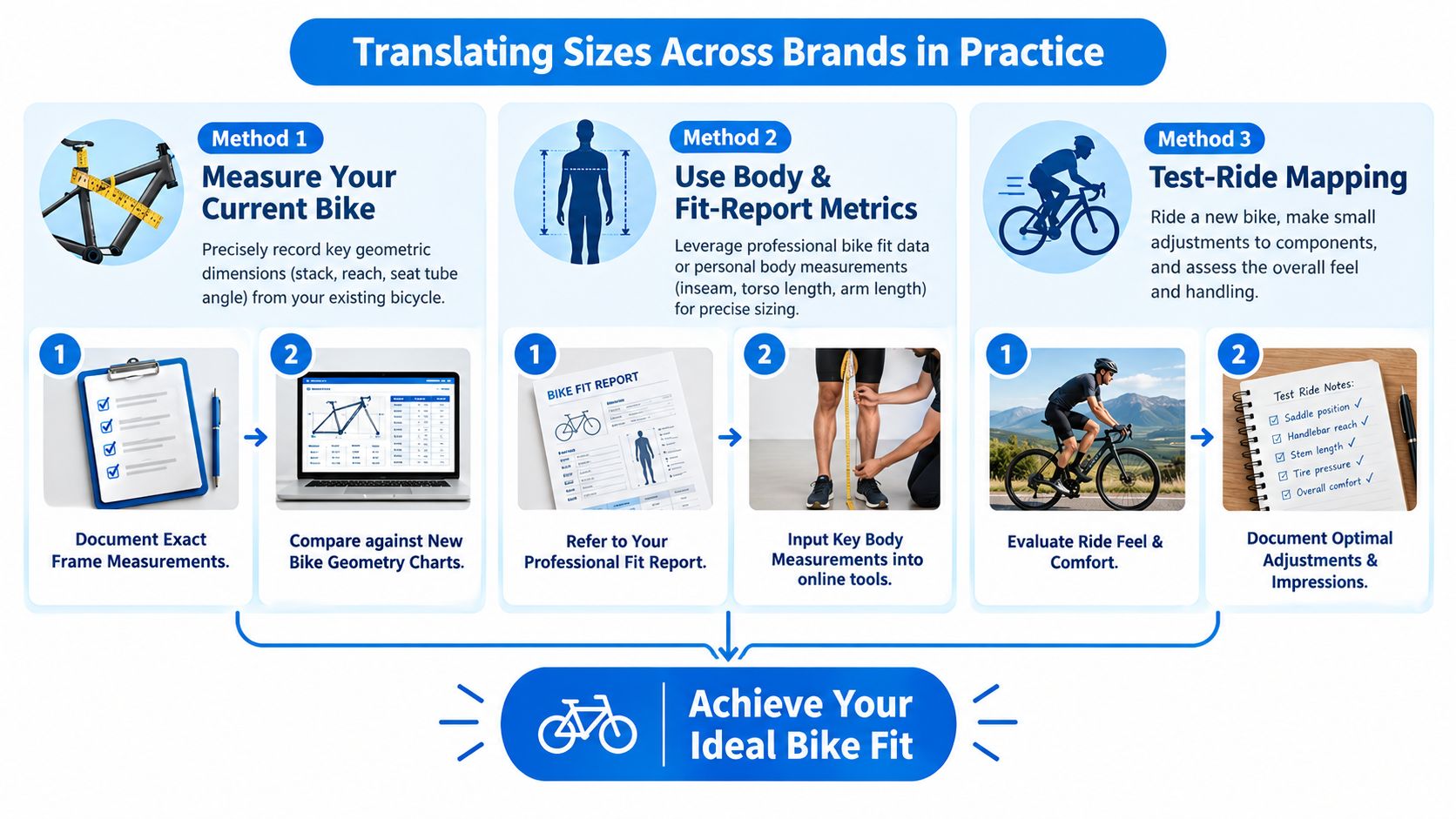
Method one uses your current bike
Record the current bike's frame size, stack, reach, stem length, spacer height, handlebar reach, handlebar shape, and saddle position. Geometry charts provide the frame numbers, while your own measurements show how the bike is actually assembled.
Then compare the candidate frame's stack and reach with your current bike. Use the remaining geometry and the current cockpit to understand how close the complete setup may be.
Method two uses a fit report when available
Height and inseam can provide useful initial sizing context. A known-good current bike or a professional fit report is stronger comparison context when available, because it reflects a position that already works in the real world.
If you have a fit report, use it to compare candidate frames against a known reference. If you do not, a current bike that you know works well is still more useful than trying to infer the correct frame from body proportions alone.
Method three checks the complete build context
Before deciding that two frames are equivalent, check the complete build context. A similar stack and reach pair may still be paired with a different stem, spacer arrangement, handlebar shape, or saddle position.
Cockpit changes can refine the position on a suitable frame, but they should not be used to compensate for a frame that is poorly matched in stack, reach, or adjustment range.
The key principle is that labels such as 54 cm or Medium do not standardize frame shape. As MyVeloFit's data-based sizing explanation makes clear, stack and reach are the more comparable technical measures, so geometry charts should lead the comparison.
Why Model Geometry Matters More Than Brand
Brand size differences usually come from two design realities. A manufacturer may use compact geometry with a sloping top tube, which makes seat-tube length a weak visual reference. A brand may also use different geometries across different models, even when the labels look familiar.
Avoid judging an entire brand as consistently small or large. Different models within the same brand can use meaningfully different geometry even when their size labels look familiar. For a practical comparison, identify the exact model and intended use first, then compare its geometry rather than relying on the label.
Classic and compact frames
Classic frames generally use a level top tube, so the printed seat-tube length more closely matches the frame's apparent height. Compact frames slope the top tube and shorten the visible seat tube. This changes how the frame looks and weakens the usefulness of seat-tube labels for cross-brand comparison.
As a result, two frames marked "52 cm" can look different and place the rider differently. Use stack, reach, effective top-tube length, and seatpost extension context to translate the label into a more useful comparison.
The model comparison matters more
The cited Venge and Roubaix comparison shows why exact model geometry matters more than the shared brand name or nominal size label. At size 54, the Specialized S-Works Venge has 534 mm stack and 387 mm reach, while the Specialized S-Works Roubaix has 585 mm stack and 375 mm reach. The geometry figures are documented by Cycling Weekly's road-bike geometry analysis.
Apply the same workflow to new and used listings. Match the exact model and year first, compare stack and reach second, then check the current cockpit and remaining geometry.
Pitfalls When Comparing New vs Used Listings
A new-bike geometry chart usually gives you a clean starting point. A used listing may show a different stem, added spacers, a replacement handlebar, or a changed saddle position. The printed frame size may be accurate while the photographed setup no longer reflects the original build.
Model year adds another layer. A current size label does not automatically translate to an older version with the same model name. The exact model year matters because the manufacturer's geometry chart may differ.
Check the listing in the right order
Keep the used-bike review process simple and fit-focused:
Exact model
Model year
Size
Manufacturer geometry
Current cockpit
Known-good current-bike or professional-fit reference
That sequence helps you separate the frame itself from the way the listed bike is currently set up.
How SYCLR Helps You Compare Fit-Aware Listings
SYCLR is one option for organizing road and gravel listings around fit signals, geometry signals, model-year context, price context, listing quality, condition signals where available, and confidence signals. The workflow is designed to reduce the time spent comparing labels that do not describe the same frame shape.
Begin with the minimum useful information
Start with your height, bike type, and budget. This creates a practical first pass across road or gravel listings, but it should not be treated as a final fit decision. Height narrows the field. The exact model, year, geometry, and setup determine whether an individual listing deserves closer attention.
For more control, enter detailed fit information through SYCLR's fit-details entry. Riders who already know their current-bike stack and reach, or who have a fit report, can use those figures to compare a new frame against a known reference.
The important output is not a universal size verdict. It is a more organized view of fit signals, geometry signals, model-year context, price context, listing quality, condition signals where available, and confidence signals, so you can build a more relevant shortlist.
Compare the complete listing, not just the frame
Open each candidate and inspect the model identity, frame size, geometry availability, model year, photos, and current cockpit details. If important geometry or setup information is missing, treat the listing as an unresolved comparison until those details can be verified.
For used bikes, compare the photographed cockpit with the manufacturer's original specification when possible. If the bike has a different stem or handlebar, separate the frame's stack and reach from the current contact-point setup before deciding whether the size translates.
SYCLR does not perform a professional fit, physically inspect bikes, authenticate listings, verify ownership or seller claims, or guarantee fit or condition. Its role is narrower and practical: help riders compare available information more consistently before they contact a seller.
Bike Size Comparison FAQs
Does a proprietary label such as S1 or S2 translate across brands?
No. Treat S1 or S2 as an internal range label. Find the model's stack and reach, then compare those values with a bike you know fits or with fit-report details.
Should I choose a different frame or change the stem?
Start with a frame whose geometry is a plausible match for the intended position, then use the cockpit to refine that position. Stem length, spacers, handlebar reach, and saddle position can fine-tune a suitable frame, but they do not fix a poor frame match.
Is inseam enough to choose a bike?
No. Inseam can help with initial context, but it cannot translate one brand's size label to another by itself. Use it to narrow the search, then compare the exact model, year, stack, reach, and current cockpit. SYCLR's bike fit guide provides broader pre-purchase context.
Why can two Medium gravel bikes feel different?
Because "Medium" is not a universal dimension. The two bikes may use different stack, reach, supporting geometry, and cockpit setups, even if the printed label matches.
Should used-bike shoppers compare the model year?
Yes. The exact model year helps you find the correct manufacturer's geometry and avoid comparing the wrong version of a bike with the same model name.
What if I'm between two sizes?
Compare both options against your known-good bike or fit report. The stronger candidate is the one whose exact geometry and cockpit can support the intended position without requiring substantial compensation.
Can a size chart replace a test ride?
No. A size chart can narrow candidates and improve frame comparison, while a test ride or professional-fit context can provide additional information about the complete position. Neither guarantees fit by itself.
Use SYCLR to compare road and gravel listings by fit signals, geometry signals, model-year context, price context, listing quality, condition signals where available, and confidence signals. Start with the basics, or enter known stack, reach, or fit-report information through Advanced Fit to build a more relevant shortlist before contacting a seller.