Used Gravel Bikes: How to Choose the Right Fit, Condition & Value
Most advice on used gravel bikes starts in the wrong place. It starts with price, brand, or a vague idea that any drop-bar bike with knobby tires will do the job.
That approach gets people into expensive mistakes. A cheap listing with the wrong geometry, limited tire clearance, unclear model year, or vague seller details isn’t a bargain. It’s just a lower-priced problem. A strong used gravel bike buy is the one that fits your body, suits your terrain, matches your riding style, and comes with enough listing clarity to judge what you’re buying.
Used gravel bikes also demand more interpretation than many road listings. The category has changed quickly, and the word “gravel” covers very different bikes. Some are close to endurance road bikes. Others are built around bigger tires, calmer steering, and more carrying capacity. If you don’t sort that out early, it’s easy to compare two listings that share a label but solve completely different riding problems.
Table of Contents
The Best Used Gravel Bike Is Rarely the Cheapest One
The cheapest used gravel bike is often the fastest way to buy the wrong bike.
Price gets attention, but confidence-adjusted value is what keeps a purchase from turning into a parts bill. On a used gravel bike, the question is not whether the number looks low. The question is whether the bike’s year, geometry, tire clearance, condition, and seller credibility support that number.
That matters even more in a category where one model name can cover very different bikes across a few generations. A bargain price on a frame with tight tire clearance, dated fit, or unclear history is not a bargain for long.
The second-hand market is broad enough that buyers can afford to be selective. The key takeaway is that terrain-capable bikes are already a major part of the used market. There are enough listings that patience usually beats compromise.
Cheap can become expensive fast
A low asking price often hides one of the problems that matter most on gravel:
-
Limited tire clearance that rules out the tire sizes many riders prefer.
-
Geometry that rides more like an endurance road bike than a stable gravel bike.
-
Unclear model year or frame generation that makes original spec harder to verify.
-
Wear in expensive areas such as the drivetrain, wheel hubs, bottom bracket, or hydraulic brakes.
-
Low seller transparency when basic details, service history, or close-up photos are missing.
I pay close attention to what the seller can explain without hesitation. A cheap bike with clear photos, a known build, and believable maintenance history can be a smart buy. A cheap bike with vague answers and missing details usually stays cheap for a reason.
Brand name and groupset still matter, but they come after the fundamentals. On the used gravel side, a well-priced bike with the right year, useful clearance, and geometry that suits your riding is usually the stronger purchase than a cheaper listing that leaves three big question marks.
Verify the Model Year and Gravel Sub-Type First
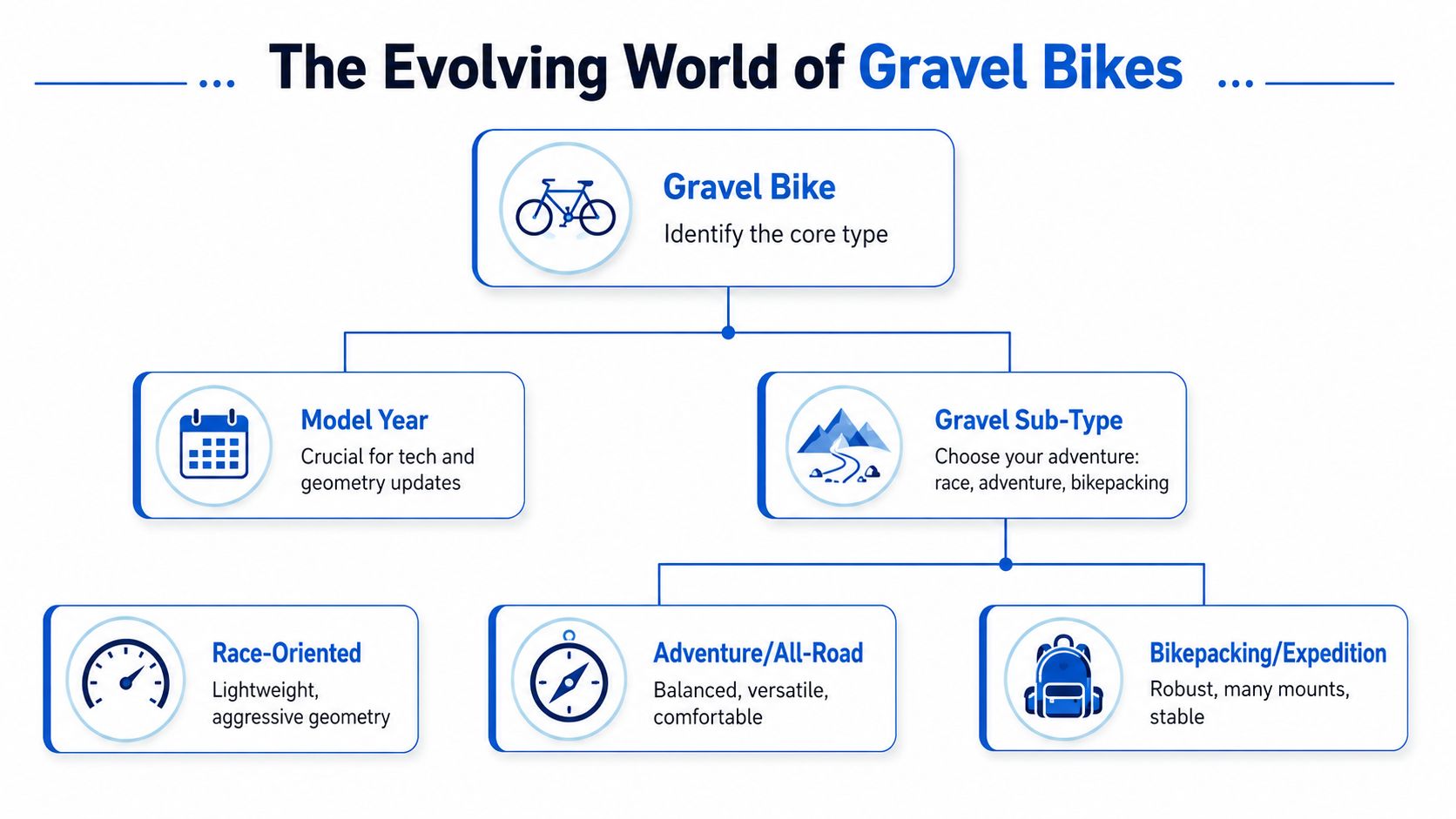
The first detail to verify on any used gravel bike listing is the exact model year or frame generation. Not the family name. Not “basically new.” Not “same as current model.” The year.
A listing that only says “Specialized Diverge,” “Trek Checkpoint,” or “Canyon Grizl” is incomplete. Gravel bikes changed quickly as brands pushed the category in different directions, and the same model name can span major differences in geometry, tire clearance, axle standards, mounts, and original build.
The category itself is still expanding. Used gravel listings require extra care because the category has changed quickly. Newer generations may add tire clearance, different geometry, updated axle standards, more mounting points, or different drivetrain expectations, even when the model name stays the same. More growth usually means more sub-types, more frame generations, and more buyer homework on the used side.
Why the year matters before anything else
Once you know the year, you can verify the bike’s original platform and judge any upgrades or swaps in context. Without that, every other comparison gets softer.
Check these first:
-
Frame generation. A later generation may have different tire clearance, fit, or mounting options even if the name stayed the same.
-
Original trim. This helps you see whether the seller changed wheels, drivetrain parts, or cockpit components.
-
Brake and axle standard. Older generations may create compatibility headaches.
-
Wheel compatibility. Some frames work well with more than one setup. Others are much more limited.
If the seller can’t confirm the model year, listing confidence drops immediately.
Not all used gravel bikes are built for the same riding
This is the second filter. The word “gravel” isn’t specific enough to judge whether a bike suits your riding.
A practical way to sort used gravel bikes is by intended use:
-
Fast all-road bikes feel closest to endurance road bikes. They suit mixed pavement and lighter gravel.
-
Race gravel bikes usually lean lighter and quicker in feel, with a more aggressive posture.
-
Adventure gravel bikes tend to balance comfort, stability, and versatility.
-
Bikepacking-capable gravel bikes usually bring more mounts, steadier handling, and room for bigger tires or gear.
A buyer should judge the listing by the riding it supports, not by the category label alone. If your rides are mostly pavement with rough connectors, one kind of used gravel bike makes sense. If you want loaded rides, rough roads, and bigger tires, you need a different tool entirely.
For a broader category comparison, SYCLR has a separate guide on gravel bike vs road bike.
Decode Geometry and Fit Signals for Gravel
Used gravel bike sizing goes wrong in a predictable way. Buyers fixate on the frame label, then end up on a bike that is cheap on paper and awkward everywhere that matters.
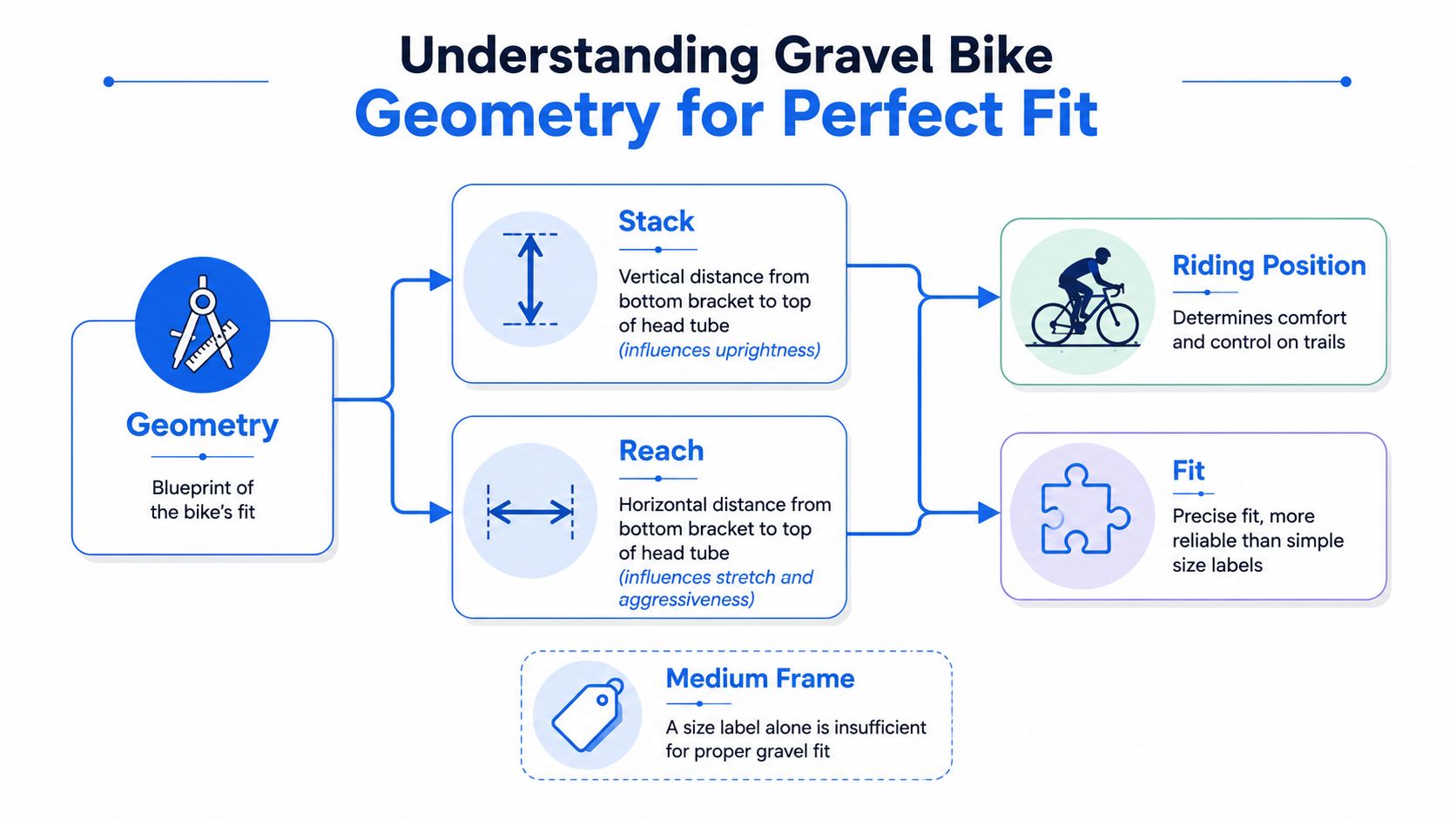
A 54 from one brand can fit like a 56 from another. A “Medium” can mean upright and steady, or long and low enough to feel nervous on loose descents. For used gravel bikes, geometry is where confidence starts.
Why size labels fail on used gravel bikes
Brand matters less here than the shape of the bike underneath you. Model year matters too, because brands often change fit and handling without changing the bike’s name. A newer version may gain stack, lose reach, or stretch wheelbase to suit bigger tires and rougher roads. On the used market, those differences change value more than a logo on the downtube.
The fit question is simple. Can you hold the position for hours, and does the bike stay calm on the surfaces you ride?
For that, start with the numbers that affect both posture and handling:
-
Stack sets bar height relative to the bottom bracket. More stack usually gives a more sustainable position for long gravel rides.
-
Reach affects how stretched out the cockpit feels. Too much reach is a common reason a used bike feels fast in the parking lot and tiring by hour two.
-
Wheelbase influences stability, especially on loose descents and washboard.
-
Head tube angle shapes steering response. Slacker often feels calmer off pavement.
-
Standover matters more on gravel than many road riders expect, because uneven stops and loose shoulders punish a bike that’s awkward to straddle.
-
Seat tube angle affects pedaling position and weight distribution between the wheels.
These numbers work together. A bike with moderate reach can still feel aggressive if the stack is low. A bike with a relaxed head angle can still feel cramped if the front end is too short.
What to compare against
The best reference point is a bike you already know fits well. Compare the used gravel bike to your current road, gravel, or hardtail cockpit and ask where the differences will show up on real rides. If you want a broader pre-purchase framework, SYCLR’s guide to bike fit before buying is a useful starting point.
For many riders coming from road bikes, a gravel bike with slightly more front-end height can make rough-surface riding feel more controlled and sustainable. But that is not a universal rule. The right used gravel bike depends on your terrain, flexibility, current-bike reference, riding goals, and the frame’s actual stack, reach, standover, wheelbase, and tire clearance.
Stack-to-reach ratio can help you screen listings quickly, but it should not decide the purchase. Use it to spot whether a bike leans racier or more upright, then go back to the actual stack, reach, standover, cockpit setup, and intended use.
Ask a better question than “Is this my size?” Ask, “Does this geometry match the terrain and riding position I want?”
That is how you judge confidence-adjusted value. A lower-priced used gravel bike with the wrong reach, low stack, or twitchy front-end geometry is not better value. It is a future resale listing.
Evaluate Gravel-Specific Components and Clearance
Cheap gravel bikes hide their compromises in three places. Tire clearance, gearing, and brakes. Those details matter more than the logo on the downtube, because they decide where the bike works well and how much money it will take to make it suit your riding.
Clearance tells you what the bike can do
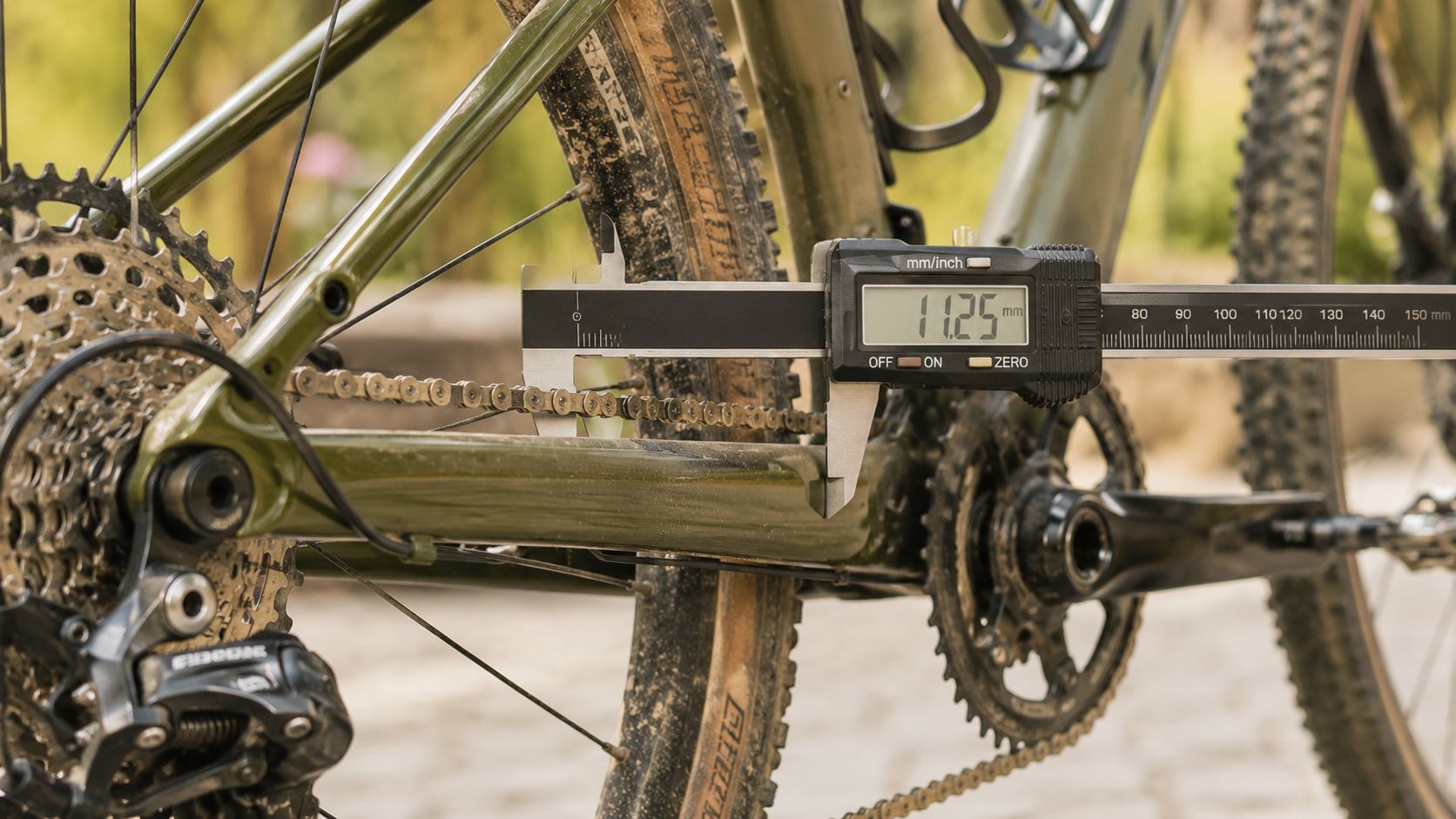
For used gravel bikes, clearance is often the separating line between a confident buy and a bike you’ll outgrow in a month. I care more about the frame and fork’s stated tire limit than the tires shown in the photos. Sellers swap rubber all the time. A bike pictured on 38 mm tires may clear much more, or it may already be near its limit.
Ask for four specific details: maximum 700c clearance, maximum 650b clearance if supported, measured rear clearance at the chainstays, and whether mud room disappears with the current tire. Gravel riding is messy. A bike that barely fits a dry-condition tire size can become a poor choice once roads turn wet or chunky.
A few checks save a lot of guesswork:
-
Current tire size proves very little. It only tells you what is mounted now.
-
700c and 650b compatibility change the bike’s range. Dual-wheel compatibility gives you more setup options.
-
Rear clearance is often tighter than fork clearance. Check both ends.
-
Mud clearance matters as much as tire clearance for mixed-surface riding.
If you’re comparing two listings that seem close on price, use a bike geometry comparison tool for gravel setups and look at tire room alongside wheelbase and front-end height. That gives you a better read on confidence-adjusted value than brand reputation does. A lower-priced bike with limited clearance is often the worse long-term buy.
Drivetrain and brake choices reveal the bike’s real use case
Used gravel drivetrains tell a story. A 1x setup usually points toward rougher terrain, simpler maintenance, and fewer front-shift problems in bad conditions. A 2x setup usually makes more sense for fast mixed-surface riding, long pavement transfers, or riders who care about tighter cadence steps. Neither is superior on its own. The right choice depends on your climbs, speed, and how often you ride loaded.
Look past the headline spec and inspect the range. A cheap 1x with too-large gaps between gears can feel fine in the parking lot and annoying for every long road section after that. An older 2x can still be an excellent gravel setup if the chainrings, cassette range, and shifter condition match the riding you plan to do.
Before you commit, get clear answers on these points:
-
Brake type. Hydraulic disc brakes usually offer better power and control on long descents and in wet grit. Mechanical discs can still work well, but setup quality matters more.
-
Chain and cassette wear. A worn drivetrain changes the cost of the deal.
-
Rotor wear and pad life. These are easy to miss in listing photos and easy to pay for later.
-
Crank, derailleur, and cassette compatibility. Mixed generations or bargain replacement parts can create awkward upgrade paths.
-
Non-original upgrades. Some improve the bike. Some suggest the previous owner was solving a problem the frame never handled well.
I also look hard at brake calipers, hose routing, and derailleur condition. Gravel bikes live in dust, grit, and wash spray. Cosmetic wear is normal. Sloppy shifting, thin pads, seized adjusters, and rounded rotor bolts are where the hidden costs start.
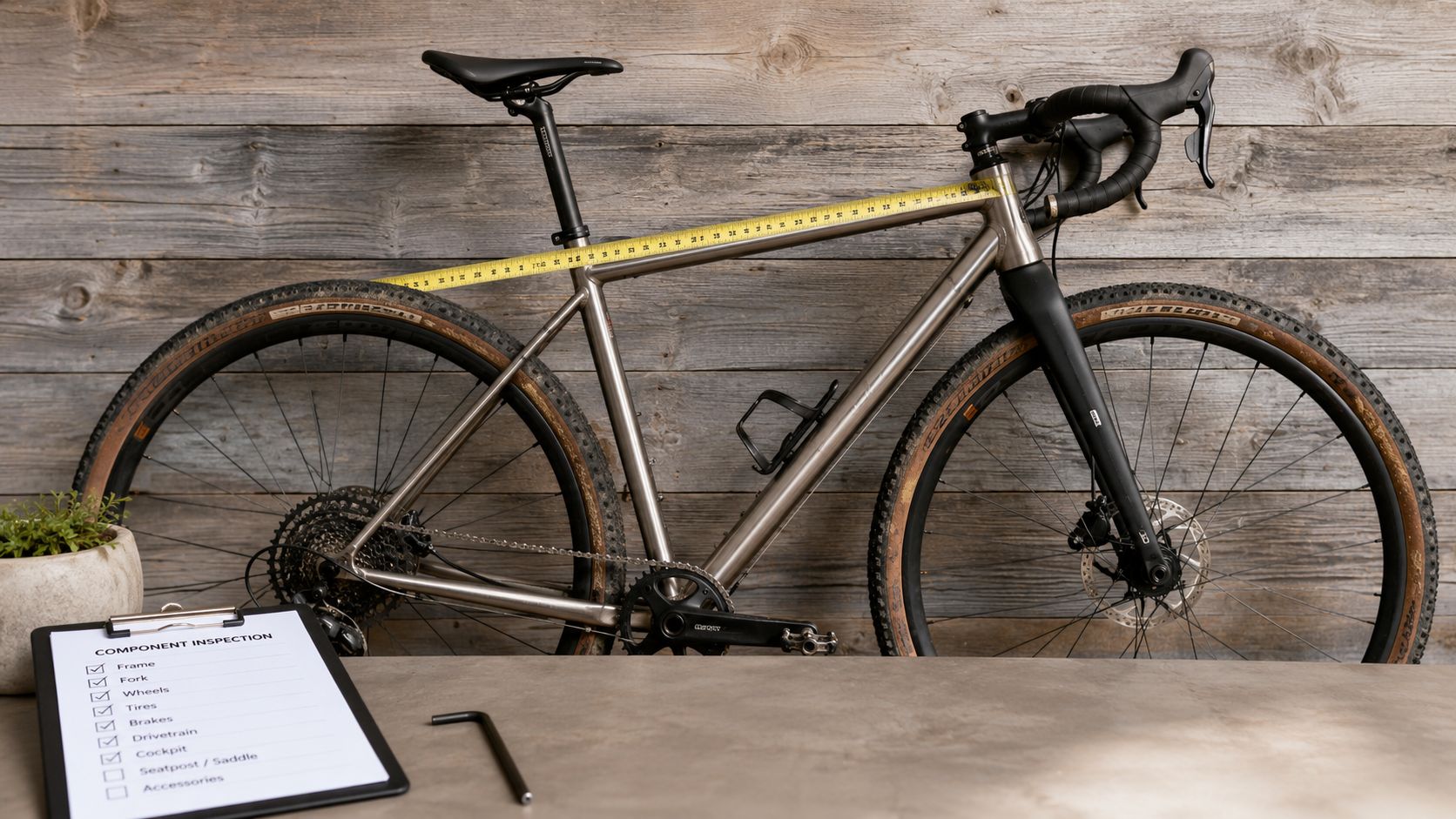
Used gravel bike wear-point checklist:
-
Chain wear
-
Cassette teeth
-
Chainring teeth
-
Brake pad life
-
Rotor wear
-
Hub smoothness
-
Bottom bracket play
-
Headset play
-
Tire cuts or dry rot
-
Wheel dents or spoke tension issues
-
Scrapes on shifters, pedals, fork, and dropouts
-
Damage around frame mounts and bottle bosses
Assess Condition and Confidence-Adjusted Value
Used gravel bike value isn’t just a number pulled from brand reputation. It’s a judgment call built from comparable listings, then adjusted for condition risk, fit uncertainty, and listing uncertainty.
That last part gets overlooked. Two bikes can appear similarly priced, but if one listing clearly identifies the year, trim, tire clearance, drivetrain, wheel size, and visible wear, it’s easier to trust. The bike with the better documentation may deserve the stronger price.
Condition starts with the listing
Good listings reduce guesswork before you even message the seller. Weak listings push work and risk onto the buyer.
A higher-confidence listing usually includes:
-
Exact model year and full trim
-
Clear photos from both sides plus close-ups
-
Visible drivetrain and brake details
-
Honest notes on scratches, chips, or replaced parts
-
Useful seller answers when you ask follow-up questions
A lower-confidence listing often says something vague like “great condition” with no supporting detail. That doesn’t mean the bike is bad. It means you can’t price it confidently.
A clear listing with honest flaws is usually stronger than a polished listing that hides basic details.
What to inspect on the bike itself
Once the listing passes the first screen, inspect the bike as a machine, not just a photo set.
Check the frame and fork for impact marks, cracks, deep gouges, and signs of a crash. Pay extra attention around the head tube, bottom bracket area, dropouts, and fork legs. On a used carbon gravel bike, surface scuffs may be harmless, but ambiguous marks deserve caution and, if needed, professional inspection.
Then move through the wear items:
-
Drivetrain for chain wear, hooked cassette teeth, and tired chainrings.
-
Wheels for dents, spoke tension issues, and hub roughness.
-
Bearings in the headset, bottom bracket, and wheel hubs.
-
Brakes for rotor condition, pad life, and lever feel.
-
Mounts and bosses for stripped threads or damage from over-tightened accessories.
The economics can still be attractive when the bike is honest and the wear is manageable. But the price gap only matters if the used bike does not immediately need a drivetrain, tires, brake service, wheel work, or fit-correction parts. A low asking price can disappear quickly once the repair list starts.
For a deeper framework on pricing uncertainty and offer logic, SYCLR’s article on used bicycle value goes further into comparable-based thinking.
The Used Gravel Bike Listing Checklist
Use this checklist before you message a seller. If the listing can’t answer most of these points, the bike may still be real, but your confidence should be lower.
| What to Verify | Why It Matters | Red Flag |
|---|---|---|
| Exact model year | Unlocks geometry, original spec, clearance, and compatibility checks | Seller can't confirm the year |
| Full model and trim | Tells you what the bike actually started as | Listing uses only a model family name |
| Frame size and geometry | Size label alone isn't enough | No geometry chart, no measurements, no fit reference |
| Stack and reach | Strong fit signals for comparing listings | Seller only says “should fit most riders” |
| Standover | Helps judge practical confidence and clearance | No standover info when requested |
| Tire clearance | Defines intended surface and future tire options | Seller only reports current tire size |
| Wheel size | Affects ride feel and upgrade flexibility | Wheel size not stated or mixed up |
| Drivetrain setup | Reveals gearing style and likely use case | Vague “Shimano gears” description |
| Brake type | Signals control, age, and future upgrade cost | No clear brake photos or brake model |
| Wheel and tire condition | Hidden repair cost can change the deal | Dented rims, dry tires, or missing close-ups |
| Frame and fork condition | Structural risk matters more than cosmetics | Paint damage with no explanation |
| Mounts and accessories | Important for bags, bottles, and use case | Broken or stripped mounts |
| Service history | Helps judge wear and seller care | “Never checked, just ridden” |
| Seller photos | Listing quality affects confidence | Blurry, dark, or one-sided photos only |
Shortlist Better-Fit Used Gravel Bikes with SYCLR
Cheap used gravel bikes get too much attention. The better buy is usually the one you can identify clearly, size with confidence, and trust not to surprise you with tire clearance limits or expensive parts swaps after purchase.
That is why a comparison tool helps at the shortlist stage. SYCLR lets riders compare road and gravel listings using fit signals, geometry, model year context, price context, and listing quality. It does not replace a workshop inspection or a proper fit session. It helps cut out weak listings before you spend time messaging sellers, arranging test rides, or chasing a bike that was never a good match.
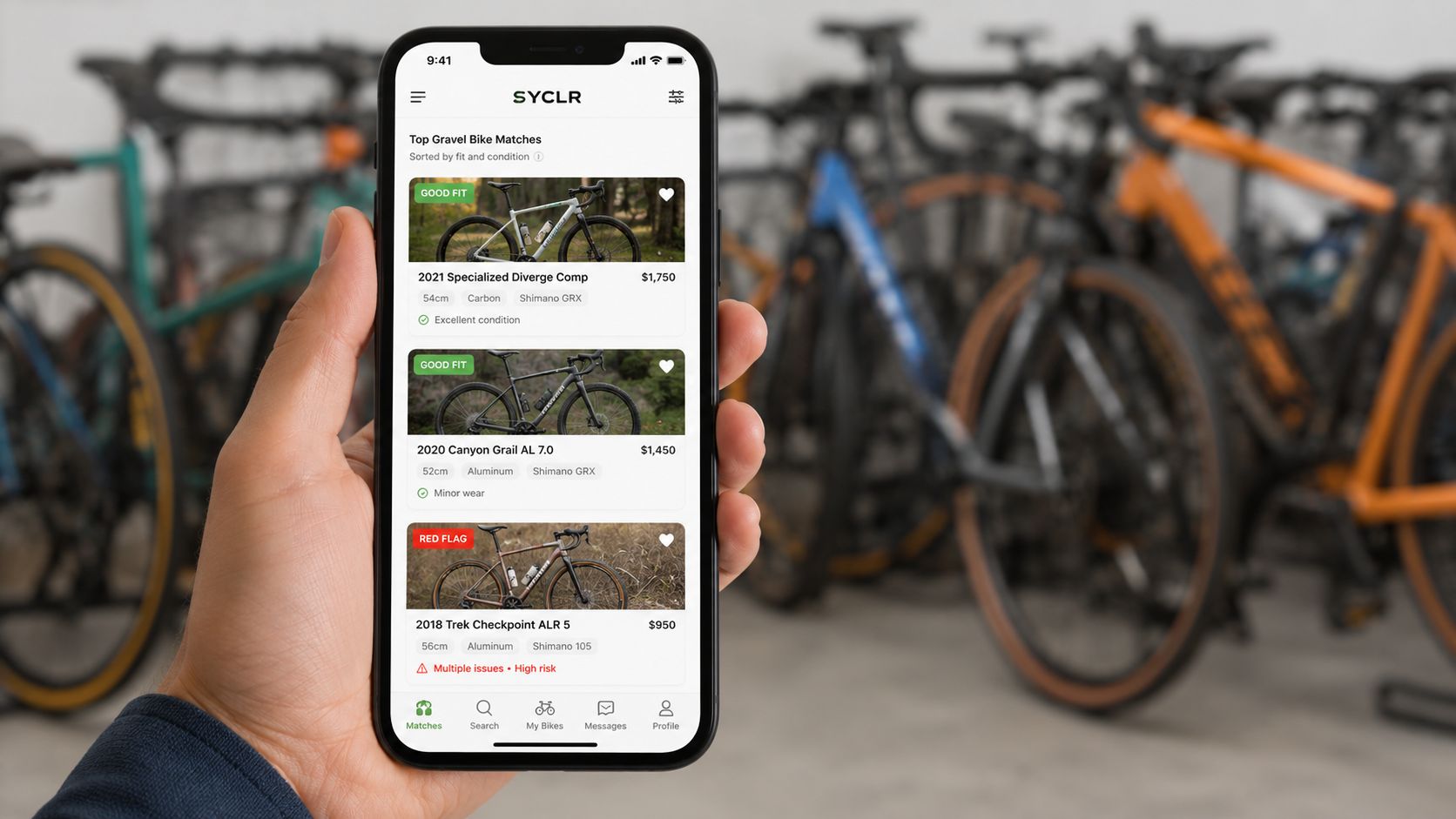
Use it in two ways.
If you are early in the search, start with height, bike type, and budget to narrow the field. That gives you a cleaner set of listings to compare, which matters when sellers leave out model year, geometry, or complete photos. If you already know what fits, enter stack, reach, current-bike geometry, or fit-report details and filter harder. That is usually the faster route to a shortlist with real confidence behind it.
This is especially useful in the used gravel category because brand and asking price are weak shortcuts. Model year can change frame geometry, fork design, axle standard, and tire room. A bike that costs a little more but matches your fit and your intended tire size is often the stronger deal than a cheaper listing that will need compromise or correction. That is confidence-adjusted value, and it is what separates a bike you enjoy from one you keep trying to fix.
Used Gravel Bikes FAQ
What should I check first on a used gravel bike listing?
Check the exact model year or frame generation first. That detail helps you verify geometry, tire clearance, drivetrain compatibility, axle standards, mounting options, and original spec.
Are used gravel bikes worth buying?
Yes, used gravel bikes can be worth buying when the fit, model year, tire clearance, condition, and listing quality all make sense. A low price alone is not enough.
What geometry numbers matter most on a used gravel bike?
Stack, reach, and standover are the first fit numbers to check. Wheelbase, head tube angle, seat tube angle, and tire clearance help explain stability, handling, and intended use.
How much tire clearance should a used gravel bike have?
It depends on your riding. Fast all-road riding may need less clearance than rough gravel or loaded riding. Check the frame and fork’s stated maximum clearance, not just the tire size currently installed.
Is a 1x or 2x drivetrain better on a used gravel bike?
Neither is automatically better. A 1x drivetrain can be simpler for rough terrain, while a 2x drivetrain can offer tighter gear steps for pavement and mixed riding. The right choice depends on terrain, climbs, speed, and condition.
What are the biggest red flags when buying a used gravel bike?
Major red flags include no exact model year, vague sizing, unclear tire clearance, poor photos, no drivetrain details, hidden frame damage, worn wheels or brakes, and a seller who avoids direct questions.
Can SYCLR help compare used gravel bike listings?
Yes. SYCLR helps riders compare used gravel listings using fit signals, geometry signals, model year context, price context, condition signals, listing quality, and confidence signals before contacting sellers.
If you are comparing used gravel bikes now, start with your height, bike type, and budget in the SYCLR app. SYCLR helps you compare used gravel listings by fit signals, geometry signals, model year context, price context, condition signals, listing quality, and confidence signals so you can shortlist better-fit bikes before you message sellers.
Already know your current-bike geometry, stack, reach, or fit-report details? Use your fit details to improve your recommendations.