
Carbon vs Aluminum Gravel Bike: Which Should You Choose?
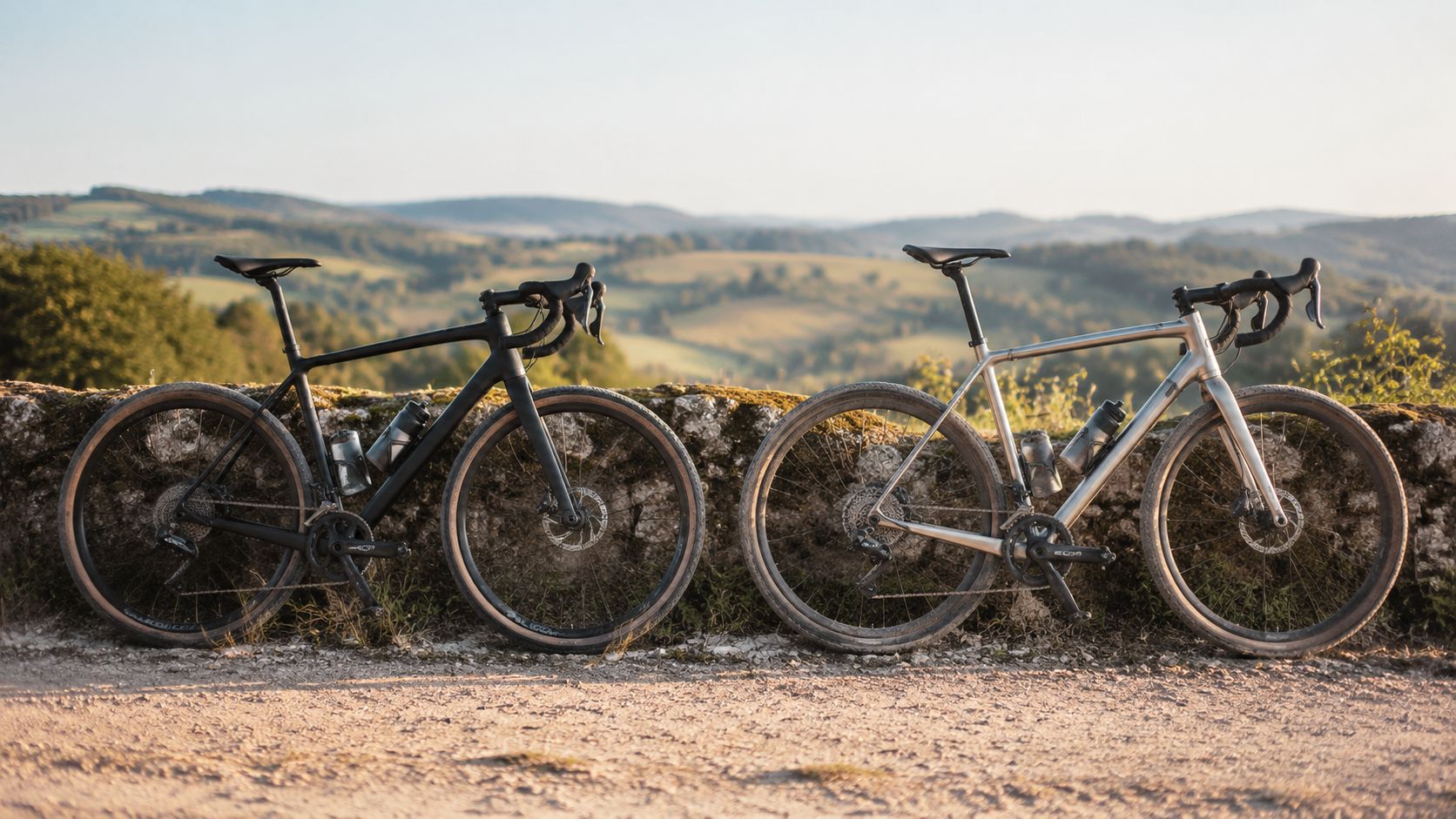
Choose carbon when the complete bike fits well and the lower weight, frame design, or higher-end build justify the price. Choose aluminum when value, simpler ownership, and putting more of your budget into wheels, tires, gearing, or other parts matter more.
Neither material guarantees better comfort, speed, durability, gravel capability, or resale. In a carbon vs aluminum gravel bike decision, the better choice depends on fit, geometry, tire clearance, cargo needs, terrain, build quality, condition, and total price, not the frame material by itself.
Table of Contents
- The Real Carbon vs Aluminum Gravel Bike Decision
- How Carbon and Aluminum Affect Gravel Bike Design
- A Cautious Comparison Table for Gravel Buyers
- Fit Geometry and Tire Clearance Matter More Than Material Labels
- Rough Gravel Speed and Control
- Bikepacking Carrying Needs and Real-World Use
- Durability Damage and Repair Risk
- Used Carbon Gravel Bike vs Aluminum Listings
- Cost Complete-Bike Value and Resale
- How SYCLR Helps You Compare Gravel Bikes Better
- Frequently Asked Questions
- Is carbon faster than aluminum for gravel
- Does aluminum ride harsh on gravel
- What is the best gravel bike frame material
- Which is better for bikepacking, carbon or aluminum
- Should I worry about a used carbon gravel bike
- Is a carbon frame worth paying more for on a gravel bike
- What matters more than gravel bike frame material
The Real Carbon vs Aluminum Gravel Bike Decision
The usual carbon gravel bike vs aluminum debate gets framed too simply. One material gets presented as the performance choice, the other as the budget choice. Real gravel-bike buying is not that clean.
A gravel frame has to work with your fit, your terrain, your tire setup, your handling preferences, your carrying needs, and the condition of the exact bike in front of you. That is why the best answer to carbon or aluminum gravel bike is usually conditional. Carbon can be the right buy when the complete bike earns its premium. Aluminum can be the right buy when it delivers stronger overall value with fewer compromises elsewhere.
For a broader road-focused version of the same material question, see SYCLR's carbon vs aluminum road bike comparison.
What frame material can change, and what it cannot
Frame material can influence the design options engineers have for tube shapes, structural targets, integration, frame weight, and packaging around tires or storage. The resulting geometry and fit still depend on the exact model and design brief rather than the material itself. That matters. It can change how one gravel bike rides, handles, carries gear, or fits within a price bracket.
But material alone does not decide whether a bike will feel smooth, feel quick, carry loads well, suit rough roads, or hold value. Construction details matter just as much, and often more. Tire size and casing, tire pressure, wheel quality, fork design, seatpost, bar shape, frame geometry, and complete-bike weight can all reshape the riding experience.
Practical rule: compare the whole gravel bike, not the frame material in isolation.
How Carbon and Aluminum Affect Gravel Bike Design
Carbon gives bike designers broad freedom in shaping tubes and tuning the structure of a frame. That flexibility can support lighter builds, aerodynamic shaping, integrated storage, or different stiffness targets in different parts of the frame. In gravel, that may show up in bikes aimed at racing, fast mixed-surface riding, or premium complete-bike packages.
Aluminum also allows very capable gravel-bike design. A well-made aluminum gravel bike can have modern tire clearance, stable geometry, useful mounting points, and a build that suits rough roads or long mixed-surface rides. Because aluminum frames often cost less than comparable carbon options, brands can sometimes deliver better wheels, drivetrain parts, brakes, or tires at the same total bike price.
That is why best gravel bike frame material is the wrong question if it ignores the rest of the build. The better question is which complete bike gives you the best combination of fit, capability, condition, and value.
Why ride feel is not just about the material
Frame material can influence ride feel, but it should not get all the credit or all the blame. Two gravel bikes made from different materials can feel surprisingly close if their tires, wheelsets, fit, and geometry are similar. Two bikes made from the same material can feel very different if one has larger tires, lower pressure, a more flexible seatpost, different cockpit dimensions, or a different wheel and fork setup.
That is why blanket claims about carbon always feeling smoother or aluminum always feeling firmer are not reliable buying advice. Ride feel comes from the full system. If you want to know how a gravel bike will actually ride, look at tire volume, recommended pressure range, wheel choice, seatpost design, bar position, wheelbase, and intended use before you turn the material label into a verdict.
The practical takeaway is that ride feel should be evaluated from the complete bike rather than inferred from the frame material alone.
Why complete-bike weight matters more than frame talking points
Buyers often focus on frame weight because it is easy to market. But complete-bike weight matters more in real gravel buying. A carbon frame paired with heavy wheels and basic tires can be less appealing than an aluminum frame with a lighter, better-chosen build. The exact difference between two bikes depends on the model, size, generation, and spec.
So instead of assuming one material always saves a fixed amount, compare the actual listed weight of the complete bikes, the wheelset, the tire spec, the crank and cassette range, and whether the carbon option is forcing tradeoffs elsewhere. For many riders, wheel quality and tire choice will shape the bike more than a frame-only number.
A Cautious Comparison Table for Gravel Buyers
| Buying factor | Carbon gravel bike | Aluminum gravel bike | What to check before deciding |
|---|---|---|---|
| Upfront price | Often higher, though exact pricing depends on brand and build | Often lower for a similar category of bike | Compare complete-bike spec, not frame material alone |
| Weight potential | Can support very light complete bikes | Can still be light enough for many gravel uses | Compare actual bike weights in the same size and build tier |
| Ride feel | Depends on frame design, fork, wheels, tires, pressure, and fit | Depends on frame design, fork, wheels, tires, pressure, and fit | Test ride if possible, or compare the full setup closely |
| Geometry and shaping | Can allow more design freedom in some models | Can still deliver modern gravel geometry and clearance | Check stack, reach, wheelbase, and tire clearance |
| Cargo and mounts | Varies a lot by model | Varies a lot by model | Check mount count, frame bag space, and weight limits |
| Crash or impact evaluation | Condition can require careful inspection and a clear history | Condition also requires careful inspection and a clear history | Look at the exact frame, not generic material assumptions |
| Used-bike confidence | Depends heavily on seller detail, photos, and history | Depends heavily on seller detail, photos, and history | Ask about crashes, storage, transport, and repairs |
| Best fit for buyer | Strong option when the premium buys a better complete bike for your goals | Strong option when value and smart component choices matter more | Buy the bike that fits your terrain, budget, and ownership priorities |
Fit Geometry and Tire Clearance Matter More Than Material Labels
If a gravel bike does not fit well, frame material will not save the purchase. A well-sized aluminum bike with the right front-end height, reach, wheelbase, and tire clearance is usually a better buy than a carbon bike that is only close enough.
This is especially true in gravel because surface conditions vary so much. A rider doing fast hardpack events may want a different front-end position and handling balance than a rider doing rough roads, long days, or loaded routes. Those differences come from geometry and setup, not just material.
Do carbon and aluminum versions fit the same
Not always. Brands sometimes give carbon and aluminum versions of the same model different geometry, tire clearance, fork design, or cockpit parts. Even small changes in stack, reach, wheelbase, and front-center can change how the bike fits and steers.
That is why buyers should compare geometry charts for the exact model year and exact material version. Do not assume a carbon and aluminum bike with the same family name will feel identical.
What to compare before you compare frame material
Before deciding between aluminum vs carbon gravel bike options, compare these points first:
Stack and reach
Wheelbase and head angle
Tire clearance with your preferred tire size
Fork design and axle standard
Mounts for bottles, bags, racks, and fenders
Claimed system weight or cargo limits
Wheel and tire spec
Drivetrain range for your terrain
Bar width, stem length, and seatpost type
Actual size availability
Use a gravel bike frame size chart as a starting point, then compare geometry details rather than shopping by height alone.
Rough Gravel Speed and Control
On gravel, speed and confidence come from traction, stability, gearing, and fit at least as much as from frame material. The wrong tires on the wrong pressure can slow either material. So can a nervous geometry, limited clearance, or a wheelset that does not match the surface.
A rider choosing between a carbon gravel bike and an aluminum alternative should ask whether the premium bike actually brings useful gains for the terrain they ride. If the carbon model gives you better tire clearance, a stronger wheelset, lower total weight, and a geometry that better suits your position, it may be worth it. If the aluminum model offers equal clearance, a better drivetrain, and better wheels at a lower price, it may be the smarter gravel bike.
When carbon can make sense
Carbon can be the stronger choice when:
The complete bike fits you better
The build is meaningfully lighter or better equipped
The frame design includes features you want, such as integration or storage
You are shopping for racing or fast mixed-surface riding and the premium is justified by the whole package
The exact bike has the right wheel and tire setup for your riding
When aluminum can make sense
Aluminum can be the stronger choice when:
The lower frame cost leaves room for better wheels or tires
You want strong overall value instead of a premium frame at the expense of the build
You are comparing used bikes and want to minimize financial risk
You prioritize practical ownership and a straightforward price-to-spec balance
The geometry, clearance, and cargo features already meet your needs
Bikepacking Carrying Needs and Real-World Use
Bikepacking is one of the easiest places to make bad assumptions about gravel bike frame material. Neither carbon nor aluminum is automatically the correct answer. Some carbon gravel bikes are designed with useful mounts, high load allowances, and excellent tire clearance. Some aluminum bikes are. Some are not.
For loaded gravel riding, carrying needs should be evaluated model by model. Look at where the mounts are placed, whether the bike is approved for racks or only soft bags, how much heel clearance you have with rear luggage, whether the fork has cargo mounts, and how the bike handles the tire size you actually want to run.
Check mounts limits and wheel clearance first
Before you decide that one material is better for carrying gear, check:
Frame and fork mount count
Official cargo recommendations or system weight limits
Clearance for larger tires with mud and debris in mind
Whether the fork is designed for front load use
Whether the rear triangle leaves enough room for bags and tires
How the bike handles when loaded within the manufacturer’s approved limits
If your trips involve rough tracks, washboard, or mixed weather, those practical details usually matter more than the material label.
Durability Damage and Repair Risk
Avoid blanket claims about toughness
Durability is often oversimplified in a carbon vs aluminum gravel bike article. That is not useful. Real outcomes depend on frame design, wall thickness, layup or alloy choice, manufacturing quality, where the bike is loaded, how it is transported, how often it is crashed, and what kind of terrain it sees.

Instead of assuming one material is universally tougher, ask a narrower question: how comfortable are you with the ownership and inspection demands of this exact bike? A lightly used carbon gravel bike with clear history and excellent documentation may be a better buy than a neglected aluminum one. The reverse can also be true.
The practical takeaway is that ride feel should be evaluated from the complete bike rather than inferred from the frame material alone. Impact history, construction, maintenance, transport, and inspection quality matter more than broad assumptions about either material.
What to inspect on each material
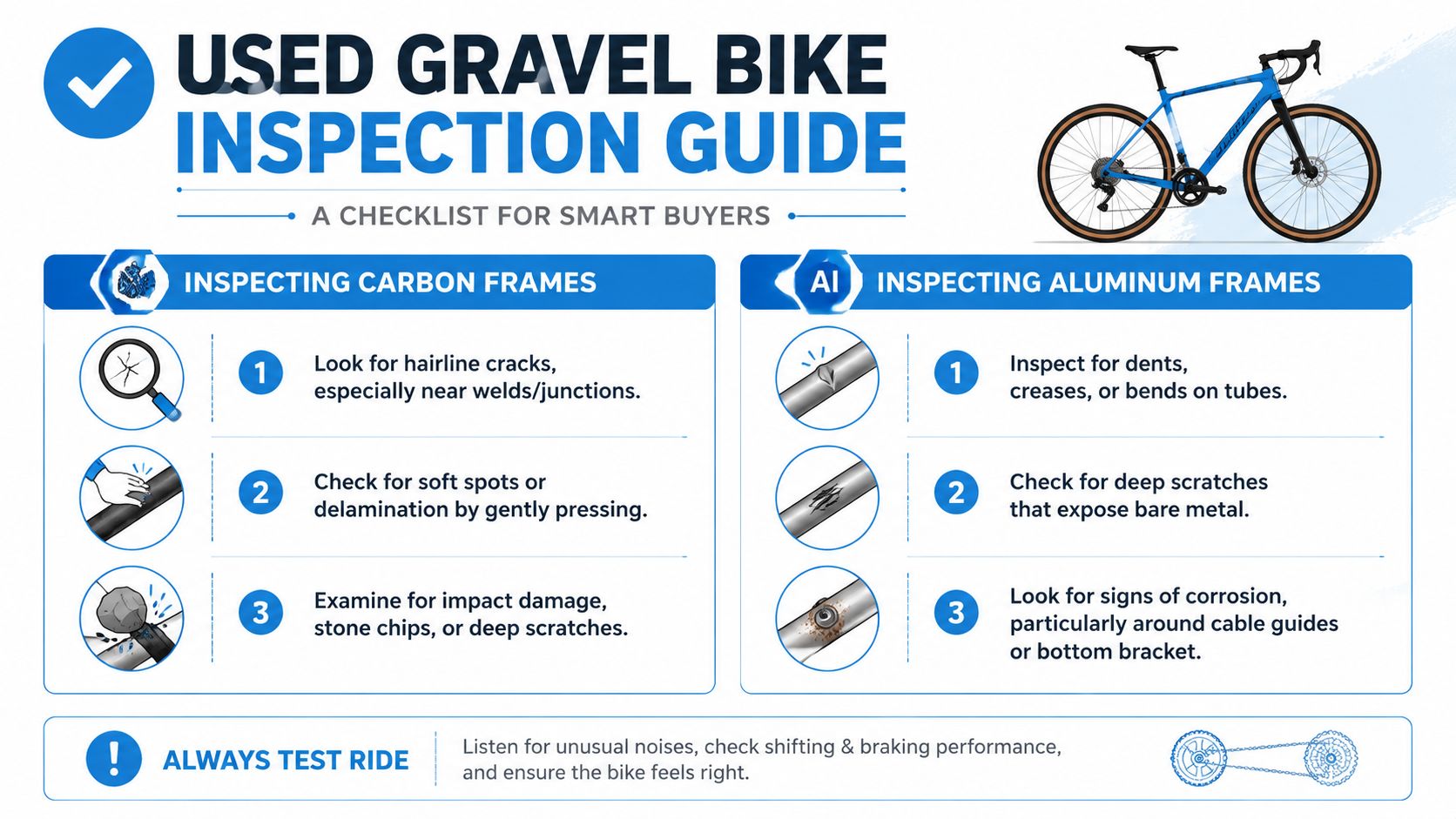
For any used gravel bike, inspect the exact frame carefully and ask for history. Material changes the details you focus on, but it does not remove the need for evidence.
For carbon, look closely around the head tube, bottom bracket, fork crown, chainstays, dropouts, and any chipped or scuffed areas. Ask about crashes, travel cases, roof-rack incidents, racing history, and any repairs.
For aluminum, inspect for dents, creases, deep gouges, alignment concerns, and stress around weld areas, the bottom bracket shell, and dropouts. Ask the same questions about crashes, transport, storage, and repairs.
Buyer consequence: the right decision comes from the condition and history of the exact gravel bike, not from assumptions about how a material behaves in every crash.
Used Carbon Gravel Bike vs Aluminum Listings
Used-bike shopping changes the material debate because uncertainty becomes part of the price. A low-priced carbon bike with vague photos and no history may not be good value. A clean aluminum bike with complete geometry details, good close-up images, and a clear service record may be the safer purchase even if it feels less exciting on paper.
That is where carbon gravel bike vs aluminum becomes a listing-quality question as much as a material question.
How risk changes the value equation
When you buy used, evaluate:
How complete the seller's description is
Whether the photos show both sides of the frame and close-ups of key areas
Whether the geometry and size are clearly identified
Whether the model year and original spec can be verified
Whether the seller can explain any cosmetic marks
Whether the price reflects uncertainty, not just original retail value
A used gravel bike should get cheaper as uncertainty rises. That is true for both materials, but it matters even more when buyers start making assumptions based only on the frame label.
For a more transaction-focused starting point, SYCLR's used gravel bikes page helps you narrow listings before you get lost in vague marketplace browsing. If you are trying to anchor price expectations, SYCLR's used bicycle value page helps frame the conversation around condition, fit, and market context.
Cost Complete-Bike Value and Resale
The biggest buying mistake in this category is paying for a premium frame while accepting a weaker complete bike. A carbon frame does not automatically create better value if the wheels, tires, brakes, cockpit, or gearing are below the level you actually need.
By contrast, an aluminum build can be excellent value if it puts the budget into parts that change the ride more directly. On gravel, a stronger wheelset, more appropriate tires, lower gearing, or better braking can matter more than a frame-material upgrade.
Why a better aluminum build can beat a worse carbon build
If two gravel bikes cost the same, ask these questions:
Which one fits better right now
Which one has better wheels
Which one has the tires you would actually choose
Which one has the gearing that suits your local climbing and surface mix
Which one offers the mounts and clearance you need
Which one has the lower-risk ownership profile if bought used
Which one would require fewer immediate upgrades
Those answers often decide the purchase before frame material does.
For riders comparing the broader value story across categories, SYCLR's carbon vs aluminum road bike comparison offers useful context on how similar tradeoffs show up outside gravel.
How SYCLR Helps You Compare Gravel Bikes Better
Turn a material preference into a short list
SYCLR helps compare available road and gravel listings using fit signals, geometry signals, model-year context, price context, listing quality, condition signals where available, and confidence signals. That makes frame material one input in the shortlist rather than the deciding factor by itself.
That approach is better than sorting gravel bikes into carbon good, aluminum bad, or the other way around. A material preference should narrow your options, not make the decision for you.

If you already know your stack, reach, or current-bike numbers, the advanced fit flow at fit details can narrow the field further. If not, start with your height, bike type, and budget in the SYCLR app.
Frequently Asked Questions
Is carbon faster than aluminum for gravel?
Not automatically. A carbon gravel bike can be lighter or more performance-oriented in some builds, but gravel speed depends heavily on tires, pressure, wheels, fit, gearing, terrain, and the total package. Compare the exact bikes, not the material in the abstract.
Does aluminum ride harsh on gravel?
It can, but it does not have to. Ride feel depends on the complete bike, including tires, pressure, wheels, seatpost, cockpit, and frame design. Some aluminum gravel bikes feel more refined than buyers expect, and some carbon bikes feel more direct than the marketing suggests.
What is the best gravel bike frame material?
There is no universal winner. The best gravel bike frame material is the one that supports the best complete bike for your fit, terrain, cargo needs, condition tolerance, and budget.
Which is better for bikepacking, carbon or aluminum?
Either can work well if the bike has the right mounts, load guidance, tire clearance, and handling for loaded riding. Choose based on the exact model's carrying features and the kind of trips you do, not the material alone.
Should I worry about a used carbon gravel bike?
Inspect it carefully and ask for crash, transport, repair, and ownership history. A clean visual inspection does not prove structural condition, so questionable impact marks, cracks, crushed areas, or prior repairs should be evaluated by a qualified bike shop or appropriate frame specialist before purchase.
Is a carbon frame worth paying more for on a gravel bike?
It can be. A carbon frame may justify the premium when the complete bike offers better fit, lower weight, useful frame features, stronger components, or a specification that better matches the rider’s goals. It may not be the better value when an aluminum alternative fits equally well and provides stronger wheels, tires, gearing, or overall condition for the same budget.
What matters more than gravel bike frame material?
Fit, geometry, tire clearance, wheels, tires, gearing, cargo features, condition, and price. Those are the factors that usually decide whether a gravel bike is the right buy.
If you are comparing carbon and aluminum gravel bikes, start with your height, bike type, terrain, and budget in the SYCLR app. Compare available fit signals, geometry signals, model-year context, price context, listing quality, condition signals where available, and confidence signals before building your shortlist.
Already know your stack, reach, current-bike geometry, or fit-report details? Use the advanced fit entry to improve your recommendations.
When frame condition is uncertain, use a qualified bike shop or appropriate frame specialist before purchasing.