
Carbon vs Aluminum Road Bike: Fit, Weight & Value Guide
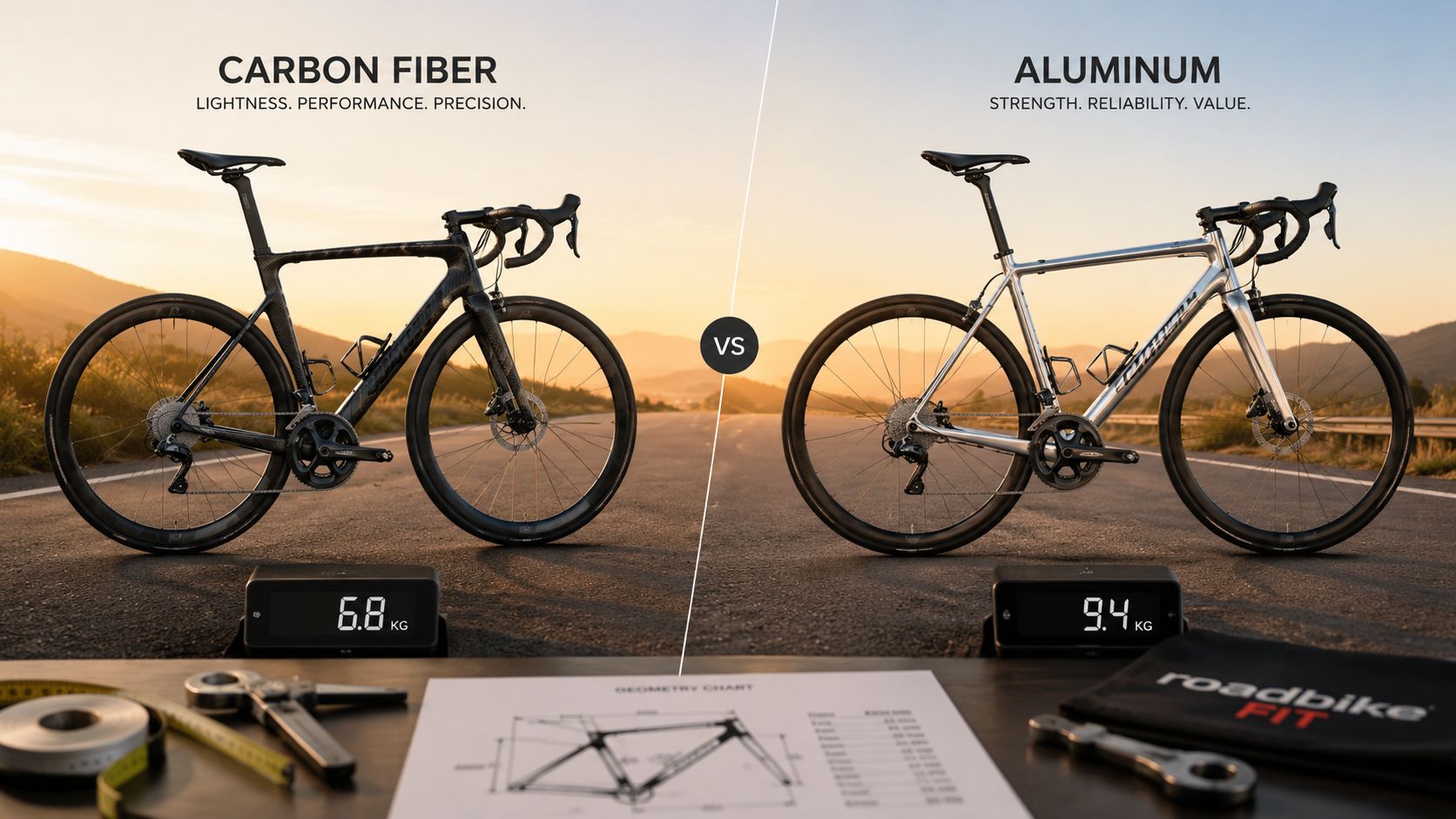
People keep saying carbon is the default upgrade. That's lazy advice. A carbon vs aluminum road bike decision should start with fit, geometry, condition, and complete-bike spec, because a badly fitting carbon bike is still a bad buy, and a well-specced aluminum bike can be the smarter spend. The frame label matters, but it's only one line in the purchase decision.
Table of Contents
What Actually Determines Frame Material Choice
A used carbon bike with a vague history is a bad buy, even if the frame sticker looks impressive. A clean aluminum bike with the right geometry and a sensible build is often the better deal. That is the part shoppers keep missing.
Fit, geometry, condition, model year, and build quality decide whether a bike feels right and holds its value, not the material name on the frame. A bike that matches your position and riding style will matter more than one that merely sounds premium. Carbon does not save a poor fit, and aluminum does not ruin a good one.
Practical rule: buy the bike that fits the route you actually ride, not the material that sounds more expensive.
Road bikes in both materials show up as race bikes, endurance bikes, aero bikes, and all-road bikes. The frame material does not lock a bike into one category. Size, stack, reach, cockpit setup, tire clearance, and the complete build shape the ride more than the label on the down tube. Two bikes with the same material and similar marketing can still feel completely different once you get on the road.
Used-bike shoppers need to be even more careful. Carbon can hide damage in listing photos, and aluminum can hide dents, corrosion, or sloppy repairs. If you are comparing two listings, pick the one with clearer geometry data, better condition signals, and a spec sheet that fits your budget. The Bike Fit Guide and Bike Stack and Reach pages help you judge the position side of that choice.
The blunt takeaway is simple. Material does not guarantee better fit, comfort, or speed. It changes what the frame can do, how it is built, and how easy it is to assess later. The key decision is whether the exact bike is worth the money.
What Carbon Road Bikes Are Designed to Offer
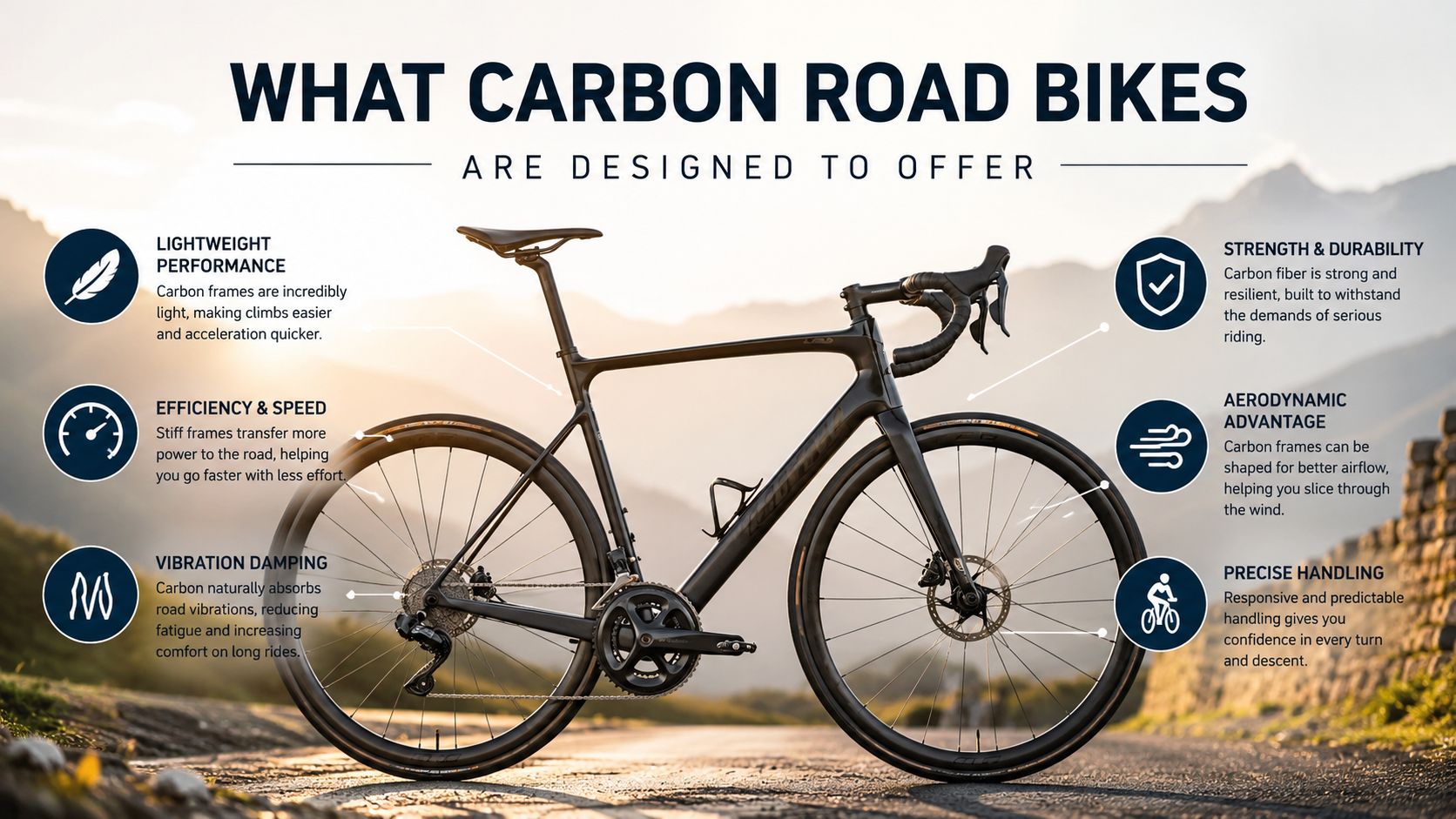
Carbon earns its place because engineers can shape it in ways metal doesn't allow as easily. Tube profiles can be tuned around stiffness, compliance, and aero shaping in different zones of the frame. That flexibility is a real design advantage, not just marketing copy.
Carbon frames are often lighter than comparable aluminum frames, but there is no universal weight gap. Compare the exact frame size and complete-bike specification rather than relying on broad material averages.
Carbon's bigger selling point is really engineering freedom. Makers can shape the frame for a specific ride feel, routing layout, or performance target, and they can do that without relying on a simple round-tube welding process. That's why carbon often appears on race-oriented frames and premium endurance models.
The trade-off is straightforward. Carbon usually costs more, and the used-bike buyer carries more uncertainty if the history is unclear. Listing photos may not show a previous strike, a repaired area, or a questionable paint line. If the bike's background is vague, the premium isn't just about materials, it's also about risk.
Carbon is best understood as a design tool. It's not magic, and it's not a substitute for a good frame size, a sane cockpit, or solid components.
What Aluminum Road Bikes Are Designed to Offer
Aluminum is not the bargain-bin option. A well-made aluminum frame can be welded cleanly, hydroformed into efficient shapes, and built into a road bike that feels sharp and holds up well under normal use. The old line that aluminum is only for beginners does not hold up.
The primary advantage is value. Lower frame cost leaves room for better wheels, a stronger groupset, better tires, or a brake setup that makes more sense for the riding you do. That matters more than paying extra for a carbon frame that comes with weaker parts elsewhere.
Some aluminum damage, such as visible dents or cracked weld areas, may be easier to notice in listing photos. Other problems, including alignment issues, fatigue cracks, concealed corrosion, or prior repairs, can still be difficult to evaluate remotely.
Carbon damage can also range from obvious impact marks to less visible structural concerns. Listing photos cannot confirm structural safety for either material.
Carbon and aluminum respond to impact and fatigue differently. Either material can become unsafe after damage, and the condition of a used frame should be judged individually.
On bikes with similar geometry and tire capacity, the differences riders notice may come more from fit, wheels, tires, seatpost design, cockpit setup, and contact points than from frame material alone.
Aluminum can race. Aluminum can train. Aluminum can be a smart long-term ownership choice. It is not the cheap version of carbon, it is the better-value option in a lot of real purchases.
Weight, Comfort, and Durability Compared
Carbon and aluminum often get reduced to three talking points: weight, comfort, and toughness. This shorthand is useful only if you don't treat it like a law. The comparison is messier, and that's why complete-bike comparison beats frame-only comparison.
Weight
Carbon frames are often lighter, but complete-bike weight depends on frame size, groupset, wheels, tires, cockpit, brakes, and accessories. A premium aluminum bike can weigh less than a lower-spec carbon bike if the aluminum build gets better wheels and lighter parts. That's why the frame material by itself never tells the full story.
Comfort
Carbon is not automatically comfortable. Aluminum is not automatically harsh. Comfort depends on fit, tire width, tire pressure, wheel construction, saddle position, seatpost, cockpit setup, and road surface. If a carbon race bike has a stretched position and narrow tires, it can feel worse than a well-fit aluminum endurance bike with better contact-point setup.
Durability
The main crash difference is in how damage tends to show up. Carbon is commonly described as more likely to crack under sharp impact but sometimes repairable by specialists, while aluminum is more likely to dent or bend and is often treated as a ride-home-or-replace material rather than commonly repaired for full strength restoration source. Neither frame is immune to damage, and neither should be treated like it can shrug off every hit.
For riders comparing categories, the Road Bike Geometry Comparison page is the deeper read on how frame shape changes the ride more than the material label does.
Bottom line: comfort comes from the whole bike. Material can influence the frame design, but it doesn't override bad fit or poor contact-point choices.
Components and Budget Allocation Matter More Than Material
Buyers give the frame too much credit and the rest of the bike too little. A cheaper aluminum road bike with a better groupset, better wheels, and cleaner condition can be the smarter purchase than an entry-level carbon bike that only looks more expensive on paper. What you are really buying is the complete package, not the frame badge.
What to compare on the complete bike
Groupset tier: drivetrain quality affects shifting feel, serviceability, and how satisfied you stay with the bike over time.
Wheelset: wheels change acceleration, handling, and overall ride quality more than most frame marketing admits.
Tires and clearance: the frame only matters if it fits the tires you want to run.
Brake type and cockpit: these affect control, maintenance, and how well the bike can be adapted to your position.
Condition details: a well-kept bike with honest photos is easier to trust than a flashy listing with missing information.
Judge the price against the full spec, not the material label. If two bikes fit equally well, the one with better wheels and a stronger drivetrain usually makes more sense. That rule matters even more when a carbon frame is paired with entry-level parts just to hit a price point.
A good used-bike deal starts with fit and spec, then moves to condition. A poorly fit carbon bike with weak wheels is still a poor buy, even if the frame name sounds premium. The same money often goes further on an aluminum bike that gives you better contact points, better performance where it counts, and less compromise.
Rule of thumb: if the aluminum bike gets you noticeably better wheels or a stronger drivetrain, do not ignore it just because the frame is alloy.
For a more structured way to compare spec and listing quality, a guide to evaluating used bicycle value is a useful companion. It keeps the frame material from distracting you from the parts and condition that decide whether the deal is strong.
Evaluating Used Carbon and Aluminum Bikes
Used bikes make the carbon vs aluminum question more serious because condition risk changes the math. A clean listing with full photos, clear component details, and a believable service history is always easier to evaluate than a vague one. If the story is thin, the frame material matters less than the uncertainty around it.
What to check on carbon
Cracks and impact marks: inspect high-stress areas, especially around the head tube, bottom bracket, fork, stays, and seat cluster.
Crushing or compression damage: look for marks where clamps, bolts, or an impact may have overstressed the frame.
Repairs and paint lines: odd finish transitions can signal prior work or a hidden event.
Crash history: if the seller can't explain the bike's past, the risk climbs.
Photo quality: blurry closeups are a problem, not a detail.
What to check on aluminum
Welds and joints: look for cracks or fatigue near the weld zones.
Dents and bends: these can make a frame unsuitable even if the bike still looks rideable.
Corrosion and corrosion-related wear: especially around hardware and hidden surfaces.
Alignment: a knocked frame can ride poorly or track badly.
Crash damage: aluminum can take a hit and still look usable from ten feet away.
A second undersold issue is ownership confidence. Used-bike buyers worry about carbon damage, but they rarely get practical guidance on repairability, inspection, or what a vague listing should cost them in caution source. If the bike's history is uncertain, the safest response is to lower your offer or move on.
The valuation formula should stay simple: comparable value minus condition risk minus fit uncertainty minus listing uncertainty equals a more realistic offer range. For carbon-specific buying, the Used Carbon Road Bike page is the right next stop.
Which Material Fits Your Riding Goals and Budget
Choose carbon when the extra weight savings matter to you, the bike is meant for climbing or racing, and the budget supports the complete build, not just the frame. Carbon also makes sense when the exact geometry fits your position, the condition is clear, and the seller can answer basic history questions without hedging.
Choose aluminum when you care more about value, easier inspection, and stronger parts for the money. It's a better fit for a lot of training bikes, general road bikes, and used purchases where the seller photos are decent but not perfect. If the aluminum bike fits better, that should outweigh the material prestige of a carbon alternative.
A representative scenario makes the decision obvious. A rider wants a taller front end and a less aggressive cockpit. One listing is a carbon race frame with a stretched position and vague history. The other is an aluminum endurance bike with a taller stack, shorter effective cockpit, wider tire clearance, and a cleaner spec. The aluminum bike wins because the fit and setup match the rider's position, not because aluminum is magically more compliant.
| Decision Factor | Carbon Road Bike | Aluminum Road Bike | Better Choice When |
|---|---|---|---|
| Purchase price | Often higher | Often lower | Budget is tight and parts matter more |
| Frame weight | Usually lower | Usually higher | Weight is a priority |
| Complete-bike weight | Model dependent | Model dependent | Spec matters more than frame label |
| Geometry | Race, endurance, aero, or all-road | Race, endurance, aero, or all-road | Geometry match matters most |
| Comfort | Depends on fit and setup | Depends on fit and setup | Tire and position choices drive comfort |
| Tube shaping | More design freedom | More traditional shaping, often hydroformed | Aero or tuned-stiffness design matters |
| Component value | May be weaker at the same price | Often stronger at the same price | Best spec per dollar matters |
| Durability | Can crack under impact | Can dent or bend | Simpler ownership is preferred |
| Damage inspection | Harder from photos | Usually easier visually | Listing confidence is low |
| Repair complexity | Often more specialized | Often less commonly repaired | You want simpler service decisions |
| Corrosion | Doesn't corrode like metal frames | Can corrode if neglected | Long-term care and storage vary |
| Fit | Depends on size and geometry | Depends on size and geometry | The exact model fits better |
| Racing | Strong choice for performance builds | Fully raceable | Budget supports a strong complete build |
| Training | Works well | Works well | Value and parts matter more |
| Used-bike risk | Higher if history is unclear | Lower if inspection is straightforward | Condition and history are uncertain |
| Resale | May be stronger on premium models | Depends on model and spec | Brand, year, and condition are strong |
| Overall value | Strong when spec and condition are clear | Strong when components and fit are better | Best total package wins |
How SYCLR Helps You Compare Better-Fit Options
SYCLR is built for the part most marketplaces skip, the comparison layer. It helps you compare road-bike listings using fit signals, geometry signals, model-year context, price context, listing quality, condition signals, and confidence signals so you can shortlist better-fit bikes faster. That matters a lot in a carbon vs aluminum road bike search, where the wrong frame choice can hide behind a flashy title or a clean paint job.
Start with height, bike type, and budget if you're early in the process. If you already know your stack, reach, or current-bike geometry, use the more detailed fit path through the Bike Fit Guide and the advanced fit details entry. The point is to reduce guesswork before you get pulled into a listing that looks good but fits poorly.
SYCLR doesn't replace a professional fit or a mechanical inspection, and it doesn't verify structural safety. What it can do is make the comparison cleaner, so you're not trying to judge a frame, a size, a year, and a price all at once with half the information missing.
If you're choosing between carbon and aluminum, use the platform to compare the exact bikes, not just the frame labels. A better-fitting aluminum bike is still the stronger buy than a carbon bike that misses your position or comes with too much uncertainty.
Frequently asked questions
Is carbon better than aluminum for a road bike?
Not automatically. Carbon is often the premium choice, but the better buy depends on fit, geometry, condition, and build spec.
Is a carbon road bike always lighter?
No. Carbon frames are often lighter, but complete-bike weight depends on the full build, and a well-specced aluminum bike can weigh less than a lower-spec carbon one.
Are aluminum road bikes uncomfortable?
No. Comfort depends on fit, tires, pressure, wheels, saddle setup, and frame design, not material alone.
Is carbon more fragile than aluminum?
Not in a simple way. Carbon and aluminum fail differently, and both can be damaged. Carbon can crack under sharp impact, while aluminum can dent or bend.
Which material is better for beginners?
Neither by default. A beginner should buy the bike that fits, has sensible geometry, and offers the best value within budget.
Is a used carbon road bike worth the risk?
It can be, if the history is clear and the inspection signals are strong. If the story is vague, the risk rises fast.
Can SYCLR help compare carbon and aluminum bikes?
Yes. It helps compare available listings using fit signals, geometry signals, model-year context, price context, listing quality, condition signals, and confidence signals.
If you are comparing carbon and aluminum road bikes, start with your height, bike type, and budget in the SYCLR app. Compare available fit signals, geometry signals, model-year context, price context, listing quality, condition signals, and confidence signals before building your shortlist.
Already know your stack, reach, current-bike geometry, or fit-report measurements? Use the advanced fit entry to improve your recommendations.