
Endurance Road Bike vs Gravel Bike: Which Fits Your Riding?
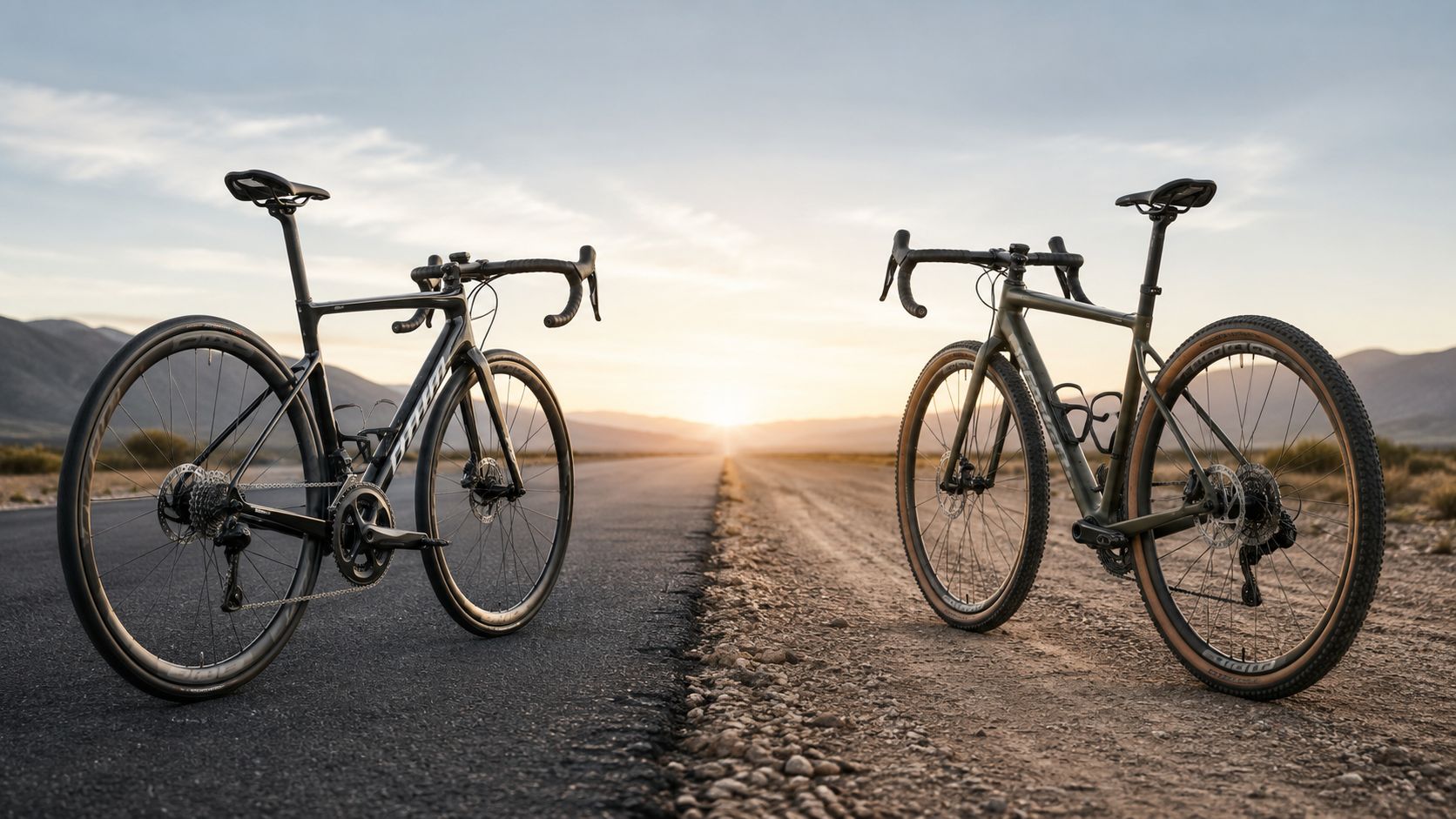
You’re standing between two listings that look close enough to confuse anyone. One is an endurance road bike, the other is a gravel bike, and both claim comfort, speed, and versatility. Here’s the blunt answer, choose an endurance road bike if most of your riding is pavement with only light dirt or hardpack connectors, choose a gravel bike if rougher surfaces, larger tires, and more stability matter more.
The mistake most buyers make is treating this like a road-versus-dirt identity test. It isn’t. The decision sits on three levers, terrain severity, tire clearance, and geometry. If those don’t line up with your routes, the category label won’t save the purchase.
Table of Contents
Which Bike Fits Your Real Riding
If your week is mostly smooth pavement, group rides, and the occasional quiet lane or hardpack connector, the endurance road bike is usually the better buy. If your routes regularly turn into loose gravel, washboard, ruts, or longer mixed-surface days, a gravel bike is usually the stronger choice.
That’s the whole question in plain language. Most buyers don’t need a dramatic category switch, they need the bike that matches the surfaces they ride.
Start with the surface, not the label
An endurance road bike stays road-first. It gives up some aggression compared with a race bike so you can ride longer and stay more comfortable, but it still wants to feel quick on tarmac. A gravel bike takes the opposite tack, it gives up some pavement sharpness to gain stability, clearance, and confidence when the ground turns ugly.
The right call usually shows up fast if you’re honest about your routes. If you’re thinking, “I want road speed, but I also want rough pavement and light unpaved connectors to feel manageable,” endurance is probably your lane. If you’re thinking, “I keep ending up on rough roads, loose shoulders, and dirt that isn’t always smooth,” an endurance road bike will often make more sense.
Practical rule: if the route is still mostly paved, buy for paved efficiency first. If the unpaved sections are serious enough to make you hesitate, buy for control first.
That’s why this isn’t about which bike is cooler or more versatile in the abstract. It’s about where the bike spends its time. The same rider can be well served by either category, but only one of them will be honest about the terrain.
Why This Is Not the Same as Road vs Gravel
Many buyers simplify endurance road and gravel bikes to a basic road-versus-dirt comparison. This overlooks the core choice. Endurance road bikes and gravel bikes both use drop bars, but they solve different problems.
Endurance road bikes are still road bikes. They keep the efficient feel, the paved-road posture, and the quick response road riders expect, while softening the position and widening the tire window. Gravel bikes keep some of that road-bike DNA, but they stretch harder into wider tires, calmer handling, and lower gearing for messy ground. The difference is not cosmetic. It changes how the bike feels under load and how much confidence it gives you when the surface stops being clean.
Terrain severity is the real divider
That is the part many shoppers miss. The category name matters less than the roughness you face. A modern endurance bike can handle light gravel, crushed stone, and rough pavement without feeling like a compromise. A gravel bike can still ride road well enough, especially with smoother tires, but its design brief is broader and more off-road tolerant.
The practical question is not, “Which bike is faster?” It is, “How much rough-surface ability do I need, and how much pavement speed am I willing to give up to get it?” A gravel bike will often feel less immediate on smooth pavement, especially when fitted with wider or more aggressive tires. The size of that difference depends heavily on tire choice, pressure, geometry, rider position, and the exact bike.
That is why the binary framing misses the point. You are not choosing between two separate worlds. You are choosing between two frames with overlapping comfort benefits and a narrow performance gap on pavement, then deciding how much rough-surface ability you want to buy into.
What an Endurance Road Bike Is Built to Do
An endurance road bike is the bike for riders who want the road to stay the road, just with less punishment. It’s built for long days on pavement, rough chip seal, and the kind of mixed riding that still looks road-shaped when you zoom out. Canyon describes endurance road bikes as more road-oriented, with setups that commonly use narrower, performance-focused chainring combinations like 50-34 or 52-35, while mainstream road bikes are often designed around 28 mm tires and progressive endurance road bikes commonly accept up to 32 mm (Canyon).
What that means on the road
The frame posture is calmer than a race bike, but not lazy. You get a position that’s easier to hold for hours, which is exactly why this category exists. The bike still wants to accelerate cleanly, track well in a group ride, and keep rolling efficiency high on tarmac.
That makes endurance road a strong fit for riders who ride pavement first but don’t live on perfect pavement. Rough asphalt, patched shoulders, and the odd crushed-stone connector are all within the bike’s comfort zone when tire clearance is reasonable. It’s the road category that admits real life exists.
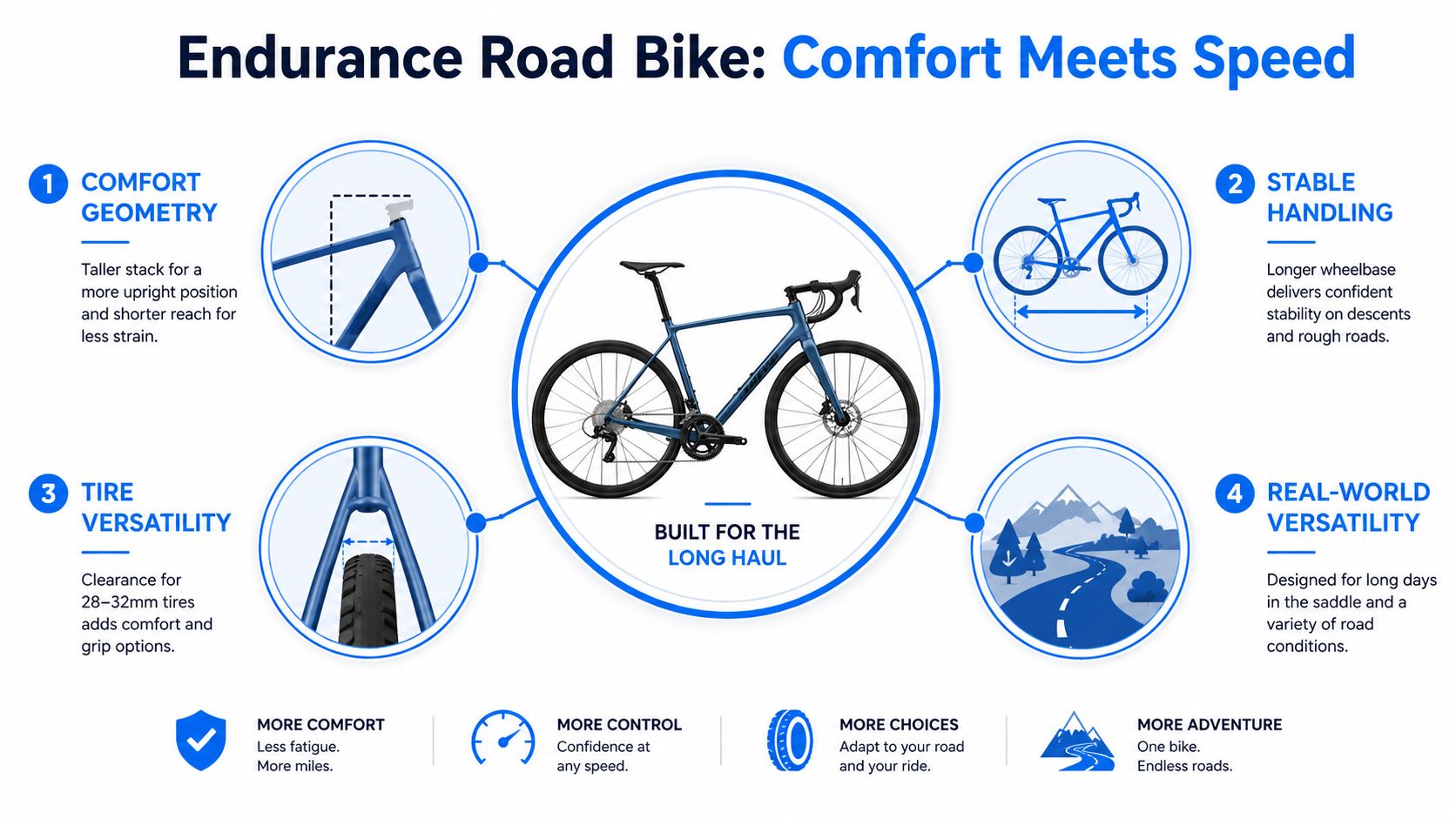
A useful way to think about it is this, an endurance bike is not a gravel bike with skinny tires. It’s still a road bike with comfort built in. That distinction matters because the whole design still prioritizes paved efficiency, predictable road handling, and group-ride compatibility.
If you only occasionally touch light dirt, hardpack, or crushed stone, this category usually keeps the best balance. It gives you enough real-world flexibility without dragging you into the heavier, calmer, more off-road-biased feel of a gravel frame. For a broader look at how road-bike categories differ, compare the geometry patterns in SYCLR’s Road Bike Geometry Comparison guide.
What a Gravel Bike Is Built to Do
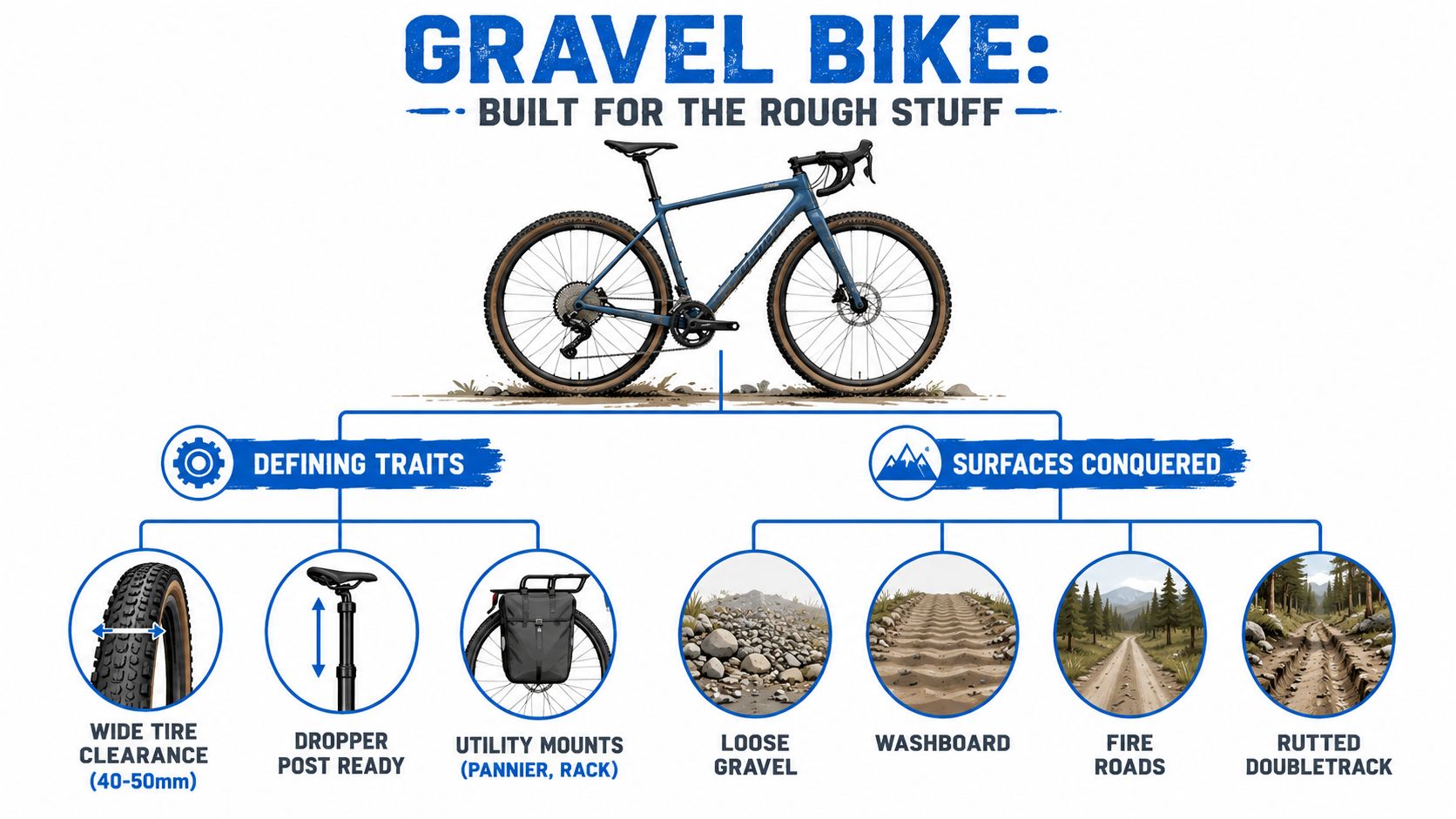
A gravel bike is built for the kind of riding that makes a road bike feel twitchy and out of place. Loose gravel, washboard, fire roads, ruts, rough connectors, and long mixed-surface days are its home turf. Manufacturer guidance commonly places many gravel bikes in a wider tire range than endurance road bikes, but exact clearance varies significantly by model and model year (Canyon).
Built for control, not just speed
That extra room is there for a reason. Wider tires let you run lower pressures, which improves grip and reduces chatter when the surface turns loose or broken. Gravel frames also usually stretch the wheelbase and calm the front end, so the bike stays steadier when the line ahead is messy. The compromise is simple, more stability and confidence, less pavement snap.
Gravel bikes also make more sense if you carry anything at all. Many frames come with extra mounts for bags and bottles, and that matters once rides stop being simple fitness loops and start including tools, food, layers, or bikepacking gear. The category is built to handle real mixed-use riding, not just fast laps on clean roads.
Call it what it is. A gravel bike usually gives up some efficiency on smooth pavement, and that trade-off is part of the design. If your routes regularly include rough shoulders, loose surfaces, or loaded mixed-terrain mileage, that penalty is the correct one to pay.
If you are comparing real listings, a gravel bike frame size chart is useful, but size alone does not tell you whether the frame has the tire clearance and calm handling you need. That is the mistake buyers make, choosing a bike that is “gravel” in name but too tight on clearance or too nervous in the front end to be useful off pavement.
Geometry Differences That Change the Decision
Buyers fixate on tire width and miss the part that changes how the bike feels. Tire clearance matters, but stack, reach, wheelbase, head tube angle, chainstay length, bottom bracket drop, and standover do more to define the ride than the category name on the decal. That is the split between endurance road and gravel.
Stack, reach, and posture first
Stack and reach decide how stretched out or upright you sit. Endurance bikes usually move you toward a less aggressive road position, while gravel bikes often add more stack and a calmer stance so you can stay in control when the surface turns ugly. That extra front-end height can matter more on long rides than any badge or marketing copy.
If you want to compare bikes, start with stack and reach geometry, not the label. Those numbers tell you whether the frame will feel road-ready, upright, stretched, or relaxed before you ever throw a leg over it.
Wheelbase and head tube angle control stability. A longer wheelbase and slacker front end settle the bike down when the ground gets messy. Chainstay length adds to that by making the rear end feel more planted, especially when traction changes from corner to corner. Bottom bracket drop affects how composed the bike feels in corners and over broken ground, while standover affects practical confidence when you stop, mount, or thread through uneven terrain.
On rougher routes, the bike that feels a little less lively on clean pavement often wins because it stays composed when the surface stops cooperating.
The pavement tradeoff can be noticeable, but it depends heavily on setup. The road bike is quicker on smooth tarmac, and gravel bikes give away efficiency there, with the gap shrinking once you fit faster rolling tires and set them up well. That is why the same gravel frame can feel sluggish with the wrong rubber and perfectly reasonable with a smarter tire choice.
Clearance tells you what the bike can really do
Endurance road bikes generally support wider tires than traditional race bikes but less clearance than most dedicated gravel bikes. Gravel bikes typically provide more frame and fork room for larger tires and additional mud clearance. Always verify the exact manufacturer limit for the specific model year.
That is also why a bike can look “close enough” on paper and still be the wrong buy in practice. A frame with tight clearance may work for light roads and the occasional hardpack lane, but it stops making sense once your routes include real loose surfaces or broken tarmac that asks for more tire.
Geometry is not a detail. It is the reason one bike feels calm, fast, and road-focused while another feels steadier and more tolerant when the route stops being clean.
Decision Factors at a Glance
| Decision factor | Endurance road bike | Gravel bike | Better choice when |
|---|---|---|---|
| Primary terrain | Mostly pavement, rough road, light connectors | Mixed surfaces, loose gravel, rougher unpaved routes | Pick endurance for road-first riding, gravel for frequent dirt |
| Road speed | More efficient on smooth pavement | Usually slower on clean pavement | Pick endurance when road speed matters most |
| Rough-road comfort | Strong on bad pavement and chip seal | Strong on rougher, looser, more variable ground | Pick endurance for rough pavement, gravel for rougher terrain |
| Tire clearance | Commonly around 28–32 mm | Commonly around 40–45 mm, often more | Pick gravel when clearance drives the purchase |
| Geometry feel | More road-like, comfort oriented | More stable, calmer, more terrain tolerant | Pick based on handling preference and terrain |
| Long-ride posture | Easier than race geometry | Often even more upright and composed | Pick the posture you can hold longest |
| Gearing | Road-oriented chainring setups like 50-34 or 52-35 | Usually lower and more terrain-friendly | Pick gravel for steeper, rougher, or loaded rides |
| Mounts | Usually fewer | Usually more | Pick gravel for bags, bottles, and utility |
| Group rides | Strong fit | Fine, but less road-snappy | Pick endurance for frequent fast road groups |
| Loose gravel control | Limited | Better | Pick gravel when traction is unpredictable |
| One-bike versatility | Good for road plus light dirt | Better across more surfaces | Pick gravel when one bike must do more |
| Used-market buying risk | Fit and tire clearance still matter | Clearance, mounts, and intended use matter more | Pick the bike whose geometry and use case match the listing |
The table cuts through the category talk. If your riding is road-first, the geometry and terrain point toward gravel. If your routes regularly ask for more clearance, more calm handling, and more utility, gravel is the better tool.
Do not buy the prettier listing and hope the fit works out later. The wrong tire room or geometry choice turns a good frame into a compromise you feel on every ride. A fit-aware shortlist should start with the terrain you ride most often, then filter for clearance, handling, and gearing that match that use.
Rider Profiles That Decide the Category
The easiest way to choose is to stop thinking in abstract categories and start thinking in rider profiles. A bike that looks like a bargain can still be the wrong buy if the geometry, tire room, and terrain use don’t line up.
Pick endurance road if you mostly ride pavement
If you ride mostly pavement, join group rides, and only see light gravel or hardpack occasionally, endurance road is the right call. It gives you road speed, a familiar position, and enough comfort to make rough asphalt and short connectors manageable. That’s also the cleanest answer if you already own a road bike and want a less aggressive second bike without drifting into a whole new terrain category.
Pick gravel if your routes get rough
If your rides regularly include loose gravel, washboard, ruts, dirt roads, or loaded mixed-surface days, you are more likely to benefit from a gravel bike. Wider tires, calmer handling, and lower gearing matter more as the terrain becomes rougher or less predictable. The bigger tires, calmer handling, and lower gearing matter more than the pavement speed loss. This is also the right answer if you want one bike to cover more surfaces and you don’t want to babysit every rough shoulder or bad road section.
A useful middle case exists too. When the overwhelming majority of a route is pavement and the unpaved sections are smooth, short, and predictable, an endurance road bike may preserve more of the road feel the rider wants. The bike stays quick on pavement, and with enough tire clearance it can handle the light off-road section without pretending to be a gravel machine.
Budget rule: If one bike must cover a wide variety of surfaces, gravel may offer more versatility. If the rider already owns a fast road bike, gravel may open more new terrain, while an endurance bike may make more sense when the goal is longer, more comfortable road riding.
Height alone doesn’t settle this. Two riders of the same height can need completely different categories based on stack, reach, standover, and the way they ride. Fit signals matter more than the number on a size chart, especially once the route stops being uniform.
How SYCLR Helps You Shortlist Both Categories
The fastest way to compare these bikes is to stop scrolling random listings and start comparing fit-aware signals. SYCLR helps organize available rider details, bike type, budget, fit signals, geometry signals, model-year context, price context, listing quality, and confidence signals so riders can compare stronger candidates more efficiently. That matters because an endurance road bike and a gravel bike can look close in photos while being very different in frame shape, tire room, and intended use.
If you already know your stack, reach, or current-bike numbers, plug those in and compare listings against the geometry that fits you. If you don’t, start simpler with height, bike type, and budget, then narrow the field from there. The point is to reduce guesswork before you contact a seller, not after you’ve already fallen in love with the wrong frame.
For buyers who want a deeper fit baseline, the bike fit guide is the right companion read before comparing listings. Once you know what you need, the platform helps you compare better-fit road and gravel bikes by fit signals, geometry signals, model year context, price context, listing quality, and confidence signals.

If you’re already comparing listings, start here: compare endurance road and gravel bike listings. If you’ve got stack, reach, or a fit report in hand, use the fit-details entry point to shortlist better-fit bikes before you buy.
Endurance Road Bike vs Gravel Bike FAQ
Is an endurance road bike faster than a gravel bike?
An endurance road bike will often feel more efficient on smooth pavement because it is road-oriented and usually uses narrower, faster-rolling tires. The actual difference depends on tires, pressure, rider position, gearing, and the exact bikes being compared.
Can an endurance road bike handle gravel?
Yes, an endurance road bike can often handle smooth dirt, hardpack, crushed stone, and short light-gravel connectors when tire clearance and setup are appropriate. It is less suited to loose, rough, muddy, or deeply rutted terrain.
Is a gravel bike comfortable on paved roads?
A gravel bike can be comfortable and capable on pavement, especially with smoother tires. It may feel less sharp or efficient than an endurance road bike, but the difference depends heavily on the setup.
Which bike is better for long rides?
Both can work well for long rides. An endurance road bike usually suits pavement-focused distance riding, while a gravel bike may be better when the route includes rougher surfaces, larger tires, lower gearing, or loaded riding.
Which geometry numbers matter most?
Start with stack, reach, standover, wheelbase, head tube angle, chainstay length, bottom bracket drop, and tire clearance. Exact model-year geometry matters more than the category label alone.
Should I choose gravel if I can only own one bike?
A gravel bike may offer more surface versatility, but it is not automatically the best one-bike solution. If you want one bike for road and gravel, see the dedicated guide. Riders who spend almost all their time on pavement may be happier with an endurance road bike.
Can SYCLR help compare endurance road and gravel bikes?
Yes. SYCLR helps riders compare available listings by fit signals, geometry signals, model-year context, price context, listing quality, and confidence signals before they buy.
If you are comparing endurance road and gravel bikes now, start with your height, bike type, and budget in the SYCLR app. Compare available listings by fit signals, geometry signals, model-year context, price context, listing quality, and confidence signals before deciding which category belongs on your shortlist.
Already know your stack, reach, current-bike geometry, or fit-report details? Use the fit-details entry to improve your recommendations.