
Gravel Bike Tire Size: Width, Clearance, 700c and 650b
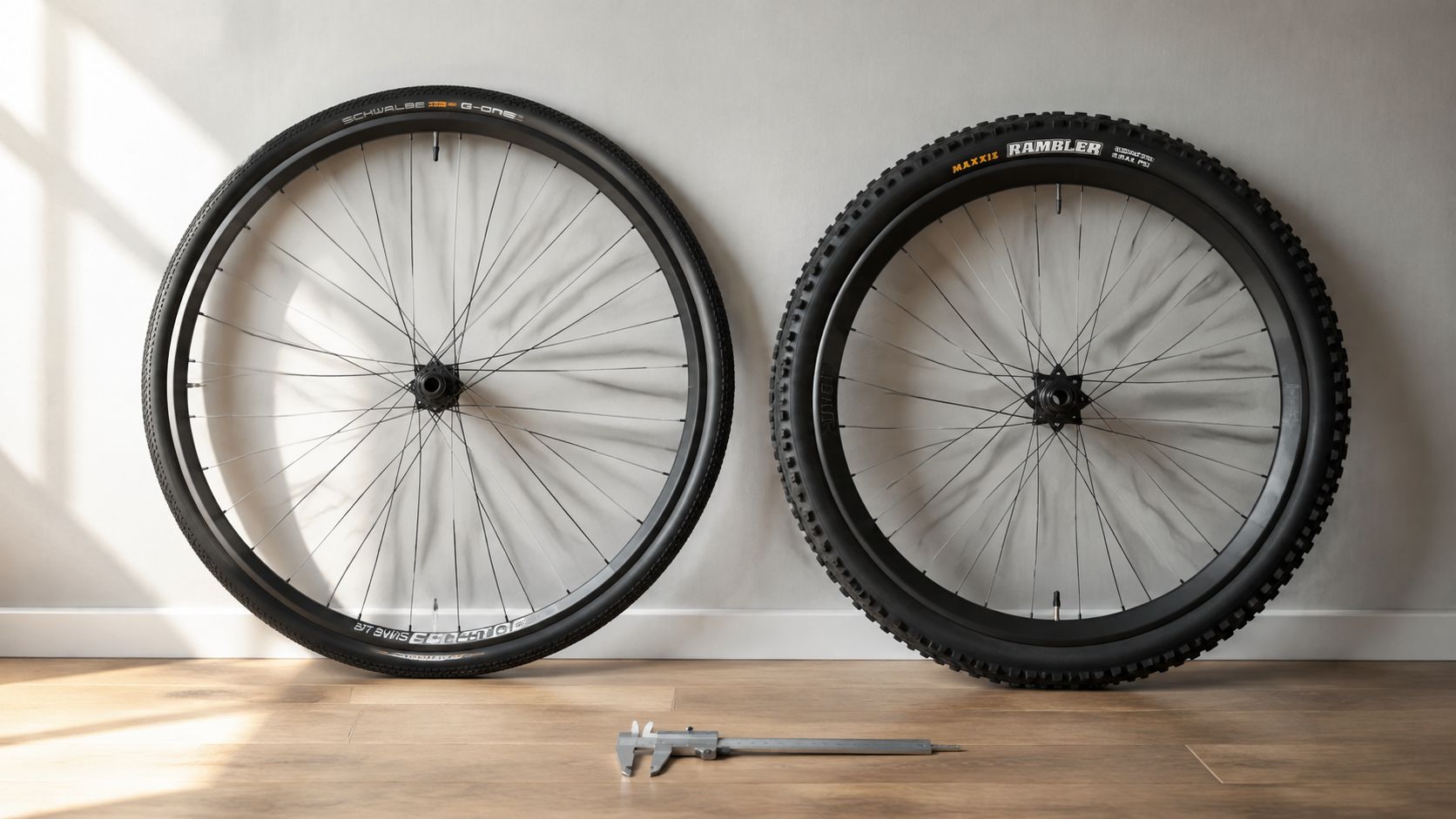
There is no universal best gravel bike tire size. The right setup depends on the frame and fork the bike was designed to clear, the wheel standard, rim internal width, the tire's actual mounted size, terrain, rider and cargo load, and the pressure and tire construction you plan to use. For buyers comparing bikes, the key point is simple: the size printed on the sidewall does not prove compatibility. You need to evaluate the whole system before deciding whether a bike can safely run the tire you want.
Table of Contents
What Gravel Bike Tire Size Actually Means
When buyers talk about gravel bike tire size, they often mean only width, such as 38 mm, 40 mm, or 45 mm. In practice, tire size is a combination of several variables that have to work together:
Wheel standard, such as 700c or 650b
Rim internal width
Tire casing and construction
Actual mounted width and height
Available frame and fork clearance
Intended terrain and load
That is why two bikes with the same printed tire size can behave very differently, and why two tires with the same label may not measure the same once mounted.
Why the sidewall label is only a starting point
A printed size like 700x40c tells you the tire is intended for a particular rim diameter and suggests an approximate width. It does not guarantee the tire will measure exactly 40 mm on your wheel, and it does not guarantee it will clear your frame and fork.
This matters because buyers often compare a listing's stated tire size against a general idea of what gravel bikes "should" fit. That shortcut causes mistakes. The exact frame, frame size, fork, model year, rim, and mounted tire matter more than category-wide assumptions.
Key takeaway: a tire label is not a compatibility check. It is only the first data point.
How to Evaluate Gravel Bike Tire Size as a System
The most useful way to think about gravel bike tire compatibility is as a complete system. A bike either supports the complete wheel-and-tire setup you want, with adequate real-world clearance, or it does not.
The five checks that matter most
Use this order when evaluating any bike, especially a used one:
Confirm the exact frame, size, fork, and model year
Clearance can change between sizes and model years.Check the manufacturer-approved wheel and tire support
Look for official maximum tire and wheel compatibility for that exact bike.Verify the wheel standard
A tire must match the rim's bead-seat diameter.Check rim internal width and the mounted tire's measured dimensions
The actual tire on the bike may be larger or smaller than the sidewall label suggests.Confirm front and rear clearance against the manufacturer’s specifications and the actual mounted setup
Adequate clearance depends on the frame and fork manufacturer’s requirements, the mounted tire dimensions, wheel condition, intended terrain, and debris exposure.
If any one of those points is unclear, you do not yet know whether the bike is compatible with your target tire.
700c and 650b, What Buyers Need to Know
For compatibility, the important technical difference between 700c gravel tire size and 650b gravel tire size is bead-seat diameter.
700c bead-seat diameter = 622 mm
650b bead-seat diameter = 584 mm
Bead-seat diameter is the diameter of the rim where the tire bead sits. It is not the same thing as the complete outside diameter of the wheel and tire once inflated.
Either wheel standard can be used for smooth or rough terrain. On some compatible frames, 650b may permit a higher-volume tire than a comparably fitted 700c setup. On other bikes, especially many modern gravel frames, 700c may also accept large-volume tires. Neither standard is inherently faster, more comfortable, or more capable on its own.
For buyers, the practical rule is simple: confirm what the manufacturer supports for the exact frame, fork, size, and model year before assuming a wheel change or wider tire will work.
If you want a deeper wheel-size comparison, see 650b vs 700c gravel bike.

Gravel Bike Tire Width, Labeled vs Measured
When people search for gravel bike tire width, they usually want one number they can trust. Unfortunately, there is no single number that tells the whole story.
A labeled width is only a nominal size. The tire's real mounted width and height can change based on:
rim internal width
tire casing design
tread shape
inflation pressure
whether the tire has stretched after use
That is why a labeled 40 mm tire may not measure exactly 40 mm on the bike. It may end up slightly narrower or wider, and that difference can matter if the frame is already close.
Why the mounted tire can be wider than expected
A tire’s measured width can change when it is mounted on rims with different internal widths. The amount of change depends on the specific tire, rim, casing construction, pressure, and manufacturer specifications, so there is no universal conversion formula.
If one wheel uses a narrower internal rim and another uses a wider one, the same tire model can end up measuring differently on each.
For a buyer, this changes the decision in two ways:
Fit: a tire that measures wider than expected can reduce frame and fork clearance.
Ride feel: changes in tire shape can alter support, pressure range, and handling feel.
This is why gravel tire width should always be evaluated together with rim width and measured size, not as a standalone sidewall number.
Frame and Fork Clearance, Front and Rear
Gravel bike tire clearance is the space between the mounted tire and the frame or fork around it. This includes width clearance at the sides and vertical clearance above the tire.
The bike, not the tire label, sets the limit. Even if the wheel and tire match by standard, the mounted setup still needs to fall within the frame and fork manufacturer’s stated compatibility limits.
Modern gravel-bike tire clearance varies significantly by brand, model, frame size, fork, and model year. Use the manufacturer’s specification for the exact bike rather than applying a category-wide clearance range.
How to check real clearance
Clearance should be checked separately at the front and rear because one end may be tighter than the other. The usual pinch points include:
Rear triangle: chainstays, seatstays, seat tube area, and bridges
Fork: fork blades, crown area, and any tight shaping near the tire
Use this checklist:
Start with manufacturer specifications for the exact bike, size, fork, and model year.
Inspect the narrowest point, not just the easiest angle to photograph.
Check front and rear separately, because their limits may differ.
Allow room for mud and debris, especially for wet rides and mixed surfaces.
Allow room for flex and load, including rider weight, cargo, out-of-saddle movement, and a wheel that is not perfectly true.
If you are evaluating a listing remotely, close-up photos can help identify obviously tight or questionable clearances. They should not replace the manufacturer’s specification or an in-person inspection when compatibility is uncertain.
Also ask whether the stated tire width is the printed size or an actual mounted measurement.
Practical rule: a tire that "just fits" in a clean static photo may still be a poor real-world choice.
How Terrain, Load, and Pressure Affect Tire Choice
There is no ideal gravel bike tire width for every rider. Terrain still matters, but it should be part of the compatibility decision, not treated as a universal rule.
Representative examples can help frame the decision:
Pavement-heavy or smoother routes may not require the same tire volume as rougher mixed-surface routes.
Rougher surfaces may increase the value of additional tire volume, depending on casing, pressure, rim width, and the bike’s approved clearance.
Rider and cargo weight can influence appropriate pressure and tire-volume requirements.
Tire casing, tread, pressure, and terrain should be considered alongside nominal width.
These are setup considerations, not universal width prescriptions.
For a broader terrain-focused buying decision, see best gravel bike type for your terrain.
How to Evaluate a Used Gravel Bike Listing
A used listing rarely gives you the full answer. It may show the current tire, but that does not tell you whether the setup is original, whether the tire measures true to label, or whether the bike still has safe mud and flex clearance.
When comparing used bikes, gravel bike tire sizes should be checked in context:
exact model
exact frame size
model year
wheelset and rim width
current tire model and labeled size
actual measured tire width
real front and rear clearance
A bike advertised with a wide tire is not automatically a wide-clearance bike. It may simply be running close to the limit.
| Decision factor | What to check | Why it matters |
|---|---|---|
| Wheel standard | 700c/622 or 650b/584 | Tire bead must match the rim standard |
| Labeled tire width | Sidewall size | Useful starting point, not final mounted size |
| Measured tire width | Actual inflated width | Determines real clearance |
| Rim internal width | Wheel manufacturer specification | Can affect tire shape and measured dimensions |
| Front clearance | Fork and crown area | Front and rear limits may differ |
| Rear clearance | Chainstays, seatstays, bridges | Rear may become the limiting point |
| Model year | Exact frame generation | Clearance can change between generations |
| Frame size | Exact size being purchased | Some specifications vary by size |
| Wheelset changes | Stock vs aftermarket | Different rims may change tire dimensions |
| Manufacturer specification | Official frame/fork limits | Primary compatibility reference |
| Terrain | Expected surface and debris | Influences practical tire and clearance needs |
| Used-listing uncertainty | Missing specs or undocumented changes | More uncertainty requires more verification |
Questions worth asking the seller
Ask direct questions that reveal compatibility quickly:
What is the exact model, frame size, and model year?
What wheelset is installed, and what is the rim internal width?
What tire model and labeled size is mounted now?
What does the tire actually measure when inflated?
Can you provide clear photos of the tightest front and rear clearance points with the current setup?
Did the bike come stock with this wheel and tire setup, or was it changed later?
Has the bike been ridden in wet or muddy conditions with this setup, and was there any rub?
These questions matter because compatibility is often misrepresented by omission rather than by an obvious false claim.
If you are comparing multiple listings, Used Gravel Bikes can help narrow the field before you spend time chasing incomplete ads.
How SYCLR Helps You Compare Tire Compatibility
Tire questions are usually tied to fit, geometry, listing quality, and model-year details. SYCLR helps buyers evaluate those signals together, which is useful when a listing mentions a tire size but leaves out the details that determine whether the setup actually works.
SYCLR can help you compare available listings using:
fit signals
geometry signals
model-year context
price context
listing quality
condition signals where available
confidence signals
That context can help you identify which listings deserve closer tire-compatibility verification, but SYCLR does not certify wheel, rim, tire, frame, or fork compatibility.
If you already know your stack, reach, current-bike geometry, or fit-report details, use the advanced fit entry.
Gravel Bike Tire Size FAQs
What is the best tire size for a gravel bike?
There is no single best gravel tire size. The correct width depends on the frame and fork’s approved clearance, rim width, actual mounted tire dimensions, terrain, rider and cargo load, tire construction, and target pressure.
How wide should gravel bike tires be?
There is no universal width that works for every rider or route. Compare the terrain you ride with the exact bike’s approved clearance, rim compatibility, tire construction, and mounted dimensions.
Can I put wider tires on my gravel bike?
Possibly, but the manufacturer’s official clearance for the exact frame, fork, size, wheel standard, and model year should be checked first. A tire that physically mounts does not prove approved compatibility.
Does rim width change tire width?
It can. Rim internal width can affect a tire’s mounted shape and measured dimensions. Check the tire and rim manufacturers’ compatibility guidance rather than using a universal width-conversion formula.
Is 650b better than 700c for gravel?
Neither is universally better. Both standards can work across a wide range of gravel terrain. The better choice depends on the exact frame, tire volume, complete wheel-and-tire diameter, compatibility, and intended use. See the 650b vs 700c Gravel Bike guide for the full comparison.
How much tire clearance does a gravel bike need?
There is no universal minimum clearance that applies to every gravel bike. Follow the frame and fork manufacturer’s requirements for the exact model, size, year, wheel, and tire setup, and account for the intended riding environment.
Can SYCLR tell me whether a tire fits a bike?
SYCLR can help compare listings using fit signals, geometry signals, model-year context, price context, listing quality, condition signals where available, and confidence signals. Actual wheel and tire compatibility should be confirmed through manufacturer specifications or a qualified inspection.
If you are comparing gravel bikes, start with your height, bike type, terrain, and budget in the SYCLR app. Compare available fit signals, geometry signals, model-year context, price context, listing quality, condition signals where available, and confidence signals before building your shortlist.
Already know your stack, reach, current-bike geometry, or fit-report details? Use the advanced fit entry to improve your recommendations.
Confirm tire, rim, wheel, frame, and fork compatibility with the applicable manufacturers before purchasing or modifying a bike.