How to Inspect a Used Carbon Bike Before Buying
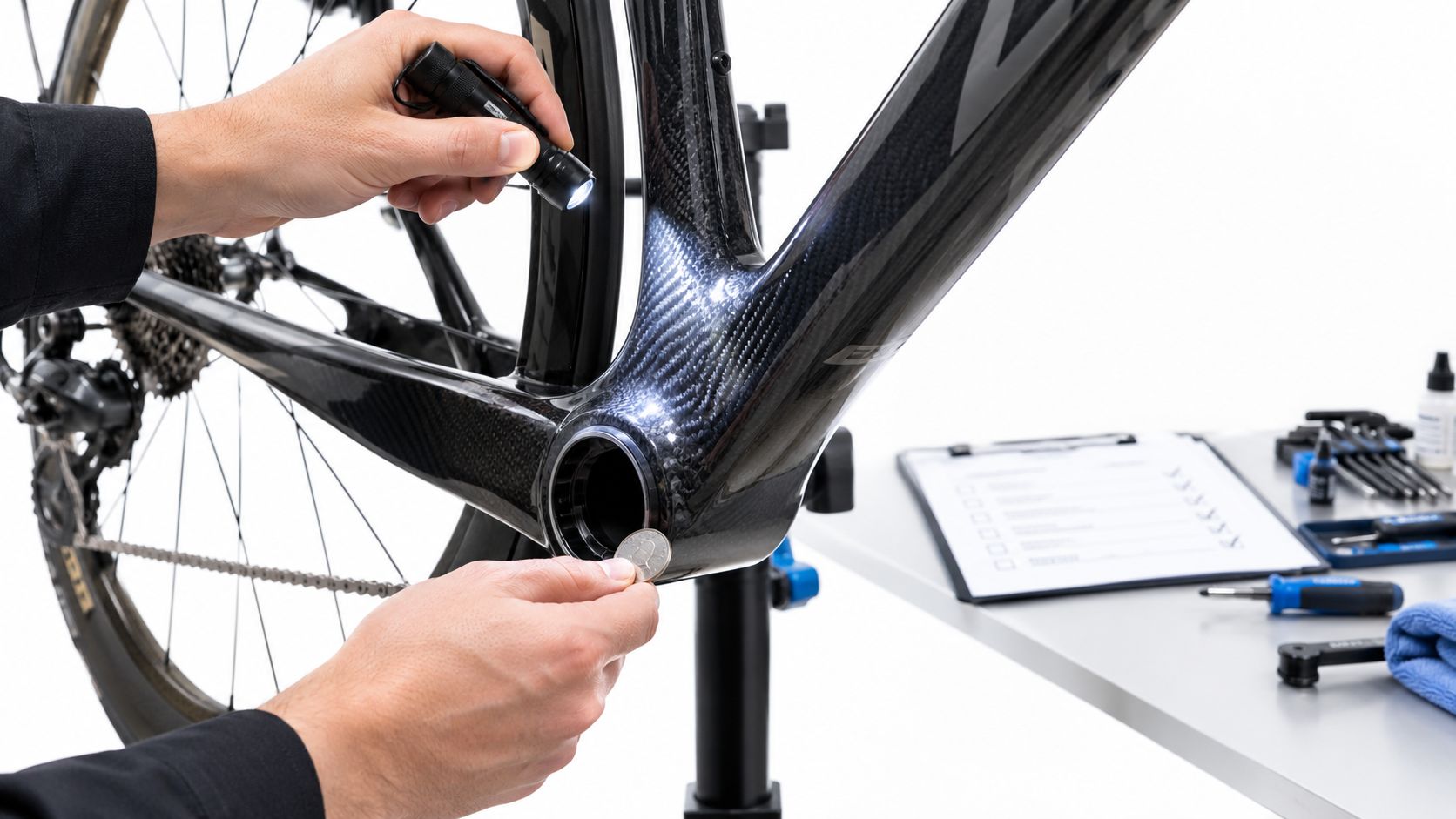
You've found the right carbon bike on paper, the photos look clean, and the price feels close enough to justify a closer look. That is exactly where buyers need a disciplined screening process. A used carbon bike can have structural concerns that are not obvious in listing photos, a wrong-size bike can still be a bad buy, and incomplete seller information can leave major uncertainty unresolved.
Most importantly, a buyer inspection cannot certify carbon as structurally safe. What it can do is help you screen for obvious concerns, identify uncertainty, and decide when to stop and seek professional evaluation before riding or buying.
Table of Contents
- The Hidden Risks of Used Carbon Frames
- Visual and Structural Frame Inspection
- Component, Cockpit, and Drivetrain Evaluation
- Wheels, Bearings, and Test-Ride Protocol
- Fit Verification and Seller Documentation
- Red Flags and When to Seek Professional Help
The Hidden Risks of Used Carbon Frames
The dream listing usually starts with a clean photo set and a seller who says the bike was “barely ridden.” That story can still leave out crash history, impact history, repairs, storage damage, shipping damage, or prior inspection concerns. With carbon, that uncertainty matters because a surface-level look does not establish structural integrity.
A smart buyer treats structure, fit, and documentation uncertainty as one decision. If crash or impact history is unclear, if visual warning signs appear, or if the listing leaves major questions unanswered, the right next step is not to negotiate harder. It is to slow down and decide whether the bike needs professional carbon evaluation before any ride or purchase.
Inspect joints, clamp areas, and any locations with visible impact or crash evidence carefully carbon bike inspection guidance. Scratches, chips, scuffs, touch-up paint, or abrasion do not all mean the same thing, but they can justify closer scrutiny, better photos, service records, or escalation to a specialist.
Practical rule: if the frame only looks good in one lighting condition, assume you have not seen enough of it yet.
The practical consequence is simple. If you stop at marketplace photos and cosmetic impressions, you can overpay for a bike with unresolved structural uncertainty. If the bike also misses your fit or geometry needs, the purchase becomes less attractive because both condition uncertainty and fit uncertainty remain unresolved.
Visual and Structural Frame Inspection
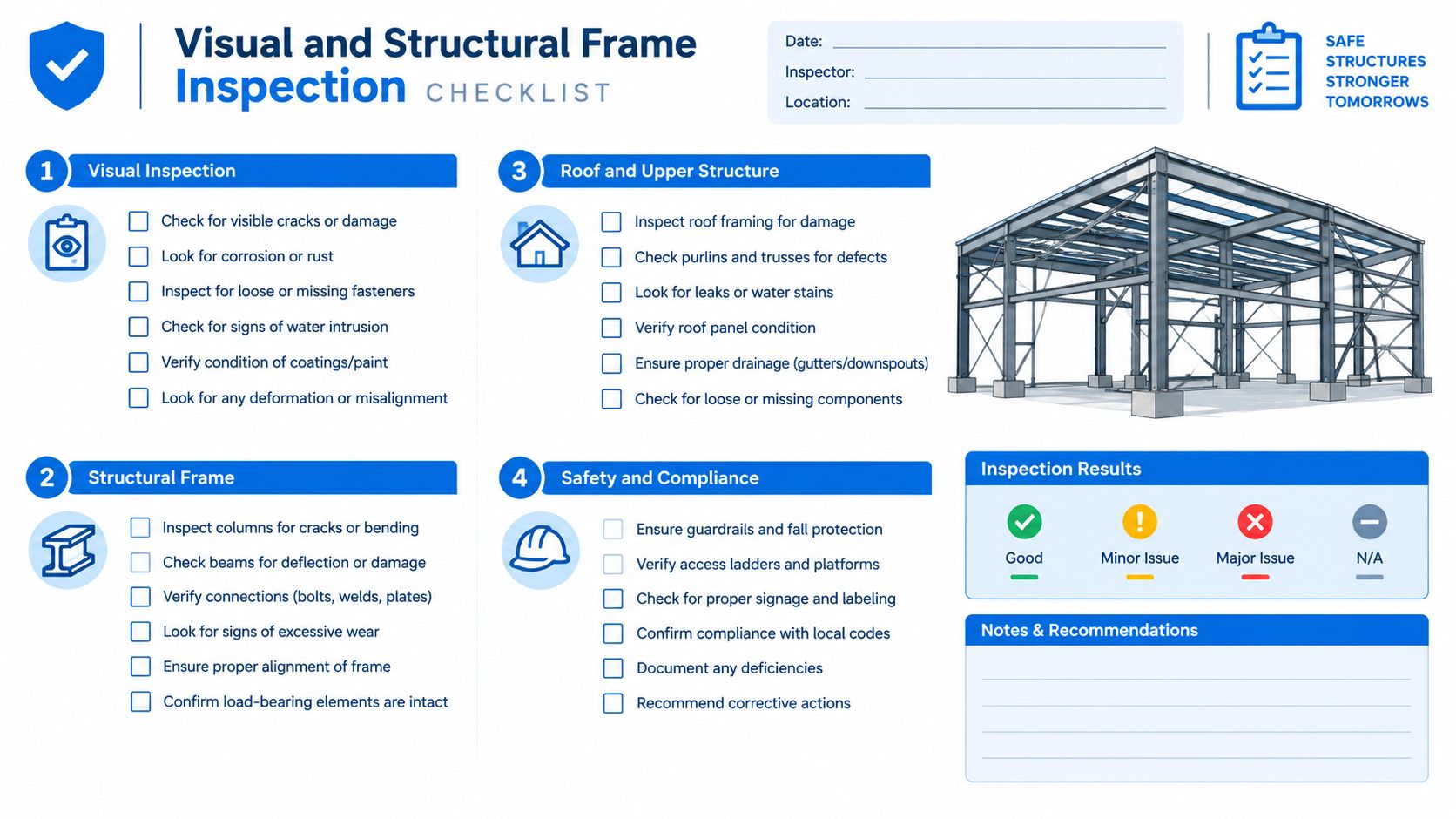
Start with a clean frame and a systematic plan. Dirt can hide hairline cracks, abrasions, and refinishing. Follow a process like the SYCLR used bike checklist before you move on to carbon-specific concerns. Work under strong raking light, then look for cracks, splintering, deformation, rippling, bubbling, white haze, gouges deeper than paint, exposed fibers, unexplained refinishing, and any area that looks visually inconsistent with the surrounding structure used carbon frame inspection checklist.
Pay special attention to joints, clamp areas, dropout areas, the fork, and any place with visible impact evidence or a disclosed crash history. If carbon already appears soft, deformed, cracked, splintered, delaminated, or otherwise abnormal, stop and escalate. A buyer inspection is a screening step, not structural certification.
If crash/impact history or visual evidence creates reasonable suspicion of structural carbon damage, do not test ride the bike. Stop and seek professional evaluation.
What the tap test actually tells you
A simple tap comparison may identify an area worth investigating, but a consumer tap test cannot establish structural integrity. Tube shape, layup, wall thickness, paint and internal structure can affect sound.
That means a tap comparison is only a limited screening aid. It may help you notice that one area sounds different from a nearby area, but it does not confirm healthy laminate and it does not diagnose damage on its own. If a sound difference lines up with crash history, visible damage, refinishing, or another warning sign, that is a reason to pause and escalate.
Professional carbon assessment may use controlled acoustic or percussion methods together with trained interpretation, and that is different from a casual consumer coin test. Do not treat a DIY tap comparison as equivalent to non-destructive testing.
A suspicious sound change is a reason to investigate further, not a reason to declare the frame good or bad.
How to read the frame, not just the paint
Paint-only damage can be cosmetic, but paint can also hide or mimic structural problems. What matters is context. Look for cracks that continue across a junction, crushed-looking edges, asymmetry around a joint, fiber exposure, localized rippling, or unexplained refinishing near visible impact.
Do not assume mismatched paint or uneven clear coat proves a repair or cover-up. But unexplained refinishing near suspected damage warrants questions or professional evaluation. If the seller cannot explain what happened in that area, uncertainty remains part of the purchase decision.
Component, Cockpit, and Drivetrain Evaluation
This article focuses on carbon-specific screening, so keep the rest of the used-bike check brief. A bike can pass an initial visual frame screen and still require expensive parts or service.
Start with the cockpit and seatpost, because clamp interfaces deserve careful inspection on carbon components. Inspect the stem faceplate, handlebar clamp area, seatpost collar, and saddle clamp for cracks, distortion, uneven gaps, deep scoring, unusual witness marks, or other signs that justify closer inspection.
Check the contact points first
At carbon contact points, visible marks do not tell the whole story, but they can justify closer inspection and questions about assembly, torque practices, part compatibility, and service history. If the cockpit shows damage, distortion, or unexplained marks, treat that as unresolved risk until you understand it.
The drivetrain and wear parts matter too, but mainly as a cost and maintenance question. Check chain wear, cassette wear, shifting quality, brake function, and whether the build matches the listing. For brand-level context, SYCLR's Shimano groupset hierarchy page helps when you are trying to decide whether the current build matches the listed and original component context.
Buyer consequence: even if carbon screening raises no obvious structural concern, worn or questionable parts can still change the value of the deal.
Watch for interface problems
Pay close attention where metal meets carbon. Bottom bracket areas, derailleur hangers, seatpost interfaces, and threaded hardware can show wear, corrosion, movement, or installation concerns. Those findings do not prove frame damage, but they can increase uncertainty and may warrant closer inspection by a qualified mechanic or carbon specialist.
If the seller cannot clearly explain what has been replaced, what still matches original spec, or what service the bike has received, build that uncertainty into your decision.
Wheels, Bearings, and Test-Ride Protocol
Wheels and bearings do not need to look dramatic to add cost or raise concern. Spin the wheels, check for obvious hop or side-to-side wobble, and inspect the rims for cracks, bulges, spoke-bed issues, or unusual wear. If the bike uses carbon rims, inspect them carefully for impact damage, heat damage, or other abnormalities.
What to check before any ride
Before any test ride, finish your initial screening first. Check headset play, wheel retention, brake function, and obvious bearing looseness. Confirm that nothing about the frame, fork, cockpit, or wheels creates reasonable suspicion of structural carbon damage.
If crash history is disclosed, impact evidence is visible, or any structural concern remains unresolved, do not use the test ride to "see what happens." A buyer should not deliberately load a suspected damaged frame or fork.
A normal test ride, only if screening finds no structural concern
Only consider a normal test ride after your initial inspection finds no reason to suspect structural damage. Even then, the ride is not structural certification. It is simply another screening step.
On a short, normal ride, check that the bike shifts, brakes, steers, and tracks in an ordinary way. Note any creaks, clicks, rubbing, or vague handling. Those clues may point to assembly issues, worn bearings, loose parts, wheel problems, or other service needs. They are not proof of carbon failure by themselves.
A short ride can reveal comfort, fit, and general function. It cannot clear a questionable frame.
Fit Verification and Seller Documentation
A structurally uncertain carbon bike is not a good buy, and a structurally unremarkable bike can still be wrong for you if the fit is off. Geometry and cockpit setup provide more useful fit context than the size label alone.
Verify the frame you're actually buying
Manufacturers can change molds and specs across model years, sometimes subtly, so always check the geometry chart for the exact year and model. A size label might look familiar while the front end, top tube, or cockpit position has changed enough to matter. Compare the bike's current bar height, stem length, spacers, and seatpost setup against your known fit coordinates, not just your height estimate.
Fit-aware takeaway: a used carbon bike is only a good deal if the geometry supports the way you ride and the condition screening leaves no unresolved concern you are ignoring.
That is where listing confidence becomes part of the purchase. If the seller cannot confirm the model year, cannot explain major spec changes, or provides limited detail about condition, you have greater uncertainty about fit, specification history, and condition.
SYCLR compares road and gravel listings using fit signals, geometry signals, model-year context, price context, listing quality, condition signals where available, and confidence signals.
SYCLR does not perform a professional bike fit, physically inspect bikes, authenticate listings, verify ownership or seller claims, or guarantee fit or condition.
Ask for the records that reduce uncertainty
Ask for any available purchase documents, service records, repair records and crash/impact history.
If the bike has had a repair, ask what was repaired, who performed the work, and whether any inspection report exists. Missing documentation increases uncertainty, but it does not prove dishonesty. It does mean you should be more cautious about what you can verify independently.
Available purchase, service, and repair records can provide useful context for the bike’s identity, maintenance history, and visible wear. Without that, even a clean-looking bike can be overpriced because unresolved uncertainty is part of the risk.
Red Flags and When to Seek Professional Help
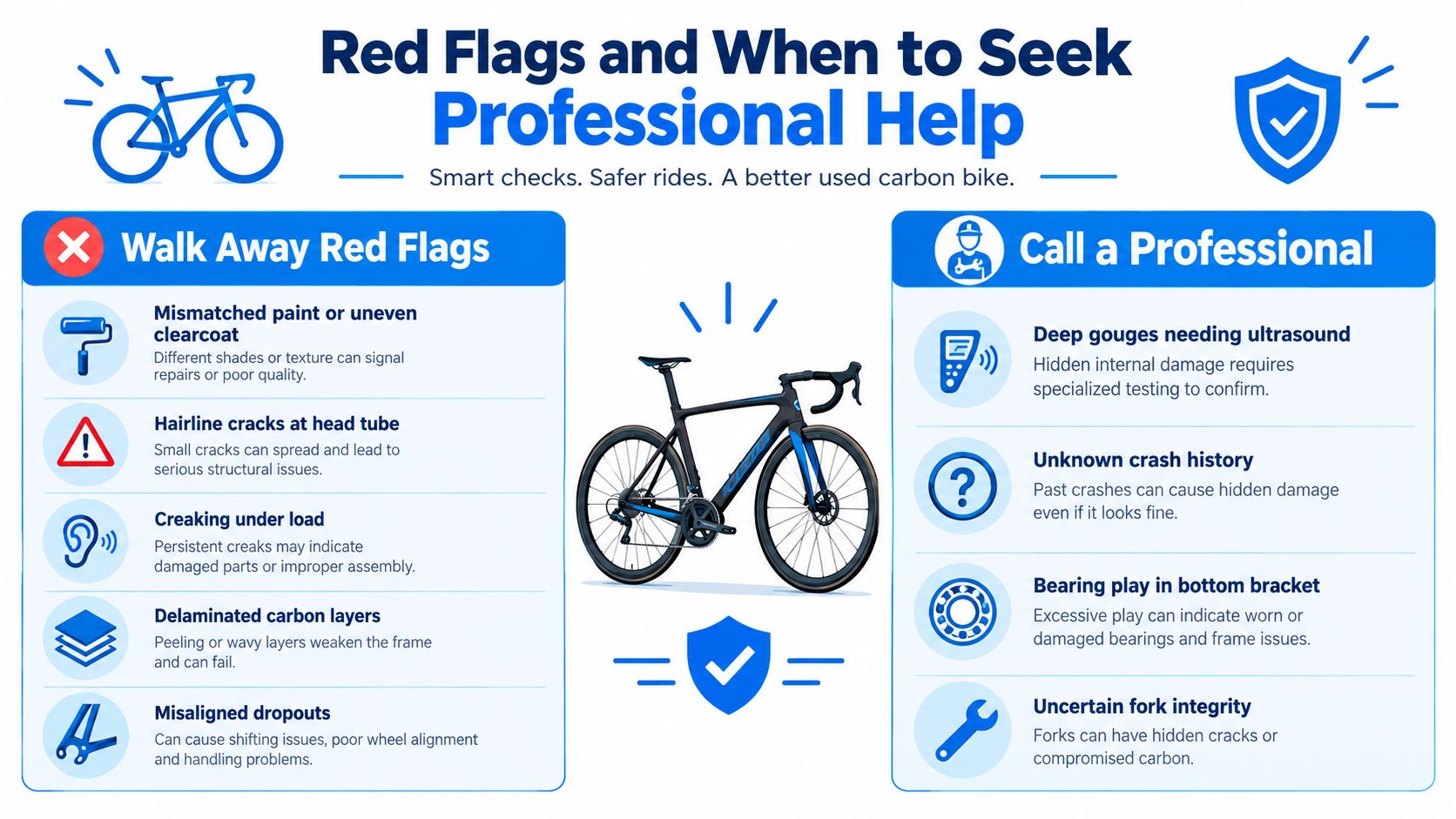
Some bikes should not move forward to a test ride or purchase decision without more scrutiny. Visible cracks, splintering, deformation, delamination, fork concerns, misalignment, unexplained refinishing near suspected impact, or unresolved crash history are not points to gloss over.
When the DIY screen stops being enough
A buyer's visual check and simple tap comparison are limited screening tools. They do not certify a frame, fork, handlebar, stem, seatpost, or rim as structurally safe.
Specialized carbon services may use ultrasound, controlled acoustic or percussion testing, borescopes, or other non-destructive testing methods, depending on the component and the service carbon inspection diagnostics. Those processes rely on specialized equipment, controlled methods, and trained interpretation. DIY inspection is not the same as NDT.
If the frame has crash history, impact evidence, unexplained refinishing near suspected damage, a suspicious sound change that aligns with other warning signs, or any visible structural abnormality, professional evaluation is warranted before riding or buying.
Clear do-not-ride or walk-away signals
-
Visible cracking, splintering, deformation, or delamination: stop and escalate.
-
Crash or impact history with unresolved structural questions: do not test ride pending evaluation.
-
Fork, steerer, or wheel concerns that could affect safety: stop and seek qualified inspection.
-
Unexplained refinishing near suspected damage: ask questions or seek professional evaluation.
-
Seller information gaps that leave major condition questions unanswered: treat the uncertainty seriously.
A practical used-carbon-bike decision has three buyer outcomes:
-
No obvious concern identified in buyer screening, not structural certification.
-
Uncertain, professional evaluation warranted.
-
Do not ride / walk away pending evaluation.
If you're comparing used carbon road or gravel bikes and the inspection starts to feel uncertain, open SYCLR and compare other listings before spending more time on one with unresolved condition uncertainty. Use SYCLR to compare road and gravel listings, start with height, bike type, and budget, then compare fit and geometry signals, shortlist better-fit bikes, and check model-year and price context before you commit.