SRAM Groupset Hierarchy Explained from Apex to RED
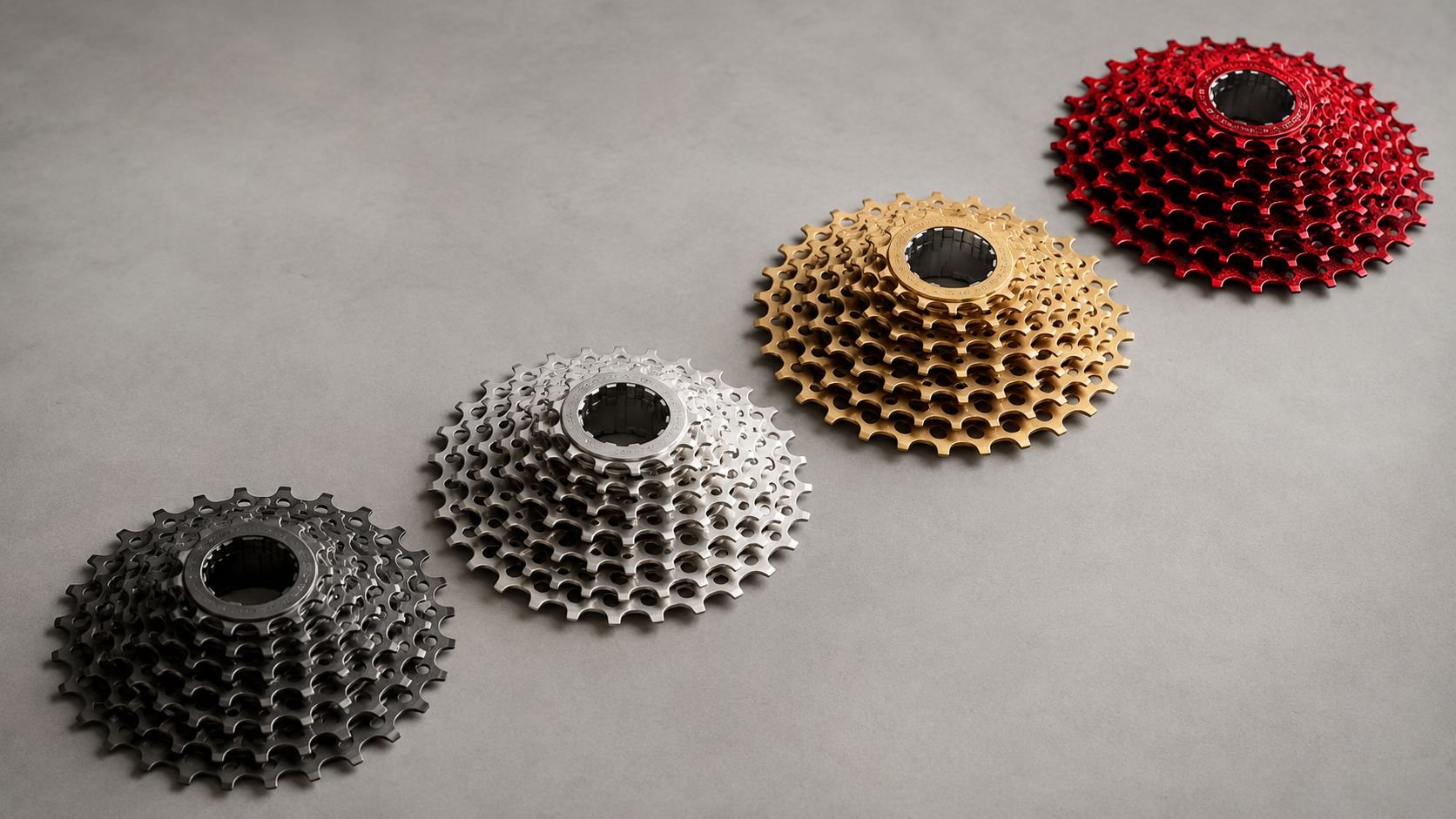
SRAM's road and gravel groupset hierarchy is usually summarized as Apex → Rival → Force → RED. That shorthand is useful, but it can also hide what matters most when you are choosing a bike or decoding a used listing. SRAM is not one perfectly symmetrical ladder. The same tier name can appear across different drivetrain families, different generations, different speeds, and different frame interfaces.
For most buyers, the first questions are not simply "Which tier is higher?" They are:
Is this a road AXS setup or an XPLR setup?
Is it current generation or previous generation?
Is it 12-speed or 13-speed?
Is it hanger-mounted or Full Mount?
Does the frame use a standard derailleur hanger or a UDH interface?
Those distinctions shape compatibility, upgrade paths, replacement-part choices, and how a bike fits your riding. Tier still matters, but it is only one part of the decision.
Table of Contents
- The SRAM Hierarchy at a Glance
- Current and Previous SRAM Drivetrain Families
- What Actually Changes from Apex to Rival to Force to RED
- Mechanical Apex Versus AXS
- XPLR and Gravel Gearing
- UDH, Full Mount, and Frame Compatibility
- SRAM Eagle Mixed Builds for Drop-Bar Bikes
- How to Decode a Used SRAM Bike Listing
- How SYCLR Helps You Shortlist Bikes
- Choosing the Right SRAM Tier for Your Riding
- SRAM Groupset Hierarchy FAQs
- Is SRAM one simple ladder from Apex to RED?
- What is the difference between current road AXS and current XPLR Full Mount?
- Is Apex XPLR part of the current 13-speed Full Mount XPLR family?
- Are previous-generation 12-speed XPLR groupsets still relevant?
- Does a UDH frame automatically work with every SRAM drivetrain?
- What should I verify in a used SRAM listing before buying?
The SRAM Hierarchy at a Glance
At the broadest level, SRAM's drop-bar hierarchy runs from Apex at the entry point to RED at the top end, with Rival and Force in between. That sequence applies as a tier structure, but it does not mean every SRAM drivetrain sits on one neat ladder with directly equivalent options at every level.
The key reason is that SRAM's naming now spans more than one family of drop-bar drivetrain. Some systems are road-oriented 12-speed AXS groupsets. Some are XPLR gravel systems. Some current XPLR groupsets are 13-speed Full Mount systems that require a UDH-interface frame. Others, including older XPLR systems and current Apex XPLR, are hanger-mounted and should not be treated as the same platform.
When comparing bikes, start by identifying the drivetrain family and generation first. Then use the tier name to understand where that particular system sits in SRAM's range.
The four main tiers
Apex is SRAM's most accessible drop-bar tier.
Rival sits above Apex and is often the practical middle of the range.
Force is the higher-performance tier below the flagship level.
RED is the flagship tier.
Across those tiers, the usual changes are in materials, weight, finish, component options, and price. Exact specifications vary by generation and drivetrain family, so the badge alone never tells the full story.
Current and Previous SRAM Drivetrain Families
The most useful way to understand SRAM today is to separate its drop-bar range by family and generation, not just by tier.
Current road AXS, 12-speed
At Rival, Force, and RED, SRAM's current road-oriented AXS drivetrains remain 12-speed, distinct from the current 13-speed XPLR Full Mount gravel systems.
These systems are distinct from current 13-speed XPLR Full Mount. They use their own road-oriented component combinations and should not be blurred together with the latest XPLR gravel platform.
On complete bikes and in used listings, road AXS may appear in:
2x road configurations
builds using standard derailleur-hanger layouts rather than Full Mount XPLR hardware
If a listing simply says "Force AXS" or "Rival AXS," that is not enough on its own. You still need to identify the exact rear derailleur, cassette, speed, crank, and intended drivetrain family.
Current XPLR Full Mount, 13-speed
Current RED XPLR AXS 13-speed, Force XPLR AXS 13-speed, and Rival XPLR AXS 13-speed are SRAM's latest drop-bar gravel-specific XPLR systems.
These current XPLR groupsets share several defining features:
13-speed
1x only
10-46T XPLR cassette
Full Mount rear derailleur
requires a UDH-interface frame
Road Flattop chain compatibility
Current 13-speed RED, Force, and Rival XPLR rear derailleurs use SRAM's Full Mount attachment and require a frame built with the UDH interface. The Full Mount derailleur attaches directly at that interface and eliminates the conventional derailleur hanger.
If you are shopping used or comparing complete bikes, avoid treating "XPLR" as one uniform category. Current 13-speed Full Mount XPLR and previous-generation 12-speed XPLR are different systems.
Apex XPLR, current 12-speed
Apex XPLR sits in a separate position from current 13-speed RED, Force, and Rival XPLR Full Mount.
Current Apex XPLR is:
12-speed
available in mechanical and AXS forms
1x
hanger-mounted
Verify the exact Apex rear derailleur, cassette, controls, and build rather than assuming every component carrying the Apex name belongs to one interchangeable configuration.
That matters because Apex XPLR should not be described as a 13-speed XPLR option, and it should not be grouped into the Full Mount category. If you are evaluating an Apex XPLR bike, think of it as a current 12-speed gravel setup with its own compatibility path.
Previous-generation XPLR, 12-speed
Previous-generation Rival XPLR AXS, Force XPLR AXS, and RED XPLR AXS in 12-speed form remain highly relevant, especially on used bikes.
For the previous-generation 12-speed XPLR systems discussed here, the key distinction is:
12-speed drivetrains
conventional hanger-mounted rear derailleurs
XPLR-specific gravel intent, but not the current 13-speed Full Mount standard
This distinction is one of the easiest places for buyers to get confused. A used listing might say "Force XPLR AXS" without making clear whether the bike has:
previous-generation 12-speed hanger-mounted XPLR, or
current-generation 13-speed Full Mount XPLR
Do not assume they are interchangeable or cross-compatible. They are different generations with different hardware and frame-interface requirements.
What Actually Changes from Apex to Rival to Force to RED
The safest way to describe SRAM's hierarchy is objectively. Higher tiers generally change materials, weight, finish, component options, and price. Depending on generation and exact build, they may also differ in crank construction, cassette construction, lever materials, and brake or power meter options.
What you should avoid is treating every step up the range as a universal gain in every ride-quality category. A higher tier does not automatically mean better braking, faster shifting, superior feel, or greater durability in every real-world use case.
| Tier | Position in range | What generally changes | Buyer takeaway |
|---|---|---|---|
| Apex | Entry point | Cost-focused construction and fewer premium component options | Identify mechanical vs AXS and the exact XPLR generation first |
| Rival | Mid-range | Access to current AXS road and XPLR systems with less premium construction than upper tiers | Strong functional overlap with Force in many applications |
| Force | Upper tier | Lower weight and more premium materials/component construction than Rival in comparable generations | Compare exact parts and cost against Rival rather than assuming a different use category |
| RED | Flagship | SRAM's lightest and most premium road/XPLR component options | Flagship tier, but compatibility and use case still come first |
How to compare tiers objectively
When you compare SRAM tiers, use this sequence:
Identify the drivetrain family.
Identify the generation.
Confirm the speed count.
Confirm the frame interface and derailleur type.
Then compare the tier.
That approach prevents the most common buying mistake, which is assuming that a higher badge always outweighs generation, compatibility, or intended use.
If you want a deeper look at the two tiers most often cross-shopped, see SYCLR's SRAM Rival versus Force comparison: what the price difference actually buys.
Mechanical Apex Versus AXS
This comparison should stay simple.
Mechanical Apex means cable-actuated shifting. It does not automatically mean mechanical brakes, because brake specification depends on the exact build.
AXS removes mechanical shift-cable routing between the controls and derailleurs, but it introduces its own electronic layer. In ownership terms, that can include:
batteries
pairing
firmware
electronic controls and derailleurs
That does not make one system universally better. It means the maintenance routine and replacement-part path are different.
The ownership difference in simple terms
Choose between mechanical Apex and AXS based on the kind of bike you want to own and maintain, not on a blanket assumption that one format is always superior.
Mechanical Apex keeps the shifting system cable-actuated.
AXS removes shift-cable routing and changes the system to an electronic one.
Replacement parts, troubleshooting, and setup differ between those approaches.
For a deeper comparison, read SYCLR's electronic versus mechanical shifting comparison.
XPLR and Gravel Gearing
XPLR is SRAM's gravel-specific naming, but gearing decisions still depend on terrain, cadence preference, strength, and the intended role of the bike. The key point is not to prescribe one chainring or cassette as universally correct.
In broad terms:
lower gearing makes it easier to ride steep or loose terrain at a manageable cadence
higher gearing favors faster speeds before cadence becomes limiting
Within gravel setups, the gearing decision often matters more than the badge on the derailleur.
Lower versus higher gearing
Instead of chasing one "best" gravel ratio, ask what the bike needs to do.
Steeper, rougher terrain usually pushes riders toward lower gearing.
Faster routes and less extreme gradients may support higher gearing.
The appropriate gearing depends on the exact drivetrain, terrain, and rider. Use the gravel bike gearing guide for the deeper ratio comparison.
UDH, Full Mount, and Frame Compatibility
These terms are often blurred together, but they are not the same thing.
What the terms actually mean
UDH (Universal Derailleur Hanger) is SRAM's standardized hanger design, and frames built for UDH also provide the interface used by SRAM Full Mount derailleurs.
A Full Mount derailleur uses that frame interface directly and eliminates the hanger.
That means current 13-speed RED XPLR AXS, Force XPLR AXS, and Rival XPLR AXS Full Mount systems require a UDH-interface frame.
It does not mean that any frame with a UDH interface is automatically compatible with every 12-speed drivetrain. UDH does not erase the need to verify the rest of the system.
A practical compatibility matrix
| System type | Speed | Mounting style | Frame requirement | Key caution |
|---|---|---|---|---|
| Current road AXS | 12-speed | Hanger-mounted road setup | Depends on the exact frame and derailleur layout | Do not confuse with 13-speed XPLR Full Mount |
| Current RED/Force/Rival XPLR Full Mount | 13-speed | Full Mount | Requires UDH-interface frame | Not the same as previous-generation 12-speed XPLR |
| Current Apex XPLR | 12-speed | Hanger-mounted | Uses a conventional hanger-style arrangement | Not a 13-speed Full Mount system |
| Previous-generation Rival/Force/RED XPLR AXS | 12-speed | Hanger-mounted | Conventional hanger style | Do not assume cross-generation interchangeability |
Whenever you assess compatibility, verify the complete system:
controls
rear derailleur
cassette
chain
crank and chainring
frame interface
SRAM Eagle Mixed Builds for Drop-Bar Bikes
SRAM supports certain compatible drop-bar AXS + Eagle combinations, which gives some riders another route to wide-range gravel gearing.
Compatibility depends on the specific Eagle generation and complete drivetrain. Do not treat “Eagle AXS” or “Transmission” as universal drop-bar compatibility labels.
The important caution is not to blend hanger-mounted Eagle AXS and Full Mount Eagle Transmission into one assumed system. They are not the same hardware standard.
If a bike uses a mixed build, verify the exact compatibility of:
the controls
the derailleur
the cassette
the chain
the crank and chainring
the frame
Mixed builds can work very well when planned correctly, but they should be evaluated as complete systems, not as a shorthand parts swap.
How to Decode a Used SRAM Bike Listing
Used bikes are where SRAM naming causes the most confusion, because sellers often use a tier name without enough technical detail.
A used listing should be decoded by:
tier
exact component model/model ID where visible
generation
speed count
road vs XPLR
frame interface
cassette
chain
controls
That list matters more than the badge alone.
For example, a listing titled "Rival AXS gravel bike" still leaves several unanswered questions:
Is it road-oriented Rival AXS or Rival XPLR?
Is it 12-speed or 13-speed?
Is the rear derailleur hanger-mounted or Full Mount?
Does the frame use a standard hanger or the UDH interface?
Are the cassette and chain correct for that derailleur generation?
When possible, ask the seller for clear photos of:
both shifters
the rear derailleur
the cassette
the crankset
the dropout or derailleur interface area
model-number labels or markings where visible
That visual confirmation is often the fastest way to separate current XPLR Full Mount from earlier hanger-mounted XPLR, or to spot mixed-generation builds.
How SYCLR Helps You Shortlist Bikes
SYCLR can help you narrow a shortlist using fit signals, geometry signals, model-year context, price context, listing quality, condition signals where available, and confidence signals.
That is useful when you are comparing bikes that look similar on paper but differ in fit, use case, age, or listing clarity.
SYCLR does not verify drivetrain compatibility or component condition for you. Those checks still need to be made from listing details, seller responses, photographs, and inspection.
Use SYCLR to start with rider details, bike type, and budget, then compare road and gravel listings using available fit signals, geometry signals, model-year context, price context, listing quality, condition signals where available, and confidence signals.
If you already know current-bike geometry or fit-report details, use Advanced Fit to make the comparison more specific.
Choosing the Right SRAM Tier for Your Riding
The right SRAM choice starts with the bike's intended use and compatibility path, then narrows to the tier.
A practical way to think about it is:
Choose road AXS 12-speed when the bike is primarily road-focused and built around that ecosystem.
Choose current 13-speed XPLR Full Mount only when you want that specific gravel platform and the frame has the required UDH interface.
Choose Apex XPLR 12-speed when its 1x gravel format and hanger-mounted setup suit the bike and your priorities.
Keep previous-generation 12-speed Rival, Force, and RED XPLR AXS firmly in view when shopping used, because they remain relevant and should not be confused with current 13-speed Full Mount XPLR.
Compare Apex, Rival, Force, and RED only after the family, generation, speed, and frame interface are clear.
A lower-tier bike can be the better candidate when its fit, drivetrain generation, compatibility, condition, and asking price align more closely with your needs than a higher-tier listing.
SRAM Groupset Hierarchy FAQs
Is SRAM one simple ladder from Apex to RED?
Not in a fully symmetrical sense. Apex, Rival, Force, and RED are the main tiers, but those names appear across different drivetrain families and generations. You still need to identify whether a bike is road AXS, XPLR, current generation, or previous generation.
What is the difference between current road AXS and current XPLR Full Mount?
Current road AXS is road-oriented and 12-speed. Current-generation RED, Force, and Rival XPLR AXS Full Mount are 13-speed gravel-specific systems with a 1x layout, a 10-46T XPLR cassette, a Full Mount derailleur, and a UDH-interface frame requirement.
Is Apex XPLR part of the current 13-speed Full Mount XPLR family?
No. Current Apex XPLR is a 12-speed, 1x, hanger-mounted system and is available in mechanical and AXS forms. It should not be confused with current 13-speed RED, Force, and Rival XPLR Full Mount.
Are previous-generation 12-speed XPLR groupsets still relevant?
Yes. Previous-generation Rival XPLR AXS, Force XPLR AXS, and RED XPLR AXS remain common and relevant in the used-bike market. They are 12-speed systems that use a conventional hanger-mounted layout and should not be confused with current 13-speed Full Mount XPLR.
Does a UDH frame automatically work with every SRAM drivetrain?
No. A UDH-compatible frame supports SRAM's standardized hanger interface and also provides the frame interface used by Full Mount derailleurs, but drivetrain compatibility still depends on the exact derailleur, cassette, chain, controls, crank/chainring, and generation.
What should I verify in a used SRAM listing before buying?
Verify the tier, exact component model, generation, speed count, road versus XPLR identity, frame interface, cassette, chain, and controls. If the bike has mixed parts, also confirm that the derailleur, cassette, chain, crank or chainring, controls, and frame all belong to a compatible system.
When comparing SRAM-equipped road and gravel bikes, identify the drivetrain family, generation, speed count, and frame interface before judging the tier.
Use SYCLR to compare listings using fit signals, geometry signals, model-year context, price context, listing quality, condition signals where available, and confidence signals. Then verify the exact SRAM components and compatibility independently before purchasing.