
Electronic vs Mechanical Shifting: A 2026 Guide
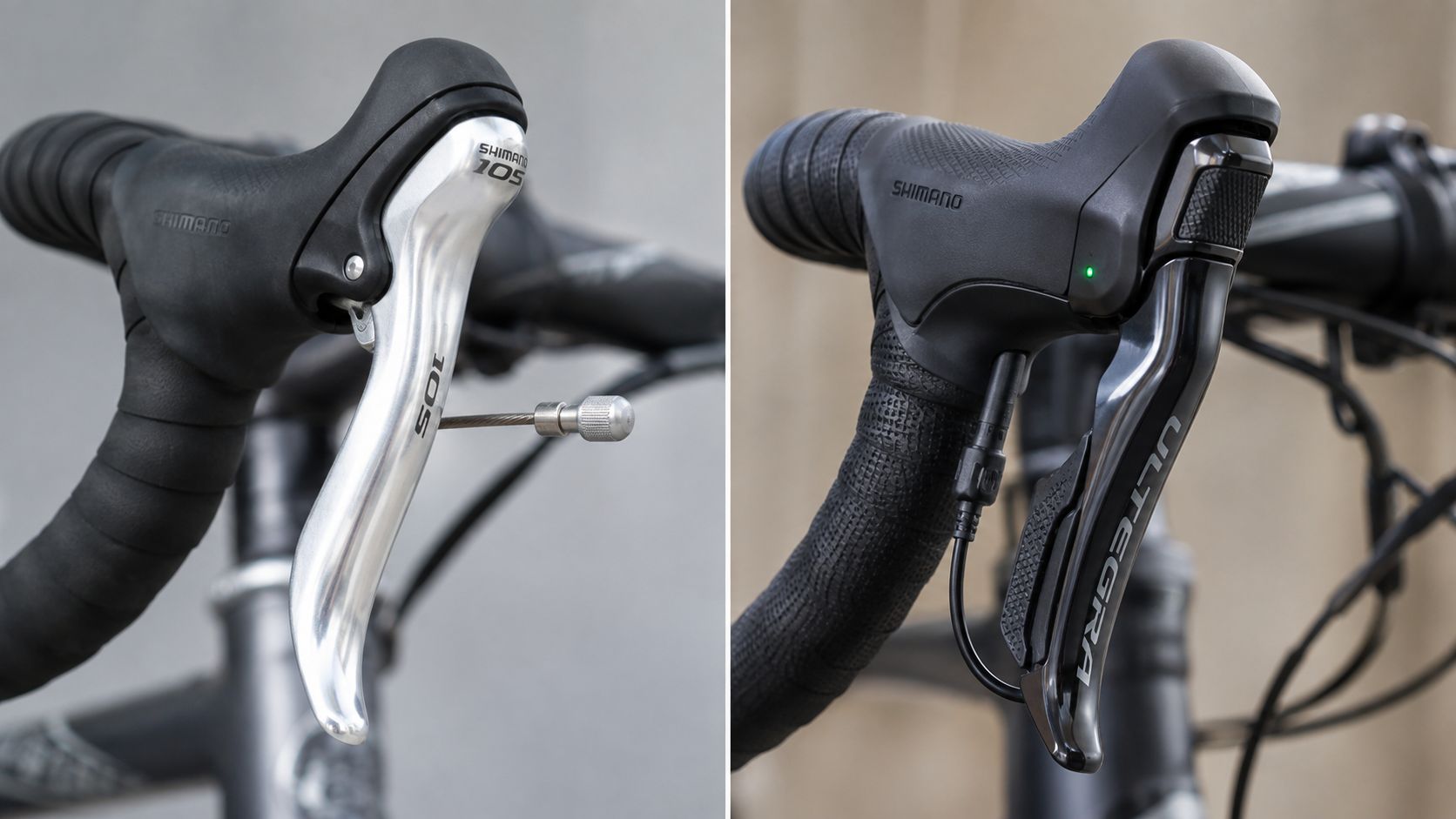
Most advice on electronic vs mechanical shifting starts with feel. That is usually the wrong place to begin.
If you are comparing road or gravel bikes, especially complete bikes or used listings, the better question is simpler: which drivetrain setup makes the whole bike the better buy for your fit, gearing needs, maintenance preferences, budget, and ownership habits?
Neither system is universally better. Electronic shifting is not automatically faster, smoother, or more accurate in every situation. Mechanical shifting is not automatically simpler, cheaper, or better for every kind of riding. The right choice depends on the exact drivetrain generation, compatibility, condition, battery or cable needs, and the complete bike around it.
| Factor | Electronic shifting | Mechanical shifting |
|---|---|---|
| Actuation | Motor moves the derailleur | Cable tension moves the derailleur |
| Power source | Battery or batteries, plus shifter batteries on some systems | No drivetrain battery |
| Everyday upkeep | Charging, battery checks, pairing or app setup on some systems, firmware or diagnostics where applicable | Cable and housing condition, cable tension, indexing checks |
| Shared maintenance needs | Derailleur alignment, drivetrain wear, crash inspection, compatibility checks | Derailleur alignment, drivetrain wear, crash inspection, compatibility checks |
| Ownership feel | Button based actuation, system specific controls | Lever and cable based actuation |
| Entry cost | Often higher, depending on build and generation | Often lower, depending on build and generation |
Current examples matter because not all electronic systems are built the same. Shimano's current 12-speed road Di2 systems use wireless shift controls with an internal main battery connected to the derailleurs, while the rear derailleur serves as the charging and communications hub in that platform (Shimano dealer manual, Shimano 105 Di2). Current SRAM AXS road and gravel systems use wireless controls, removable rechargeable derailleur batteries on the electronic derailleurs fitted to the drivetrain, and replaceable CR2032 batteries in the shift controls. Shimano's current GRX Di2 lineup also illustrates why generation and configuration matter. GRX RX825 2×12 uses a central battery connected to the derailleurs with wireless shift controls, while newer GRX 1×12 systems such as RD-RX827 use a fully wireless rear derailleur with a removable battery. (Shimano GRX RD-RX825, Shimano GRX dealer manual).
That difference matters even more on a used bike than it does in a showroom. A tidy mechanical setup with fresh cables and compatible parts can be a great buy. An electronic build with the wrong battery situation, unclear compatibility, crash damage, or missing charger can be a headache. The opposite can also be true. A clean electronic bike with complete accessories and known history may be the smarter purchase than a rough mechanical one.
If you want broader Shimano road context, SYCLR's Shimano groupset hierarchy is useful. Just do not let the groupset name override fit, geometry, gearing, model year, and condition.
Practical rule: buy the shifting system that makes the complete bike a better fit for how you ride and what you want to maintain.
Table of Contents
- Electronic vs Mechanical Shifting at a Glance
- Shift Feel, Accuracy, and Real-World Setup
- Batteries, Cables, and Ongoing Maintenance
- Price, Value, and Long-Term Ownership
- What to Check on a Used Electronic or Mechanical Bike
- Which System Fits Which Rider and Terrain
- Is Electronic Shifting Worth It and What to Do Next
- Frequently Asked Questions About Electronic vs Mechanical Shifting
- Is electronic shifting more reliable than mechanical shifting?
- How much battery management does electronic shifting add?
- Does electronic shifting require less maintenance than mechanical?
- Which offers better value, electronic or mechanical shifting?
- What matters most when buying a used bike with electronic or mechanical shifting?
- Is electronic shifting worth it on a road or gravel bike?
Electronic vs Mechanical Shifting at a Glance
The difference is in the actuation chain
Mechanical shifting uses a physical cable through housing to move the derailleur. Shift quality depends on setup, cable and housing condition, derailleur and hanger alignment, compatibility, and drivetrain wear.
Electronic shifting replaces cable pull with motorized derailleur actuation. But that does not describe one single architecture. Shimano's current 12-speed road Di2 systems use wireless shift controls with a central internal battery connected to the derailleurs (Shimano dealer manual, Shimano 105 Di2). Current SRAM AXS systems use wireless controls, rechargeable removable derailleur batteries, and CR2032 batteries in the shifters (SRAM AXS batteries, SRAM Road AXS and XPLR AXS manual). Shimano's current GRX Di2 lineup is another reminder that the details vary by family and configuration, with RX825 2×12 and fully wireless 1×12 systems using different battery and component architectures.
What that means for buyers
For buyers, the real comparison is not analog versus digital in the abstract. It is whether a given drivetrain on a given bike is complete, compatible, correctly configured, and sensible for your ownership style.
Electronic systems can offer programmable controls, multi-shift options, and app-based configuration on some platforms. Mechanical systems can offer familiar adjustment and a parts path that stays cable based. Neither advantage matters if the bike does not fit, the gearing is wrong, the drivetrain is worn, or the build mixes incompatible generations.
That is why the complete bike matters more than the drivetrain badge alone. If you need context on Shimano road tiers, SYCLR's Shimano groupset hierarchy helps, but fit, model year, wheelset, geometry, gearing, and condition still decide whether the bike is actually a good buy.
Quick buyer read
Choose electronic when: you want button based shifting and are comfortable with the battery and configuration side of ownership.
Choose mechanical when: you want a cable based system and prefer that maintenance workflow.
Stay system agnostic when: fit, geometry, gearing, condition, and price are the bigger differences between the bikes you are considering.
If you are comparing similar used road bikes, what size road bike do I need matters more than the shifting label if one bike fits properly and the other does not.
Shift Feel, Accuracy, and Real-World Setup
What riders actually notice
Riders usually notice three things first: control layout, shift timing, and how well the system is set up.
Electronic shifting changes the hand feel because you press a button or paddle and the derailleur motor completes the shift. Mechanical shifting gives you a lever pull tied to cable movement. Some riders strongly prefer one interface over the other, but that is a preference, not a universal performance ranking.
Accuracy in real riding depends heavily on setup and condition. A well-adjusted mechanical drivetrain can shift very well. A poorly configured electronic system can be frustrating. The useful buyer question is not which technology sounds better in isolation. It is whether the exact bike in front of you shifts cleanly across the cassette and chainrings, with the right gearing for your riding.
Why exact drivetrain generation matters
This comparison becomes clearer on modern road and gravel bikes because generations differ in control logic, battery layout, compatibility, and feature set.
Shimano's current 12-speed road Di2 family uses wireless shift levers with a wired connection to the main battery and derailleurs, while current SRAM AXS road and gravel systems use wireless component communication with removable derailleur batteries and coin-cell shifter batteries (Shimano dealer manual, SRAM AXS batteries). Shimano's current GRX Di2 systems show again that exact family and configuration matter, especially when comparing 1x and 2x gravel builds or mixed-generation used bikes.
That is why it is risky to compare only brand names. Two bikes can both say Di2 or AXS and still differ in generation, compatibility, battery arrangement, gearing range, and replacement-part availability. If you want Shimano road context for side by side shopping, this Shimano 105 vs Ultegra breakdown is a useful companion.
Batteries, Cables, and Ongoing Maintenance
What electronic ownership asks from you
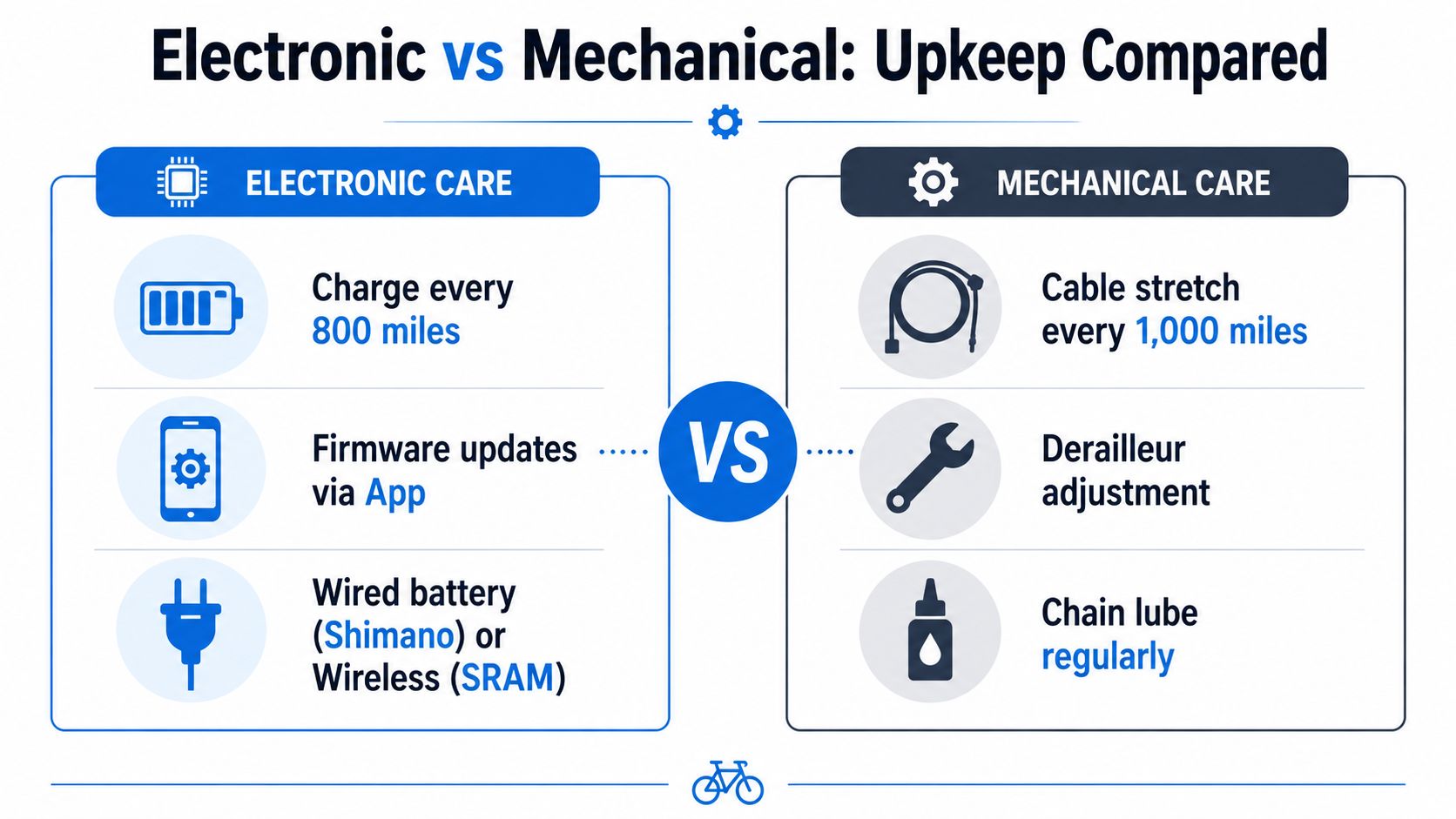
Electronic shifting changes the maintenance tasks, it does not eliminate them.
Depending on the system, electronic ownership may include:
charging the main battery or derailleur battery/batteries
checking battery status
replacing shifter coin cells where applicable
pairing components or confirming app connectivity where relevant
firmware updates or configuration in the brand's app ecosystem where applicable
electronic diagnostics if something stops communicating correctly
derailleur alignment and normal drivetrain wear, just like any other bike
For Shimano's current 12-speed road Di2, the main battery is connected to the derailleurs and the shifters use coin cells (Shimano 105 Di2, Shimano dealer manual). For SRAM AXS, derailleur batteries are removable and rechargeable, and each shifter uses a CR2032 battery (SRAM AXS batteries, SRAM Road AXS and XPLR AXS manual).
What mechanical ownership asks from you
Mechanical shifting keeps maintenance in the cable system.
That usually means:
checking cable and housing condition
adjusting cable tension and indexing when needed
inspecting derailleur and hanger alignment
replacing worn cables or housing over time
managing normal drivetrain wear, including chain, cassette, and chainring wear
Mechanical maintenance can be straightforward, but it is still setup dependent. If the routing is poor, the housing is contaminated, the hanger is bent, or the drivetrain is worn, shift quality suffers.
Compare tasks, not myths
The cleanest way to compare maintenance is to compare tasks, not slogans.
Electronic replaces cable management with battery and system management. Mechanical skips batteries but depends on cable condition and adjustment. Both still depend on alignment, compatibility, and drivetrain wear.
If you are evaluating a used bike, that practical difference matters more than any generic claim about which system is easier. Use a broader used bike checklist so you are not judging the drivetrain in isolation.
Price, Value, and Long-Term Ownership
Complete-bike value matters more than labels
Electronic and mechanical builds often differ in price, but the useful comparison is not just the groupset line on a listing. It is the total value of the bike.
At the same budget, one bike may offer a better frame, more appropriate gearing, stronger wheels, cleaner service history, or a better fit. That can matter more than whether the shifters are electronic or mechanical. A premium drivetrain on the wrong size bike is not a premium buying decision.
Used buyers should also think about what is included. Charger, spare battery, correct app access, and known parts generation matter on electronic bikes. Fresh cables, recent service, and good indexing matter on mechanical bikes. Neither system is automatically the better value without that context.
Think about replacement parts and ecosystem fit
Before you decide, think about what happens after the sale.
Can you easily identify the exact drivetrain generation? Are replacement parts straightforward to source? Are road and gravel parts mixed in a way that stays within the brand's compatibility rules? Will the gearing suit your terrain without immediate changes? Do you mind battery management, or would you rather deal with cables and housing?
Those are the questions that turn a drivetrain from a feature into an ownership experience.
What to Check on a Used Electronic or Mechanical Bike
Electronic checks
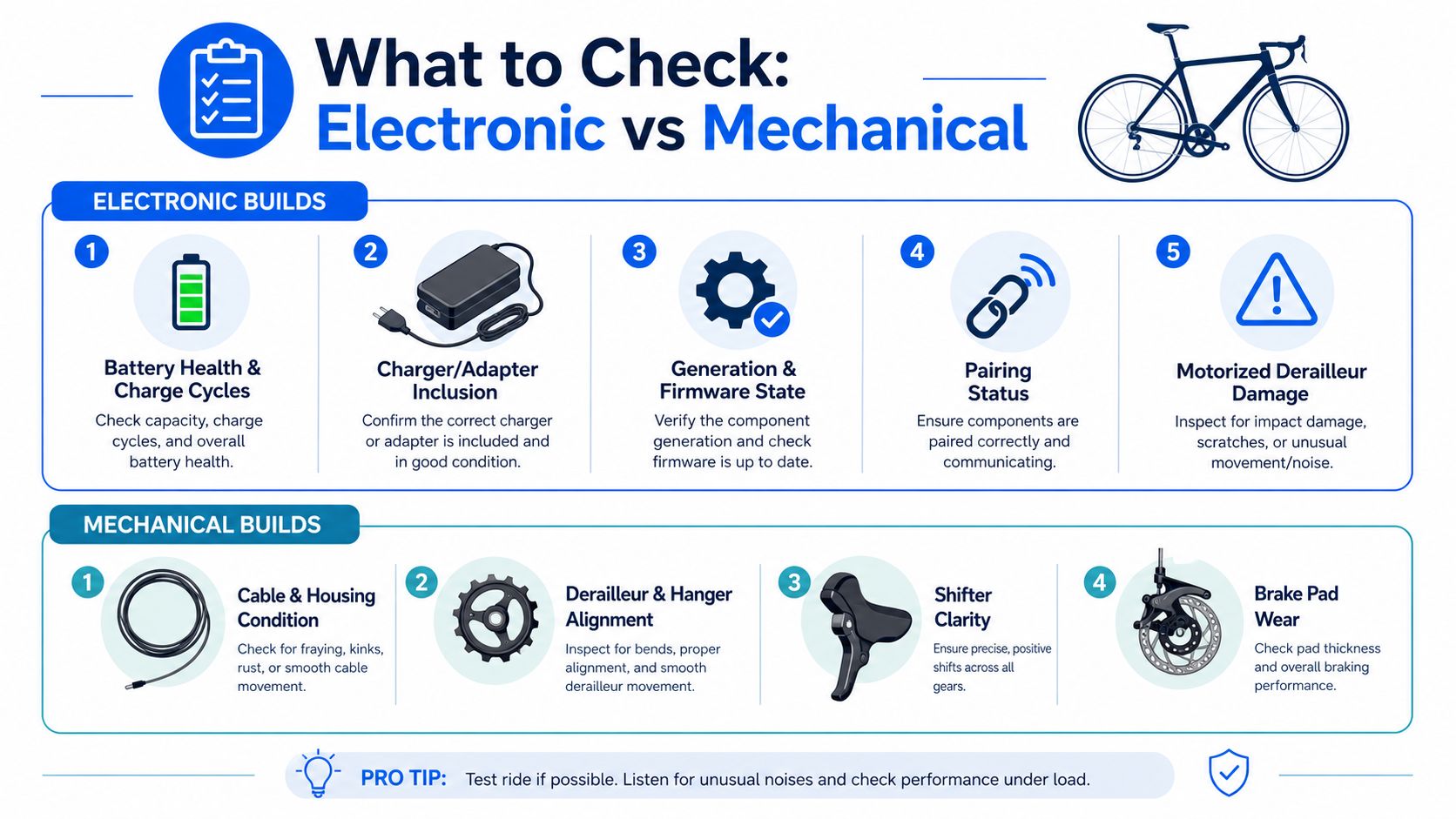
Keep the electronic inspection concise:
confirm the exact generation
verify the system powers up and shifts across its range
check that the battery hardware and required charging cable or charging accessories are included where applicable
confirm pairing and app function if the system uses them
inspect for crash damage at the derailleurs and controls
verify compatibility if the bike mixes parts
check normal drivetrain wear
Mechanical checks
For a mechanical bike, focus on:
cable and housing condition
indexing consistency across the cassette and chainrings
derailleur and hanger condition
generation and compatibility
normal drivetrain wear
A good used-bike decision comes from fit, condition, compatibility, and price context together, not from the shifting type alone.
If you want a more disciplined process for evaluating listings, start with the used bike checklist before messaging sellers.
Which System Fits Which Rider and Terrain
Road and gravel priorities vary by rider
Road and gravel riders do not all want the same thing.
Some riders care most about button based controls, programmable features, and a cleaner cockpit. Others care more about cable based simplicity, lower entry price on the complete bike, or a drivetrain they already know how to adjust. Some want a race-oriented road setup. Others want practical gravel gearing and a bike that fits wider tires and rougher routes.
That is why broad claims fail here. Electronic is not automatically the better road choice, and mechanical is not automatically the better gravel choice. The right answer depends on the specific build, the gearing, the terrain, your maintenance habits, and how much the complete bike suits your riding.
Use the whole-bike view
For road and gravel shopping, SYCLR helps compare available listings using fit signals, geometry signals, model-year context, price context, listing quality, condition signals where available, and confidence signals. That is a better way to narrow choices than treating the drivetrain label as the whole decision.
If fit is the main question, start with what size road bike do I need and the advanced fit flow at SYCLR Fit Details. If you are ready to compare live road and gravel options, use the primary tool at SYCLR.
Is Electronic Shifting Worth It and What to Do Next
Worth it for some riders, not necessary for everyone
Electronic shifting is worth considering if you want its feature set and are comfortable with its battery and configuration requirements. Mechanical shifting is worth considering if you prefer its cable based setup and maintenance workflow.
Neither choice is universally superior. What matters is whether the exact drivetrain generation is compatible, the bike fits, the gearing suits your riding, the condition is good, and the ownership demands match what you actually want to manage.
What to verify before you buy
Before buying any road or gravel bike, compare the complete package:
fit and geometry
drivetrain generation and compatibility
gearing range
condition and crash history
battery or cable situation
included accessories such as chargers where relevant
price relative to the rest of the build
That keeps the decision practical.
Frequently Asked Questions About Electronic vs Mechanical Shifting
Is electronic shifting more reliable than mechanical shifting?
Not universally. Electronic systems remove cables from the actuation path, but they add batteries, electronic communication, and system-specific diagnostics. Mechanical systems avoid those electronics, but they still depend on cable condition, indexing, alignment, and wear. Reliability depends on the exact system, setup quality, maintenance, and condition.
How much battery management does electronic shifting add?
It depends on the platform. Shimano's current 12-speed road Di2 uses a central battery plus coin-cell batteries in the shifters, while current SRAM AXS uses rechargeable derailleur battery or batteries plus CR2032 batteries in the shifters (Shimano 105 Di2, SRAM AXS batteries). In practice, electronic ownership adds a routine for checking charge status, keeping the correct charger on hand, and confirming pairing or app function where relevant.
Does electronic shifting require less maintenance than mechanical?
Not as a universal rule. Electronic and mechanical drivetrains ask for different maintenance tasks. Electronic may involve charging, battery checks, pairing, firmware, and diagnostics. Mechanical may involve cables, housing, cable tension, and indexing. Both still need derailleur alignment and normal drivetrain wear checks.
Which offers better value, electronic or mechanical shifting?
Value depends on the complete bike. A well-priced bike with the right fit, gearing, and condition can be the better buy regardless of shifting type. Compare the whole package, including wheels, frame, service history, included accessories, drivetrain generation, and any immediate replacement needs.
What matters most when buying a used bike with electronic or mechanical shifting?
Start with fit, geometry, and condition. Then verify drivetrain generation, compatibility, and wear. On electronic bikes, confirm that the system powers up, shifts correctly, and includes the necessary battery hardware and charger where applicable. On mechanical bikes, check cable and housing condition, indexing consistency, and derailleur or hanger condition.
Is electronic shifting worth it on a road or gravel bike?
Sometimes, yes. If you want the feature set and are comfortable with the battery and configuration side of ownership, it can be a strong choice. If you prefer a cable based system and that maintenance workflow fits you better, mechanical can be the better choice. The right answer depends on the exact bike, not just the technology label.
Electronic or mechanical shifting is only one part of the buying decision. Use SYCLR to compare available road and gravel listings using fit signals, geometry signals, model-year context, price context, listing quality, condition signals where available, and confidence signals.