
How to Inspect a Used Bike Before Buying Online
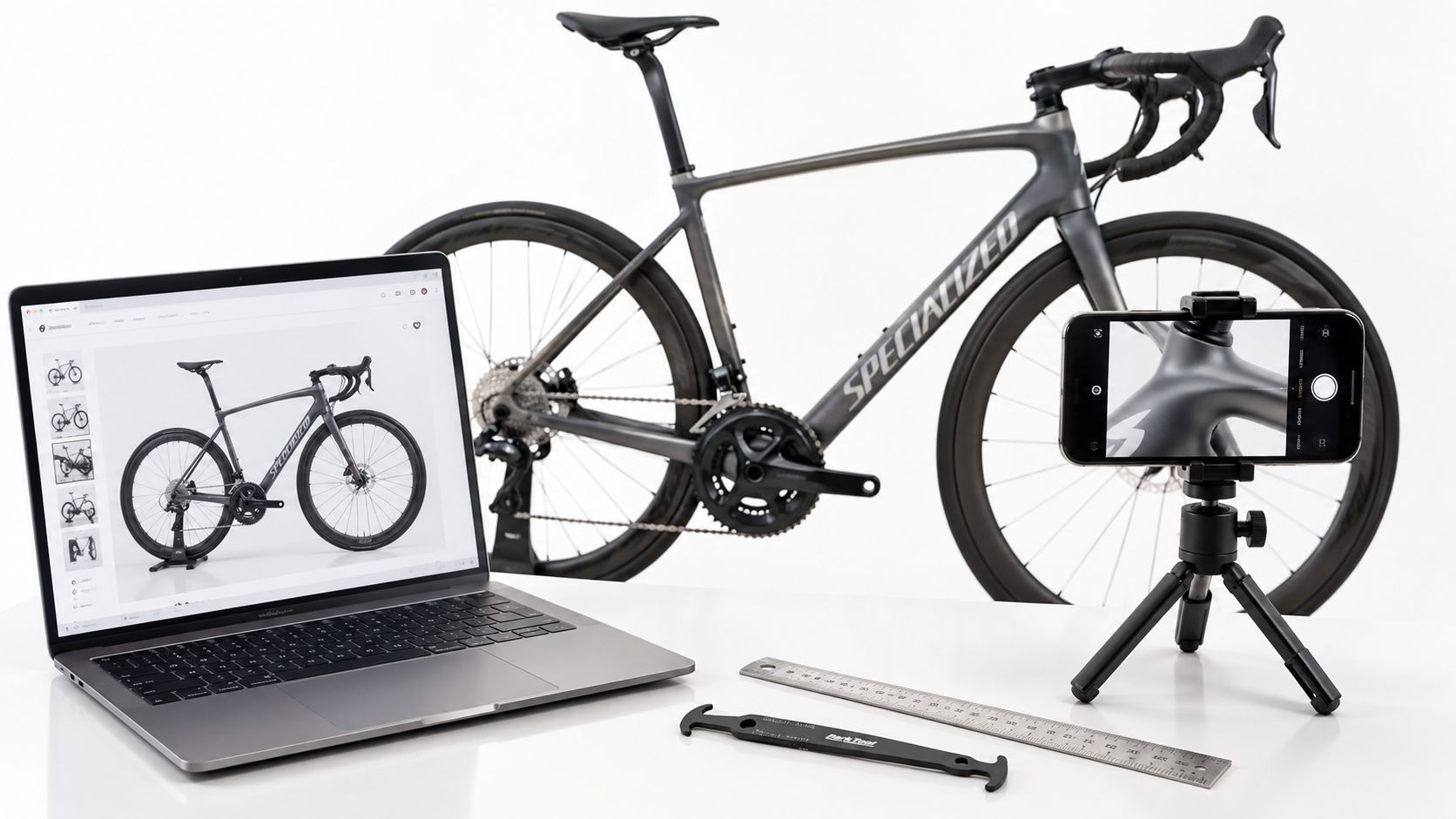
Most used-bike advice starts with a test ride. That works in person, but online the first job is different. Before you travel, negotiate, or commit, you need enough evidence to confirm what the bike appears to be, what remains unverified, and whether the listing justifies a closer look.
Remote photos and video can reveal evidence and reduce uncertainty, but they cannot prove a bike is structurally sound, mechanically healthy, authentic, correctly owned, or a correct fit.
Table of Contents
- Remote Photo and Video Evidence Protocol
- Confirming Model, Year, Size, and Geometry Remotely
- Visible-Damage Screening for Frame and Fork
- Remote Checks for Drivetrain and Components
- Serial Numbers, Ownership Evidence, and Listing Consistency
- Using SYCLR to Shortlist Better Candidates
Remote Photo and Video Evidence Protocol
A clean listing photo is only a starting point. For remote buying, ask for recent, clear photos of the actual bike plus a continuous walk-around video that shows the whole bike from multiple angles.
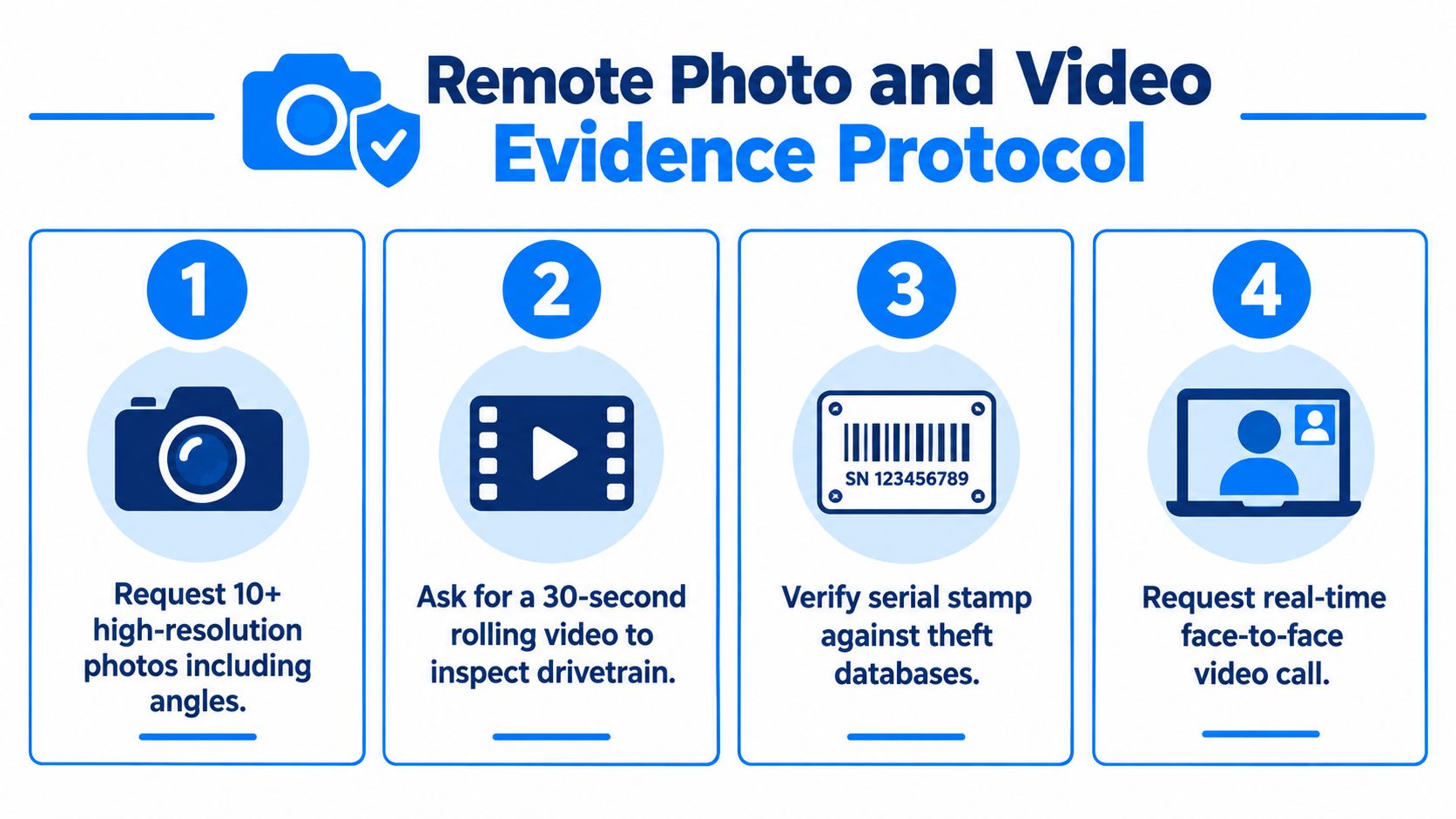
Ask for current, clear evidence of the actual bike
Ask for clear photos of the complete bike in good light, along with close-ups of the frame, fork, drivetrain, brakes, wheels, cockpit, and any area already mentioned in the listing description. If possession needs confirmation, you can also request a fresh-reference photo, such as the bike shown with a current note or other recent reference, but that is not necessary for every listing.
The point is not to prove everything remotely. It is to separate what is visible from what is still unverified or unresolved. SYCLR's bike year identification guide can help if you need to decode frame details from listing photos.
Use video to clarify what still photos miss
A continuous walk-around video helps connect separate details into one view of the bike. Ask for a slow pass from front to rear, both sides of the bike, wheel rotation, brake-lever actuation, and basic gear shifting. That aligns with the remote evidence approach recommended by DEKRA, which emphasizes live-looking inspection cues rather than a single polished image.
Video can clarify condition signals, but it still has limits. Lighting, resolution, compression, camera angle, and movement all affect what you can actually verify from a recording.
Confirming Model, Year, Size, and Geometry Remotely
A used bike can be mechanically acceptable and still be the wrong purchase if the frame identity or geometry is wrong. Remote review should confirm the exact model, model year, size, and manufacturer geometry before you make assumptions about fit.
Start with the exact model, model year, and size
A listing that says only “medium” or “54 cm” leaves too much unresolved. Confirm the exact model name, model year, and stated size, then compare the seller's photos against manufacturer details and geometry charts. Brands often change frame shapes, clearances, and dimensions across model years, even when the size label stays the same.
If the listing does not clearly establish the model, model year, or size, fit remains unverified. That also affects price context and resale comparability. For cross-brand checks, SYCLR's geometry comparison page is useful while reviewing listings.
Use stack and reach first, then supporting details
Use stack and reach as the primary frame coordinates for remote fit screening. Then use supporting frame geometry such as seat-tube angle and front-center, along with cockpit and component details such as stem length, spacer height, handlebar setup, saddle position, and crank length to understand how the listed bike is currently set up.
A known-good bike or previous fit reference is especially useful here. If you already ride a bike that fits well, compare its frame geometry and cockpit setup against the listing rather than relying on generic size charts.
Remote geometry review can narrow the field, but it cannot confirm dynamic fit, comfort, handling preference, or pedaling position in use.
Visible-Damage Screening for Frame and Fork
The frame and fork are safety-critical, but remote review is only a visible-damage screening step. Photos and video can reveal visible concerns. They cannot rule out hidden structural damage.
New Zealand's official Bike Buyer's Guide tells buyers to check frame joints for even welds and to walk away from any bicycle with cracks, and that is a useful baseline for remote review too. Bike Buyer's Guide
What photos can screen for
Ask for close-ups of the head tube, down tube, bottom-bracket shell, chainstays, seat-tube junction, rear dropouts, fork crown, and both fork blades. Those areas can show visible cracking, dents, buckling, corrosion, impact marks, rippling paint, or signs of repair.
For carbon frames, keep the remote check simple. Look for obvious surface irregularities, cracking, exposed fibers, local bulges, or abrupt changes under the finish, then use SYCLR's dedicated carbon inspection article for a more detailed screening framework. Cannondale's guidance notes that visible symptoms like these may indicate carbon damage and should be treated cautiously. Cannondale's carbon safety guidance
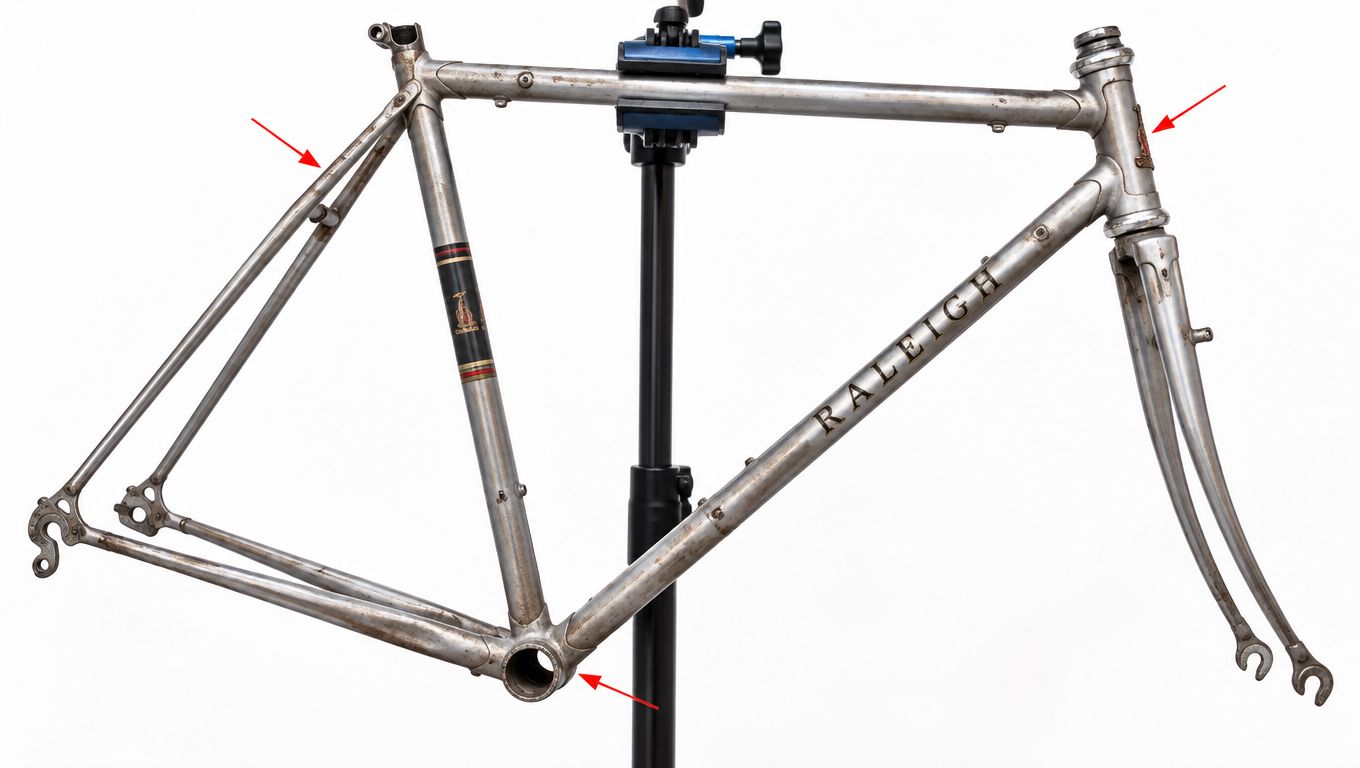
If key frame or fork areas are not shown clearly, their condition remains unverified.
When to escalate to specialist inspection
Escalate when photos or video show visible concerns, when important areas remain unresolved, or when the purchase involves enough cost or uncertainty to justify professional evaluation. That can mean an in-person inspection, a shop assessment, or a specialist frame inspection.
This is the key boundary of remote review: it can identify evidence, inconsistencies, and unresolved questions, but it cannot certify that a frame or fork is structurally sound.
Remote Checks for Drivetrain and Components
A tidy-looking bike can still need immediate service, so remote review should focus on what can be evidenced clearly and what remains uncertain without riding the bike.
Ask for wear evidence, not just appearance
Ask for chain-wear evidence and which tool or method was used to measure it, along with clear photos of the cassette, chainrings, derailleur pulleys, brake surfaces, tyres, and cockpit. Park Tool's chain wear guidance is a helpful benchmark for understanding why chain condition matters, but for a full process use SYCLR's drivetrain wear guide while reviewing listings.
Remote evidence may show neglect, visible wear, corrosion, damage, or mismatched parts. It cannot confirm how the bike performs under real riding load.
Know what a stationary video cannot confirm
A stationary shifting video may reveal obvious indexing issues, hesitation, or noise. It cannot reproduce normal riding load, road vibration, sprinting, braking force, or sustained climbing effort.
That means drivetrain and braking condition can be screened remotely, but not fully verified.
Serial Numbers, Ownership Evidence, and Listing Consistency
A bike can appear mechanically acceptable and still raise unresolved identity or ownership questions. Remote review should compare all available evidence for consistency, while recognizing the limits of what documents and databases can prove.
Bike Index treats the frame serial number as a key theft-reporting detail, alongside the time and location of theft.
Use serial and ownership evidence to improve confidence
Ask for a clear photo of the serial number in its manufacturer-specific location on the frame, then compare it with any receipt, registration record, or ownership evidence the seller can provide. Serial evidence, receipts, and database checks can improve confidence, but they do not prove ownership or provenance. A clean theft-database search also does not prove lawful ownership.
The listing itself should stay consistent across description, photos, and claimed specification. Frame material, model year, size, groupset, wheel spec, brake type, and visible condition should line up. If they do not, the mismatch is unresolved until clarified.
Keep seller-warning coverage brief
If communication, payment requests, identity evidence, or listing details create concern, keep that as a separate risk assessment from the mechanical review. For a fuller breakdown of payment pressure, evasiveness, and fraud-related warnings, use SYCLR's used-bike red flags guide.
Using SYCLR to Shortlist Better Candidates
Remote buying gets difficult when fit, geometry, model year, price context, and listing detail sit in separate tabs. SYCLR compares road and gravel listings using fit signals, geometry signals, model-year context, price context, listing quality, condition signals where available, and confidence signals.
SYCLR does not perform a professional bike fit, physically inspect bikes, authenticate listings, verify ownership or seller claims, or guarantee fit or condition.
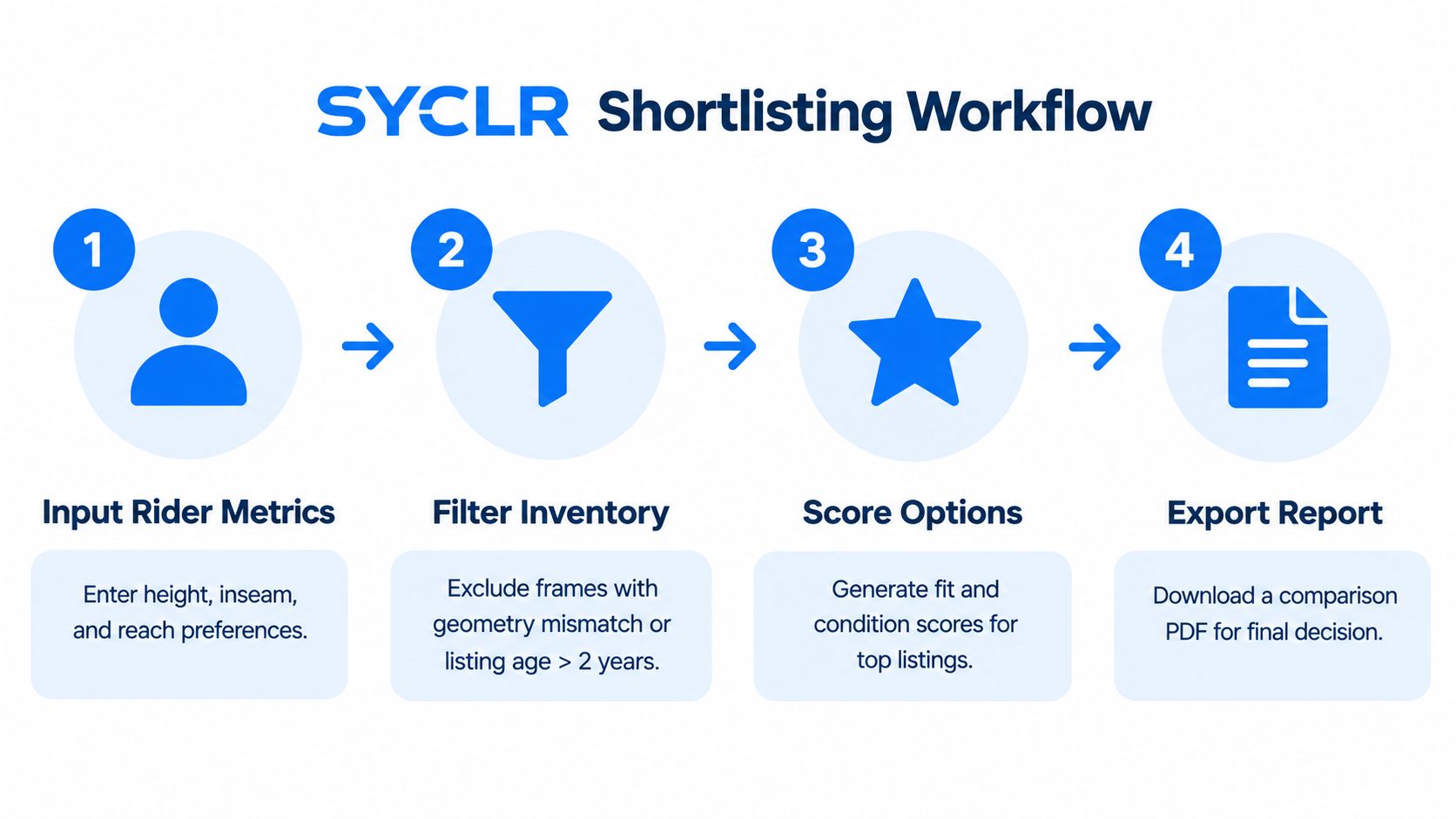
Shortlist around fit and listing quality first
Start with your height, bike type, and budget, then narrow the field using fit signals, geometry signals, model-year context, and listing quality. If you already know your stack, reach, or current-bike geometry, use that information to screen listings more precisely before contacting sellers.
For riders who already know their fit measurements, the advanced fit entry point is the more precise place to start.
Use confidence signals before contacting sellers
Prioritize listings with enough evidence to confirm model identity, approximate fit relevance, condition signals, and overall consistency. Then decide which bikes justify follow-up questions, an in-person viewing, or a specialist inspection.
If you want a cleaner buying path, SYCLR helps you compare road and gravel listings and shortlist better candidates before spending time on listings with too many unresolved questions.