Best Road Bikes for Beginners: How to Choose the Right Fit, Type & Budget

The best road bike for a beginner is usually an endurance road bike with a comfortable geometry, practical components, and a fit that matches the rider’s body and goals. In many cases, that means looking at bikes like a Trek Domane AL, Specialized Allez, Giant Contend, Cannondale Synapse, Liv Avail, Felt VR, Scott Speedster, or similar aluminum road bikes, then choosing based on fit, condition, and total budget, not just the spec sheet.
A lot of new riders start in the same place. One browser tab has a Trek Domane AL. Another has a Specialized Allez. A third has a used race bike with a longer component list and a tempting price. On paper, all of them can look close enough.
They usually are not.
The best road bike for beginners is rarely the one with the flashiest drivetrain, the lightest claimed frame, or the most impressive listing title. It is the bike that fits the rider, matches the intended riding style, and leaves enough room in the budget for the gear, maintenance, and adjustments needed to ride comfortably.
If you already know that a bike needs to fit, you are ahead of most first-time buyers. But fit does not mean guessing from a 54 cm or 56 cm label alone. Different brands size differently, and two bikes with the same nominal frame size can feel completely different. A sizing chart should narrow the field, not make the final decision. A good place to start is a road bike size chart from SYCLR.
Table of Contents
-
Frame Size Is Not Enough: A Practical Guide to Fit and Geometry
-
Your Next Steps: How to Find and Compare Your First Road Bike
Introduction: Beyond “Which Bike?” to “Which Bike Fits?”
The beginner mistake is not wanting a good bike. It is assuming the best beginner road bike is a brand name, a frame material, or a groupset.
Take the common shortlist many new riders build. Trek Domane AL. Specialized Allez. Giant Contend. Maybe a used Cannondale CAAD-series bike if the listing looks sharp. Those are all reasonable places to look because they tend to offer stable handling, practical value, and broad availability in both new and used markets. But they are not interchangeable.
A Trek Domane AL, Specialized Allez, Giant Contend, Cannondale Synapse, Liv Avail, or similar aluminum road bike can be a strong beginner candidate when the size, geometry, condition, and total budget make sense.
Practical rule: Use model recommendations to build a shortlist. Use geometry and fit to make the actual choice.
A beginner buying a first road bike usually wants some mix of comfort, confidence, speed, and room to grow. That is why endurance geometry matters so much. In plain terms, endurance geometry usually means a less aggressive position, a taller front end, and handling that feels calmer than a dedicated race bike. A race geometry bike typically puts you lower and more stretched out. That can be great for an experienced, flexible rider. It can also feel harsh, twitchy, or simply wrong for a beginner who wants longer, more comfortable rides.
A few terms help sort the noise fast:
-
Frame size is the broad size label, like 54 cm or 56 cm.
-
Geometry is the set of frame measurements that shapes how the bike fits and handles.
-
Stack is how tall the front of the bike is.
-
Reach is how long the bike feels from the bottom bracket to the front end.
If you buy with those ideas in mind, you stop shopping by marketing category and start shopping by real fit.
First, Your Budget: The Total Cost of Getting Started
A beginner walks into a shop with a $1,200 bike budget, sees a sale bike at $1,199, and thinks the math is done. It rarely is.
New entry-level road bikes for beginners are often priced between $800 and $3,000, with especially strong value in the $800 to $1,500 range, where components and ride comfort improve meaningfully over very cheap options, according to this beginner road biking guide. The mistake is treating the sticker price as the full cost of getting on the road.
Cannondale notes that beginner guides often leave out the $300 to $600 needed for pedals, helmet, shoes, apparel, and repair tools in its beginner road bike overview. On lower-priced bikes, that extra spend changes the decision more than beginners expect.
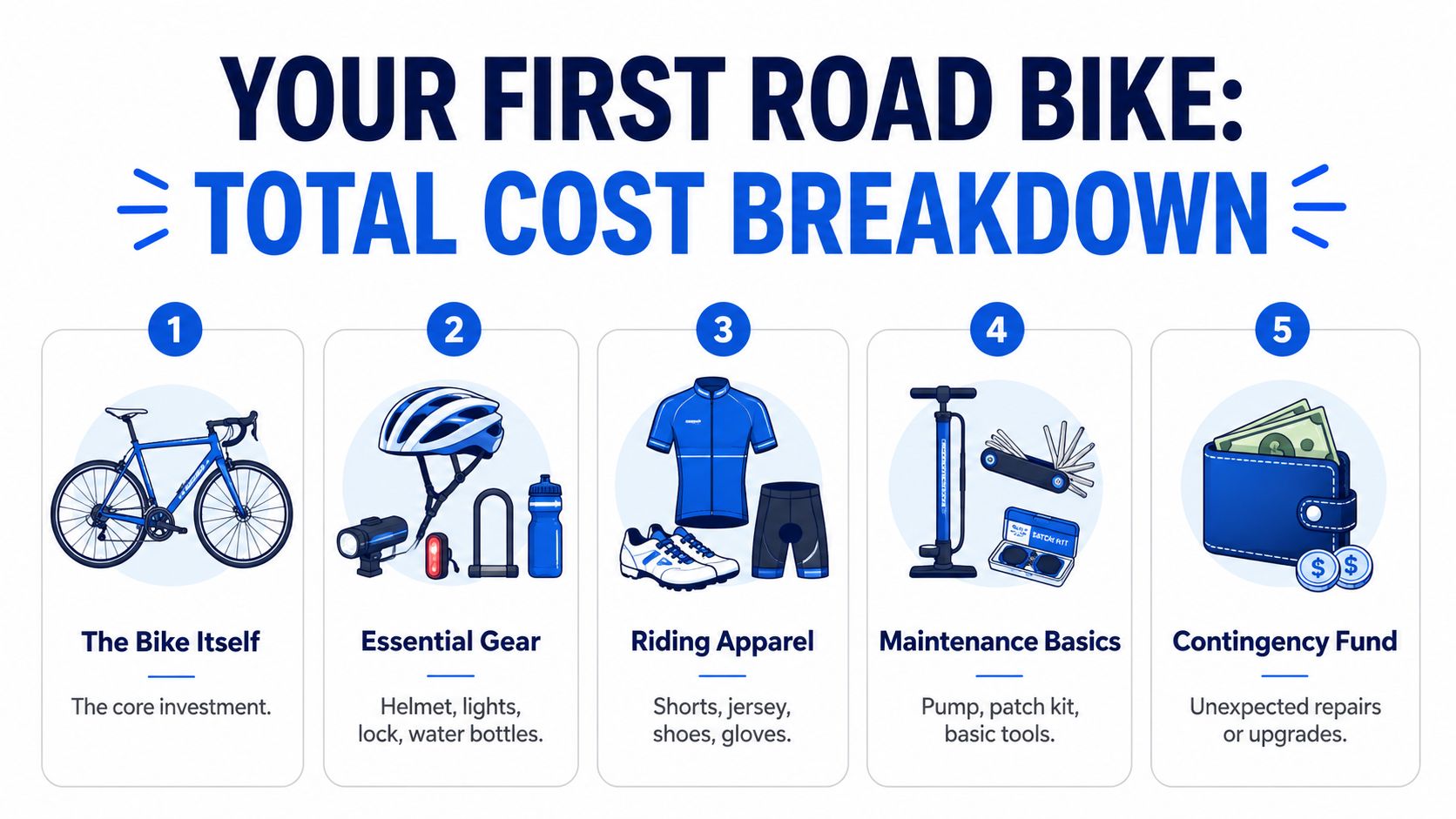
What a realistic first-bike budget looks like
If your bike budget is $1,000, your total starting budget is usually higher. Add a basic kit and you can land near $1,450 before the first proper ride.
That matters because beginners often compare the wrong bikes. They stretch for a flashier frame or groupset, then run out of room for the parts and gear that make the bike usable, comfortable, and safe. In practice, a bike that fits well and leaves money for setup is a better buy than a more expensive bike that forces compromises everywhere else.
| Item | Estimated Cost | Why It's Important |
|---|---|---|
| Bike | $800 to $1,500 | This is the core purchase and usually the value sweet spot for new riders. |
| Pedals | Part of the $300 to $600 accessory budget | Many bikes need pedals added before you can ride comfortably. |
| Helmet | Part of the $300 to $600 accessory budget | Basic safety gear is required. |
| Shoes and apparel | Part of the $300 to $600 accessory budget | Better contact points and clothing improve comfort on longer rides. |
| Pump and repair tools | Part of the $300 to $600 accessory budget | You need to manage tire pressure and basic roadside fixes. |
Where to spend and where to stay disciplined
Put money into fit, the right bike category, and the contact points you notice every ride. Stay cautious with upgrades that look impressive on a listing but do little for a new rider.
A common mistake is buying too much bike on paper, often by chasing carbon or a racier spec, then ending up on the wrong size, the wrong shape, or a bare-bones setup with no money left for pedals, tires, tools, or decent bibs. That rider would often have been better served by a well-fitted aluminum bike with endurance geometry and a complete starter kit.
The budget question is not just, “How much bike can I afford?” It is, “How much bike can I afford after I cover the gear and setup that let me ride it properly?” That is also where fit starts to matter more than category labels. If two bikes cost the same, the one with geometry that suits your body and riding goals is the better use of your money, even if the other has the more impressive spec sheet.
Anatomy of a Beginner Road Bike: What Actually Matters
A beginner spec sheet should answer one question: Will this bike be easy to live with for the first year?
That pushes a few priorities to the top and knocks a few others down the list.
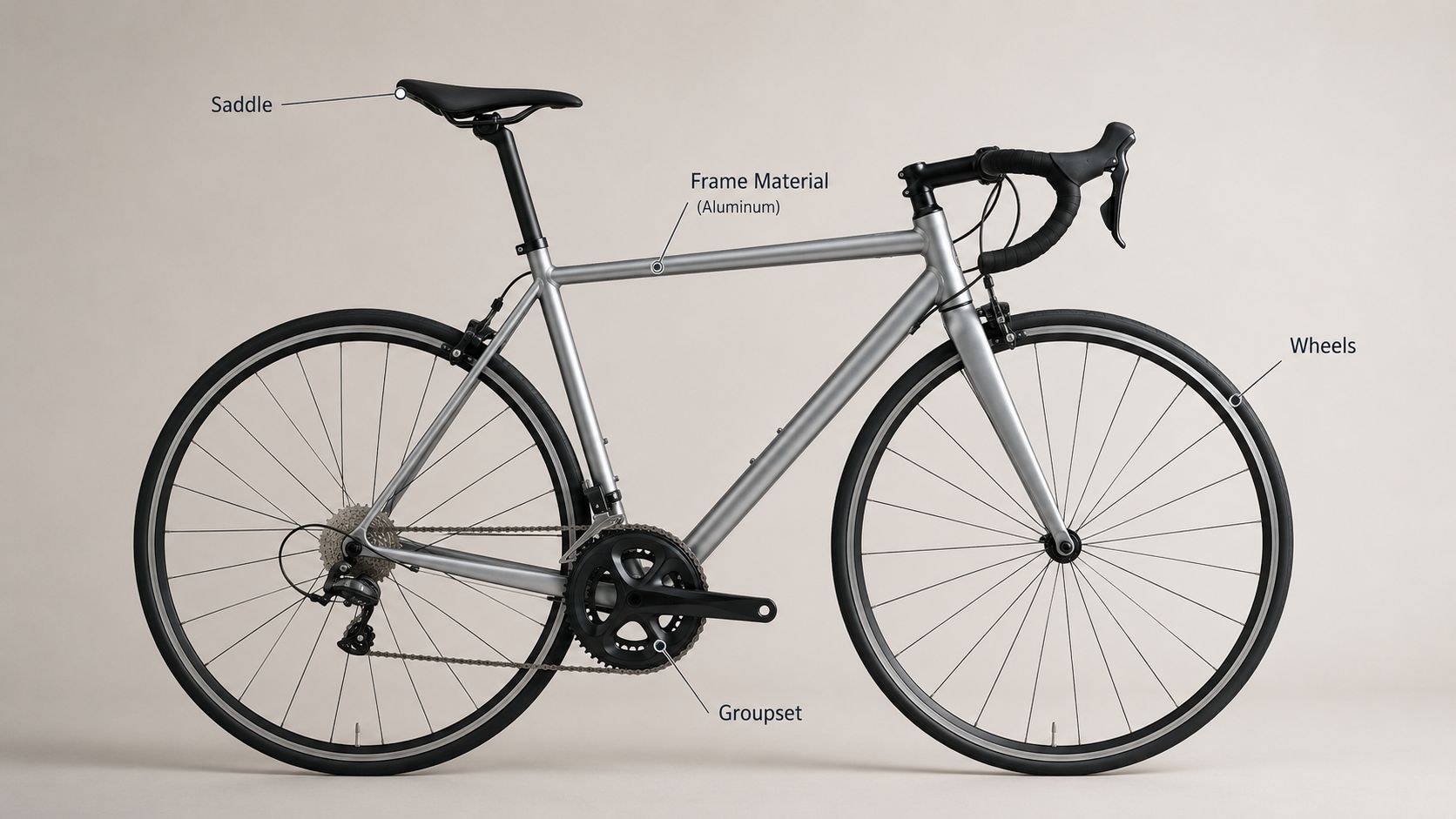
For beginner road bikes, the practical entry point is often around $1,600 (€1,500), where aluminum frames paired with reliable lower-tier groupsets like Shimano Tiagra or Shimano 105 can offer durability and performance without full-carbon pricing, according to Canyon’s entry-level road bike guide.
Frame and fork first
For most beginners, an aluminum frame with a carbon fork is the right answer.
Aluminum keeps cost under control, handles everyday use well, and gives you access to good complete builds in the range where real value appears. A carbon fork matters because it usually improves ride quality and front-end feel without forcing you into a full-carbon price jump.
Models like the Giant Contend, Specialized Allez, Trek Domane AL, Cannondale Synapse, Liv Avail, Felt VR, Scott Speedster, and similar aluminum endurance or entry-level performance road bikes are common beginner shortlists because they are widely available, serviceable, and easier to evaluate in both new and used markets.
Groupset, brakes, and wheels
A groupset is the collection of shifting and drivetrain parts. For a beginner, the important question is not prestige. It is reliability.
Shimano Tiagra and Shimano 105 are appealing because they often mark the point where shifting quality, durability, and long-term serviceability become much easier to live with. A lower-tier drivetrain is not automatically bad, but it is often the first place a very cheap bike feels cheap.
A few component trade-offs matter more than the rest:
-
Drivetrain reliability matters more than spec-sheet glamour. A dependable Tiagra or 105 setup is often a better long-term choice than chasing a cheaper frame with weaker supporting parts.
-
Hydraulic disc brakes are worth having if the budget allows. They improve control and reduce the compromises common on lower-end braking systems.
-
Wheelsets should not be ignored. Beginners often focus on frame material and forget that durable, compliant wheels do a lot for ride feel and confidence.
Buy the bike that shifts cleanly, brakes predictably, and fits your position. Do not buy the one that only sounds faster in a classifieds title.
A few quick definitions make spec sheets easier to read:
| Term | What it means | Why beginners should care |
|---|---|---|
| Frame material | Usually aluminum or carbon at this end of the market | Aluminum usually offers better first-bike value |
| Groupset | Shifters, derailleurs, crank, cassette, chain, brakes | Affects reliability, maintenance, and ride feel |
| Hydraulic disc brakes | Fluid-actuated braking system | Better control and easier confidence in mixed conditions |
| Wheelset | The bike's wheels and hubs | Affects ride quality, durability, and future upgrades |
| Endurance geometry | More upright road-bike fit | Usually more beginner-friendly than race geometry |
What does not work well for most new riders is buying on one isolated feature. Cheap carbon with weak components. An aggressive race frame because it looks fast. A very low-priced bike with outdated or hard-to-service parts. Those choices often feel impressive in a listing and disappointing on the road.
Frame Size Is Not Enough: A Practical Guide to Fit and Geometry
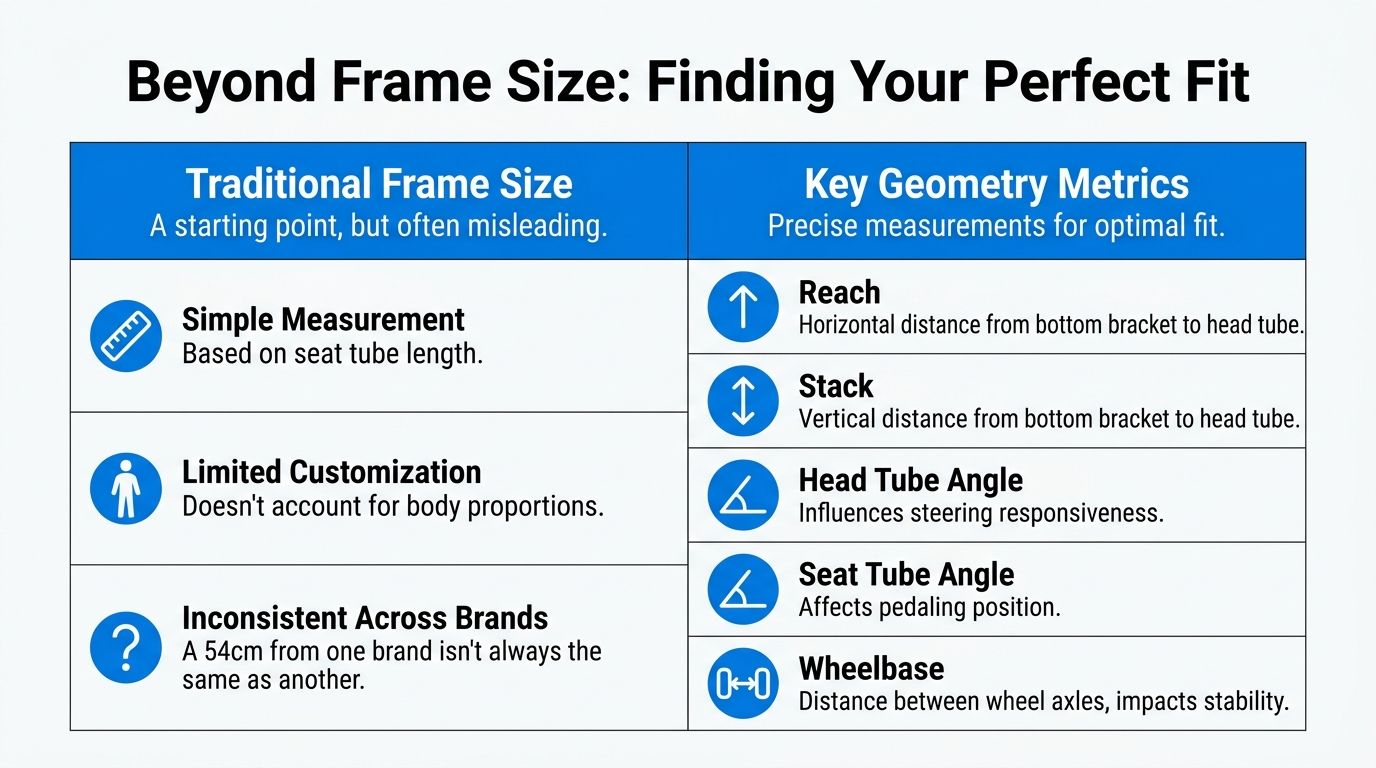
Most beginners misread frame size as fit. It is not. It is only a rough category.
A 54 cm from one brand will not necessarily fit like a 54 cm from another. That is one reason so many first-time buyers end up on a bike that looks right on paper and feels wrong after a few rides.
Beginner discomfort often comes from a bike that is too long, too low, or too aggressive for the rider’s current flexibility and goals. Components matter, but geometry usually decides whether the bike feels manageable after the first few rides.
What stack and reach actually tell you
Two measurements matter more than the size sticker.
Stack is the vertical distance from the bottom bracket to the top of the head tube area. In practical terms, it tells you how high the front of the bike is. More stack usually means a taller front end and a more upright position.
Reach is the horizontal distance from the bottom bracket to that same front-end reference point. In practical terms, it tells you how long the bike feels. More reach usually means a more stretched-out position.
Those measurements are often more useful than frame size alone when comparing road bike fit, because they describe the frame from the rider’s point of view. SYCLR’s bike stack and reach guide explains how stack shapes bar height, how reach affects cockpit length, and why both numbers are most useful when you compare them across several bikes.
A useful way to think about them:
-
Stack answers height. How low or upright will the front end feel?
-
Reach answers length. How stretched or compact will the cockpit feel?
-
Frame size answers category. It helps narrow the search, but it does not tell the full fit story.
Here is a practical fit vocabulary that helps when comparing listings:
| Term | Simple definition | Why it matters |
|---|---|---|
| Frame size | The brand's size label | Good for narrowing options, not final decisions |
| Stack | Front-end height | Helps estimate upright versus low riding position |
| Reach | Frame length to the front end | Helps estimate how stretched out you will feel |
| Effective top tube | A sizing-related horizontal reference | Useful context, but less direct than stack and reach |
| Geometry | The frame's measurements and angles | Explains fit and handling differences |
| Fit details | Your body and bike-position data | Improves comparisons beyond height alone |
| Source confidence | How trustworthy and complete a listing seems | Important when comparing used and mixed-source bikes |
Why two bikes in the same size can fit differently
This situation frequently traps beginners.
One rider sees two 56 cm bikes. The first is a race-leaning road bike with lower stack and longer reach. The second is an endurance road bike with a taller front end and shorter reach. In a marketplace listing, they both look like “a 56.” On the road, they can feel like different sports.
That is why height is a useful start, not a precise fit method. Stronger recommendations come from adding inseam, comfort preference, current bike geometry, and riding goals. Rider inseam is also important for basic clearance. For most road riders, around 1 to 2 inches of standover clearance is a practical starting point, and two bikes with the same labeled size can still have different standover heights, as explained in SYCLR’s bike standover height guide and general fit guidance from BikeRadar and Cannondale.
Use this beginner fit checklist when comparing bikes:
-
Use frame size as a starting range only.
-
Compare stack to understand front-end height.
-
Compare reach to understand cockpit length.
-
Favor endurance geometry unless you know you want a low race position.
-
Avoid any bike that only “fits” after extreme stem, spacer, or saddle changes.
If you want a stronger starting point than a basic size chart, SYCLR’s bike fit guide is a practical next read before you compare real listings.
New vs. Used Bikes: Making a Smart Decision
The right answer is not always new. It is not always used, either.
For a beginner, this decision comes down to value, risk, and how confident you are at checking fit and condition. A good used bike deal can still be a bad buy if the size or geometry is wrong.
When new makes more sense
New bikes are simpler. You get known history, clean components, and usually better support if something needs adjustment early.
If you are buying your first road bike and do not yet trust yourself to evaluate wear, a new aluminum endurance bike is often the lowest-friction way in. Models like the Giant Contend, Specialized Allez, Trek Domane AL, Cannondale Synapse, Liv Avail, Felt VR, Scott Speedster, and similar bikes are common beginner shortlists because they are widely available, serviceable, and easier to evaluate in both new and used markets.
New usually makes more sense when:
-
You want lower risk. Unknown crash history and hidden wear are not part of the deal.
-
You need a clean baseline. It is easier to learn what a good fit and healthy drivetrain feel like on a fresh bike.
-
You value shop support. Early adjustments are common on a first road bike.
When used is the better value
Used can be excellent value, especially if you know how to compare frame geometry, component level, and listing quality.
A used Trek Domane AL, Cannondale Synapse, CAAD-series bike, Felt VR, Scott Speedster, or Liv Avail can offer better components for the money than a new entry-level bike. But the listing still needs to check out.
Use this checklist before you message a seller:
| Checkpoint | What to look for | Why it matters |
|---|---|---|
| Size and geometry | Exact size, model, and if possible stack and reach | Fit beats bargain pricing |
| Model year | Clear year or generation details | Helps compare value and spec honestly |
| Frame condition | Cracks, dents, deep chips, bad repairs | Structural issues can erase any savings |
| Drivetrain wear | Chain, cassette, chainrings, pulley wear | Replacement cost adds up quickly |
| Brake setup | Confirm type and visible condition | Important for safety and serviceability |
| Listing quality | Clear photos, complete description, consistent details | Better listings usually reduce guesswork |
| Seller communication | Direct answers, extra photos, serial or history info | Confidence matters as much as price |
Used-bike shopping rewards patience. The best listing is not always the cheapest one. It is the one with the clearest size, cleanest details, and the fewest unanswered questions.
A beginner should also watch for category mismatch. A used race bike from a respected brand can still be the wrong first road bike if the geometry is too aggressive. That is especially common when shoppers sort by spec first and fit second.
Your Next Steps: How to Find and Compare Your First Road Bike
A lot of first-time buyers lose the plot at this stage. They start with a sensible budget and a rough idea of size, then get distracted by brand names, extra gears, or a listing that looks cleaner than the others.
The job now is simpler than it seems. Build a shortlist of bikes that fit your body, suit the kind of riding you want to do, and still make sense once you factor in condition, spec, and price.

A practical workflow for shortlisting bikes
Start with three to five listings, not twenty. Once beginners compare too many bikes at once, they usually stop comparing the things that matter and fall back on whatever has the best badge or discount.
Use this order:
-
Filter by category. Keep endurance road bikes at the top of the list unless you know you want a lower, longer race position.
-
Set your real price ceiling. Include pedals, helmet, tools, bottles, and anything else you still need to get riding.
-
Use size to narrow the field. Height charts are only a first pass.
-
Check geometry before spec. Compare stack, reach, and the bike’s overall posture. A slightly lower-spec bike that fits well is usually the better first purchase.
-
Review the listing like a buyer, not a fan. Look for model year, groupset details, brake type, wheel condition, and clear photos.
-
Cut anything with unclear fit or vague details. If the seller cannot tell you the exact model, size, or year, move on.
A common mistake is searching for a 56 cm road bike, finding a cheap race bike and a slightly more expensive endurance bike, then choosing based on components. On paper, the race bike wins. On the road, the longer reach and lower front end often leave a beginner cramped, overextended, or avoiding rides longer than an hour.
That is why comparison needs a method. If you want a practical way to compare options with fit and geometry in mind, keep your shortlist tight and compare each bike on the same points every time.
How to compare listings without getting fooled
A clean listing does not always mean a better bike. It usually means a better seller.
Compare each option across the same categories: size, stack and reach if available, bike category, groupset level, brake type, tire clearance, condition, and total price after any parts you will need to replace. Following this process helps beginners stop asking, “Which bike is best?” and start asking, “Which of these bikes fits me, rides the way I want, and is priced fairly for its condition?”
If you want help organizing that comparison, SYCLR can help you sort listings by fit signals, bike type, budget, and listing quality in one place. That is useful once you are past casual browsing and trying to choose between a few realistic options.
Used well, a tool like that saves time and cuts down on bad shortlists. It does not replace a proper bike fit or your own judgment. It helps you avoid wasting energy on bikes that were wrong from the first click. If you are shopping online, SYCLR’s bike stack and reach guide and bike fit guide can help you interpret listings more confidently before you buy.
Frequently Asked Questions
What is the best type of road bike for a beginner?
An endurance road bike is usually the best starting point. It typically offers a more comfortable position and calmer handling than a more aggressive race bike.
How much should a beginner spend on a first road bike?
A practical range for a new beginner road bike is $800 to $1,500, with total starting cost rising once you add essential accessories. Beginners should budget for the full setup, not just the bike.
Is aluminum or carbon better for a first road bike?
For most beginners, aluminum with a carbon fork is usually the better value. It often delivers durability, sensible pricing, and strong real-world performance without the higher cost of full carbon.
Is frame size enough to choose the right bike?
No. Frame size is only a starting point. Stack, reach, geometry category, and your comfort goals all matter when comparing how a bike will fit.
Should I buy a new or used road bike as a beginner?
Buy new if you want lower risk and simpler buying. Buy used if you can evaluate fit, condition, and listing quality carefully. A used bike can offer strong value, but only if the size and geometry are right.
Are bikes like the Trek Domane AL, Specialized Allez, and Giant Contend good beginner options?
Yes. These models are commonly considered because they tend to offer practical frame designs, beginner-friendly road manners, and broad availability in both new and used markets. The best choice still depends on whether the bike fits your body, goals, and budget.
Can SYCLR replace a professional bike fit?
No. A professional fit can still be valuable. SYCLR helps you apply fit-aware shopping logic, compare geometry signals, and make a more informed buying decision while evaluating listings.
If you are comparing your first road bike, SYCLR helps reduce guesswork before you click through to a seller. You can use it to compare road and gravel bike listings by fit, price, geometry, model year, and confidence signals, then shortlist better-fit bikes before you buy.