
Road Bike Size Chart by Height and Inseam
Quick answer: Use a road bike size chart to estimate a starting frame size from your height and inseam. Then confirm a specific bike with stack, reach, standover height, and the manufacturer’s actual geometry.
Road-bike size labels are useful for narrowing your search, but the same nominal size can fit differently across brands and models. Start with the chart below, then use geometry to decide whether a particular bike is worth considering.
The Essential Road Bike Size Chart
Quick starting point by height and inseam
Road bike frame sizes are commonly shown in centimeter increments across many brands and markets, with frequent ranges running from about 47-48 cm through 61-63 cm, as outlined in this road bike size guide with charts.
Here is a practical starting reference, not a guarantee.
| Rider Height (cm/ft-in) | Inseam (cm/in) | Suggested Starting Frame Size (cm) |
|---|---|---|
| 148-152 cm / 4'10"-5'0" | 65-71 cm / approx. 25.6-28.0 in | 47-48 |
| 152-160 cm / approx. 5'0"-5'3" | 71-75 cm / approx. 28.0-29.5 in | 49-50 |
| 160-168 cm / approx. 5'3"-5'6" | 76-79 cm / approx. 29.9-31.1 in | 51-53 |
| 168-175 cm / approx. 5'6"-5'9" | 78-82 cm / approx. 30.7-32.3 in | 54-55 |
| 175-183 cm / approx. 5'9"-6'0" | 81-85 cm / approx. 31.9-33.5 in | 56-58 |
| 183-191 cm / approx. 6'0"-6'3" | 86-90 cm / approx. 33.9-35.4 in | 58-60 |
| 191-198 cm / 6'3"-6'6" | 89-92 cm / approx. 35.0-36.2 in | 61-63 |
Want a more personalized starting size? Use the SYCLR Bike Size Calculator with your height, inseam, bike type, and riding preference before comparing specific bikes.
Between two sizes? Do not automatically size up or down. Compare the two frames using stack, reach, your proportions, and a bike you already know. See how to choose between two bike sizes.
A few reference points can help anchor the chart without overstating precision. A rider around 168 cm may often be near the low-to-mid 50 cm range, while a rider around 175 cm may often be near the mid-50 cm range, depending on inseam, brand, model, and geometry.
Table of Contents
Why this chart is only step one
The size label on the frame tells you less than many buyers expect. It narrows the search, but it does not tell you whether the bike will feel upright or aggressive, compact or stretched.
Practical rule: Use the road bike size chart to eliminate obviously wrong listings first. Then validate the shortlist with geometry.
That matters even more when you are comparing used bikes, endurance road bikes, race bikes, and gravel bikes in the same search session. Two bikes can share the same nominal size and still fit very differently once you look at front-end height and cockpit length.
If you are early in the process, start with your height, bike type, and budget. That is a simple way to narrow road and gravel listings before you spend time decoding frame labels that only tell part of the story.
How to Take Your Key Body Measurements
Bad input gives you bad sizing advice. If you measure casually, even a good chart becomes less useful.
How to measure height at home
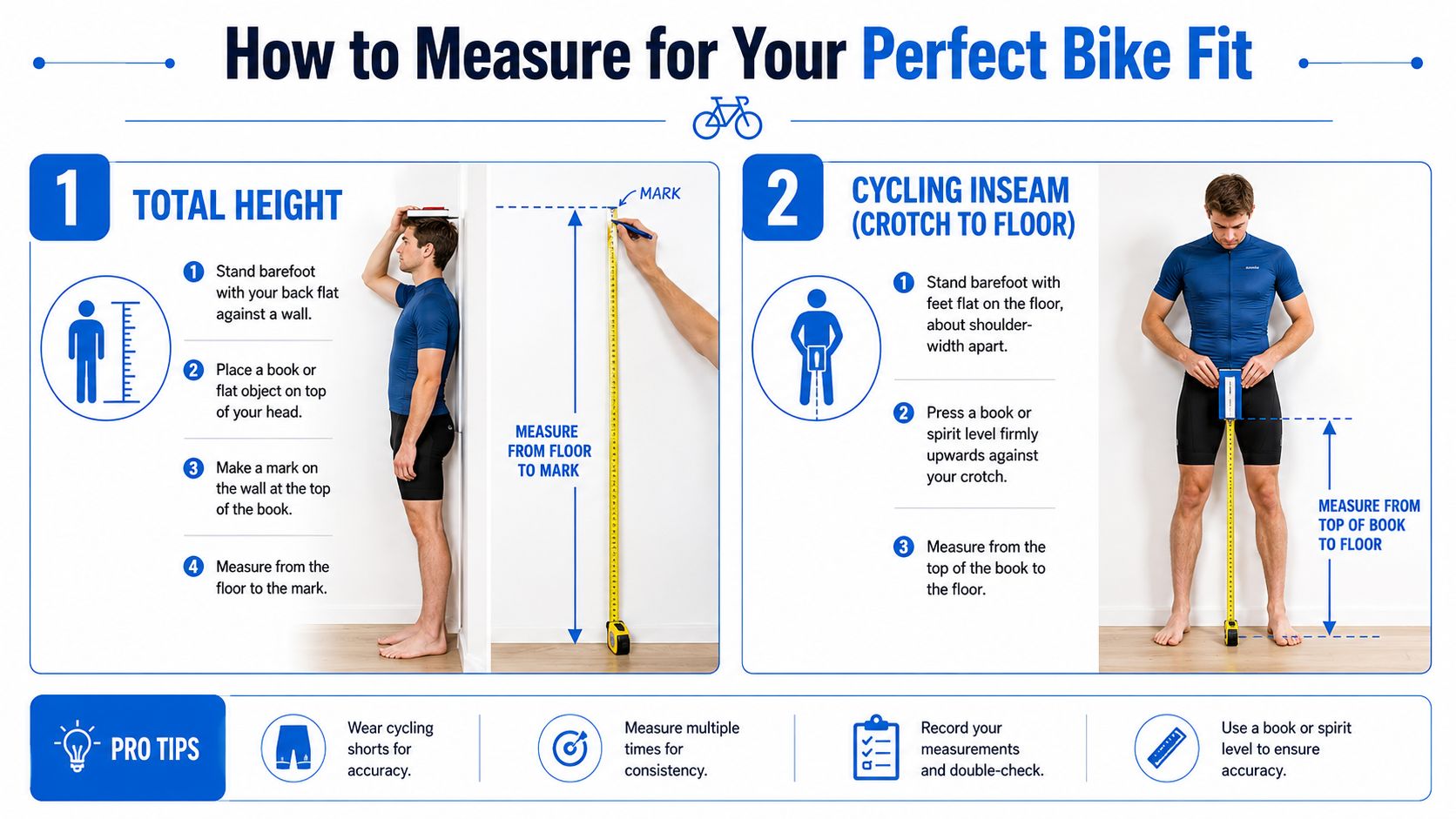
Start with total height. Stand barefoot against a wall, keep your heels on the floor, and place a flat object like a book on your head. Mark the wall, then measure from the floor to the mark.
This sounds basic, but consistency matters. Measure more than once and use the same posture each time.
How to measure cycling inseam correctly
Your cycling inseam matters more than many riders expect because it affects standover and helps separate two people with the same height but different proportions.
Cannondale’s sizing guidance explains that you should stand with your legs 20-25 cm apart, measure from the floor to the crotch, then subtract 2.5-5 cm for clearance. That process helps produce about 1-2 inches of clearance between your body and the top tube for safety and comfort, as described in Cannondale’s article on road bike standover and sizing.
A simple home method works well:
-
Stand barefoot against a wall with your feet set naturally apart.
-
Place a book firmly upward against your crotch, similar to saddle pressure.
-
Measure from the top of the book to the floor.
-
Repeat the process a few times and use the most consistent result.
If you want a deeper explanation of clearances and what they mean in real shopping, this guide to bike standover height is worth bookmarking.
A short visual walkthrough helps if you have not done this before.
Do not use your jeans inseam. Measure your cycling inseam directly.
Beyond Frame Size: Key Geometry Terms Explained
Once you know your likely size range, the next step is learning the geometry terms that matter in real listings. This is where buyers stop treating a road bike like a T-shirt size and start comparing frames more carefully.
The terms that actually affect fit
Frame size usually refers to the nominal size label, often tied to seat tube length in centimeters. It is a sorting tool, not a full fit answer.
Geometry is the collection of frame measurements that shapes rider position and handling. This is what separates a race road bike from an endurance road bike, and often what separates a smart purchase from a frustrating one.
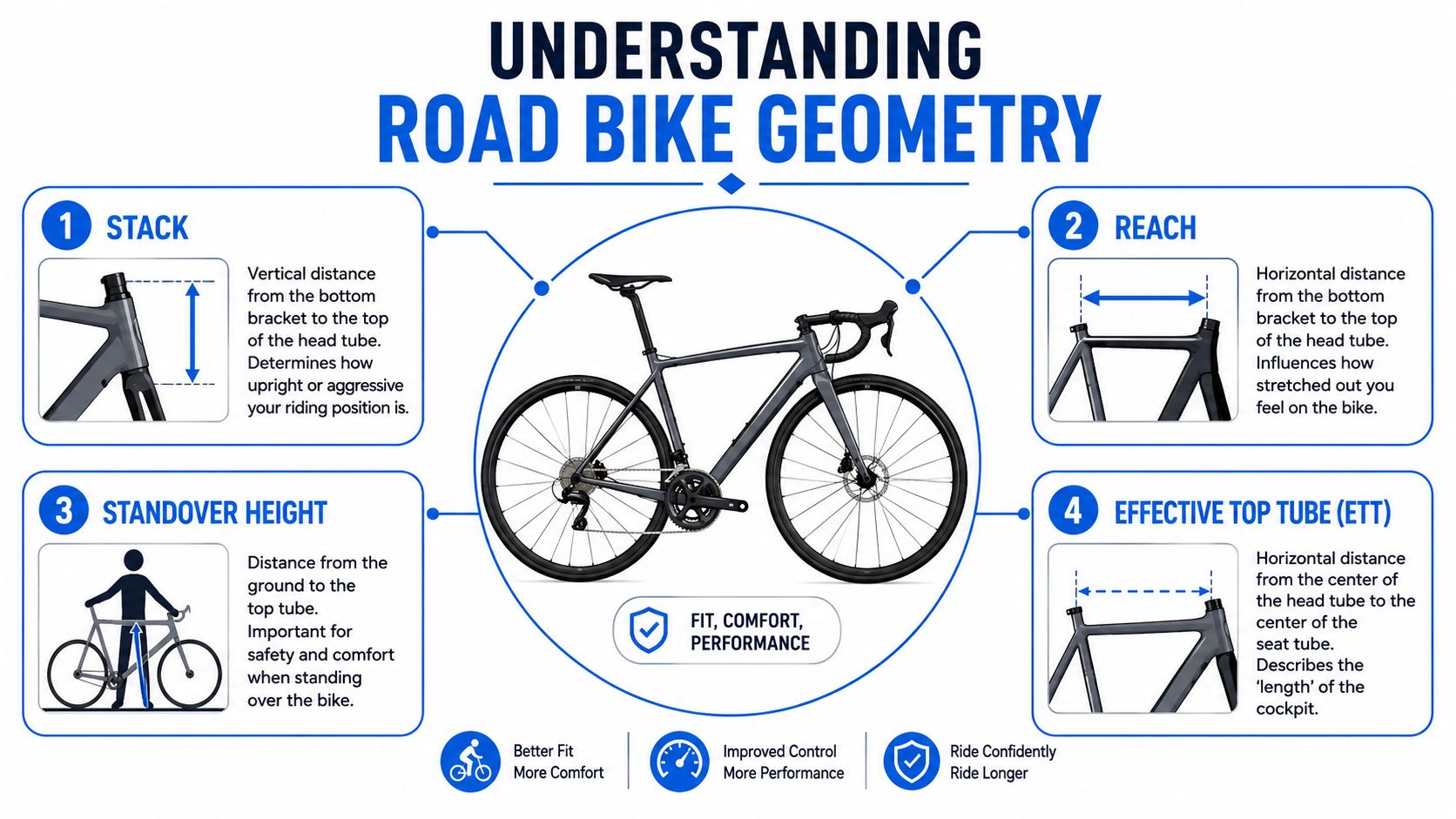
Stack is the vertical distance from the center of the bottom bracket to the top of the head tube. A taller stack usually creates a more upright posture, while a lower stack usually pushes the rider into a more aggressive position, as explained in this bike geometry guide on stack and fit.
Reach is the horizontal distance from the bottom bracket to the top of the head tube. It shapes how stretched out the rider feels.
Effective top tube is the horizontal distance between the seat tube and head tube. In plain terms, it helps describe cockpit length.
Standover height is the distance from the ground to the top tube. It matters most when you are standing over the bike at a stop.
What matters most when comparing listings
If you only remember two terms, remember stack and reach. They are one of the cleanest ways to compare bikes across brands and model years.
| Term | What it tells you | Why it matters in shopping |
|---|---|---|
| Frame size | The general size category | Good for narrowing the search |
| Stack | How tall the front end is | Helps predict upright vs aggressive position |
| Reach | How long the frame feels | Helps predict stretched vs compact fit |
| Standover height | Top tube clearance | Useful for a basic safety and comfort check |
| Effective top tube | Cockpit length reference | Helpful, but less consistent than stack and reach for cross-brand comparison |
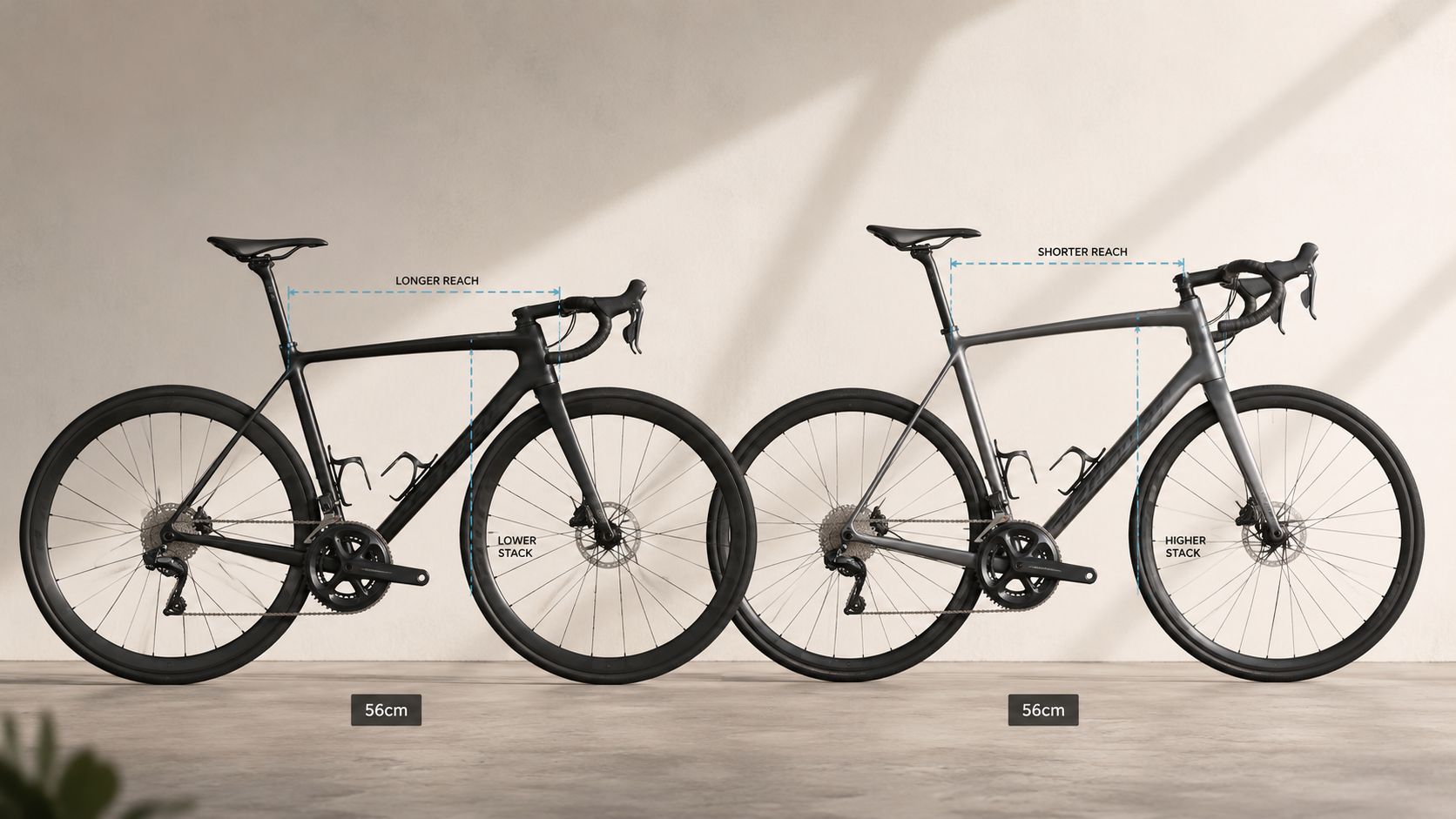
A lot of riders get lost because brands use the same size label for different fit intentions. A 56 cm endurance bike and a 56 cm race bike may sit in the same listing filter, but they may not feel similar on the road.
For a more detailed geometry breakdown while you shop, the SYCLR guide to bike stack and reach is the right next read. For broader fit education, you can also browse the SYCLR blog.
Why Two 56 cm Bikes Can Fit Differently
Many buyers get burned by assuming that once they know they are usually near a 56 cm range, every 56 cm road bike is fair game.
It is not.
Same label, different position
A useful example comes from rider proportions. Canyon notes that two riders who are both 170 cm tall can still need different frame ranges if one has a 76 cm inseam and the other has an 82 cm inseam. In that case, one rider may be closer to 51-53 cm while the other may be closer to 55-57 cm, which is one reason height-only charts can miss a meaningful share of riders according to Canyon’s road bike size guide and measurement advice.
That same problem shows up when comparing bikes, not just bodies.
A 56 cm race bike often places the rider lower and longer. A 56 cm endurance bike often places the rider higher and a bit shorter. Both can be within a reasonable starting range on paper. Only one may be a better match for how you ride.
A practical comparison mindset
When comparing listings, do not start with paint, groupset, or asking price. Start with whether the geometry matches your known position or likely comfort range.
If a bike’s stack looks low and its reach looks long relative to what you ride now, treat it like a more aggressive bike, even if the seat tube number looks familiar.
That applies to gravel bikes too. Gravel geometry often trends more stable and more upright than pure race road geometry, but the label alone still does not tell you enough.
A smart buyer compares:
-
Nominal frame size against the chart
-
Bike category such as race, endurance, all-road, or gravel
-
Stack and reach against current-bike benchmarks
-
Standover height for a basic clearance check
-
Listing completeness so missing geometry does not get mistaken for a good fit
Between Sizes: How to Choose the Right Frame
Being between sizes is normal. The mistake is treating it like a coin flip.
When smaller may make more sense
When riders are between two sizes, the better choice depends on the geometry difference and the riding position they want. The smaller frame may be easier to adjust with stem, spacer, and bar choices if the larger frame feels too long or too tall, but smaller is not always automatically better. Compare stack, reach, standover, and your current bike before deciding.
Use your current bike as the baseline
If your current road bike feels good on longer rides, use it as your reference point.
Check these items:
-
Front-end feel: Does your current bike feel comfortably upright, or do you already wish the bars were higher?
-
Cockpit length: Do you feel balanced on the hoods, or stretched?
-
Riding goal: Are you shopping for fast race posture, endurance comfort, or mixed-surface gravel use?
-
Standover and handling: Does the bike feel easy to manage at stops and at low speed?
Fit cue: If you are between sizes, focus on which option gives you a better match in position and adjustability, not just which label sounds more familiar.
That does not mean smaller is always right. A rider chasing a long, low race position may prefer the larger option if the geometry matches the target posture. The point is to decide from position and geometry, not from vague sizing folklore.
If you already know your measurements and current-bike reference points, use your fit details to reduce guesswork when comparing listings.
Using Size Charts for Used Bike Shopping
Used bike shopping is where sizing mistakes get expensive. Not because the bike always costs more, but because return options are usually worse and listing details are often incomplete.
How to read imperfect listings
A common used-bike scenario goes like this. A rider searches for a 56 cm road bike because that is the general range many charts suggest. Several listings appear across marketplaces. One looks like a deal. Another has better components. A third is from a stronger seller with clearer photos.
Without geometry, those listings can look interchangeable. They are not.
If the seller does not list stack and reach, ask for:
-
The exact model and model year
-
A photo of the geometry chart if they have it
-
Standover height or top tube info
-
Any changes to stem, bars, or saddle setback
A cheap used road bike that does not fit your needs well is still the wrong bike. The same goes for a used gravel bike with appealing tire clearance or a strong groupset. Fit comes before value.
For broader shopping help across multiple listings, SYCLR’s bike search experience is built around comparing fit signals, geometry context, price context, and source quality instead of just scrolling by frame label.
What to check in person
On an in-person viewing, keep it simple.
| Check | What you're looking for | Why it matters |
|---|---|---|
| Standover | Comfortable clearance over the top tube | Rules out an obvious mismatch |
| Hood position | Natural hand position | Reveals whether the front end feels too long or low |
| Saddle-to-bar relationship | Balanced posture | Helps spot aggressive geometry quickly |
| Seller detail quality | Clear model info and measurements | Builds confidence in the listing |
A few minutes of fit checking can save months of trying to adapt to the wrong frame.
Prioritize fit and condition together. A clean bike in the wrong size is still a poor buy.
If you are comparing several listings from marketplaces and retailers, compare road and gravel bike listings with SYCLR.
How SYCLR Helps You Compare by Fit
SYCLR is built for the gap between a generic road bike size chart and the messy reality of shopping. The chart gets you into the right range. The platform helps you compare actual listings with more context.

Instead of treating bike buying like a basic marketplace search, SYCLR helps riders compare fit-aware recommendations, geometry context, price, listing quality, and source confidence to build a better shortlist. You can begin with basic details like height, bike type, and budget, or add fit details when you know more.
That matters when two listings share the same frame label but differ in geometry, model year, source quality, or likely fit intent. It also matters when you are comparing used road bikes, used gravel bikes, endurance models, race bikes, and all-road options in the same budget range.
SYCLR can help reduce guesswork and surface stronger fit signals, but it does not guarantee the right size and it does not replace a professional bike fit.
If you want a stronger comparison workflow, start with your height, bike type, and budget. If you already know your measurements, use your fit details to compare better-match options with more confidence.
Frequently Asked Questions About Road Bike Sizing
Are women's road bike sizes different?
Not necessarily. Most adult road bike sizing works on the same basic chart logic. The important part is body proportions, contact points, and geometry, not the gender label on the listing.
Can I use a road bike size chart for gravel bikes?
As a starting point, yes. Many gravel bikes overlap with road sizing conventions, but gravel geometry can feel different. Check stack, reach, and intended riding style before assuming the same labeled size will feel identical.
What do S, M, and L sizes mean in centimeters?
They are brand-level labels that usually map to centimeter ranges. A Medium often overlaps with the mid-50 cm range, but the exact translation varies by manufacturer, which is why geometry is more reliable than the letter alone.
Is height alone enough to choose a road bike?
No. Height is useful for narrowing the field, but stronger recommendations come from adding inseam and then validating the bike with geometry details like stack and reach.
What should I do if my current bike feels uncomfortable?
Start by identifying whether the issue is size, geometry, or setup. If the frame itself feels too long, too low, or awkward to stand over, use that information as a shopping filter. A professional bike fit can also be valuable, especially before a major upgrade.
Should I choose the smaller or larger frame if I'm between sizes?
Usually, compare the geometry first. If one option looks longer, lower, or taller than you want, the other may be the better match. Stack, reach, standover, and your current bike are more useful than the size label alone. For when you’re between two frame sizes, see the dedicated guide.
If you are shopping for a road or gravel bike and want more than a generic size chart, SYCLR helps you compare listings using fit signals, geometry context, price, listing quality, and source confidence so you can make a more informed buying decision.