Bike Fork Offset Explained: Fit, Handling, and Buying Advice
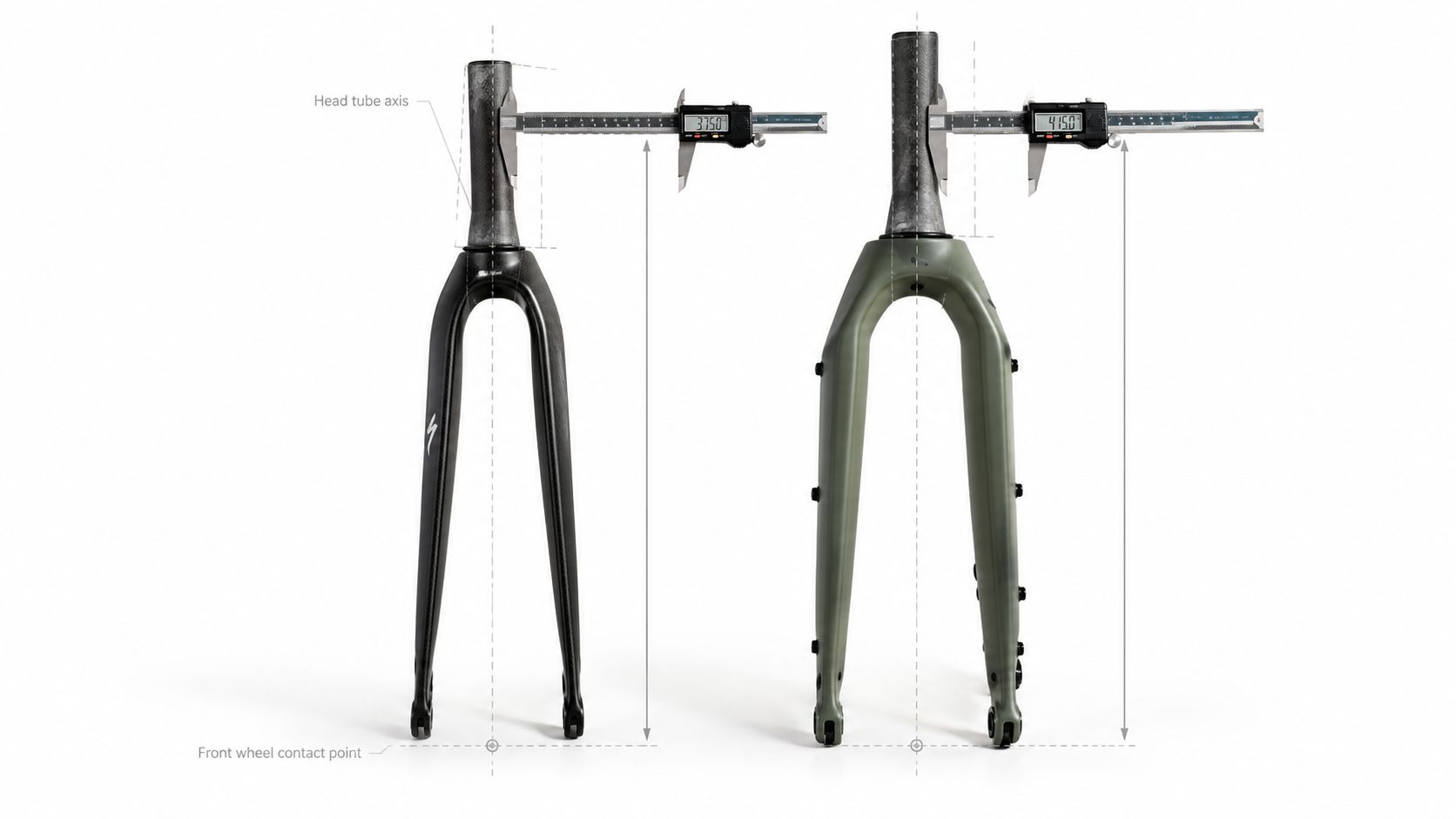
Bike fork offset is the perpendicular distance between the steering axis and the front wheel axle, usually measured in millimeters. It is part of the bike's steering geometry, and the useful question for buyers is not whether one number sounds fast or slow on its own, but how that number works with the rest of the front-end geometry.
A bike can look attractive on paper while still having front-end geometry that differs from what a buyer expects. That is a common used-bike problem, and the mistake is often treating fork offset like a spec-sheet footnote instead of part of the bike's front-end geometry.
Table of Contents
- Why Fork Offset Matters More Than You Think
- What Is Bike Fork Offset
- How Offset Interacts With Head Angle and Trail
- Why Category Labels Are Not Enough
- Measuring and Comparing Forks When Shopping
- How SYCLR Helps You Shortlist Better Options
Why Fork Offset Matters More Than You Think
A rider can love the price, paint, and drivetrain, then climb on and feel that the front end is not what they expected. Buyers usually focus on frame size and ignore steering geometry, which is how a bike that looks right on paper can still feel different from what they had in mind.

The buying mistake
Frame fit is only part of the equation. If stack and reach seem close enough, riders often stop there and overlook the fork, even though offset changes the front wheel's position relative to the steering axis and changes the front-end geometry.
That matters on used bikes, where a frame can measure out well and still ride unlike the buyer expects. A road or gravel bike can look similar on a listing and differ materially once fork offset, head angle, wheel size, tire size, and trail are considered together. As noted by Blister Review, offset is only one part of steering feel, and small changes can be less noticeable than head angle, wheel size, and trail.
Practical rule: if you cannot explain how the fork's offset fits into the complete front-end geometry, you are still guessing.
For SYCLR shoppers, that is the key check. You are not just comparing bikes, you are comparing the geometry that shapes the front end. A lower price does not resolve a mismatch between the bike’s geometry and the characteristics you are trying to compare.
What Is Bike Fork Offset
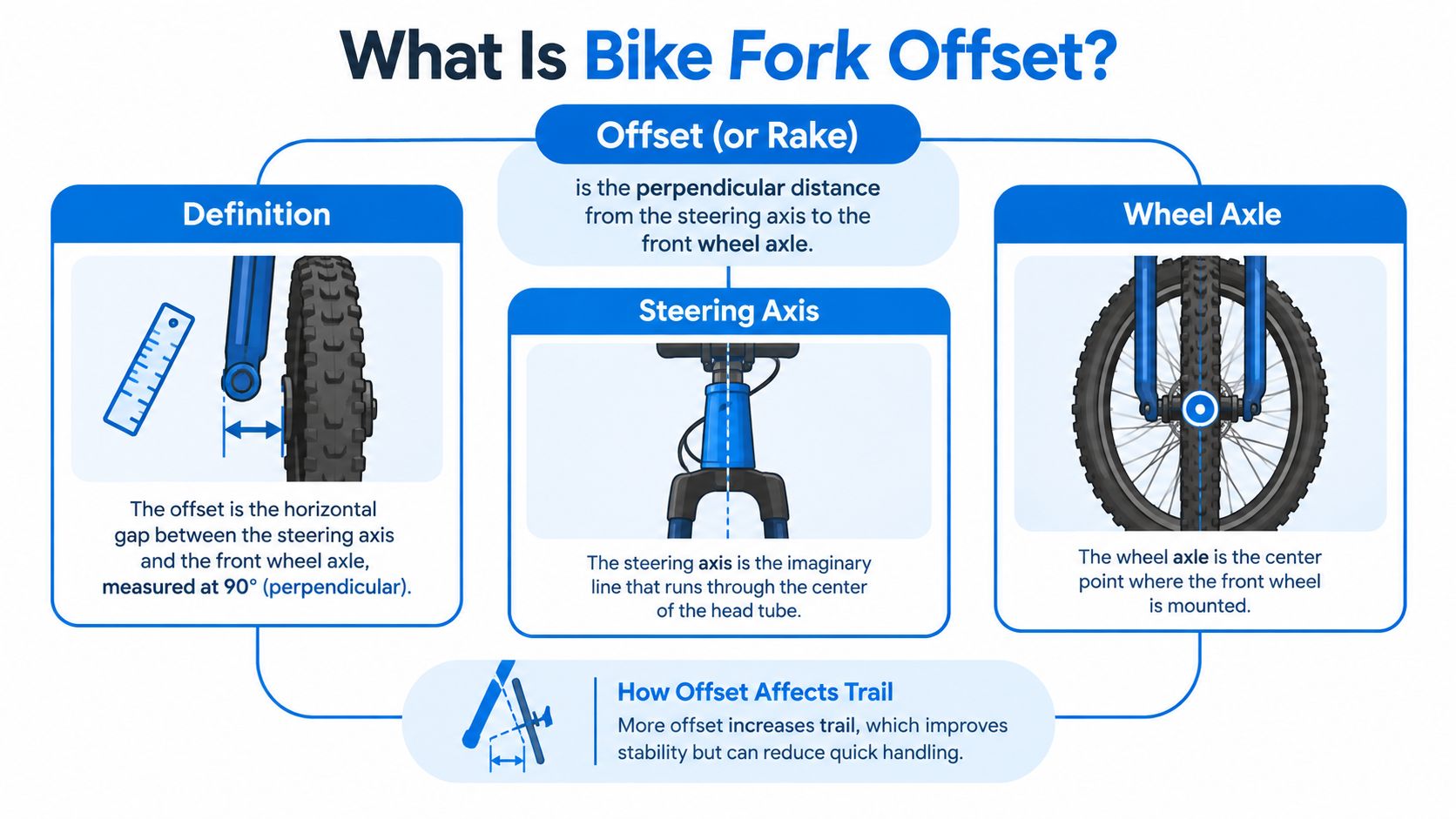
Fork offset, also called rake, is the perpendicular distance between the steering axis and the front wheel axle. In practical terms, the axle sits ahead of an invisible line running through the head tube, and that spacing is the offset.
Why the term matters
Fork offset is a property of the fork itself. Manufacturers usually list it in millimeters on geometry charts or fork spec sheets.
That makes it different from frame size, stack, or reach. Those numbers describe frame coordinates or dimensions, while offset describes one part of the steering geometry, so frame size alone will not tell you how a bike's front end is configured. Two bikes can share the same nominal size and still differ at the front end because the fork rake is different.
The fork does not just hold the wheel. It is one of the geometry inputs that helps define the front end.
Fork offset is created by the fork's geometry, which positions the axle relative to the steering axis. That is why riders need to look at fork offset with head angle and wheel/tire radius, not as a stand-alone spec that tells the whole story.
How Offset Interacts With Head Angle and Trail
A small offset change can matter, but only inside the full front-end geometry. With other variables fixed, changing offset changes calculated trail. Fork offset, head angle, and wheel/tire radius together determine calculated geometric trail. None of those numbers independently predicts complete handling. For a clear breakdown of how trail is calculated, see SYCLR bike trail geometry explained.
| Geometry Variables Quick Reference | Definition | What it tells you |
|---|---|---|
| Fork offset | Distance between steering axis and front axle | One input in front-end geometry and trail calculation |
| Head angle | Angle of the head tube relative to the ground | One input that changes where the steering axis projects to the ground |
| Wheel/tire radius | Effective rolling radius of the front wheel and tire | One input that affects calculated geometric trail |
| Trail | Ground distance derived from the front-end geometry | A calculated geometry value, not a complete handling verdict |
Why wheel and tire size change the result
Wheel and tire radius are part of the trail calculation, so the same offset can land in a different place once wheel or tire size changes. That is the practical reason the same fork offset number can describe very different bikes. Frame geometry and wheel/tire dimensions, not the fork spec by itself, determine what that offset means in context.
On paper, spec-sheet comparisons often mislead buyers here. A fork offset number only means much when you know the head angle and wheel/tire radius it was designed around. If those pieces change, the calculated trail changes too.
Buyer takeaway: compare the complete front-end package, not the fork number in isolation.
That is the useful question. A different offset becomes more relevant when it meaningfully changes the complete front-end geometry you are comparing. If it barely changes the broader front-end picture, it may be just a small spec difference.
Why Category Labels Are Not Enough
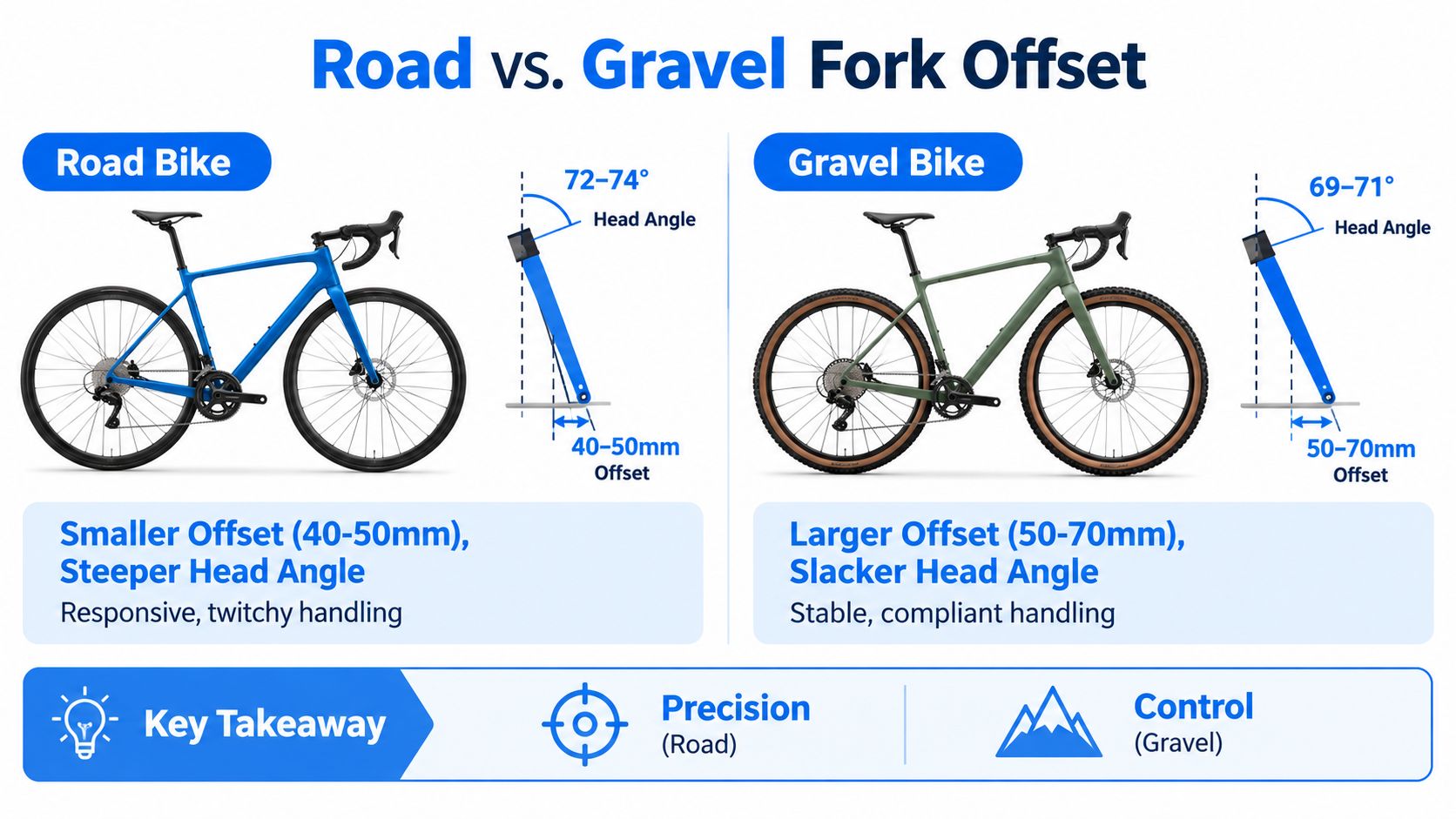
A road bike and a gravel bike can use the same fork offset number and still differ at the front end. The reason is simple: the fork does not work alone. Wheel size, tire size, head angle, and the rest of the frame geometry all shape what that offset means.
Why labels need geometry beside them
Category labels are useful shorthand, but they do not establish handling by themselves. Road and gravel bikes can use overlapping offset values, and the printed category does not tell you enough without the actual geometry beside it.
That is why offset numbers need context. A fork spec that appears on one category of bike can also appear on another, and the resulting front-end geometry may still differ because the head angle, wheel/tire radius, and frame layout are different. Bike Lab Studio makes the same point in its geometry guidance, the fork only tells part of the story without the head angle and wheel package beside it Bike Lab Studio.
| Comparison point | Why it matters |
|---|---|
| Category label | Helpful context, but not a substitute for geometry numbers |
| Fork offset | Needs head angle and wheel/tire radius to mean much |
| Head angle | Changes the steering-axis relationship used in trail calculation |
| Wheel and tire size | Change effective radius and therefore the geometry result |
| Trail | Useful calculated value for comparison when derived from the full package |
A rider comparing an endurance road bike to a gravel bike should treat the category name as a starting point, not a conclusion. For a broader category comparison, see the endurance road bike versus gravel bike guide.
Measuring and Comparing Forks When Shopping
Fork offset, head angle, and wheel/tire radius together determine calculated geometric trail. Start by finding the geometry chart and reading the line labeled fork rake or offset. If a listing leaves that number out, find the exact manufacturer geometry chart for that model and model year before drawing conclusions.
What to compare before you buy
Fork rake or offset: check the actual value, not a marketing label.
Head angle: the same fork number means something different when the head angle changes.
Wheel size and tire choice: wheel and tire package changes can alter the geometry result.
Model-year context: frame and fork designs can shift across generations, even when the bike name stays the same.
Category label: useful context, but not a substitute for actual head angle, offset, wheel/tire radius and trail.
When comparing used bikes, evaluate geometry and price as separate signals. A lower price does not resolve uncertainty about whether the bike’s front-end geometry matches the characteristics you are looking for. Use this geometry comparison tool to line up the front-end details first, then decide whether the price still makes sense.
Reading small differences the right way
Independent coverage notes that close fork offset differences can be subtle enough that riders may not notice a major change, especially compared with head angle, wheel size, and trail Blister Review. That does not make offset irrelevant. It means close numbers should be judged as part of the whole bike, not as a dramatic before-and-after verdict.
The practical takeaway is simple. Compare offset alongside the rest of the front-end geometry, then decide whether the bike is still worth the money. Small spec-sheet differences can matter, but only when the frame, wheel/tire radius, and model context put them in perspective.
How SYCLR Helps You Shortlist Better Options
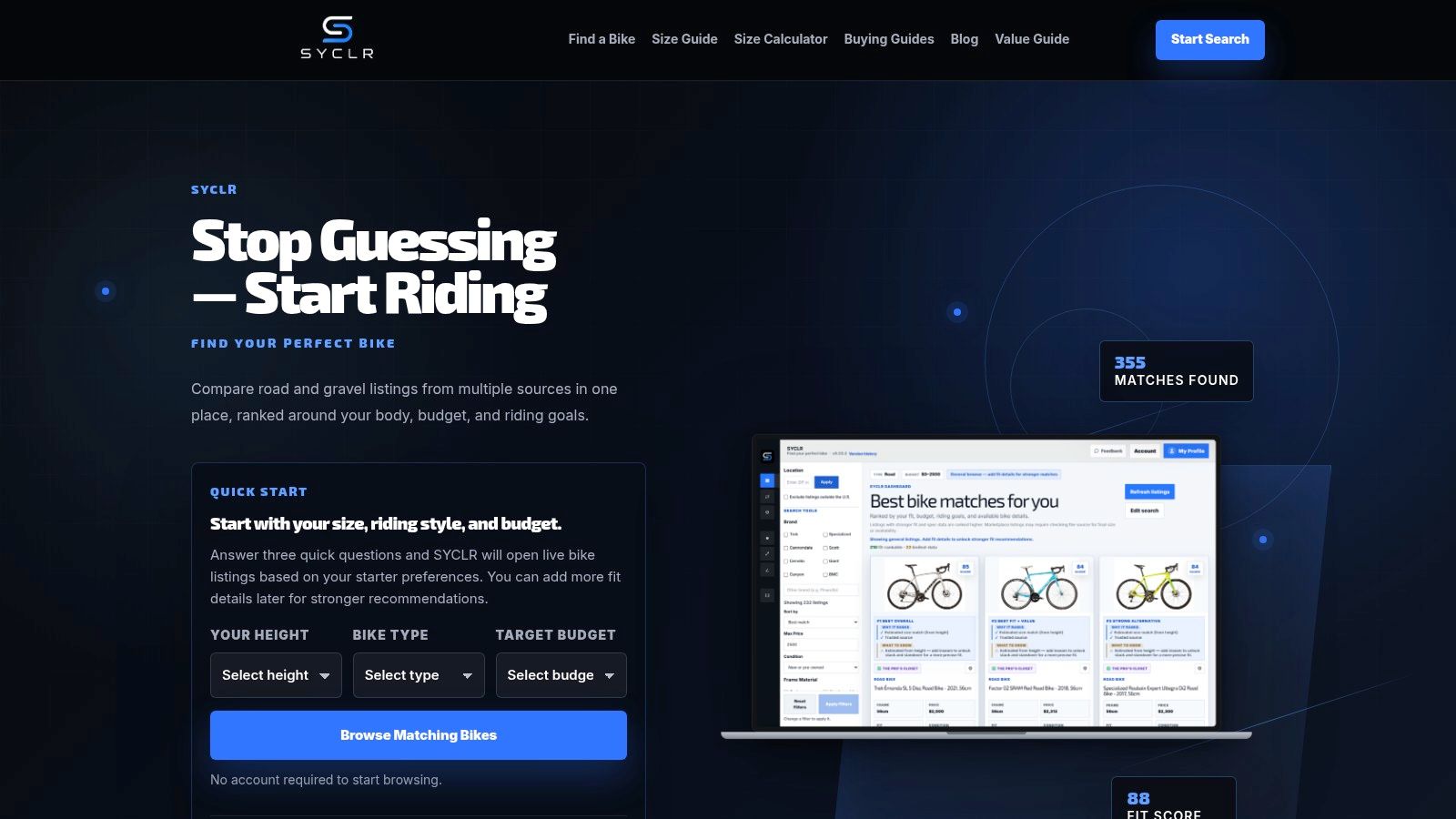
SYCLR compares road and gravel listings using fit signals, geometry signals, model-year context, price context, listing quality, condition signals where available, and confidence signals so you can shortlist bikes that make sense before you waste time on weak matches. That is especially useful when two listings look similar but differ in geometry, condition, or confidence.
Where the comparison becomes practical
A platform like this is most useful when you already know your basics, or at least your starting point. Height, bike type, and budget narrow the field, then geometry and listing context help remove bikes that are cheap for the wrong reasons. Riders with more detail can go further and use fit measurements to compare options more closely, including stack, reach, and front-end geometry.
SYCLR does not perform a professional bike fit, physically inspect bikes, authenticate listings, verify ownership or seller claims, or guarantee fit or condition. It can reduce guesswork by surfacing useful fit, geometry, listing, and confidence signals before you click through to a seller.
A good deal is only a good deal if the bike fits. If you want to compare better-fit road and gravel listings, start with your height, bike type, and budget, then check the geometry signals before you get distracted by paint, brand, or price alone.
If you're comparing road or gravel bikes right now, use SYCLR to shortlist bikes with the right fit signals, geometry signals, and price context. Start with height, bike type, and budget, then compare model-year differences before you commit. If you already know your stack, reach, or fit-report details, use the advanced fit entry to narrow the field faster.