How to Buy a Road Bike Online Without Choosing the Wrong Size
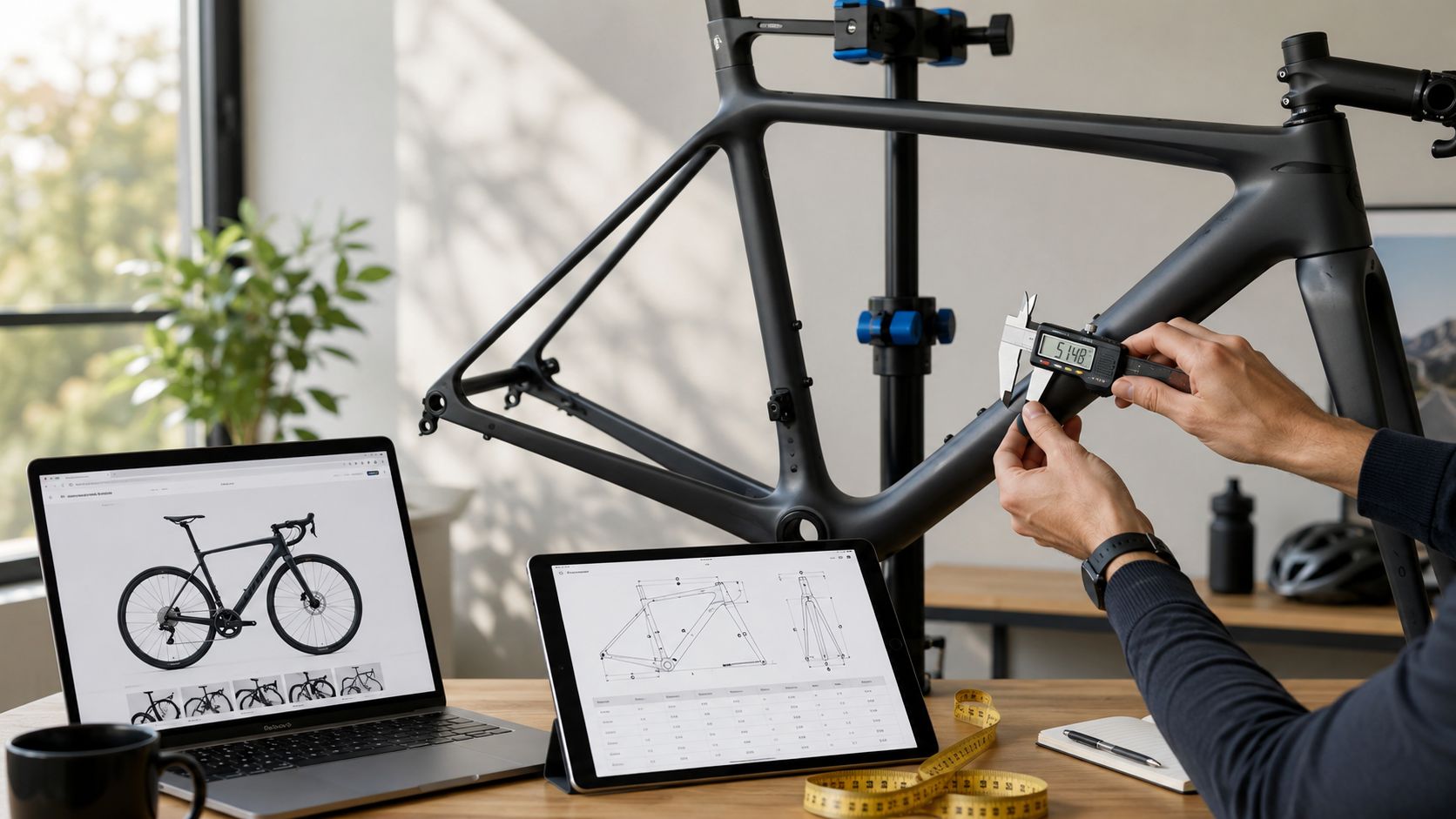
You can buy a road bike online successfully, but only if you treat fit and listing quality as the first filters. Most bad online purchases are not bad bikes. They are the wrong geometry, the wrong size interpretation, or a vague listing dressed up as a deal. If you are staring at tabs full of “56 cm” bikes, mixed seller quality, and prices that all seem plausible, the smart move is simple: define your fit, compare geometry, then judge whether the listing gives you enough confidence to proceed.
Table of Contents
How to Buy a Road Bike Online Without Choosing the Wrong Size
Quick answer: To buy a road bike online with confidence, start with your fit baseline, check the bike’s stack and reach, verify the exact model and year, evaluate listing quality, compare price context, and ask for missing details before you commit. A good online deal is only a good deal if the bike fits and the listing gives you enough confidence to trust it.
Buying a road bike online goes well when you judge fit and listing quality before you judge price. A bike can look like a bargain on paper and still leave you with numb hands, too much saddle-to-bar drop, or a front end you can never set up properly. Good buyers work from body position first, then geometry, then condition and parts.
This is not a generic ecommerce decision. It is a fit decision, a geometry decision, and a trust decision. The goal is to avoid three expensive mistakes:
-
Choosing the wrong size because the frame label looked right
-
Overpaying for a vague listing that hides useful detail
-
Trusting a seller description that never really proves fit or condition
Broad market growth data, such as the sales trend coverage from Fortune Business Insights, may explain why more bikes are sold online, but it does not help you choose between two questionable listings. What helps is a clear process.
Fit mistakes remain one of the biggest reasons riders regret buying online. WeLoveCycling’s guide to buying a bicycle online also points to size and fit as a major source of early buying errors. That is why the first filter should never be price alone.
Start with this order:
-
Choose the kind of ride you want. Fast group rides, long endurance days, climbing, mixed pavement, and light gravel all point to different road bike categories.
-
Set a fit baseline. Height is only a starting point. Inseam, flexibility, current bike comfort, and riding posture matter more. A good road bike size chart helps narrow the range before you compare listings.
-
Read geometry before size labels. A 56 in one brand can fit very differently from a 56 in another.
-
Judge the listing like a mechanic would. Exact model, year, drivetrain, wheelset, crash history, service history, and clear photos matter more than marketing language.
-
Compare price context, then check seller quality and final details. Shipping, returns, assembly needs, and payment protection all affect whether the deal is worth doing.
That order saves money because it filters out bikes that were never right for you in the first place.
The Foundation of Fit, Your Key Measurements
Start with your body, not the listing
Online bike shopping gets easier the moment you stop asking “What size should I buy?” and start asking “What front-end height and length work for me?”
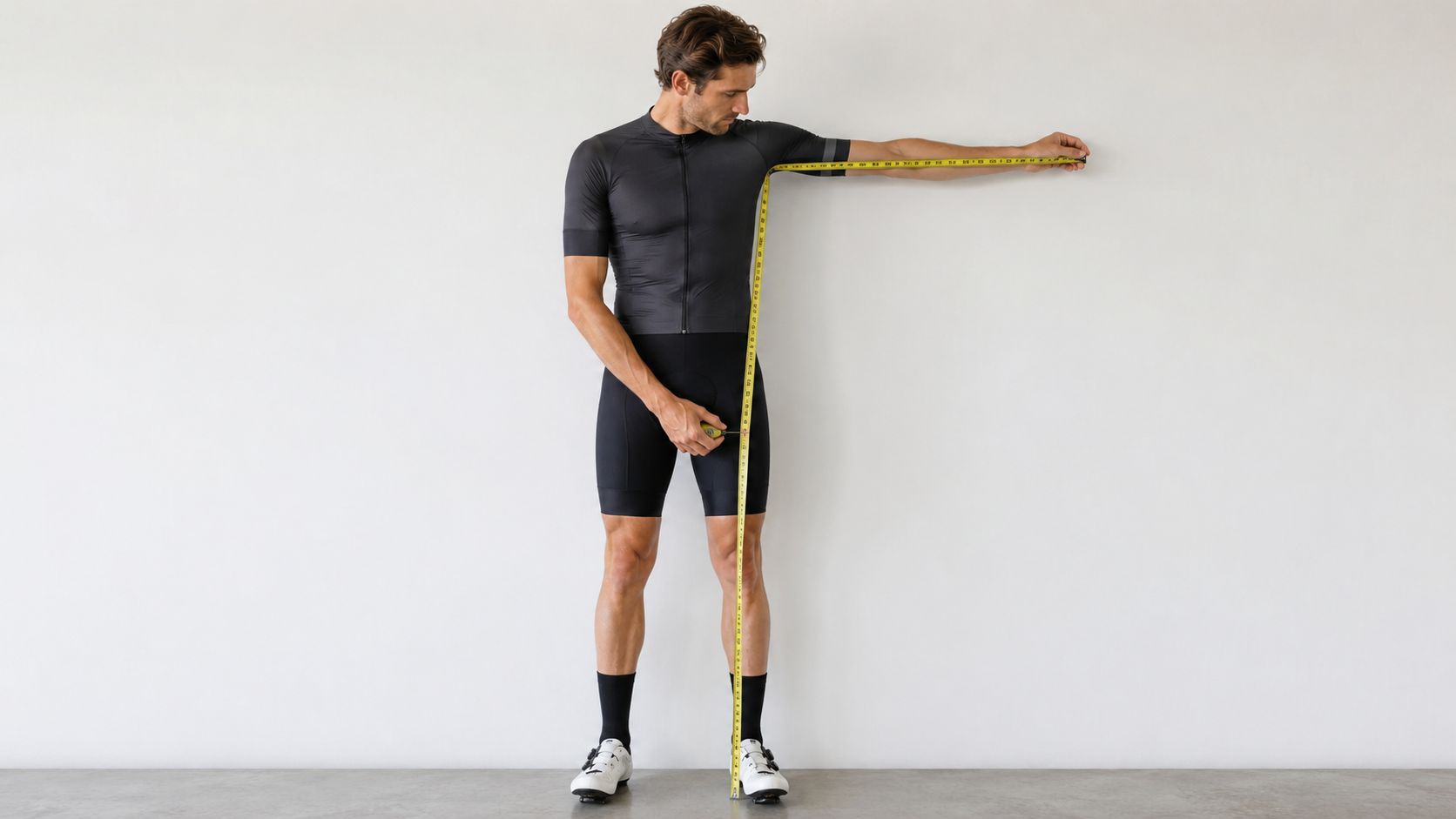
Height is a useful starting point. It is not enough for precise road bike fit. Two riders with the same height can need different bikes because of inseam, torso length, arm length, flexibility, riding history, and whether they want a relaxed endurance position or a lower, more aggressive one.
The most useful baseline measurements are:
-
Height for a rough starting range
-
Inseam for standover and saddle-height context
-
Current bike reference if you already own a bike that feels good
-
Stack and reach target if you know them from a fit or from your current bike
-
Comfort preference such as upright endurance posture versus lower race posture
When you buy a road bike online, matching your body geometry to the bike’s stack and reach is the most important technical step, because those are the most consistent cross-brand fit comparisons, as explained in BikeExchange’s road bike buyer’s guide.
If you only use size labels, you will misread a lot of bikes. That is why a rider looking at a generic chart should also review a more fit-aware reference like SYCLR’s road bike size chart.
Where to get useful fit details
The best case is simple. You already have one of these:
-
A professional fit report with your preferred coordinates or geometry range
-
A current road or gravel bike that fits well
-
A strong estimate based on home measurements and clear comfort goals
A professional fit gives you a useful range instead of guesswork. It does not mean every future bike will match exactly, but it gives you a disciplined way to compare listings.
A bike that fits well will usually be the better buy than a more expensive bike that puts you in the wrong position.
At home, you can still create a strong baseline. Measure your inseam carefully. Note whether your current bike feels too long, too short, too low, too tall, or just right. If your current bike is comfortable on longer rides, its geometry becomes valuable buying context.
A quick visual explanation helps here:
Before you compare listings, write down these basics in one note on your phone:
| Fit detail | What to record | Why it matters |
|---|---|---|
| Height | Your current measured height | Starting point only |
| Inseam | Measured carefully at home | Helps with standover and setup context |
| Current bike | Brand, model, size, year if known | Useful reference for feel |
| Current fit feel | Too stretched, too low, comfortable, upright | Prevents repeating mistakes |
| Stack and reach | From fit report or current bike if available | Best cross-brand comparison |
| Riding goal | Endurance, fast group rides, climbing, gravel detours | Helps choose the right geometry style |
Decoding Bike Geometry and Sizing
What stack and reach actually mean
Geometry is a bike’s DNA. It tells you how a bike is likely to fit and handle before you ever ride it.
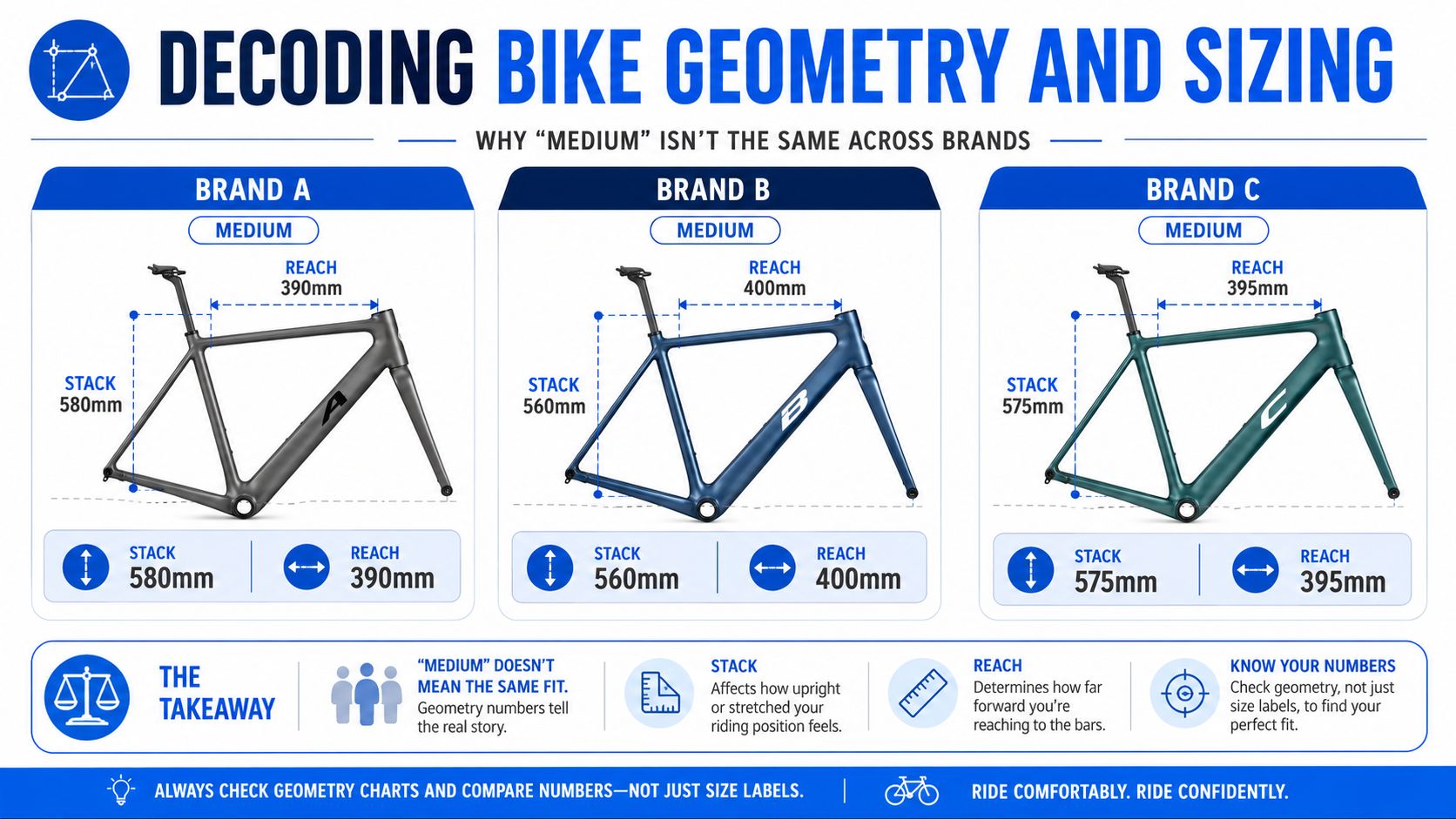
The two most useful numbers for online comparison are stack and reach. Canyon defines them clearly: stack is the vertical distance from the bottom bracket center to the top of the head tube, and reach is the horizontal distance between those same points. That makes them one of the clearest ways to compare fit across bikes with inconsistent size labels, as detailed in Canyon’s road bike geometry explainer.
A practical reading looks like this:
-
Higher stack usually means a taller front end and a more upright posture
-
Lower stack usually means a lower front end and a racier position
-
Longer reach usually means more stretch through the cockpit
-
Shorter reach usually means a more compact feel
Endurance road bikes usually give riders a more manageable front-end position than aggressive race bikes, but the exact feel depends on stack, reach, spacers, stem, handlebar shape, and rider flexibility.
Why size labels fail online
A 56 cm from one brand can ride nothing like a 56 cm from another. Some brands run taller in front. Some run longer. Some use compact frame design, so the labeled number tells you very little about actual fit.
That is why frame labels are indexing tools, not decision tools.
| Metric | 56 cm Endurance Bike (Example) | 56 cm Race Bike (Example) | What It Means for the Rider |
|---|---|---|---|
| Frame label | 56 cm | 56 cm | Same label does not mean same fit |
| Stack | Higher | Lower | Endurance bike usually supports a taller front end |
| Reach | Shorter to moderate | Longer | Race bike often feels more stretched |
| Head tube angle | Slightly calmer feel | Quicker steering feel | Handling character changes too |
| Riding posture | More upright | More aggressive | Comfort and use case differ |
| Best for | Long steady rides, general road use | Fast riding, aggressive posture | Your goals should guide the choice |
Handling matters too. Head tube angle affects how quickly the bike responds. A slacker angle feels more stable at speed, while a steeper angle reacts faster to steering input, according to The Pro’s Closet explanation of bike geometry.
Buyer mindset: Do not ask whether two bikes are both 56 cm. Ask whether their stack, reach, and handling intent are close to what you already know works.
If you want a more detailed fit-first framework, review SYCLR’s stack and reach guide.
How to Evaluate Online Bike Listings
Open two listings for the same size road bike and the difference is usually obvious within 30 seconds. One gives you enough detail to judge fit, condition, and value. The other gives you a frame label, two dim photos, and a vague promise that it rides great.
That difference matters because online bike buying is mostly a confidence test. The best listing is not the one with the flashiest parts. It is the one that lets you confirm the bike fits your known range and gives you a clear read on what you are getting.
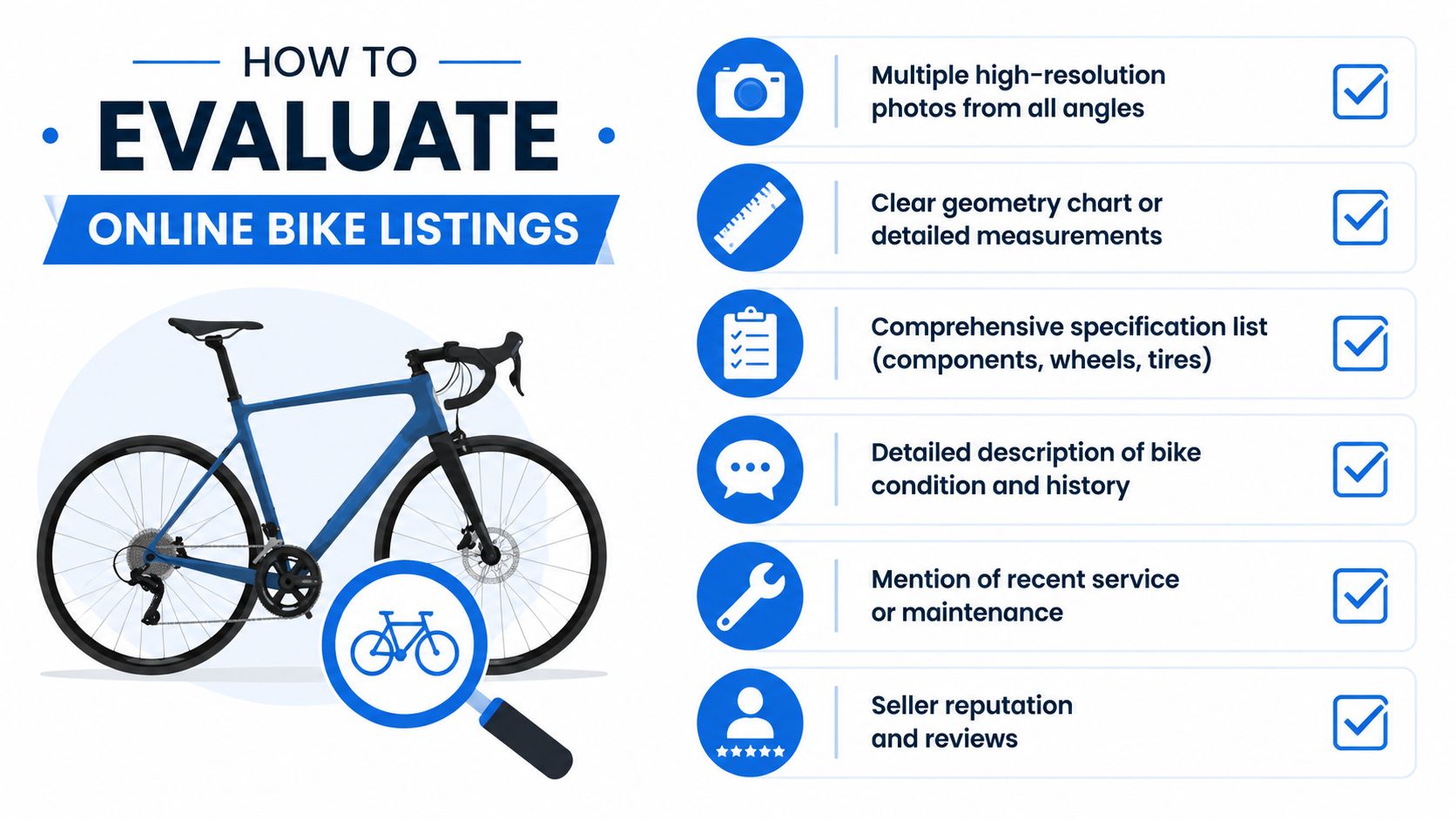
Cyclists regularly worry about listings being misdescribed, especially around stack, reach, and component wear, while many marketplaces still lack standardized verification, as noted in The Pro’s Closet discussion of online bike buying trust issues. Judge the seller’s clarity as closely as you judge the bike.
Listing Confidence Checklist
Good listings answer the questions an experienced buyer asks before sending a message. You should be able to identify the exact bike, verify the likely fit, compare the asking price with similar bikes, and spot any obvious condition concerns from the listing alone.
A strong listing should include:
-
Exact brand, model, and model year
-
Labeled frame size and geometry chart availability
-
Stack, reach, and standover if available
-
A clear side photo of the full bike
-
Close-up photos of the drivetrain, wheels, cockpit, frame, fork, and damage-prone areas
-
Accurate component details, including groupset, brakes, wheels, tires, crank length, cassette range, and cockpit setup
-
Condition notes, including crashes, repairs, carbon damage, drivetrain wear, tire wear, and service history
-
Modifications from the stock build, especially stem length, handlebar width, seatpost offset, saddle position, wheels, and tires
-
Price compared with similar bikes by model year, condition, and components
-
Seller detail, including responsiveness, ownership history, shipping terms, and return or payment protection if offered
Here is a practical scoring checklist.
| Check | What to Look For | Why It Matters |
|---|---|---|
| Model clarity | Exact brand, model, and model year | Lets you verify geometry and original spec |
| Size clarity | Labeled size plus geometry chart access | Helps compare fit, not just the sticker |
| Geometry detail | Stack, reach, and standover if available | Gives you better fit confidence before contact |
| Photo quality | Full side view and close-ups of key areas | Makes damage and wear easier to assess |
| Spec completeness | Groupset, brakes, wheels, tires, crank, cassette, cockpit | Confirms what you are actually buying |
| Condition detail | Service history, crashes, repairs, wear notes, carbon issues | Cuts down uncertainty and seller spin |
| Modification detail | Notes on stem, bars, seatpost, saddle, wheels, tires | Non-stock parts can change fit and value |
| Price context | Compared with similar bikes by year, condition, and spec | Helps you spot overpriced or suspicious deals |
| Seller quality | Reputation, ownership detail, responsiveness, terms | Helps you judge buying confidence |
One detail buyers miss all the time is cockpit setup. A bike can have the right frame and still feel wrong because the seller fitted a long stem, narrow bars, or a slammed front end. Those changes are not always deal breakers, but they affect fit, handling, and what it will cost to sort the bike once it arrives.
What weak listings usually hide
Weak listings rarely look fraudulent. They look incomplete.
A seller who writes “56 cm carbon road bike, great condition, message for details” is handing the hard part to you. You still have to identify the model year, find the geometry chart, compare fit, inspect the build, and work out whether the asking price matches the bike in front of you. That is not smart filtering. It is extra risk.
Watch for these red flags:
-
Missing model year
-
No stack or reach information, and no easy way to verify geometry
-
No drivetrain or wheel details
-
Blurry photos of damage-prone areas
-
No mention of crashes, repairs, or carbon inspection
-
No explanation of modifications
-
A price that seems high or suspiciously low compared with similar listings
-
A seller who cannot answer basic questions consistently
Photos tell a lot. I want to see the drive side, non-drive side, cockpit, drivetrain, brake tracks or rotors, rear derailleur, chainrings, dropouts, fork, underside of the down tube, and any paint chips up close. If those areas are missing, assume you do not yet have the full story.
The listing should give you enough information to judge fit, value, and risk before you contact the seller.
New vs Used, Price Context, and Final Inspection
How to choose between new and used
New bikes and used bikes solve different problems.
A new bike usually gives you cleaner history, manufacturer backing, and a more predictable buying process. Buying direct can cut out middleman costs, but it works best when you already know your size and fit range. A retailer or local shop may charge more, but can offset that with setup help and fit support.
A used bike can offer strong value, especially for riders upgrading from entry-level bikes, but only if fit and condition both make sense. A used road bike with excellent components can still be the wrong purchase if the frame is too long, too low, or a poor geometry match for your riding style.
Sales and discounts can make a listing more tempting, but timing should not outrank fit, condition, and listing clarity. A discounted bike in the wrong size is still the wrong bike.
Price context matters here. Compare the asking price with similar bikes of the same model year, frame material, groupset level, wheel quality, and visible condition. A listing is not automatically good value because it is cheaper than retail. It is good value when the fit is right, the details are clear, and the condition supports the price.
Questions and checks before money changes hands
Before you commit, ask direct questions. Good sellers answer them clearly. Weak sellers get vague fast.
Use this pre-contact checklist:
-
Ownership history. How long have you owned it, and why are you selling?
-
Crash and repair history. Has the frame, fork, or wheelset been crashed, repaired, or inspected?
-
Service history. When were the chain, cassette, brake bleed, bearing service, or cables last replaced or serviced?
-
Stock versus modified build. What has changed from the original build?
-
Fit-relevant setup. What stem length, handlebar width, crank length, seatpost offset, and saddle position is on the bike now?
-
Price reasoning. How did you arrive at the asking price compared with similar bikes?
-
Shipping and returns. Is local inspection possible, and what happens if the bike arrives misdescribed?
If you can inspect in person, check these areas carefully:
| Inspection area | What to check | Why it matters |
|---|---|---|
| Frame and fork | Cracks, chips, dents, repairs, paint stress marks | Structural risk matters more than cosmetic appeal |
| Drivetrain | Chain wear, cassette wear, bent teeth, shifting quality | Worn parts change real value |
| Wheels | Trueness, spoke tension feel, hub smoothness | Wheel problems get expensive quickly |
| Headset and bottom bracket | Play, roughness, creaks | Hidden wear often shows up here |
| Brakes | Rotor wear, pad condition, lever feel | Safety and maintenance cost |
| Fit sanity check | Standover, hood reach, saddle height, cockpit feel | Wrong fit ruins an otherwise good deal |
For a rough in-person check, confirm that you can stand over the bike comfortably, reach the hoods without locking your arms, and pedal without feeling cramped or overextended. Standover height, saddle height, and cockpit feel are practical checks, but they do not replace comparing the frame’s stack, reach, and overall geometry before contacting a seller.
If the bike is being shipped, ask for a live video walkaround. Have the seller show the drivetrain, frame junctions, dropouts, wheels spinning, and any marked damage. That will not replace an in-person check, but it will expose plenty of weak listings.
How SYCLR Streamlines Your Search
You have six tabs open. One bike looks cheap but the photos are poor. Another has a clean build sheet but no geometry. A third is the right size on paper, yet the cockpit numbers suggest it will feel nothing like the bike you already ride well. That is where online buying usually goes wrong. The mistake is treating listings like isolated deals instead of fit decisions.
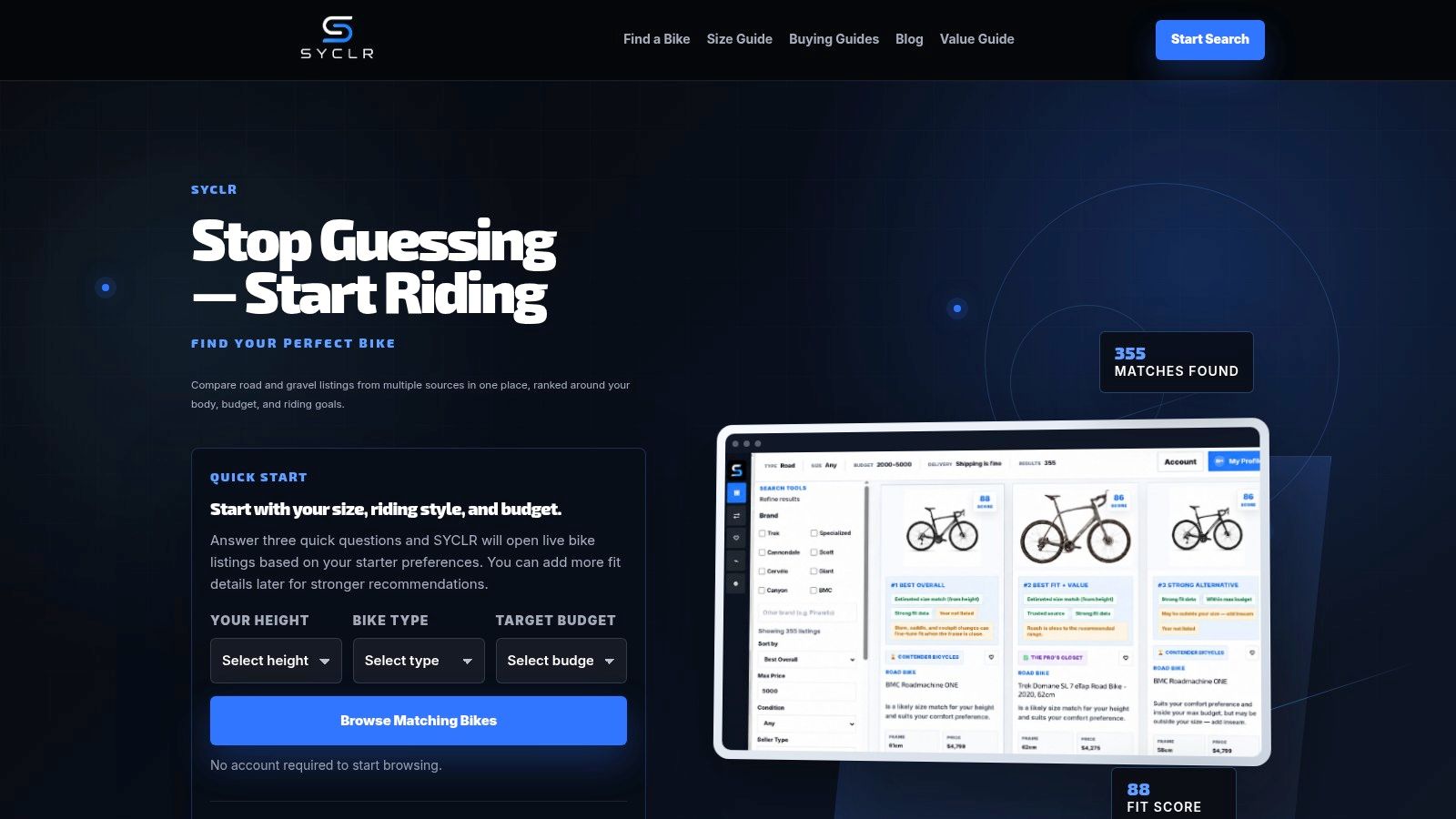
SYCLR helps you sort the market the way an experienced buyer does. Start with fit confidence, then compare the listings that deserve your time. Instead of bouncing between screenshots, geometry charts, and seller notes, you can review bikes with the right context in one place.
That changes the questions you ask before you contact a seller:
-
Which bikes are close to my fit range?
-
Which listings give enough detail to trust the size and model?
-
Which options are worth paying more for because they reduce fit risk?
-
Which bikes should I ignore, even if the price looks strong?
That last point matters. A bike that is slightly more expensive but lines up with your stack, reach, and riding position is often the cheaper decision in practice. The wrong bike can lead to stem swaps, spacer compromises, resale hassle, or a bike that never feels right.
A common example is the rider shopping for a used 56 cm road bike. Two listings may share the same size label, but one has a longer reach and lower front end than their current comfortable bike. The other has geometry that is closer, better photos, and clear model-year details. Experienced buyers shortlist the second bike first because fit confidence beats bargain hunting.
If you want to start with that filter, use SYCLR’s bike search tool for road bike listings.
Frequently Asked Questions About Buying Bikes Online
A common online buying mistake happens in the last five minutes. The bike looks clean, the spec sounds strong, and the price feels fair, so the buyer talks themself into a size that was never a confident fit. That usually gets expensive later.
Can I buy a road bike online if I only know my height?
You can start there, but height alone is a rough filter. Better decisions come from adding inseam, the fit of your current bike, your preferred riding position, and any stack and reach numbers you already trust.
Is frame size the same across brands?
No. A 54 cm or 56 cm label is only a label. Brands measure differently, and two bikes with the same stated size can ride very differently once you compare stack, reach, head tube length, and front-end height.
What matters more online, components or geometry?
Geometry usually decides whether the bike will work for you at all. Components affect value, maintenance cost, and ride feel, but fit problems are harder to solve and easier to regret.
Are used road bikes worth buying online?
Yes, if the seller gives you enough information to judge fit and condition with confidence. Used bikes can be excellent value. They can also become expensive if you end up correcting avoidable problems or reselling a bike that never suited you.
How do I judge whether a listing is trustworthy?
Look for exact model and year, clear photos from both sides, close-ups of wear points, a complete parts list, and notes on any changes from stock. Good listings reduce uncertainty before the first message.
Should I get a professional bike fit before buying online?
If you are spending serious money, dealing with discomfort on your current bike, or comparing two close sizes, a fit can save you from the wrong purchase. It will not choose the bike for you, but it gives you stronger numbers and better questions.
What should I do if the seller will not provide geometry or detailed photos?
Pass, unless you can inspect the bike in person without much risk. Online buying works best when the listing gives you enough detail to verify what the bike is and how it is likely to fit.
The buyers who get this right do not start with the flashiest listing. They start with confidence. Confidence that the bike matches their position, confidence that the seller knows what they are offering, and confidence that the price makes sense for that level of fit risk.
If you want to compare bikes that way, SYCLR helps you sort listings by the details that matter most in practice: fit, price context, and listing quality. Use it to narrow the field before you chase components or bargains.