
Cyclocross Bike vs Gravel Bike: Which Fits Your Riding?
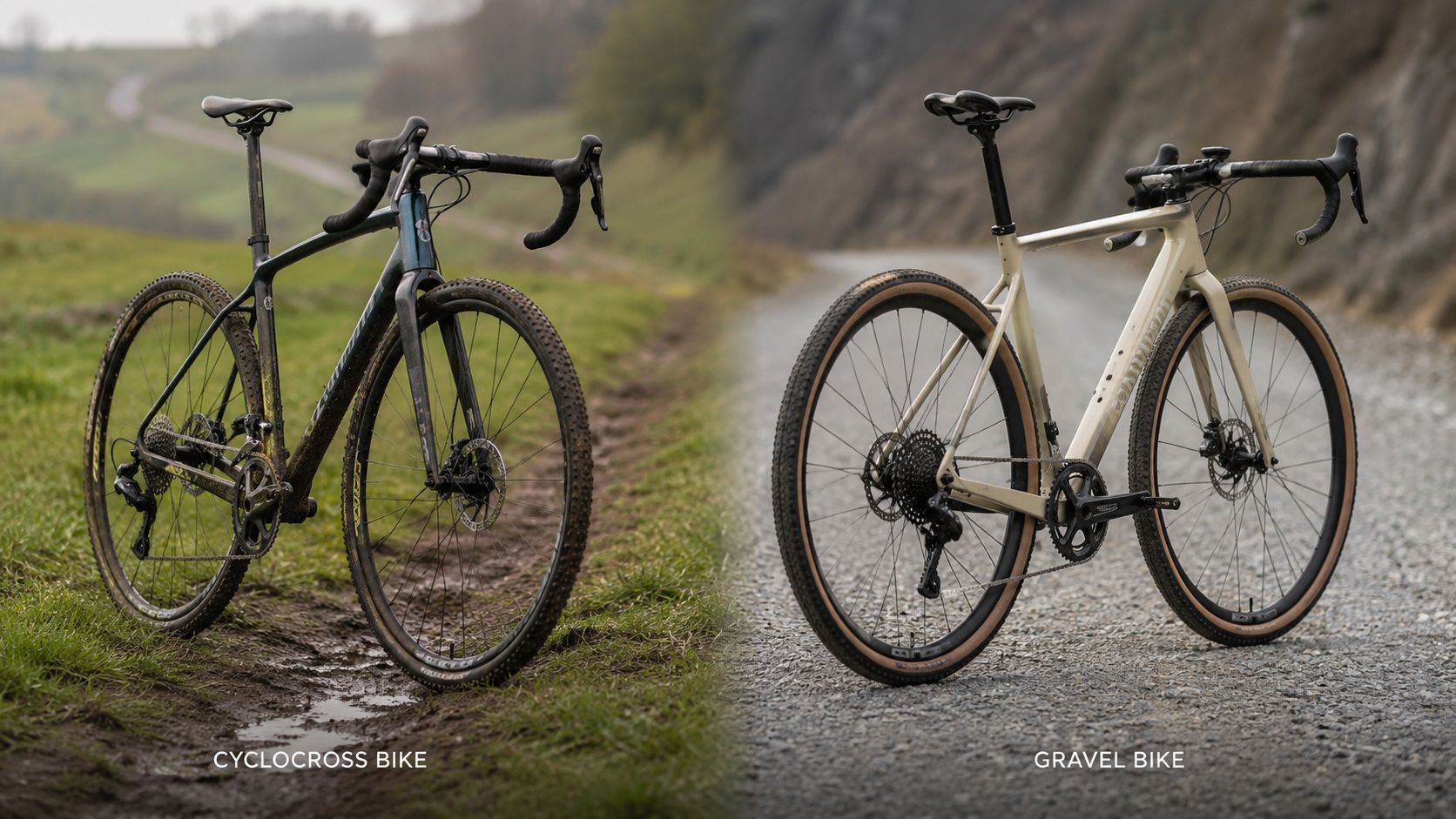
You're standing in front of two bikes that look close enough to overlap, but they don't ride the same, fit the same, or age the same on the used market. Choose cyclocross for fast, technical racing and quick handling on smoother courses. Choose gravel for wider tires, lower gearing, stability, long rides, rough terrain, and carrying flexibility. Neither label guarantees the correct fit. If the bike is for short, intense efforts and frequent remounts, CX makes sense. If the route is long, rough, or load-bearing, gravel usually wins on practicality.
Table of Contents
Tire Clearance and Wheel Compatibility Without the Guesswork
Who Should Care About the Cyclocross vs Gravel Choice
If you're comparing two drop-bar bikes that both claim mixed-surface chops, this is the decision that matters: race-focused speed and handling versus long-ride versatility and fit tolerance. The trap is obvious. Riders buy on photos, brand names, or category labels, then discover the bike is too twitchy, too narrow, or too compromised for how they really ride.
The clean rule is simple. Choose cyclocross when short-course racing, repeated accelerations, and quick remounts are the priority. Choose gravel when ride length, stability, wider tires, and carrying flexibility matter more. That distinction lines up with the way the bikes are built, not just the names printed on the frame.
Practical rule: if you're trying to make one bike do everything, the real question isn't which category sounds tougher. It's which geometry, clearance, and gear range match your actual routes.
Neither label tells you whether the bike fits your body. That's why stack, reach, standover, and listing quality matter as much as the badge on the downtube. A used listing can look like a deal and still be the wrong frame for your position, your terrain, or your budget. If you want a broader road-versus-gravel primer, see SYCLR's gravel bike vs road bike guide, but keep this article focused on the cyclocross-versus-gravel split.
What Each Category Is Built For
Cyclocross bike
A cyclocross bike is built for short, intense mixed-surface racing, quick handling, repeated accelerations, dismounts, and muddy course conditions. UCI-regulated cyclocross racing uses a 33 mm maximum tire-width rule, but that does not mean every cyclocross frame has a 33 mm physical clearance limit. Some CX frames accept wider tires outside sanctioned racing, so buyers should verify the manufacturer’s stated clearance and usable mud space for the exact model year.
That matters because CX bikes are aimed at riders who want an aggressive position, fast cornering, and efficient acceleration on smoother dirt, grass, and mud. They suit racers who value a light, responsive feel and do not need much cargo or mount capacity. A rider shopping for a cyclocross bike for gravel should be clear about the trade-off, race priorities usually come before comfort or luggage flexibility.
Gravel bike
A gravel bike is built for longer mixed-surface rides, rougher terrain, wider tires, lower gearing, stability, and versatility. Gravel bikes are not constrained by the CX race rule, and many accept 40 mm or more, with some modern frames going up to about 2.1 in (BikeRadar). That wider clearance changes the kind of rider the bike serves, especially when the route gets loose, long, or loaded.
A gravel bike is usually the better fit if you want one bike for bigger rides, rough surfaces, bags, bottles, and general mixed-surface use. It is less about pure race sharpness and more about keeping the rider comfortable and in control when the route stops being predictable. If you are checking listings side by side, use SYCLR's geometry comparison guide to see how fit numbers line up before you get distracted by paint, parts, or category labels.
Neither label guarantees fit. A “CX” frame can still be wrong for your position, and a gravel frame can still be too stretched, too tall, or too cramped.
Fit and Geometry Differences That Actually Change Handling
The measurements that matter
The category names are only the starting point. The split shows up in stack, reach, standover, top-tube shape, wheelbase, front-center, trail, head tube angle, chainstay length, bottom-bracket drop, and cockpit design. Those measurements decide whether the bike feels race-tight, calm, nervous, planted, or just awkward for your body.
Some cyclocross bikes use higher bottom brackets, quicker steering, and race-oriented positions, while some gravel bikes use longer wheelbases, lower centers of gravity, and calmer handling. The categories overlap substantially, so no single measurement reliably separates every CX bike from every gravel bike.
Compare the exact stack, reach, standover, wheelbase, front-center, trail, head tube angle, chainstay length, bottom-bracket drop, cockpit, wheel standard, and model year. Two bikes carrying different category labels can still have very similar geometry, while two bikes in the same category can fit and handle quite differently.
Cyclocross bikes may prioritize rapid direction changes, obstacle clearance, and race handling, while gravel bikes may prioritize stability across longer or rougher routes. These are common design tendencies rather than universal category rules.
If you are between sizes, start with stack and reach, then compare standover, front-center, wheelbase, cockpit dimensions, and the adjustment available through the stem, bars, and spacers. The exact size and model year matter more than the category label.
Tire Clearance and Wheel Compatibility Without the Guesswork
Don't trust the mounted tire alone
Clearance is a measurement job, not a guess. A cyclocross frame may be designed around approximately 33 mm race tires, while a gravel bike may officially support roughly 40 to 45 mm or wider, but those figures are only starting points. Model year, fork shape, rim width, and mud space all change the actual result.
A seller can mount a wider tire on a CX bike and describe it as gravel-ready, but the installed tire does not prove adequate usable clearance. Tire casing, rim width, wheel alignment, frame and fork shape, debris, and mud can all affect the available space during real riding.
Verify the manufacturer’s stated limit and inspect clearance around the fork crown, chainstays, seatstays, and frame openings. When clearance is uncertain, ask a qualified bike shop to evaluate the setup.
The checks that matter before you buy
Use the listing, then verify the frame itself. If the seller cannot give straight answers, assume you need to inspect the bike in person.
Official maximum tyre clearance. Check the published front and rear limits, not just the marketing copy.
Wheel-size compatibility. Confirm whether the frame is intended for 700c or 650b, because the wheel choice affects usable clearance.
Rim-width assumptions. A wide rim can make a measured tyre sit larger than expected.
Mud clearance. Cyclocross needs space beyond the bare tyre number, especially in wet conditions.
Exact model year. Clearance and standards can change by year, even within the same family.
A listing with a mounted 38 mm tire does not confirm that the manufacturer officially supports that width or that adequate mud and debris clearance remains. Measure the gap at the crown, seat stays, chainstays, and fork legs, then ask whether the bike still clears once the wheel flexes and the tyre grows on a wider rim. That is the part buyers skip, then regret later.
For a cleaner geometry reference, use SYCLR's bike geometry chart and keep the fit numbers separate from the category label. The bike that fits your tyre choice and wheel standard is the one worth buying, not the one with the loosest claim in the listing.
Gearing, Mounts, and Carrying Capacity
Why gearing and cargo belong in the same conversation
Gearing, mounts, and carrying capacity tell you whether the bike can handle your actual routes, not just your fastest laps. Cyclocross bikes often use race-focused gearing that supports repeated accelerations and short efforts. Gravel bikes often use wider-range gearing for steep, rough, or loaded routes, which is why riders who climb slowly or ride with bags usually feel better on gravel hardware.
The full 1x-versus-2x decision belongs in a separate gearing guide. The useful question here is whether the drivetrain provides enough range for the rider’s actual terrain, pace, and carrying needs. The useful question here is simpler. Does the drivetrain give you enough range for the terrain you really ride, especially when the route gets loose, steep, or fatigue starts to build?
If your riding includes steep climbs, loaded commuting, or extended mixed-surface routes, compare the lowest available gear carefully before choosing a race-focused drivetrain.
Mounts change what the bike can do
Gravel bikes commonly include more bottle, rack, fender, top-tube, or fork mounts. Cyclocross bikes often have fewer, because racing simplicity matters and excess hardware can get in the way. That doesn't mean every gravel bike is loaded with mounts or every CX bike is stripped bare. It means the gravel category is more likely to support the added hardware riders need for daily use or longer routes.
Many used-bike buyers misread value. A clean-looking CX frame may seem like a bargain until you notice limited mounting points and a race gearing setup that doesn't suit your riding. If you're shopping used, SYCLR's used gravel bikes page is the more relevant nearby reference when you're comparing load-friendly frames, but the choice still comes down to routes and use.
Handling, Speed, and Terrain on Actual Routes
Course shape matters more than category labels
A cyclocross bike feels quicker on tight courses, smooth dirt, grass, mud, and repeated accelerations. A gravel bike feels more settled on rough descents, loose terrain, and long routes. That does not make one universally faster. It means the geometry and intended use match different kinds of speed.
A common mistake shows up on event day. A rider signs up for a long gravel event with smooth hardpack, frequent corners, short climbs, and repeated accelerations, then assumes a gravel bike is the obvious pick because the route is long. A cyclocross bike can be the better match in that setup because the course is relatively smooth, carrying needs stay low, the rider already fits the aggressive position, and quick handling matters more than wide tires or relaxed stability.
Read your route, not the marketing copy
Surface quality, pace changes, fit, tire capacity, gearing, and carrying needs matter more than distance alone. A longer ride on smooth, fast terrain can suit a CX bike better than a shorter rough route with bags on board. The rider who only checks distance is making a weak decision.
If your routes are mixed but lean fast and technical, CX stays in the conversation. If your riding is rough, loose, loaded, or unpredictable, a gravel bike may be the stronger match. The category name matters less than whether the bike's handling matches the route.
For used buyers, SYCLR's used gravel bikes page is a useful reference point when a listing looks like it might fit your routes but you need a clearer check on wheel, clearance, and use case.
Used-Market Value and Model-Year Context
A used bike can look cheap and still cost more once you factor in the frame's hidden problems. Use a real offer range, not a sticker price. Start with comparable value minus condition risk minus fit uncertainty minus compatibility risk minus listing uncertainty. That is the number that matters, because the wrong size, outdated standards, or a vague listing can erase the deal fast.
On cyclocross and gravel listings, the signals that move price are brand, model, year, size, frame material, brake type, tire clearance, wheel standard, drivetrain, mounts, condition, race history, fit, and listing completeness. Older cyclocross bikes often show up with rim brakes, tighter clearance, and older wheel or axle standards, so a low asking price can hide expensive limits. A newer gravel frame with the same rough mileage may be worth more if it gives you room for wider tires, better brake parts, and easier replacement options later.
The model-year trap
Older cyclocross and gravel bikes can both be worthwhile purchases, but model year changes the compatibility picture. Brake systems, axle standards, wheel formats, freehub bodies, tire clearance, replacement forks, and drivetrain parts can all differ between generations.
Do not assume that a cyclocross bike is automatically outdated or that a gravel bike automatically has stronger resale value. Compare like-for-like listings by brand, model, year, size, specification, condition, fit, compatibility, and listing completeness.
A lower asking price may reflect older standards or limited tire clearance, but it can also represent good value when the existing setup already matches the buyer’s needs. The important question is whether future maintenance and replacement parts are realistically available.
Use the listing to separate real value from wishful thinking. A bike with clear photos of dropout type, brake calipers, tire clearance, and drivetrain condition is easier to price than one with a single side shot and no parts list. If the seller cannot tell you the exact model year, wheel standard, or max tire size, treat the bike as uncertain and price it that way.
Compare like-for-like. A clean listing with the right standards is worth more than a bargain frame that fits badly or needs immediate compatibility fixes.
For a broader used-bike reference, SYCLR's used gravel bikes guide is useful when you are checking how a listing lines up with current gravel standards. The same rule applies to CX bikes. Pay for fit, current compatibility, and complete information, not for a low asking price that looks good until you start replacing parts.
Choosing Between a Cyclocross and Gravel Bike at a Glance
Read the table like a routing tool, not a spec dump. Each row gives you the feature split, then the “better choice when” cue tells you what kind of rider or route pushes the decision one way or the other. Treat it as a shortlist filter, then verify fit, geometry, and clearance before you buy.
| Decision factor | Cyclocross bike | Gravel bike | Better choice when |
|---|
| Primary purpose | Short, intense mixed-surface racing | Broader mixed-surface riding and versatility | Racing focus or all-purpose use dominates |
| Rider position | Often performance oriented | Can range from race oriented to more upright | The exact stack, reach, and cockpit match the rider |
| Tire rules and clearance | UCI racing uses a 33 mm tire limit, but frame clearance varies | Often designed around wider tires, but limits vary | Verify official clearance and intended racing use |
| Handling | May prioritize quick direction changes | May prioritize stability on rougher terrain | Tight racing courses or longer rough routes dominate |
| Wheelbase | Often compact, but model dependent | Often longer, but model dependent | Compare the exact geometry rather than the label |
| Bottom bracket | May be higher for obstacle clearance | May be lower for stability | Course obstacles or planted handling matter |
| Gearing | Often race focused | Often offers a broader range | Repeated accelerations or steep and loaded riding dominate |
| Mounts | Often limited | Often more common | Bags, bottles, racks, or fenders are needed |
| Carrying capacity | Usually a lower priority | Often a stronger design consideration | Unsupported or utility riding is planned |
| Mud | Race design may prioritize mud clearance | Depends on frame and tire setup | Verify usable space beyond nominal tire width |
| Rough terrain | Capable within tire and geometry limits | Often designed for broader rough-surface use | Loose, rocky, or unpredictable terrain dominates |
| Racing | Built for cyclocross competition | Suitable for gravel racing and mixed events | The event type determines the choice |
| Long rides | Can work when fit and terrain align | Often designed for broader long-route use | Route duration and surface severity matter |
| Compatibility | Older models may use legacy brakes, axles, or wheels | Older models can have the same issues | Confirm standards and replacement-part availability |
| Used-listing risk | Verify race wear, standards, clearance, and fit | Verify condition, clearance, mounts, drivetrain, and fit | Favor the clearer, better-documented listing |
| Overall value | Strong when CX-specific design will be used | Strong when versatility solves real needs | The complete bike fits the rider and route |
How to use the matrix
Start with the row that describes your real riding, not the row you wish described your riding. If you're race-focused, light on cargo, and want fast handling, CX stays compelling. If you want wider tires, lower gearing, and a frame that tolerates longer mixed routes, gravel is the cleaner buy.
Fit signals, geometry signals, model-year context, price context, condition signals, listing quality, and confidence signals all matter before you click buy. SYCLR helps riders compare cyclocross and gravel listings by starting with height, bike type, and budget, then layering in fit and geometry signals so the shortlist gets sharper instead of noisier.
How SYCLR Helps
SYCLR is built to compare road and gravel listings with more fit context than a basic marketplace. It organizes available fit signals, geometry signals, model-year context, price context, listing quality, and confidence signals so riders can shortlist better-fit bikes before they buy. If you already know your stack, reach, or current-bike geometry, the advanced fit entry at SYCLR's fit details page gives you a more specific starting point.
FAQ
What is the main difference between a cyclocross bike and a gravel bike?
A cyclocross bike is built for short, intense mixed-surface racing, quick handling, and repeated remounts. A gravel bike is built for longer rides, wider tires, lower gearing, stability, and versatility.
Can a cyclocross bike be used for gravel riding?
Yes, but only if the terrain, tire clearance, gearing, and fit make sense. A CX bike can work on smoother gravel and faster mixed-surface routes, but it's not automatically the better choice for rough or loaded riding.
Which bike has wider tire clearance?
Gravel bikes often provide wider tire clearance, but the exact limit depends on the frame, fork, wheel size, rim width, and model year. The UCI’s 33 mm rule applies to tires used in regulated cyclocross competition, not necessarily to the frame’s physical maximum clearance.
Is a cyclocross bike faster than a gravel bike?
Not universally. A CX bike can feel quicker on tight courses and repeated accelerations, while a gravel bike can be the better match on rougher or longer routes. The course profile matters more than the category label.
Which geometry measurements matter most?
Start with stack and reach, then check standover, wheelbase, front-center, bottom-bracket drop, head tube angle, chainstay length, and cockpit design. Those measurements tell you more than the badge on the frame.
Which bike is better for long rides?
A gravel bike is often the stronger match for long, rough, or loaded routes because many models offer wider tires, broader gearing, and more carrying options. A cyclocross bike can still work well on longer rides when the terrain is relatively smooth, the rider fits the position, and carrying needs are limited.
Can SYCLR help compare cyclocross and gravel bikes?
Yes. SYCLR helps compare listings by height, bike type, budget, geometry signals, model-year context, price context, condition signals, listing quality, and confidence signals, which makes it easier to shortlist better-fit bikes.
If you are comparing cyclocross and gravel bikes, start with your height, bike type, and budget in the SYCLR app. Compare available fit signals, geometry signals, tire-clearance information, model-year context, price context, listing quality, condition signals, and confidence signals before building your shortlist.
Already know your stack, reach, current-bike geometry, or fit-report details? Use the advanced fit entry to improve your recommendations.