
Gravel Bike vs Hybrid Bike: Which Should You Choose?
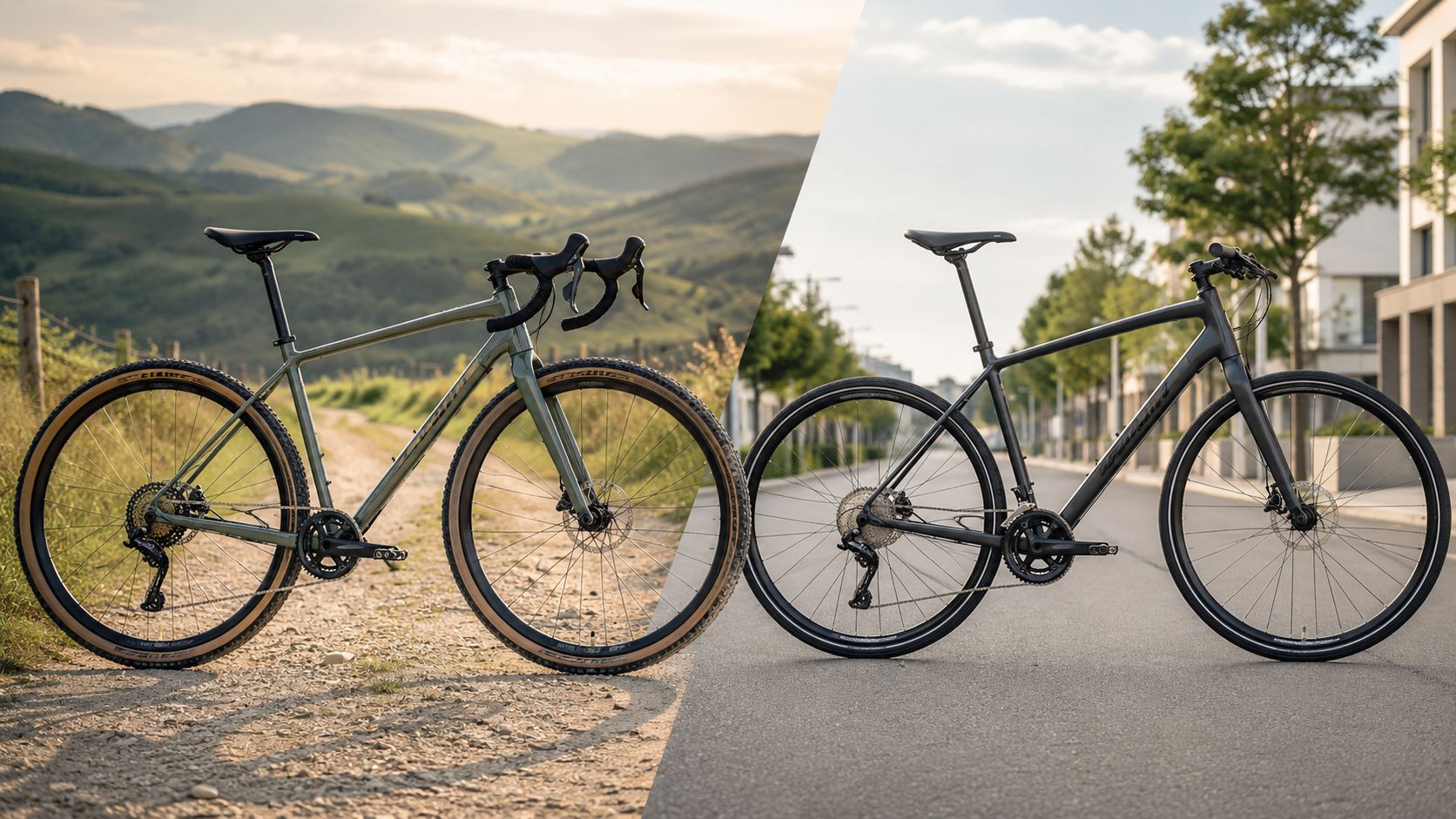
You're probably comparing two bikes that overlap on paper but feel very different in practice. One may look more commute-friendly. The other may look more adventure-ready. That does not mean either category is automatically the better buy. The right choice depends on the exact bike, your fit, and the routes you actually ride.
A gravel bike may suit riders who spend time on mixed surfaces, want drop-bar style hand positions, or plan longer rides with more varied terrain. A hybrid may suit riders who prioritize commuting, paved paths, recreational riding, or flat-bar control. Those are tendencies, not rules. Some hybrids are sporty. Some gravel bikes are quite upright. Some models blur the line almost completely.
| Category | Gravel Bike | Hybrid Bike |
|---|---|---|
| Usual design intent | Mixed-surface riding, longer road-to-gravel routes, light adventure use | Commuting, paved paths, recreational riding, utility use |
| Handlebar setup | Often drop bars, but not always | Often flat bars, but not always |
| Fit feel | Varies by stack, reach, cockpit, bar setup, and wheelbase | Varies by stack, reach, cockpit, bar setup, and wheelbase |
| Tire clearance | Model-specific | Model-specific |
| Best buying approach | Compare geometry, clearance, gearing, mounts, and condition | Compare geometry, clearance, gearing, mounts, and condition |
Table of Contents
- What Separates a Gravel Bike From a Hybrid
- Geometry, Fit, and Riding Position Compared
- Tires, Clearance, and Surface Use
- Drivetrain, Brakes, and Component Choices
- Price, Value, and What a Good Deal Actually Means
- Matching the Bike to Your Riding Style
- Used-Bike Buying Checklist
- How SYCLR Fits Into the Decision
- Gravel Bike vs Hybrid Bike FAQs
- Should I choose a gravel bike or a hybrid bike?
- Can a gravel bike work well for commuting?
- Can a hybrid bike handle light gravel?
- Which is more comfortable, a gravel bike or a hybrid?
- Which is faster, a gravel bike or a hybrid?
- Which is better for long rides?
- Is a hybrid or gravel bike better as a first bike?
- What should I check on a used gravel or hybrid bike?
- How can SYCLR help if I am leaning toward gravel?
What Separates a Gravel Bike From a Hybrid
The label gives you a starting point, not a verdict. Gravel bikes and hybrids often differ in intended use, frame design, cockpit setup, tire clearance, and accessory compatibility, but there is no single rule that cleanly separates every model.
A gravel bike is usually designed around road-to-gravel versatility. A hybrid is usually designed around practical everyday riding on pavement, paths, and lighter mixed use. That broad distinction is useful, but it is still only a category-level summary. Buyers make better decisions when they compare the actual frame, geometry, cockpit, tires, gearing, and mounts rather than relying on the name alone.
Category labels help, but the exact bike matters more
It is easy to assume gravel means drop bars, more aggressive geometry, and bigger tires, while hybrid means flat bars and a more upright fit. Sometimes that is true. Sometimes it is not. There are gravel bikes with relatively high stack and stable handling. There are hybrids with sporty positions, short stems, rigid forks, or generous tire clearance.
That is why the better buying question is not Which category is better? It is Which exact bike best matches my body, riding position preferences, terrain, and budget?
Practical rule: start with your routes and fit priorities, then compare the bike in front of you. Category is context, not proof.
If you want a broader framework for reading geometry through a fit lens, start with this bike fit guide.
Geometry, Fit, and Riding Position Compared
Fit does not begin and end with height. Height helps narrow the search, but it does not tell you how a bike will feel once bar shape, bar rise, sweep, hood position, stem length, stack, reach, standover, and wheelbase enter the picture.
Two bikes labeled the same size can feel very different. A gravel bike with a shorter reach and taller front end may feel more manageable than a hybrid with a long top tube and straight flat bar. A hybrid with backsweep and rise may feel very different from one with a low, wide flat bar. The category name will not tell you that.
What to compare beyond the size label
When you compare a gravel bike and a hybrid, look at these points together:
Stack and reach: these are the clearest starting numbers for rider position.
Cockpit length: stem length, bar reach, and control placement change how stretched or compact a bike feels.
Handlebar type: drop bars, flat bars, alt bars, and riser bars all change hand position and steering leverage.
Bar rise and sweep: especially important on hybrids and flat-bar conversions.
Hood position: on drop-bar bikes, hood angle and placement meaningfully affect effective reach and wrist position.
Standover: useful for confidence and practical fit, especially when comparing different frame shapes.
Wheelbase: Wheelbase contributes to handling, but its effect depends on the complete geometry, including head angle, trail, front-center, stem, and handlebar setup.
| Fit factor | What to compare on either bike |
|---|---|
| Size label | Use only as a starting point |
| Stack | Front-end height relative to your fit needs |
| Reach | How long the frame is before stem and bar changes |
| Cockpit | Stem, bars, controls, saddle position |
| Handlebar setup | Bar shape, rise, sweep, hood position where relevant |
| Wheelbase | Stability feel versus direct handling |
| Standover | Practical fit and confidence at stops |
Read the listing like a fitter, not just a shopper. If geometry data is available, it matters more than a vague size chart. If it is not available, the listing becomes less certain by default.
If you want a clearer way to judge those numbers before you buy, use the Bike Fit Guide as a reference.
Bottom line: a gravel bike is not automatically the better fit for longer rides, and a hybrid is not automatically the better fit for casual use. Rider position comes from the exact geometry and cockpit.
Tires, Clearance, and Surface Use
Tires influence rolling characteristics, surface interaction, and how well the bike’s setup matches the intended route. There is no universal tire width for either category, and clearance varies by model, wheel size, frame design, and fender setup.
Why clearance matters, but not in a universal way
A gravel bike may offer more room for larger tires than a hybrid, but that is not guaranteed. Some hybrids clear quite a lot. Some older or racier gravel bikes do not. What matters is the specific frame and fork, the actual tire size fitted, and whether the bike needs room for mudguards or fenders as well.
Clearance matters because it affects your options. It can shape which tires you can run, whether seasonal changes are practical, and how well the bike matches the surfaces you actually ride. But do not assume that a wider tire automatically means more comfort, more grip, or more capability in every case. Tire construction, pressure, tread, rim width, rider weight, and terrain all matter too.
For that reason, check the frame's stated or measured clearance rather than inferring it from the category. These guides can help you read listings more accurately:
Practical rule: compare the tire size on the bike, the frame's true clearance, and the surfaces you ride most often. Do not buy based on a category stereotype.
Drivetrain, Brakes, and Component Choices
Component choice tells you how a bike is configured, not what it must be. Gravel bikes may use 1x or 2x drivetrains. Hybrids may use 1x, 2x, internal gearing, hub gears, or other practical setups. Brake type also needs context. Rim brakes are not proof of poor quality, and hydraulic discs are not automatic proof of superiority or recency.
Compare the actual range and control points
When you assess a gravel bike or hybrid, compare the actual gearing and braking setup rather than relying on category assumptions.
For gearing, check:
chainring count
cassette range
easiest climbing gear
hardest gear for faster pavement riding
shift condition under load
compatibility with future replacement parts
For brakes, check:
rim or disc
mechanical or hydraulic where relevant
rotor size if disc-equipped
pad and rotor wear
lever feel and maintenance condition
wheel and frame compatibility for future service
A given setup can be excellent or inconvenient depending on the ride. A 1x drivetrain may simplify shifting for some riders. A 2x may provide ratios that suit others better. Internal gearing may be attractive for utility use. None of those conclusions should be assumed from the bike category alone.
| Component area | Better question to ask |
|---|---|
| Drivetrain | Does this gearing suit my terrain, speed, and load? |
| Brakes | Are these brakes in good condition and appropriate for my use? |
| Serviceability | Are parts standard, available, and sensible to maintain locally? |
| Controls | Do the shifters and levers suit how I want to ride? |
If you are looking at used bikes, condition and compatibility often matter more than whether the bike is labeled gravel or hybrid. A clean, well-chosen setup on the right frame beats a category-correct setup on the wrong bike.
If you want a better framework for pricing a used listing, start with used bicycle value guidance.
Price, Value, and What a Good Deal Actually Means
A good deal is not the cheapest listing in the category. It is the bike that fits your use, fits your body, and does not hide costly problems or compromises.
Use a value framework, not category assumptions
Instead of broad category price bands, use this framework:
Comparable value
minus condition risk
minus fit uncertainty
minus compatibility risk
minus listing uncertainty
That approach works better because category labels do not tell you enough. A hybrid can be poor value for a particular buyer if the sizing is wrong, the cockpit is unsuitable, the needed mounts are missing, or the seller provides limited information. A gravel bike can be poor value for the same reason if its clearance, gearing, condition, or geometry do not match the intended use.
Compatibility risk is especially important. Verify whether the bike works with the tires, racks, mudguards, pedals, wheels, or gearing changes you may actually want. Listing uncertainty also matters. Sparse photos, vague descriptions, and missing geometry details make any asking price less attractive.
The practical takeaway is simple. The right bike is not the category winner. It is the listing that clears the most uncertainty while still matching your fit and riding use.
Matching the Bike to Your Riding Style
Most buyers do not need a perfect identity label. They need a bike that suits the mix of riding they actually do.
If most of your riding is pavement-heavy commuting, a hybrid may fit well. If you regularly link pavement with gravel or rougher paths, a gravel bike may fit better. If your riding is mostly recreational paths and casual road use, a hybrid may be sufficient. If you plan longer mixed-surface rides, a gravel bike may offer cockpit and tire options that are useful. If you want one bike for commuting and exploration, compare geometry, mounts, gearing, tires, and condition rather than assuming one category always covers both roles better.
Conditional rider profiles
Pavement-heavy commuter: a hybrid may fit well, especially if the geometry, mounts, and tire setup match your daily use.
Regular pavement plus gravel rider: a gravel bike may fit better if the route mix calls for broader tire options and a road-to-gravel style setup.
Recreational path rider: a hybrid may be sufficient if your riding stays relatively light and local.
Longer mixed-surface rider: a gravel bike may offer useful cockpit and tire options, depending on the exact model.
Commuting plus exploration: compare geometry, mounts, gearing, tires, modifications, and condition before choosing either category.
The key is to stay conditional. A hybrid is not just for beginners. A gravel bike is not automatically the more serious or more capable option. The correct choice depends on the exact bike and the exact use.
If you are also weighing a broader road-and-gravel decision, SYCLR publishes a separate gravel bike versus road bike guide for that comparison.
Used-Bike Buying Checklist
Used listings deserve a more careful read because category labels hide a lot of important detail. A good used buy is usually the one with the clearest match between geometry, specification, condition, and price.
What to check before you message the seller
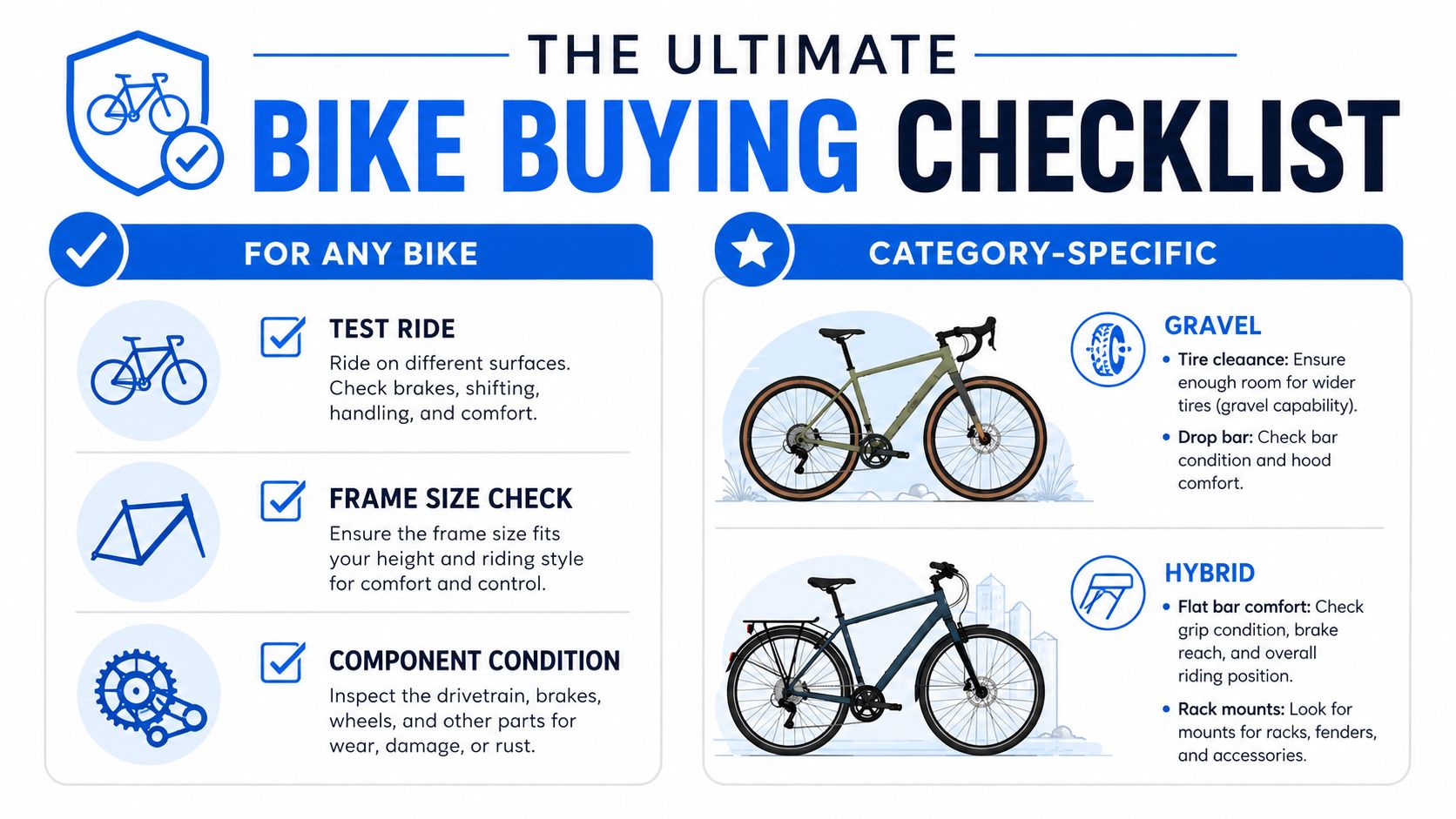
Use this checklist for either a gravel bike or a hybrid:
Model and year: identify the exact bike, not just the seller's description.
Size and geometry: confirm stack, reach, effective top tube where possible, and the stated size.
Cockpit setup: check bar type, bar width, rise or sweep, stem length, hood position where relevant, and any non-stock changes.
Tire clearance: verify what the frame and fork actually clear, not just the tires currently installed.
Gearing: compare chainrings, cassette range, shifter condition, and whether the setup suits your terrain.
Brakes: inspect brake type, wear state, lever feel, and service history if available.
Mounts and utility details: racks, mudguards, bottle mounts, and luggage compatibility can matter more than category.
Condition: look for drivetrain wear, crash damage, corrosion, wheel issues, and neglected service items.
Modifications: confirm whether stems, bars, wheels, tires, cranksets, or brakes have been changed from stock.
Listing quality: clear photos, full spec details, and responsive answers reduce uncertainty.
Price: judge the asking number only after the other checks are done.
A short listing with limited photos and a generic size claim carries more uncertainty and usually requires additional verification. The more uncertainty you have to fill in yourself, the less attractive the price becomes.
How SYCLR Fits Into the Decision
SYCLR focuses on road and gravel listings. That matters in this comparison.
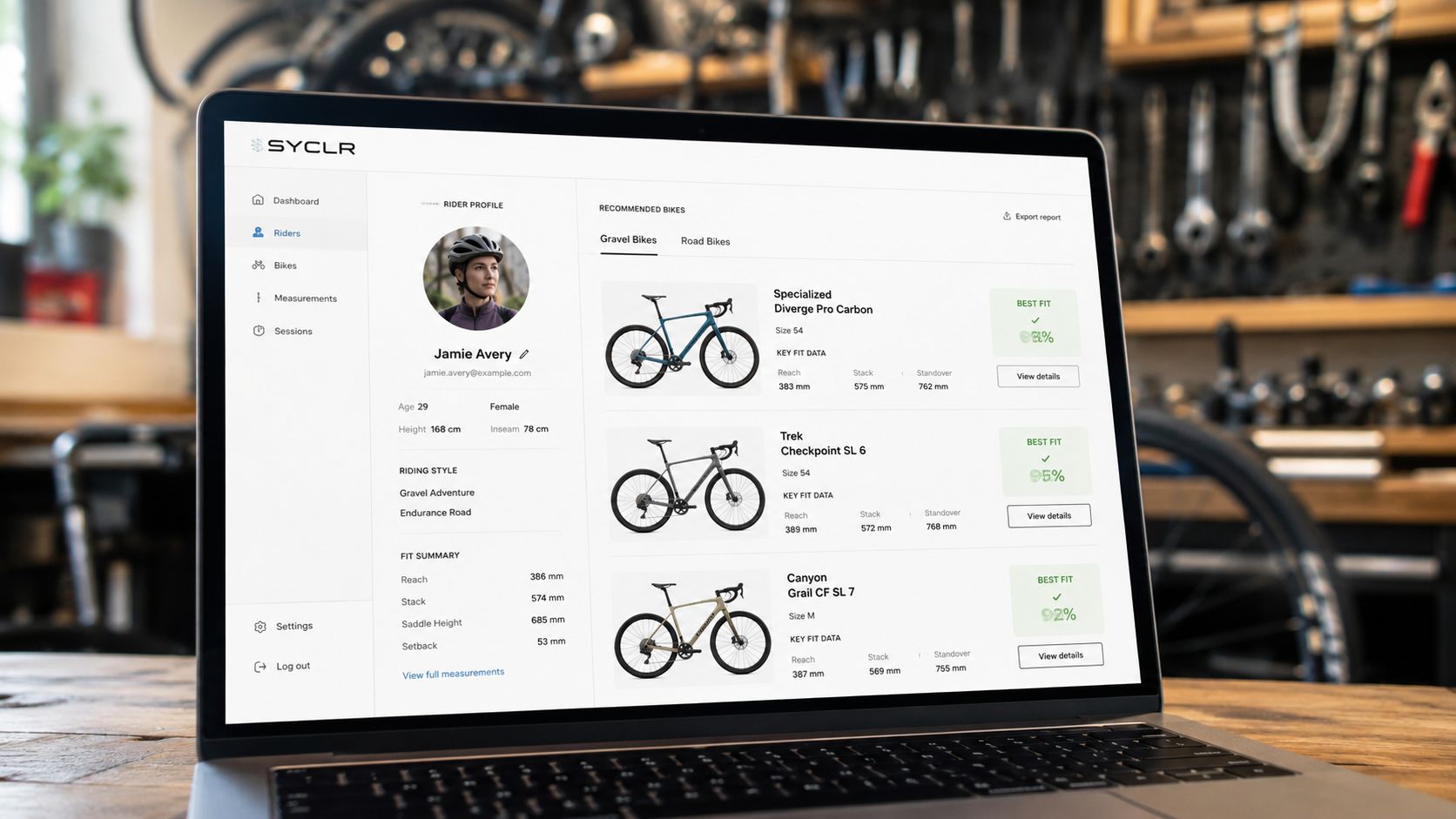
If, after comparing fit, terrain, cockpit, tire options, and use case, you decide that a gravel bike is the better direction, SYCLR helps compare available road and gravel listings using fit signals, geometry signals, model-year context, price context, listing quality, condition signals where available, and confidence signals.
If a hybrid appears to suit you better, use this guide to evaluate hybrid options elsewhere with the same logic: compare geometry, cockpit, tires, gearing, mounts, condition, and listing quality before you buy.
SYCLR does not guarantee fit, condition, authenticity, or fair value. It also does not replace a professional fit or an in-person mechanical inspection.
When SYCLR is the right next step
Start with height, bike type, and budget if you are early in the search. If you already know your fit coordinates or current-bike geometry, use the advanced fit entry for a more precise comparison.
If your comparison is leaning toward gravel, the SYCLR app is the right next step for narrowing road and gravel listings more intelligently. If your comparison is leaning toward hybrid, take the checklist and fit logic from this guide and apply it while comparing hybrid listings elsewhere.
Gravel Bike vs Hybrid Bike FAQs
Should I choose a gravel bike or a hybrid bike?
Choose based on the exact bike and your actual riding mix. A gravel bike may suit regular mixed-surface riding and longer road-to-gravel routes. A hybrid may suit commuting, paved paths, and everyday utility use. Neither category is universally better.
Can a gravel bike work well for commuting?
Yes, it can, especially if your commute includes rough pavement, longer distances, or mixed surfaces. The better question is whether the geometry, mounts, gearing, and tire setup suit your commute better than the hybrid you are also considering.
Can a hybrid bike handle light gravel?
Often, yes. Many hybrids work well on light gravel paths and smoother unpaved routes. The limit depends on the exact bike's tires, clearance, geometry, and rider confidence rather than the label alone.
Which is more comfortable, a gravel bike or a hybrid?
Comfort depends on fit, cockpit, tires, pressure, and riding position. Do not assume a hybrid is automatically more comfortable or that a gravel bike is automatically harsher. Compare stack, reach, bar setup, saddle position, and tire options on the exact bikes.
Which is faster, a gravel bike or a hybrid?
Either can be faster depending on terrain, tires, rider position, gearing, and the specific model. Performance depends on the exact tires, rider position, gearing, route, and bike setup rather than the category label. Category alone does not decide it.
Which is better for long rides?
Either can work for long rides if the fit and setup are right. A gravel bike may offer cockpit features or tire options that some riders prefer for mixed-surface distance. A hybrid may still be the better choice if its geometry and controls suit you better.
Is a hybrid or gravel bike better as a first bike?
That depends on where you will ride, how certain you are about fit, and how much versatility you need. A hybrid may be sufficient for many first-time buyers. A gravel bike may make more sense if mixed-surface riding is already part of the plan. Start with use case, not identity.
What should I check on a used gravel or hybrid bike?
Check the exact model and year, size and geometry, cockpit changes, tire clearance, gearing, brakes, mounts, wear, damage, modifications, listing quality, and asking price. A category label should never replace those checks.
How can SYCLR help if I am leaning toward gravel?
If gravel looks like the better fit, SYCLR can help you compare road and gravel listings through fit, geometry, model-year, price, listing-quality, condition, and confidence signals. Start with the app, or use the advanced fit entry if you already know more about your fit.
If gravel fits better, compare road and gravel listings in the SYCLR app using fit, geometry, model-year, price, listing-quality, condition, and confidence signals. If a hybrid fits better, use this guide to compare hybrid options elsewhere with the same level of care.