Gravel Bike with Flat Bars: Fit, Geometry, and Buying Guide
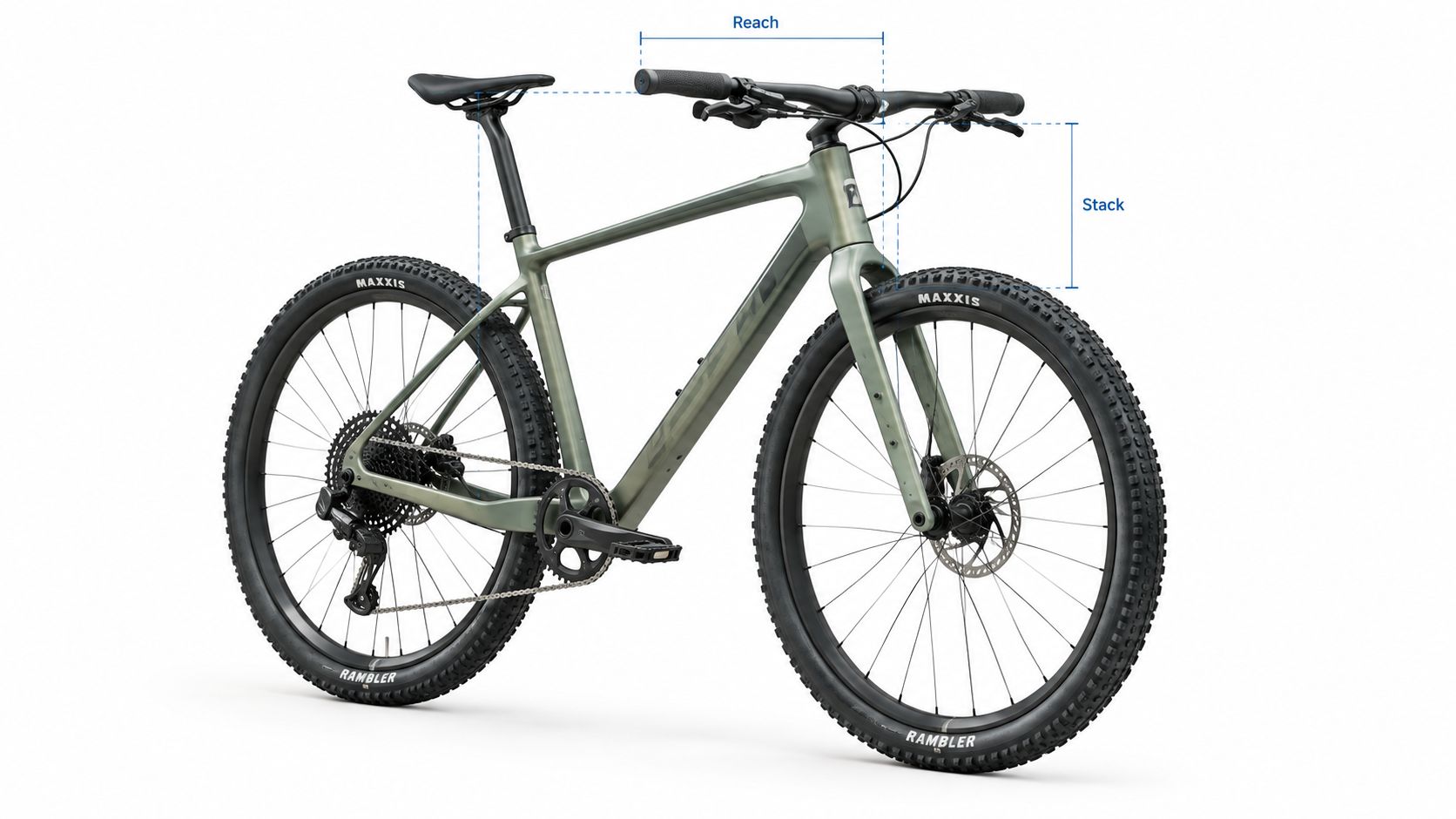
A gravel bike with flat bars is best understood as a gravel-oriented bike that uses a flat handlebar cockpit, or a drop-bar gravel bike that has been converted with compatible parts and a workable fit outcome. The handlebar choice affects your primary hand position, bar width, sweep, rise, brake controls, shifters, accessories, and overall cockpit compatibility. It is not just a matter of swapping one bar for another.
A lot of advice about flat-bar gravel bikes turns the topic into a simple comfort preference or a fixed fit formula. That is too simplistic. A flat bar changes how you hold the bike, how the controls are arranged, and how the cockpit comes together. A conversion can work, but only when the frame, stem, controls, routing, drivetrain, and brakes all support the result. In many cases, buying a purpose-built flat-bar model is the cleaner and more economical choice.
For SYCLR readers, the buying question is straightforward: does the bike match your intended use, your available fit signals, and your budget? Price and parts matter, but so do the signals you can compare across the shortlist.
Table of Contents
- What a Gravel Bike with Flat Bars Actually Is
- How Flat Bars Change the Gravel Bike Cockpit
- Geometry Implications of Choosing Flat Bars
- Flat-Bar Gravel Against Drop-Bar, Hybrid, and MTB Options
- Reading Geometry and Hardware in Gravel Listings
- Buyer Consequences and Common Conversion Mistakes
- Shortlisting Better-Fit Flat-Bar Gravel Bikes with SYCLR
What a Gravel Bike with Flat Bars Actually Is
A gravel bike with flat bars is a gravel-oriented bike that uses a flat handlebar instead of drop bars. It may be sold that way from the factory, or it may be a conversion built from a drop-bar platform with compatible parts. What matters is not the label alone, but whether the frame, controls, and cockpit work together for the intended use.
These bikes often combine disc brakes, mixed-surface tire capacity, and gearing suited to pavement, gravel, and light off-road riding. They are not automatically hybrids, and they are not automatically mountain bikes without suspension. The actual category line depends on the frame design, mounts, tire clearance, drivetrain, and cockpit.
The category has deeper roots than the marketing
Flat-bar mixed-surface bikes existed long before the modern gravel label. Earlier all-road, rigid cross-terrain, and flat-bar road designs already combined wider tires, practical control layouts, and pavement-to-dirt versatility. A history of bicycle handlebar designs traces those broader design patterns and the expansion of flat-bar road bikes.
Why the bar isn't a minor preference
A drop-bar frame is built around a different cockpit concept than a flat-bar setup. The difference is not just shape. Flat bars change the rider's primary hand position, bar width, sweep, rise, brake controls, shifters, accessories, and cockpit compatibility. That makes the bar choice a platform decision, not a cosmetic adjustment.
A hybrid often emphasizes practical utility, everyday accessories, and easier urban use. A drop-bar gravel bike centers a different control layout and more than one hand position. A flat-bar gravel bike keeps the gravel platform concept but uses a different cockpit and control system.
That trade can make sense for riders who prefer a flat-bar control layout or want gravel capability without drop bars. It is not automatically the right answer for every route or rider, and it should not be reduced to a universal fit rule.
How Flat Bars Change the Gravel Bike Cockpit
The cockpit is where the conversion question becomes real. A flat bar does not simply replace curved tubing. It changes your primary hand position, the width and shape of the bar, the controls you can use, the accessory layout, and the compatibility demands of the complete front end.
Start with hand position and width
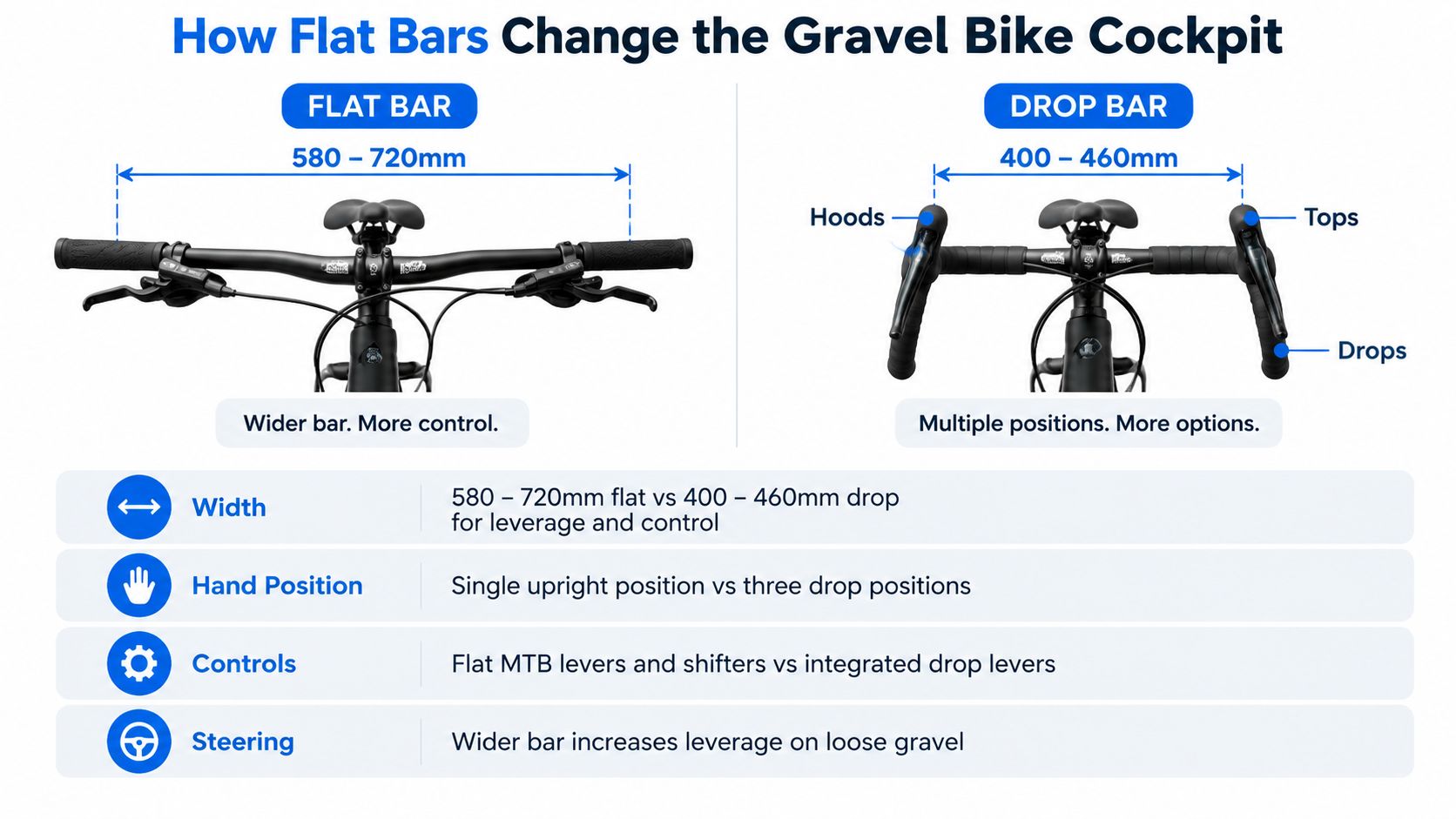
A flat bar and a drop bar place the hands differently, but there is no universal millimeter offset that applies across bikes and riders. Final grip position depends on the specific bar shape, including width, sweep, and rise, along with stem choice, spacers, and the rest of the setup.
Drop bars offer several distinct positions, including tops, hoods, and drops. Flat bars usually give one main grip area unless the rider adds accessories such as inner bar ends or alternate grips. That changes how the cockpit feels over time, especially on longer mixed-surface rides.
Bar width also deserves context. A wider bar may change steering input and shoulder position, while sweep and rise change where the grips actually land in space. The practical takeaway is simple: compare the complete cockpit, not just the bar category.
Then check the controls
Drop-bar hydraulic levers are not automatically interchangeable with flat-bar controls. A flat-bar build may use MTB-style brake levers and trigger shifters, separate shifters with compatible calipers, or a compatible flat-bar hydraulic brake and shifting setup. Each route creates questions about brake-system compatibility, hose or cable routing, clamp standards, shifter-to-derailleur compatibility, and manufacturer-approved component combinations.
Accessory placement changes too. GPS mounts, light brackets, grips, bar-end plugs, and bag attachments can differ substantially between a drop cockpit and a flat cockpit. A frame designed around internal routing may also need a different routing approach if the new controls do not follow the original hose or cable path.
Expect more than one replacement part
A complete conversion may involve more than the handlebar itself. Exact requirements depend on the specific bike, the current parts, and the target setup.
A complete conversion may require:
Handlebar: Width, sweep, rise, and clamp standard all matter.
Stem: Length and rise may need to change to produce a usable cockpit.
Brake levers: Mechanical systems require the correct cable-pull compatibility, while hydraulic systems require compatible levers, calipers, hoses, fittings, and fluid specifications.
Shifters: Road and MTB derailleurs do not always share the same actuation requirements.
Cables or hoses: Routing and length may no longer work.
Grips: These replace bar tape and affect final hand position.
Routing changes: Internal and external paths may need to be redone.
Compatible drivetrain or brake parts: A derailleur, caliper, or adapter may need replacement.
Practical rule: If the bike was originally configured as a drop-bar build, budget for a full compatibility and fit review before treating the conversion as a simple bar swap.
The most economical choice is often a flat-bar-native bike. You start with a complete factory configuration whose frame, cockpit, controls, and component compatibility were specified together.
Geometry Implications of Choosing Flat Bars
Frame geometry does not change when you change handlebars, but the rider's final grip position does. That is why two bikes with similar published geometry can still feel very different once the stem, bar rise, sweep, spacers, grips, and saddle setup are taken into account.
A flat-bar conversion therefore should not be judged by a fixed reach offset or a universal cockpit formula. The relevant question is whether the finished bike places the rider where they need to be, using the actual parts installed.
Stack and Reach Are Useful Frame-Level References
Stack is the vertical distance from the bottom bracket to the top of the head tube. Reach is the horizontal distance between those same reference points. Together, they describe the frame more reliably than a size label or a generic height chart. Bike stack and reach explained provides the measurement definitions, while Competitive Cyclist's gravel fit guidance explains why stack and reach are useful starting points in gravel fit.
They are still only frame-level reference points. Final grip position also depends on:
Stem
Bar rise
Bar sweep
Grip location
Spacers
Saddle setup
Body proportions do not automatically determine flat versus drop bar, frame size, frame reach, stem length, stack, or cockpit. Those decisions come from the complete bike setup and the rider's intended use, not from a single body-type rule.
The same frame can produce different positions
| Measurement | Drop-bar setup | Flat-bar setup | What to compare |
|---|---|---|---|
| Hand position | Multiple positions across tops, hoods, and drops | Usually one main grip area unless accessories are added | Compare the actual grip location created by the cockpit |
| Controls | Integrated brake-shift levers are common | Separate brake levers and shifters are common | Confirm compatibility and layout |
| Bar shape | Drop shape changes hand height and reach options | Width, sweep, and rise change where the grips land | Review the full cockpit, not the frame chart alone |
| Final position | Depends on frame and cockpit | Depends on frame and cockpit | Fit depends on the complete setup |
Use the frame's published figures as a starting point, then interpret them with the actual cockpit parts. For a deeper explanation of how these coordinates affect rider position, see SYCLR's guide to bike stack and reach.
Choose the platform around the complete setup
Neither flat bars nor drop bars guarantee a better fit by themselves. The frame and cockpit have to work together. That is why stack and reach matter, but they should always be read alongside stem choice, bar shape, spacer arrangement, and saddle position.
Avoid turning body proportions into automatic prescriptions. A rider should compare the actual cockpit and the intended use, not rely on a rule that says one bar shape or one frame size always follows from a certain body type.
Flat-Bar Gravel Against Drop-Bar, Hybrid, and MTB Options
A flat-bar gravel bike is not just a drop-bar gravel bike with a different handlebar. The control system, cockpit layout, parts compatibility, and intended use can all differ. Judge the complete platform, not the bar style alone.
| Category | Bar and controls | Tire capability | Suspension | Mounts | Gearing | Intended use |
|---|---|---|---|---|---|---|
| Flat-bar gravel | Flat bar, separate brake levers and shifters or other compatible flat-bar controls | Depends on the exact frame, fork, wheel size, and setup | Usually rigid, though some models vary | Often includes gravel, utility, or bikepacking mounts | 1x or 2x, depending on the exact build | Mixed pavement, gravel, and light off-road riding |
| Drop-bar gravel | Drop bar, integrated brake-shift levers are common | Depends on the exact frame, fork, wheel size, and setup | Usually rigid, though some models vary | Often includes gravel, utility, or bikepacking mounts | 1x or 2x, depending on the exact build | Mixed-surface riding with drop-bar controls |
| Hybrid | Flat bar, city or fitness oriented controls are common | Depends on the exact model | Usually rigid, sometimes front suspension | Often practical and commuter focused | Varies by model | Urban riding, paths, commuting, and general use |
| Flat-bar MTB | Flat bar with MTB controls | Depends on the exact frame, fork, wheel size, and setup | Commonly front suspension or more | Trail and accessory mounts vary widely | Commonly MTB-oriented, but exact gearing still varies | Trail riding and rougher terrain |
Against drop-bar gravel
Flat bars and drop bars change the riding experience in objective ways. Flat bars change the primary hand position, bar width, sweep, rise, brake controls, shifters, accessories, and cockpit compatibility. Drop bars offer a different control layout and multiple hand positions.
Choose between them based on the complete bike, the routes you actually ride, and whether the cockpit matches your preferences and parts needs. If you are converting a drop-bar frame, check brake and shifter compatibility before buying parts. A bar swap can require new controls, cables, housing, hoses, routing changes, and related drivetrain or brake parts.
Against hybrids
A hybrid usually makes more sense when everyday utility, practical accessories, and lower-complexity use matter more than a gravel-specific frame or drivetrain concept. A flat-bar gravel bike usually makes more sense when the buyer wants a gravel-oriented platform with the possibility of wider tires, mixed-surface gearing, and terrain-oriented mounts.
The broader category comparison in SYCLR's gravel bike versus hybrid bike guide can help, but the actual listing still decides whether the geometry and hardware fit your intended use.
Against flat-bar mountain bikes
A flat-bar mountain bike is usually the better starting point when the riding demands suspension, more off-road-specific tire choices, or more trail-specific geometry. A flat-bar gravel bike usually makes more sense when the goal is a gravel-oriented bike with a rigid or lighter mixed-surface setup.
Wheel choice adds another layer. 700c corresponds to 622 BSD, while 650b corresponds to 584 BSD. Changing wheel and tire combinations can affect mounted outer diameter, axle height, bottom-bracket height, clearance, effective gearing, and trail context. Exact frame compatibility governs.
Drivetrain choice also needs specifics. A 1x setup and a 2x setup should be compared by the actual chainrings and cassette, not by a generic rule. Range and gear steps depend on the exact system.
For loaded trips, rack, fender, and bottle mounts may matter more than the handlebar itself. Check those mounts before committing to a conversion.
Reading Geometry and Hardware in Gravel Listings
Photos tell you whether a bike has flat bars. Geometry and hardware tell you whether it may work for your intended use. Start with stack and reach, then verify the details that determine wheel, brake, drivetrain, and cargo compatibility.
SYCLR's bike geometry chart is useful for interpreting listing fields, but you still need to compare the actual model-year specification and the seller's information.
Prioritize the measurements that affect position
Stack and reach are the first coordinates to compare. They provide frame-level reference points, but they do not define the final cockpit on their own. Flat-bar setups especially depend on stem choice, bar rise, bar sweep, grip location, spacers, and saddle setup.
Do not treat chainstay, wheelbase, trail, head angle, or front-center as standalone handling verdicts. Rear-center or chainstay contributes to the overall geometry and wheelbase, but it should be interpreted with the complete geometry and setup.
Do not treat any number as a standalone verdict. Compare the complete geometry chart and the actual cockpit.
Verify hardware before making an offer
The frame must accept the wheels and controls you plan to use. Check:
Axle standard: Confirm the exact front and rear axle standards because they determine wheel and hub compatibility.
Brake mount: Flat-mount and post-mount systems require different caliper and adapter arrangements.
Drivetrain format: Road-style and MTB-style derailleurs can create different shifter compatibility issues.
Mounts: Rack, fender, and bottle bosses determine utility.
Cable routing: Internal routing can complicate a conversion if the new controls use a different hose or cable path.
Tire clearance: Confirm the manufacturer's stated clearance for the specific frame, fork, wheel size, and setup.
Six checks for a used listing
Identity: Confirm the model name, frame size, and model year.
Geometry: Find stack, reach, and other relevant frame details.
Controls: Identify whether the bike is flat-bar-native or converted.
Compatibility: Match brakes, shifters, derailleurs, axles, and wheels.
Listing quality: Look for clear, consistent listing details.
Confidence signals: Prefer claims supported by model information, measurements, and coherent specs.
Buyer Consequences and Common Conversion Mistakes
The cheapest-looking route is often to buy a drop-bar gravel bike and install a flat bar. That approach only works cleanly when the frame's geometry and components support the new cockpit. Otherwise, the rider pays through replacement parts, compatibility problems, or a result that never feels fully sorted.
Mistake one is assuming the original fit will carry over
A drop-bar frame and a flat-bar cockpit do not place the rider in the same way. That does not mean there is a universal correction rule, and it does not mean every rider should size up or size down. It means the completed setup has to be evaluated on its own terms.
Stack and reach remain useful frame references, but the finished result depends on the actual stem, bar rise, bar sweep, grip location, spacers, and saddle setup. If those pieces are ignored, the conversion may look simple on paper but feel wrong in use.
Mistake two is mixing control standards
Drop-bar and flat-bar brake controls are not automatically interchangeable. Hydraulic systems must use compatible levers, calipers, hoses, fittings, and fluid specifications, while cable-operated systems also depend on the correct cable-pull requirements.
The same warning applies to shifters. A bar clamp may fit while the derailleur actuation does not. Check the complete brake and drivetrain system before buying conversion parts.
Mistake three is ignoring the complete build cost
The expense is not limited to the bar. A realistic conversion assessment includes:
Cockpit parts: Bar, stem, grips, and possibly a new mount system.
Control parts: Brake levers and shifters.
Routing materials: Cables, housing, hydraulic hoses, adapters, and bleeding work.
Drivetrain or brake changes: A derailleur, caliper, or related part may need replacement.
Setup work: Cutting, routing, adjustment, and alignment.
A flat-bar-native bike often makes more sense when the current drop-bar bike would need a broader system change to make the conversion work.
Buying rule: If the bike was originally configured as a drop-bar build, budget for a full compatibility and fit review before treating the conversion as a simple bar swap.
Shortlisting Better-Fit Flat-Bar Gravel Bikes with SYCLR
A useful shortlist starts with broad filters, then gets narrower as you compare fit signals, geometry signals, model-year context, price context, listing quality, condition signals where available, and confidence signals.
Use filters in the right order
Begin with your height, bike type, budget, and intended use. Treat the first result set as a starting pool, not a fit guarantee.
Then narrow by the information that changes the shortlist quality:
Height range: Helps narrow plausible size options.
Stack and reach: Useful frame-level references.
Cockpit details: Bar type, bar shape, and stem setup affect how the bike may fit in practice.
Tire clearance: Use the exact manufacturer-supported clearance for the frame, fork, wheel size, and setup.
Brake and axle standards: Expose compatibility issues before purchase.
Cargo mounts: Flag models suited to racks, fenders, and practical touring.
Listing quality and confidence signals: Help separate stronger listings from weaker ones.
Compare confidence, not just specifications
Listing confidence matters when sellers provide incomplete or inconsistent information. Give more weight to geometry confirmed by a manufacturer chart, photos that match the written specification, and the signals you can compare across the shortlist.
Keep the final shortlist small enough to compare properly. Put two or three listings side by side, then ask which one offers the best combination of fit signals, geometry signals, model-year context, price context, listing quality, condition signals where available, and confidence signals.
SYCLR helps riders compare road and gravel listings using rider details, bike type, budget, fit signals, geometry signals, model-year context, price context, listing quality, condition signals where available, and confidence signals. Riders who already know stack, reach, current-bike geometry, or fit-report details can add those details through the Advanced Fit entry.
SYCLR does not perform a professional bike fit, physically inspect bikes, authenticate listings, verify ownership or seller claims, or guarantee fit or condition.
For a broader fit check before comparing listings, use the SYCLR bike fit guide. It keeps the decision focused on the rider and the frame rather than on height alone.
Use SYCLR to compare road and gravel listings with your height, bike type, and budget, then compare those signals across the candidates before narrowing to a flat-bar gravel bike. Start with the standard search for a quick comparison, or add detailed fit information through Advanced Fit when you already know your stack, reach, or current-bike measurements.