Best Gravel Bike Under 1000 That Actually Fits You
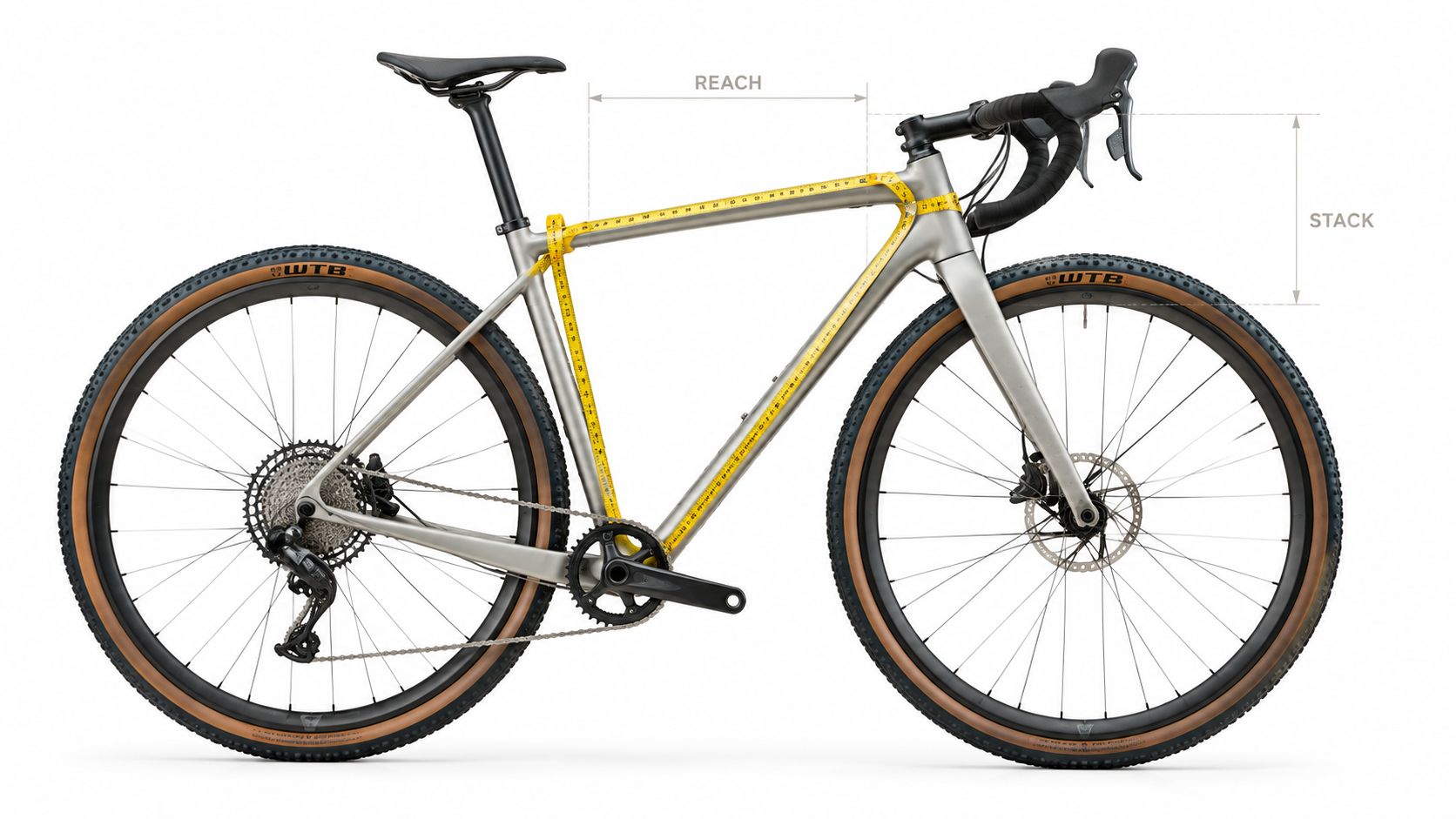
Most buyers searching for the best gravel bike under 1000 still start in the wrong place. They compare drivetrain labels, weight claims, or paint, then end up with a bike that looks right on paper and feels wrong on the road or dirt. In this price range, the better buy is usually the bike that matches your intended use, available sizes, tire needs, gearing, and setup options with the fewest compromises.
A budget matters, but fit comes first. If the frame, geometry, and setup range do not work for you, even a good deal can become an expensive mistake.
Table of Contents
- Best Gravel Bikes Under $1,000 in 2026
- What Best Means Under $1,000 When Fit Comes First
- What to Realistically Expect From a Gravel Bike Under $1,000
- How Fit and Geometry Decide If a Budget Gravel Bike Works
- New Versus Used Paths to Staying Under $1,000
- How to Vet Listings and Shortlist Smarter
- How SYCLR Helps You Shortlist Better Fit Gravel Bikes Under $1,000
- Best Gravel Bikes Under $1,000 FAQs
Best Gravel Bikes Under $1,000 in 2026
Below is a current U.S. shortlist of complete gravel or all-road bikes at $1,000 or less. This shortlist includes only bikes with a live current U.S. product or retailer page, a current complete-bike price at or below $1,000, active availability or sales listing evidence, and current model or spec evidence at the time of writing. If fewer bikes meet that standard, the shortlist stays shorter rather than padding in weaker picks.
Quick comparison table
| Bike | Current U.S. price | Availability signal | Frame / fork | Drivetrain | Brakes | Tire support | Sizes / geometry availability |
|---|---|---|---|---|---|---|---|
| State Bicycle Co. 4130 All-Road | $999.99 | Current U.S. manufacturer listing with active complete-bike product pages | 4130 chromoly steel frame / steel fork | 1×12 complete build | Cable-actuated hydraulic disc | 650b or 700c platform support on current complete listings | Multiple sizes and geometry on current State product pages |
| Marin Nicasio 1 | $999 | Current U.S. manufacturer product page | Series 1 double-butted CrMo frame / CrMo fork | Shimano Claris 2×8 | Mechanical disc | Marin states clearance for up to 45 mm tires | Current Marin product page with size and geometry info |
1. State Bicycle Co. 4130 All-Road
The State 4130 All-Road remains on this shortlist because the current U.S. product pages still show complete builds at $999.99, which keeps it inside the cap exactly as required (State 4130 All-Road collection, State 4130 All-Road Alpine Bloom 12 Speed UDH, State 4130 All-Road Raw Phosphate 12 Speed UDH). State’s live U.S. pages also provide current model and spec evidence, including the 4130 chromoly steel frame and fork, current size options, and geometry details.
Availability appears to be variant-dependent rather than universal, which is normal on current model pages. Some complete builds remain actively listed at $999.99, while other variants may show sold-out status, so the bike still qualifies as a current U.S. shortlist pick based on live manufacturer listings rather than outdated references.
Best for: buyers who want a steel all-road platform at the top of the budget and plan to compare the exact State geometry by size before buying.
2. Marin Nicasio 1
The Marin Nicasio 1 stays on the shortlist because Marin’s current U.S. product page still lists the complete bike at $999.00 (Marin Nicasio 1 product page). That keeps it within this article’s cap without relying on sale math, old listings, or non-U.S. pricing.
Marin also supplies current model and spec evidence on the same U.S. page. The bike uses a Series 1 double-butted CrMo frame and fork, Shimano Claris 2×8 drivetrain, mechanical disc brakes, and Marin states clearance for up to 45 mm tires. For buyers who want a mainstream brand option with a clearly documented current U.S. complete-bike listing, the Nicasio 1 remains one of the cleanest fits for this budget.
Best for: buyers who want a mainstream brand option with current U.S. manufacturer support and a steel complete bike at exactly $999.
SYCLR may earn a commission from qualifying purchases made through some retailer links, at no additional cost to you.
See Current Competitive Cyclist Sales
What Best Means Under $1,000 When Fit Comes First
A low price does not make a bike good value if you cannot ride it comfortably or set it up within the bike’s adjustment limits. The best budget gravel bike is not automatically the lightest option, the one with the most recognizable logo, or the one with the most impressive-looking groupset. It is the option that gives you a workable frame, useful tire clearance, appropriate gearing, and enough setup range for the way you ride.
That changes the buying order. Start with your intended use and the exact bikes that are actually available in your budget. Then compare geometry, tire clearance, current specification, cockpit, compatibility, and price.
The practical rule: A bike that does not work for your fit or riding use is expensive, even when the sticker price is low.
Height charts can help narrow a shortlist, but they are not enough to decide between bikes. Two bikes with the same size label can still differ in stack, reach, standover, seat tube angle, stock cockpit, and total adjustment range.
For a broader decision framework, use this guide to choosing a gravel bike. It helps separate category choice from model choice before you compare individual bikes.
What to Realistically Expect From a Gravel Bike Under $1,000
In the current U.S. market, complete gravel and all-road bikes under $1,000 usually involve trade-offs, but they are not automatically bad bikes. The normal compromises are simpler drivetrains, mechanical disc brakes, heavier wheels, and fewer premium finishing parts. What matters is whether those trade-offs are acceptable for your riding and whether the bike still gives you the tire support, gearing, and sizing you need.
Where the money goes
Most complete bikes in this range use either aluminum or steel frames. Forks may be steel, aluminum, or carbon depending on the model. Cable-operated brake systems remain common in this price range, including mechanical discs and some cable-actuated hydraulic designs, and setup quality matters.
The better question is not whether a frame material sounds premium. It is whether the complete package gives you:
-
the tire clearance your routes require
-
gearing that matches your expected climbs and surfaces
-
enough size and cockpit options to create a workable setup
-
a parts package you can maintain without blowing the budget
| Component area | Common under $1,000 | What varies most |
|---|---|---|
| Frame | Aluminum or steel complete bikes | Weight, mounts, and ride intent |
| Fork | Steel, aluminum, or carbon | Front-end feel, mounts, and tire support |
| Drivetrain | 1×10, 1×12, or 2×8 style builds | Range, jump size, and replacement cost |
| Brakes | Mechanical disc | Rotor size, caliper quality, and setup |
| Wheels and tires | Gravel-capable stock wheels and tires | Tubeless support, rim quality, and true tire room |
| Fit and geometry | Multiple sizes on better-supported models | Geometry transparency and setup range |
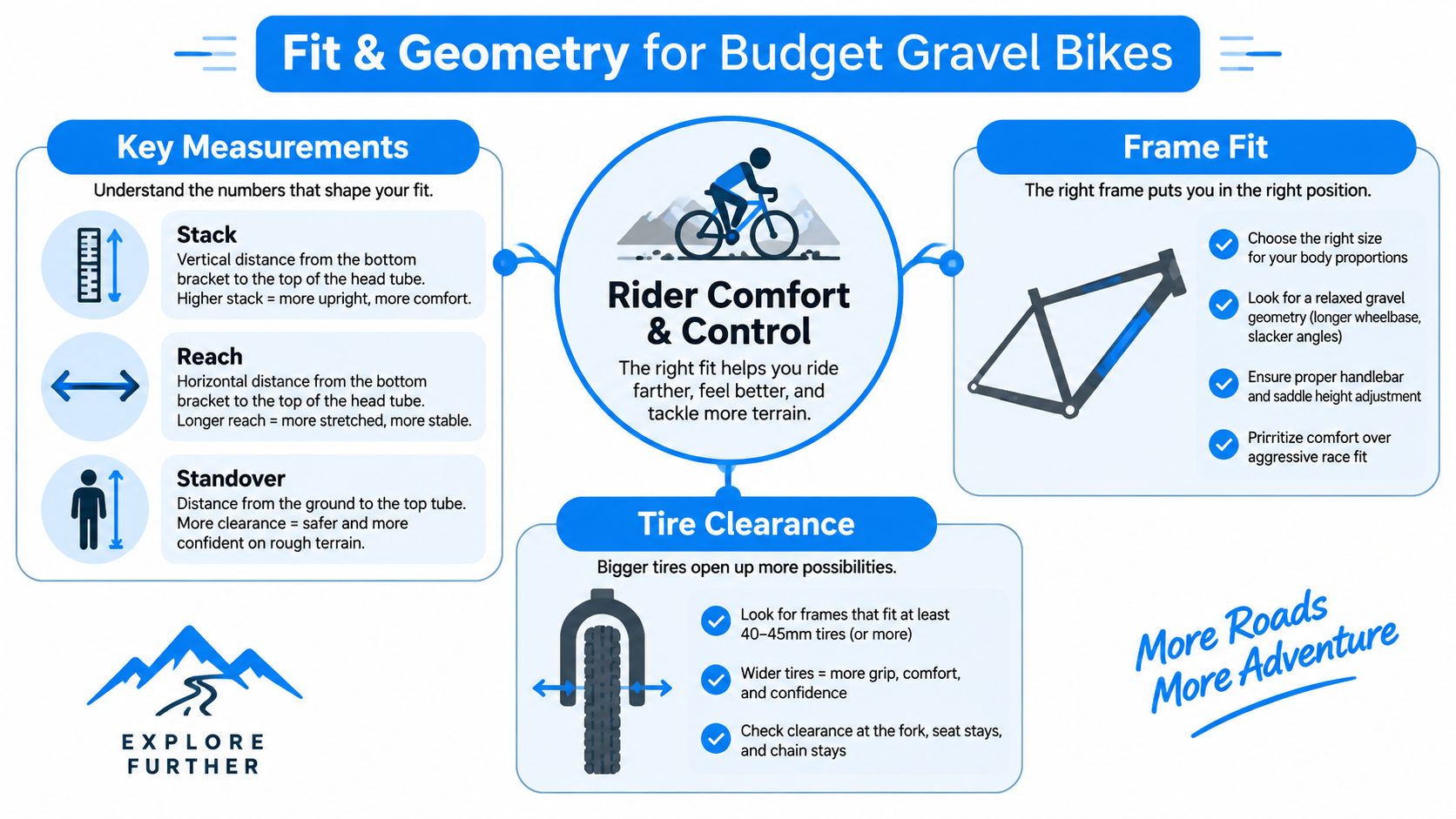
How Fit and Geometry Decide If a Budget Gravel Bike Works
A size label is only a starting point. The better comparison is always the exact model, model year, and size you are considering.
Read the measurements that affect your ride
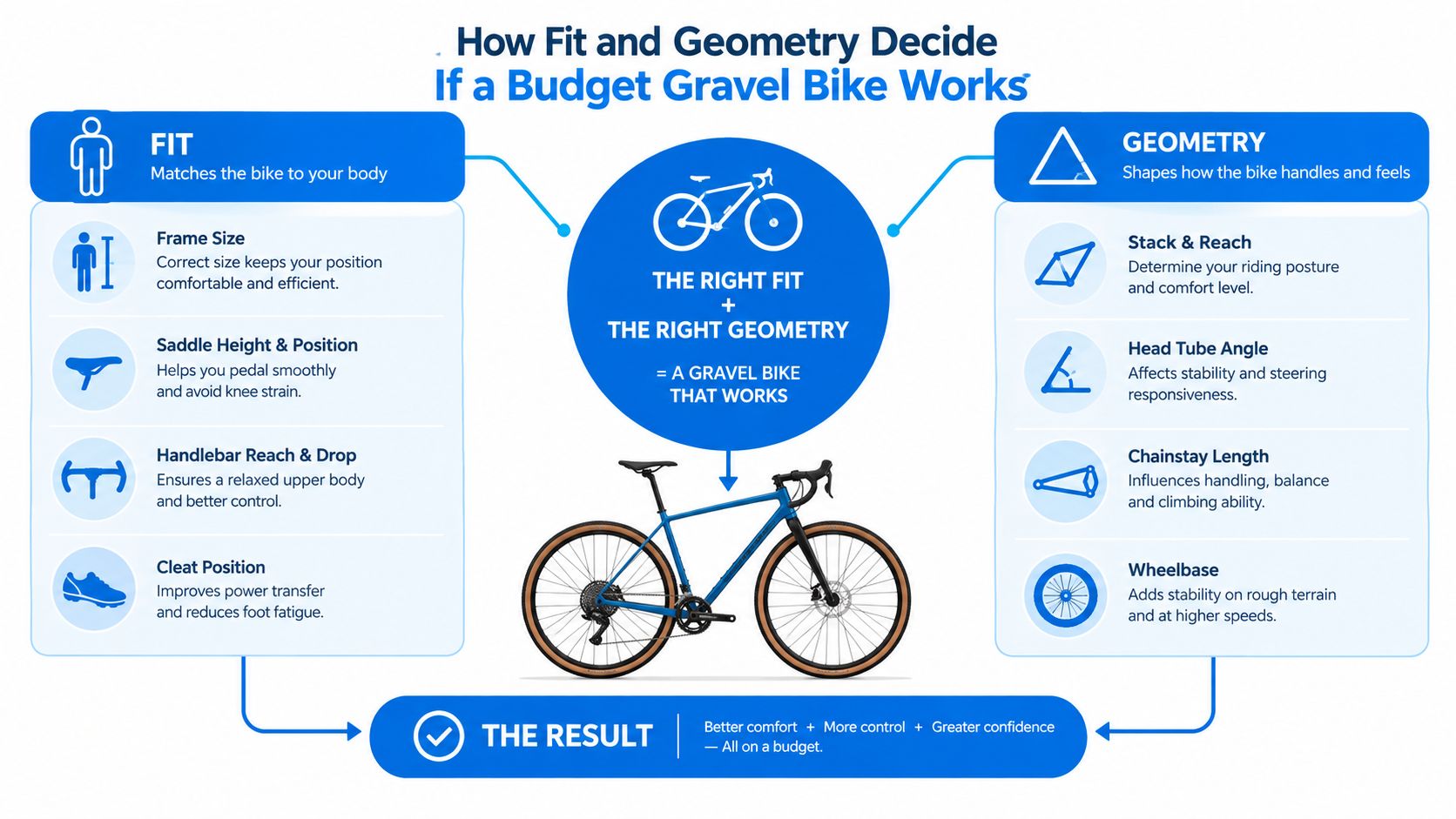
Stack and reach are useful frame-level comparison signals. They help you compare one frame to another, but they do not tell you final hand position by themselves. Final hand position also depends on the bike’s cockpit parts and how the saddle and controls are set up.
Standover matters for basic clearance and comfort when stopping or moving around the bike. Seat tube angle can influence how the bike’s saddle position range works in practice. Those numbers are most useful when you compare them across the exact bikes and sizes on your shortlist.
Use SYCLR’s stack and reach explanation and its standover-height guide when a listing includes geometry data and you want to interpret it more clearly.
How to compare adjacent sizes correctly
If you are deciding between adjacent sizes, compare these points for the exact model, year, and sizes in question:
-
stack
-
reach
-
standover
-
seat tube angle
-
stock cockpit parts
-
available adjustment range
-
manufacturer limits for fit and component changes
That matters because two adjacent sizes may differ by more than the frame triangle alone. A different stem, handlebar, spacer arrangement, seatpost, or saddle-position setup can change what is realistically possible within the manufacturer’s stated limits.
Rather than trying to generalize from labels alone, compare the actual geometry chart and current stock build. SYCLR’s bike geometry comparison tool can help place those numbers side by side.
Match the bike to your terrain and equipment needs
Terrain should guide your equipment choices more than your assumptions about labels. In practical terms, that means focusing on:
-
tire needs
-
tire clearance
-
gearing range
-
mounting points and equipment support
A smoother mixed-surface route may work well on a narrower, faster all-road setup. Rougher gravel, chunkier surfaces, or loose climbs may push you toward more tire volume, lower gearing, and stronger wheel and brake priorities. The key is to compare the bike’s actual chainring and cassette with the climbs and surfaces you expect, not to rely on a universal minimum ratio.
A bike with the right tires, usable gearing, and a setup range that works for you is usually the better buy than a bike with nicer-looking parts and the wrong use case.
For a visual overview of how the measurements interact, use the following fit diagram.
This video can supplement the geometry comparison, but do not treat a general explanation as a substitute for the exact chart of the bike you are considering.
New Versus Used Paths to Staying Under $1,000
A new bike gives you a cleaner starting point. You can verify the exact model, current specification, geometry, and available sizes more easily.
A used bike can expand your options under $1,000, especially if your size is hard to find in current stock. But the trade-off is more uncertainty around condition, compatibility, and whether the current parts still match the original model-year specification.
Keep the used-bike path simple. Use it when you need more choice, not because you assume used automatically means better value.
If you want to go deeper, follow this guide to buying a used gravel bike, review a used-bike checklist, study used-bike red flags, and compare used-bicycle value before paying.
How to Vet Listings and Shortlist Smarter
Whether you are buying new or used, keep the buying check focused on the details that actually affect the decision.
Buying check
Confirm these points before you commit:
-
exact model
-
model year
-
size
-
manufacturer geometry
-
current spec
-
tire clearance
-
cockpit
-
compatibility
-
listing condition evidence
That is enough to eliminate a large share of weak options quickly. If those basics remain unclear, treat the listing as higher uncertainty and compare it against better-documented alternatives.
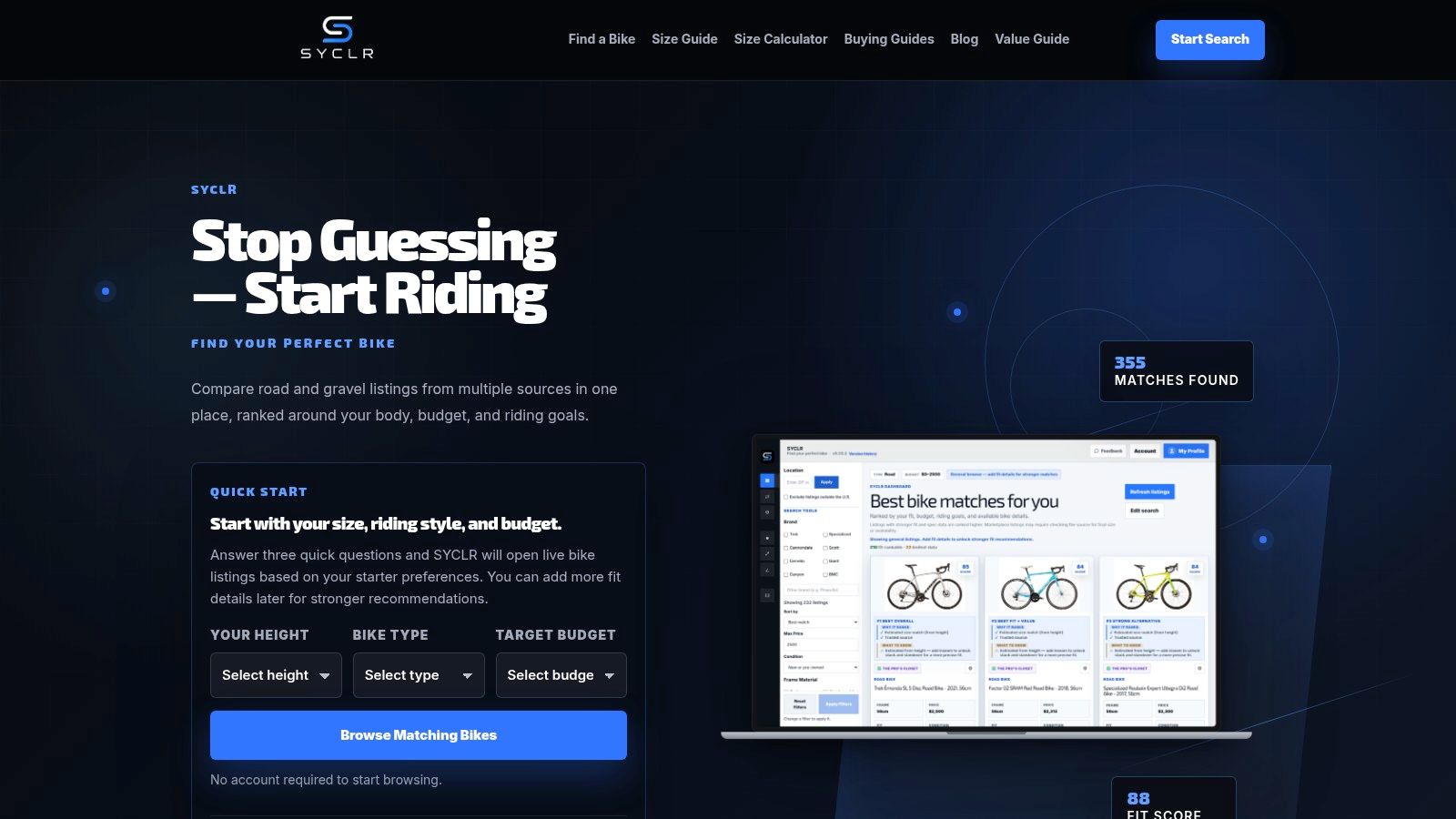
How SYCLR Helps You Shortlist Better Fit Gravel Bikes Under $1,000
SYCLR helps organize road and gravel listings around the signals that matter most when bikes look similar on price alone. You can start with height, bike type, and budget, then compare:
-
fit signals
-
geometry signals
-
model-year context
-
price context
-
listing quality
-
condition signals where available
-
confidence signals
Riders who already know more about their current setup can start with the Advanced Fit entry for a more specific comparison workflow.
SYCLR does not perform a professional bike fit, physically inspect bikes, authenticate listings, verify ownership or seller claims, or guarantee fit or condition.
A sensible next step is to start comparing listings in SYCLR.
Best Gravel Bikes Under $1,000 FAQs
Should I stretch the budget for a better gravel bike?
Only if the extra money solves a real problem, such as limited size availability, inadequate tire clearance, unsuitable gearing, or a clearly stronger complete build.
Is aluminum a problem at this price?
No. Aluminum is common in this category and can work very well. Judge the whole bike, not the frame material alone.
How do I choose between two similar alloy bikes?
Compare the exact model year, size chart, geometry, current spec, tire clearance, cockpit, and compatibility. If both remain viable, prefer the bike with clearer documentation and fewer unanswered questions.
What if I’m between two sizes?
Compare the exact adjacent sizes by stack, reach, standover, seat tube angle, stock cockpit, available adjustment range, and manufacturer limits. Do not rely on the size label alone.
Is a used endurance road bike a sensible alternative?
Yes, if your routes are mostly paved or smoother mixed surfaces and the bike has the tire clearance and gearing you need.
Should I trust a listing with excellent components?
Not until the exact model, size, geometry, compatibility, and listing condition evidence all check out. Attractive parts do not fix a poor match or uncertain history.
Start with your budget and intended riding, then use SYCLR to compare road and gravel listings through fit and geometry signals, model-year and price context, listing quality, condition signals where available, and confidence signals before you contact the seller.