How to Choose a Gravel Bike That Actually Fits
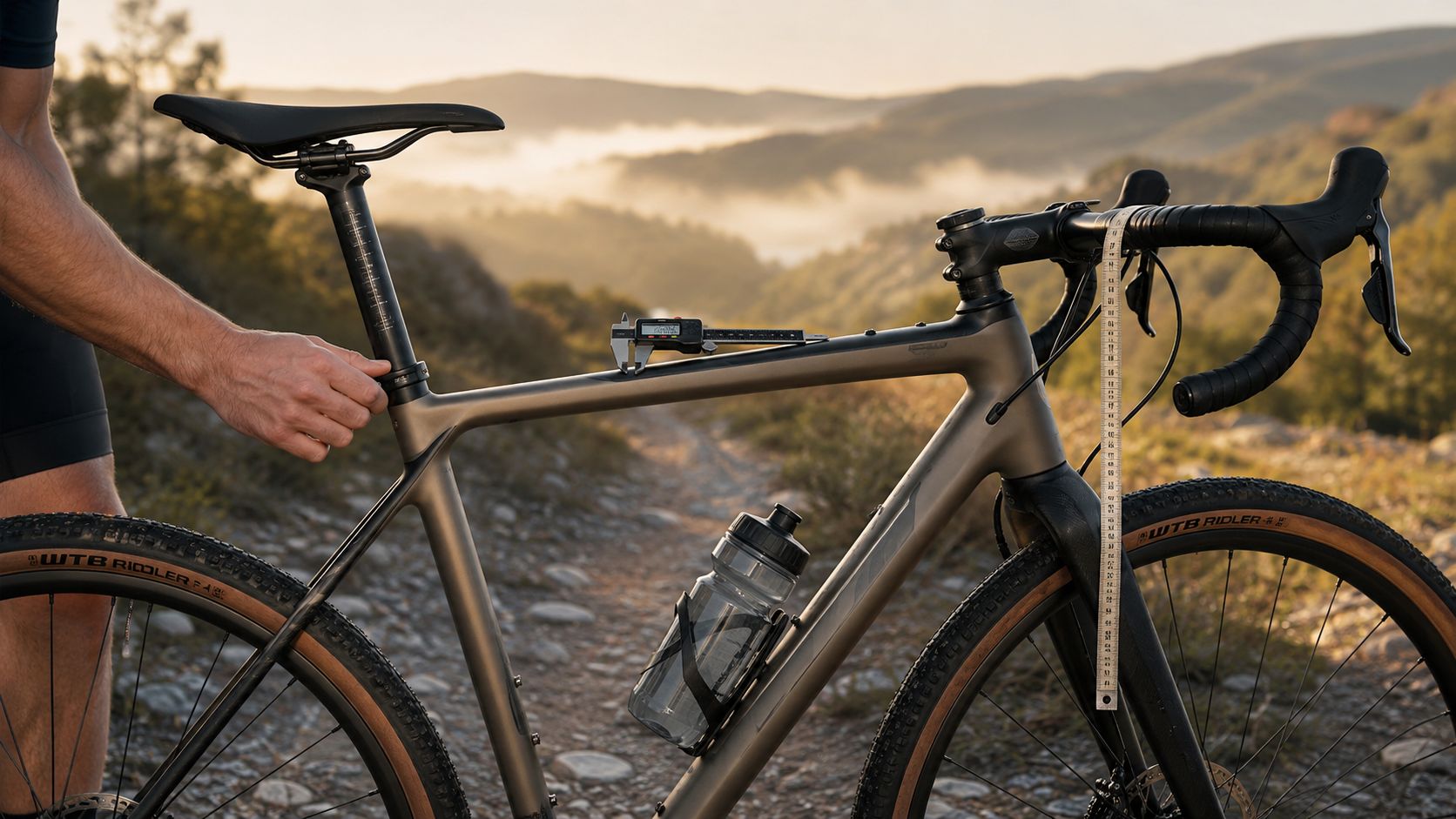
A gravel bike should match your riding before it matches your preferences for brand, frame material, or groupset. Start with intended use, then evaluate fit and geometry, tire clearance, gearing, compatibility, components, and whether the bike makes more sense new or used.
That order matters. A premium drivetrain cannot compensate for a frame whose fit or geometry is poorly matched to the rider, lacks the clearance your routes require, or introduces avoidable compatibility compromises. The stronger candidate is the gravel bike that supports the riding you will actually do, with a fit and equipment package that makes sense for your body, terrain, and budget.
This guide focuses on the broad buying sequence. Use it to narrow the field, compare exact bikes more intelligently, and avoid shopping by category hype or component prestige.
Table of Contents
- Why the Size Label Is the Wrong Place to Start
- Define Intended Use Before You Compare Bikes
- Use Fit and Geometry to Build a Real Shortlist
- Match Tire Clearance to the Bike You Are Actually Buying
- Choose Gearing for Range, Control, and Compatibility
- Check Compatibility Before You Get Distracted by Components
- Used or New, Decide With Context
- How SYCLR Helps You Shortlist Better Candidates
- Gravel Bike Questions Riders Ask Before Buying
Why the Size Label Is the Wrong Place to Start
A size label is a starting point, not a fit decision. "Medium," "Large," and numbered sizes can hide meaningful differences in stack, reach, front-end height, wheelbase, and the position the frame is designed to support across brands and model years.
That matters even more in gravel, where bikes that share a category label may reflect very different priorities. One bike may sit closer to all-road riding, another may lean toward rough-surface stability, and another may be optimized around carrying gear. The same nominal size can therefore correspond to a meaningfully different position and overall setup from one frame to the next.
Height helps narrow the first set of candidates, but it does not establish whether the frame's proportions and cockpit demands will suit the rider. Use height to begin the search. Then compare the exact model and model year's stack and reach against a bike that already fits you well, or against coordinates from a professional fit.
Buying rule: Use height to open the search. Use the exact bike's geometry and your own fit context to decide whether it belongs on your shortlist.
Stack and reach are useful primary frame-level comparison signals once you move beyond rough size filtering.
Start with the gravel bike frame size chart to identify plausible sizes. Then compare the exact bike's geometry, cockpit setup, and model-year details before you spend time thinking about component upgrades or groupset prestige.
Define Intended Use Before You Compare Bikes
The broad gravel category covers a wide range of riding. Some riders spend most of their time linking paved roads with smooth dirt. Others ride mixed surfaces for long hours, explore rough backroads, commute in all conditions, or carry bags for overnight trips. Those use cases overlap, but they do not create the same equipment priorities.
That is why the buying sequence starts with intended use. Before comparing listings, write down the kind of riding you expect to do most often:
-
The surfaces you ride regularly
-
Whether speed, comfort, stability, or versatility matters most
-
Whether you expect to run fenders, racks, or bags
-
How much pavement is involved
-
Whether the bike needs to handle commuting, training, exploration, or travel
A gravel bike does not need to do everything equally well. It needs to do your kind of riding well enough that the fit, clearance, gearing, and equipment choices feel coherent rather than compromised.
Once you know the job, it becomes much easier to judge whether a bike is genuinely suitable or simply attractive on paper.
Use Fit and Geometry to Build a Real Shortlist
Fit and geometry should narrow the field before you compare finer equipment details. If the frame is a poor match for your position and use, the rest of the specification matters less than it may appear in a listing.
Start with fit, not assumptions
Use a current bike whose position works well for your intended riding, or a professional fit if you have one. Compare the candidate bike's stack and reach with that known reference, using the exact model and model year rather than a brand's generic size language.
This approach is more useful than following category rules, guessing from height alone, or assuming gravel automatically means a larger or smaller frame. Stem length, spacer configuration, and handlebar choice can refine a plausible frame. Saddle position should primarily support the rider's pedaling position rather than being used to compensate for an unsuitable cockpit.
If you know your current-bike geometry or fit coordinates, compare them directly. If you do not, use height only to identify likely sizes, then gather the geometry of the exact bikes you are considering and compare them carefully before moving deeper into the buying process.
For a deeper explanation of these measurements, use SYCLR's guides to compare bike geometry and understand bike stack and reach.
Keep geometry in context
Stack and reach are the primary frame-level signals. Other geometry numbers provide supporting context.
Wheelbase and front-center provide context for the frame's overall layout and interact with steering geometry, weight distribution, tire setup, and rider position. Chainstay length provides rear-center context and interacts with wheelbase, tire clearance, weight distribution, and frame packaging. Bottom-bracket drop provides context for ride height and clearance trade-offs. Head angle, fork offset, and trail add steering context.
Those numbers matter, but they are most useful after a bike has already passed the initial fit screen. They help you understand how a frame may be positioned within the category, not predict the complete ride experience from a single chart.
Use geometry as a comparison tool, not a shortcut to certainty. First ask whether the frame supports a workable position. Then ask whether the broader geometry context aligns with how you plan to ride.
Match Tire Clearance to the Bike You Are Actually Buying
Tire clearance should be evaluated from the exact frame, fork, and model year you are considering. Manufacturer-supported clearance is the governing reference, not the category label attached to the bike and not the printed tire size alone.
Mounted tire width varies with rim design and internal width, which means the same labeled tire can measure differently from one wheel setup to another. Actual compatibility depends on the manufacturer-supported frame and fork specification and the mounted dimensions of the complete wheel-and-tire setup. Fenders may further affect practical clearance where the manufacturer supports their use.
This is why tire decisions should begin with your intended use, then move immediately to the manufacturer specification for the exact bike. The goal is not to maximize a number in isolation. The goal is to confirm that the bike supports a tire setup appropriate for your intended riding, with the complete wheel and frame package considered together.
If you are comparing bikes, check the official frame and fork specification, then verify how the bike is built today. A change in rim internal width can alter mounted tire dimensions, and fenders can affect practical clearance in real use.
For deeper detail, see SYCLR's guides to gravel bike tire size and gravel bike tire clearance.
Choose Gearing for Range, Control, and Compatibility
Gearing should follow the riding, not the marketing label. There is no universal winner between 1x and 2x for gravel because the right answer depends on the full system and the rider using it.
Compare these questions instead:
-
What total gear range do you need?
-
How low does your lowest gear need to be?
-
How important is high-end gearing for pavement or fast sections?
-
Do you prefer closer gear steps or larger jumps?
-
How sensitive are you to cadence changes?
-
Which control layout do you prefer at the bars?
-
What is compatible with the exact drivetrain, frame, wheel or freehub, and intended setup?
Those questions matter more than drivetrain labels on their own. A gravel bike can look promising in a listing but become a weaker candidate if its gearing does not align with your riding or if changing it would require significant compatibility changes.
If you want to go deeper, compare the options in SYCLR's guides to gravel bike gearing and 1x vs 2x gravel bike.
Check Compatibility Before You Get Distracted by Components
It is easy to overvalue visible component upgrades and undervalue system compatibility. But standards and parts matching often matter more in practice than whether a bike has a slightly newer derailleur or lighter wheelset.
Before getting pulled into component prestige, confirm the basics:
-
Tire clearance for the exact frame and fork
-
Drivetrain compatibility across crankset, cassette, derailleur, and freehub
-
Brake and axle standards
-
Mounting needs for fenders, racks, or bags if relevant
-
Whether the bike's current build reflects the official specification or a modified setup
A bike that supports your fit and intended use with a clear compatibility path may be a stronger candidate than one with more premium components but unresolved compatibility questions.
Check the Wheel System Without Overcomplicating It
Wheels matter because they influence tire fit, ride feel, and compatibility, but this guide does not need to become a standards manual. At shortlist stage, keep the questions simple:
-
Does the wheel and tire setup match the bike's intended use?
-
Is the current wheel setup compatible with the drivetrain and brake system?
-
If the setup is tubeless or uses hookless rims, are the exact rim, tire, tire width, rim internal width, and intended pressure compatible within the manufacturers' limits?
-
If you plan to carry gear, is the wheel setup appropriate for the intended load, terrain, rider, and manufacturer limits?
That is enough for broad bike selection. Deeper wheel-spec analysis can come later once a frame has already earned serious consideration.
Keep frame material in perspective
Frame material matters, but less than many buyers assume. Carbon, aluminum, steel, and titanium each involve trade-offs in purchase cost, weight, repair considerations, corrosion characteristics where relevant, and intended use. None of them automatically guarantees comfort or harshness.
Fit, frame design, tire setup, and intended use often matter more to the buying decision than material alone. Once a bike clears the fit, clearance, gearing, and compatibility checks, frame material can become one additional comparison factor. It should not be the starting point.
SYCLR may earn a commission from qualifying purchases made through some retailer links, at no additional cost to you.
See Current Competitive Cyclist SalesUsed or New, Decide With Context
A used gravel bike can be worth considering when its fit, model-year context, condition evidence, compatibility, listing quality, and price context all make sense. Confirm the exact model year, because geometry, clearance, standards, and original specification can change meaningfully across generations.
Then look at the quality of the listing itself. Clear photos, accurate model details, visible condition evidence, and a component specification that is internally consistent and clearly documented can improve confidence. You should also factor in compatibility, likely near-term service needs, and whether the asking price still makes sense once those costs are included.
New-bike purchases may remove some used-listing uncertainties, but they still require the same attention to fit, geometry, compatibility, equipment, and value. A used bike may have a lower asking price or higher original specification than a new alternative, but value still depends on fit, model year, condition evidence, compatibility, listing quality, and likely near-term costs.
For deeper used-bike evaluation, see SYCLR's guides to buy used gravel bike, the used bike checklist, and used bicycle value.
How SYCLR Helps You Shortlist Better Candidates
A better buying process starts with constraint first and comparison second. Once you know your intended use, approximate size starting point, and budget, you can begin narrowing bikes by the things that actually affect suitability.
Compare signals, then decide what deserves a closer look
SYCLR is a fit-aware discovery and comparison platform for road and gravel listings. It combines available fit signals, geometry signals, model-year context, price context, listing quality, condition signals where available, and confidence signals so you can compare candidates around the factors that matter most.
That does not turn a listing into a guarantee. Missing geometry data still limits certainty, seller claims still need verification, and SYCLR does not replace a professional bike fit or mechanical inspection, and seller or listing claims still require independent verification. The practical advantage is that you can reduce aimless browsing and identify which bikes deserve closer attention first.
If you already know your current-bike geometry or fit details, start with Advanced Fit. If you are earlier in the process, begin at SYCLR and build your shortlist from there.
Gravel Bike Questions Riders Ask Before Buying
Should I choose a gravel bike by height alone?
No. Height is useful for narrowing the first set of sizes, but it cannot tell you whether the frame's geometry and resulting cockpit options are appropriate for your fit context. Use height as a starting point, then compare the exact model and model year's stack and reach against a bike that already fits you well or against professional-fit information.
Should I size up for comfort on gravel?
Do not rely on a universal size-up or size-down rule. Comfort depends on the position the exact frame allows you to create, not on a category slogan. Compare the bike's actual stack and reach, then judge whether it supports a a workable cockpit without relying on component changes to compensate for an unsuitable frame.
What stack and reach should a gravel bike have?
There is no useful universal target that replaces your own fit context. Start with a bike that already fits you well, or with a professional fit if you have one, then compare the candidate frame's stack and reach against that reference. They are useful frame-level signals for moving beyond vague size labels, but they are not a complete fit determination.
How much tire clearance do I need?
Choose tire clearance based on the riding you plan to do, then verify the manufacturer-supported clearance for the exact frame, fork, and model year. Do not rely on printed tire labels alone, because mounted tire width can vary with rim internal width and the exact tire/rim combination and usable clearance can change with accessories such as fenders.
Is 1x or 2x better for gravel?
Neither is automatically better. Compare total range, your lowest gear, high-end needs, cadence preference, gear-step size, control preference, and what is compatible with the exact drivetrain, frame, wheel or freehub, and intended setup.
Is a used gravel bike worth considering?
Yes. A used gravel bike can be worth considering when its fit, model-year context, condition evidence, compatibility, listing quality, and price context align with your needs. Use the dedicated used-gravel-bike and inspection guides for the deeper condition and valuation checks.
Can SYCLR guarantee that a gravel bike fits?
No. SYCLR provides decision-support signals; it does not perform a professional bike fit, physically inspect bikes, verify ownership or authenticity, or guarantee seller claims.
Use SYCLR to compare road and gravel listings using fit signals, geometry signals, model-year context, price context, listing quality, condition signals where available, and confidence signals. If you already know your current-bike geometry or professional fit details, start with Advanced Fit.