
Race Gravel Bike vs Adventure Gravel Bike: Which Fits Your Riding?
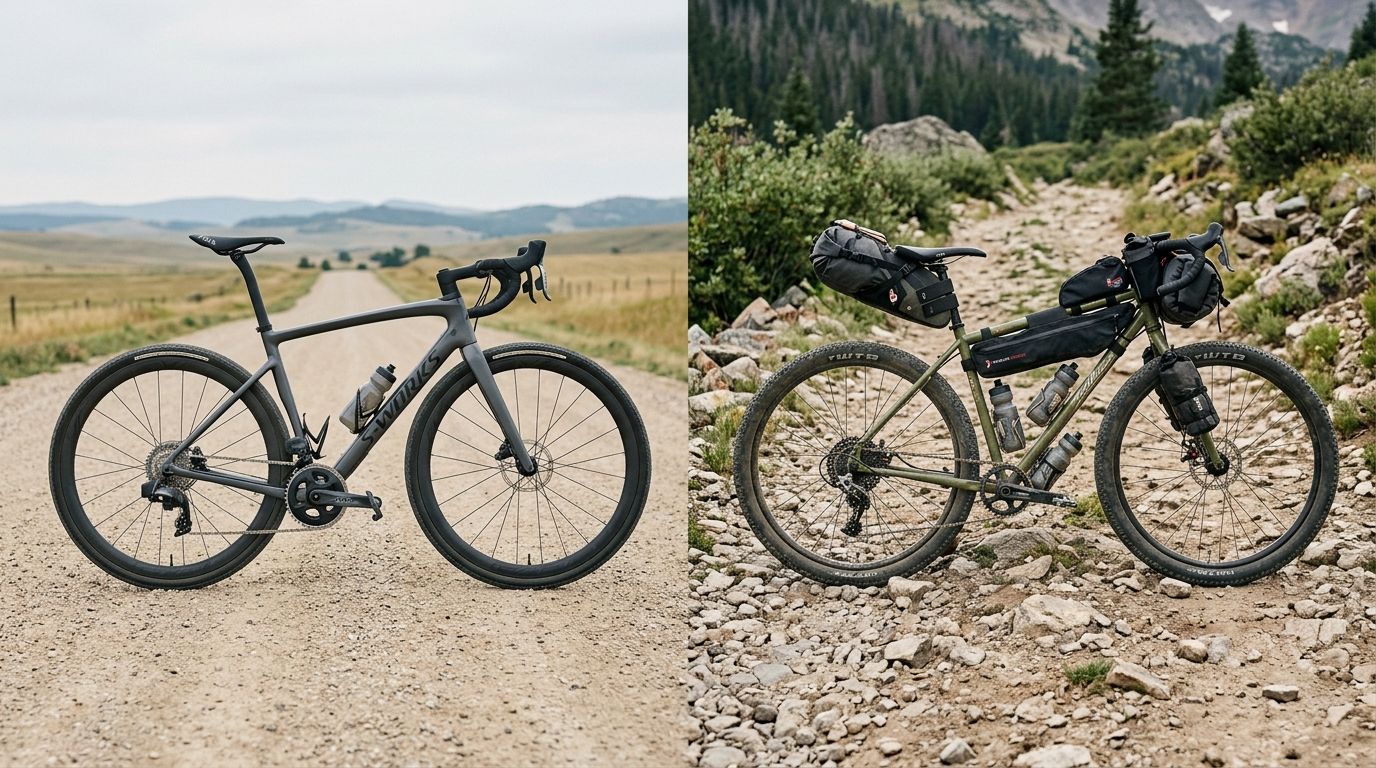
Choose race gravel when speed and responsive handling dominate the route. Choose adventure gravel when rough terrain, wider tires, lower gearing, stability, and carrying capacity matter more. On the used market, the key question isn't the label, it's whether the bike's fit, clearance, gearing, mounts, and model year match your riding.
Table of Contents
The Direct Answer for Race vs Adventure Gravel Buyers
If your routes are fast and smooth, buy race gravel. If your routes are rough, long, loaded, or unpredictable, buy adventure gravel. That's the cleanest decision rule, and it holds up better than bike labels, marketing copy, or a single spec on a listing. Fit still matters first, because a fast bike that doesn't fit you is a bad buy.
What the two categories actually mean
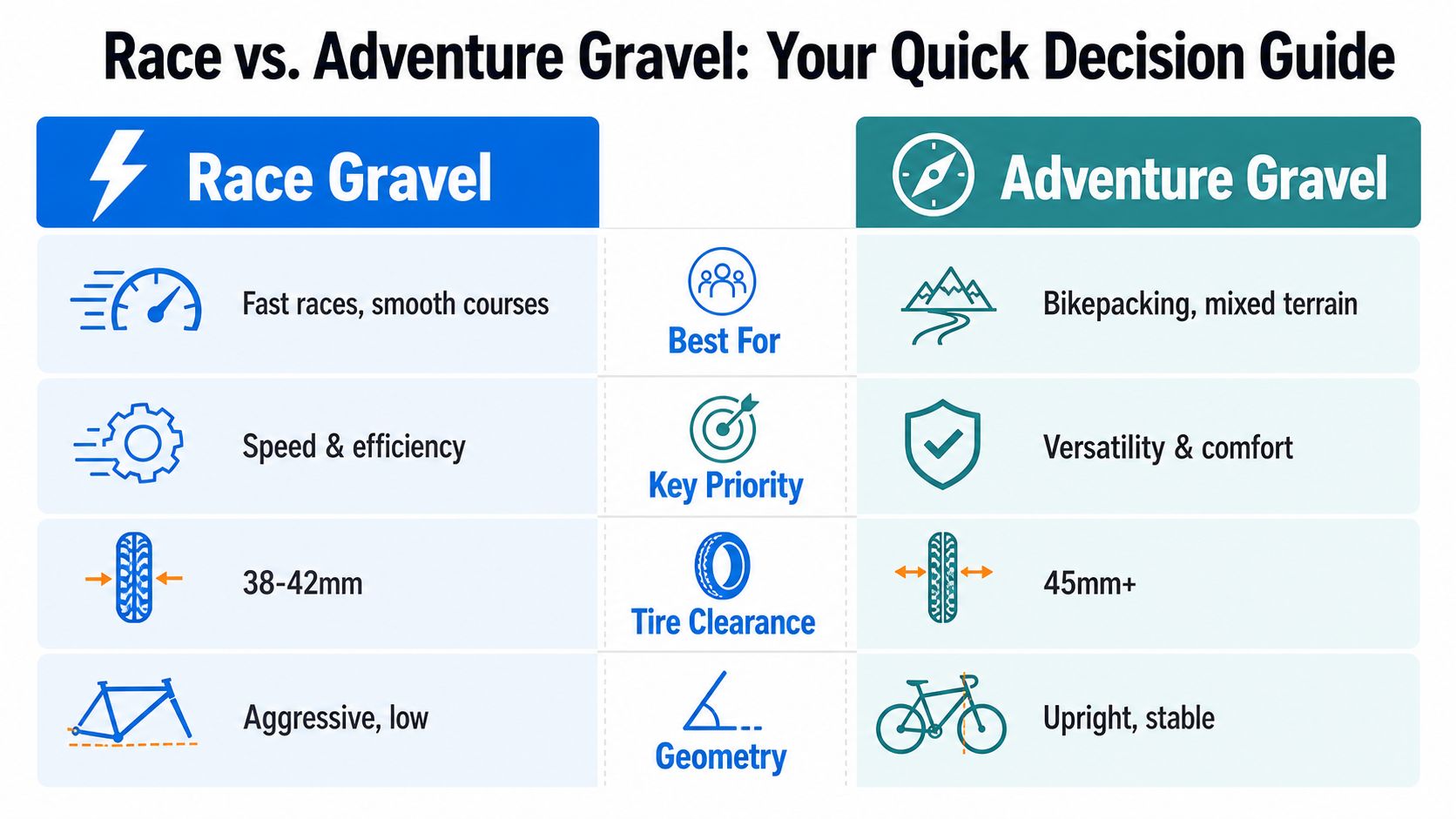
Race gravel bikes often use lower-weight builds, faster tires, and more performance-oriented geometry. Adventure gravel bikes often provide greater tire capacity, more mounting options, wider gearing, and more stable loaded handling. Exact specifications vary by model, size, wheel standard, and model year.
An adventure gravel bike gives up some snap for more stability, more tire volume, and more flexibility when the ride gets ugly. Major brands now build entire gravel lineups around that race-versus-adventure divide, which tells you how the category has matured. If you want the fitting logic behind that decision, start with SYCLR's bike fit guide, then compare the exact frame geometry and listing details before you buy.
Practical rule: use the label only as a shortcut. Use stack, reach, tire clearance, gearing, mounts, and model year as the actual decision tools.
When Race Gravel Is the Stronger Choice
Race gravel makes sense when the course rewards speed, acceleration, and a more aerodynamic position. That usually means fast gravel races, smooth hardpack, maintained dirt roads, and riders who don't need to carry much beyond the basics. If that sounds like your terrain, a lighter, sharper bike is the right tool. If terrain is the bigger question than race versus adventure positioning, use our guide to choosing the best gravel bike type for your terrain.
What you gain, and what you give up
The benefit is simple. A race bike that already matches your sustainable position will feel easier to push hard, easier to sprint out of corners, and less compromised on long efforts where speed stays high. The cost of choosing too much bike for that route is wasted mass, extra stability you don't need, and a setup that can feel sluggish when the road turns back to smooth fast gravel.
Race gravel is also the better fit when you're not planning to load the bike with bags, racks, or a pile of bottles. Once you start adding those needs, the value equation shifts quickly toward adventure geometry and broader mounting options. A fast bike can still be used for mixed riding, but if your typical route doesn't need that versatility, you're paying for capability you won't use.
Race-oriented gravel setups may feel faster on smoother courses because of tire choice, rider position, wheel selection, weight, and handling. Adventure setups may provide more practical speed when the route becomes rough enough that stability, traction, tire volume, and control matter more than minimum rolling resistance.
When Adventure Gravel Is the Stronger Choice
Adventure gravel is the stronger choice when the route gets rough, loose, muddy, technical, or long enough that a stripped-down race bike starts to feel out of place. Use it for mixed-surface events with washboard, long descents, steep climbs, and rides where stability matters more than razor-sharp steering. It is also the stronger match for bikepacking, loaded commuting, and any ride where you need room for more than one bottle and a jersey pocket's worth of gear. If carrying capacity is becoming a primary requirement rather than a secondary feature, compare a gravel bike vs bikepacking bike before deciding how much adventure capability you actually need.
Defining the two categories
Buyers get fooled here all the time. The main divider is manufacturer maximum tire clearance, not the tire already sitting on the bike. Check whether the clearance is stated for 700c or 650b, how much room exists for mud, and whether the front and rear limits match. Rim width changes real-world fit too, and the exact numbers can shift from one model year to the next.
A mounted tire does not define the limit. A listing can show a bike with modest tires and still hide a frame that is already near its limit. The installed setup tells you what the seller chose, not what the frame and fork can truly accept. That matters if you ride in sticky mud or want space for a wider casing later.
Adventure-oriented bikes usually give you more room for rubber and more forgiveness when the route turns ugly, while race-oriented bikes keep the fit tighter and the setup leaner. A review roundup from Granfondo points to the same pattern in current gravel models, with race bikes chasing speed and adventure-leaning bikes giving up a little pace to gain more usable clearance and versatility (Granfondo race gravel review). That is the right way to read the category split. Focus on the actual numbers, then decide whether the frame matches the route you ride.
Pick race gravel when you are trying to go faster on cleaner routes. Pick adventure gravel when the route can punish a narrow setup, or when the bike has to do more than just go fast.
Race vs Adventure Gravel Tire and Wheel Reality Check
| Check | Why it matters | Race gravel typical | Adventure gravel typical |
|---|---|---|---|
| Manufacturer max clearance | Sets the real ceiling for tire choice | Narrower | Wider |
| 700c versus 650b compatibility | Changes ride feel and available tire volume | Often optimized for 700c speed | Often more flexible |
| Mud clearance | Matters on sloppy routes | Tighter | More forgiving |
| Front versus rear limits | The fork and rear triangle can differ | Often closer to the limit | Usually more room |
| Rim width | Affects the tire's actual mounted shape | Often faster-leaning setups | Often supports bigger rubber |
| Model year | Specs change across generations | Needs checking | Needs checking |
| Installed tire versus frame limit | The mounted tire is not the boundary | Must verify separately | Must verify separately |
If you want a clean way to compare geometry before you buy, use a tool like SYCLR's bike geometry comparison page and check the chart values against the brand's published fit numbers before you trust the category label. That is where bad assumptions get exposed fast. A bike called “adventure” can still be tight at the tire and cramped at the front end, while a well-chosen race frame can leave enough room for the routes you ride.
Geometry and Handling Differences
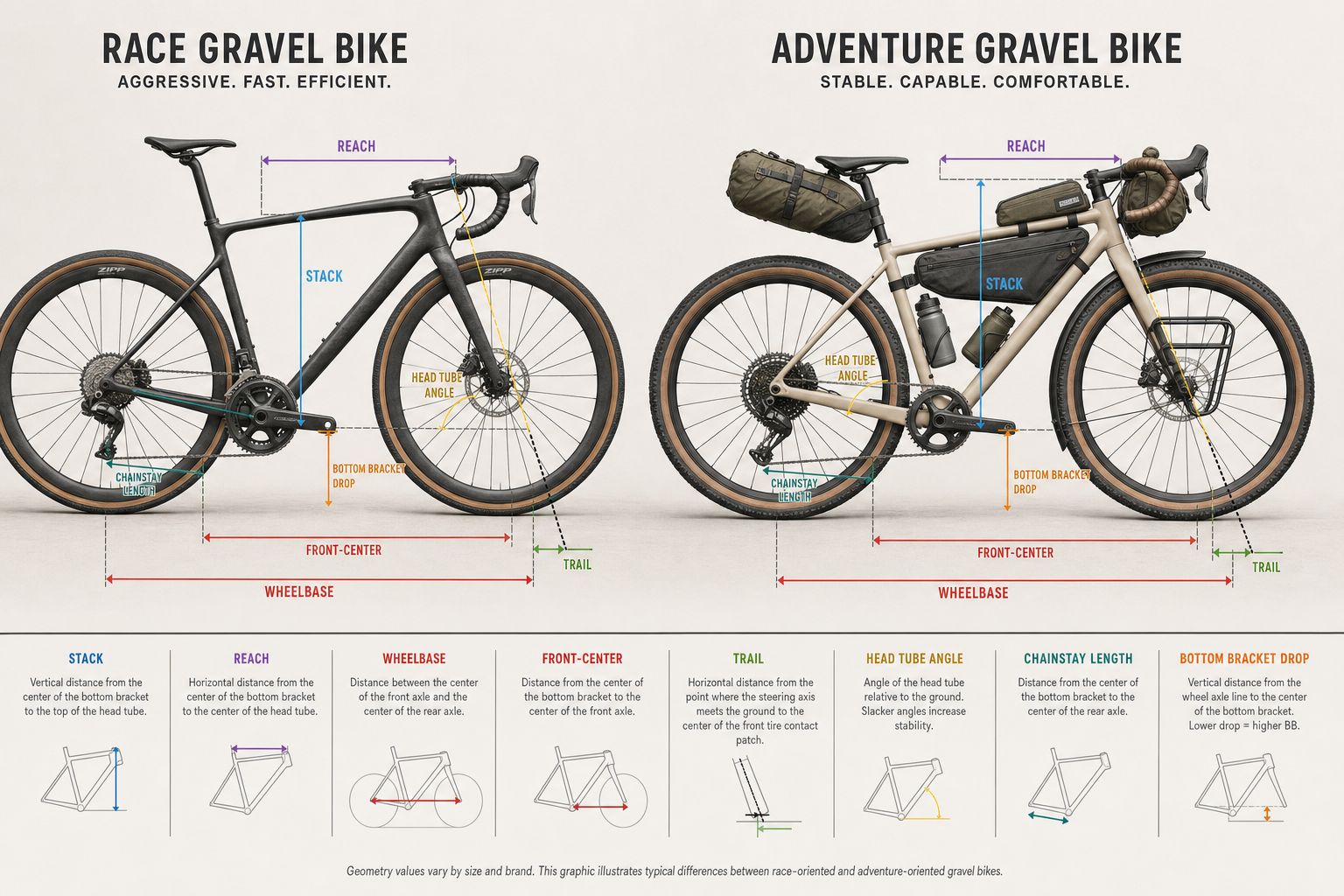
Some race gravel bikes use lower, performance-focused positions and quicker handling, while some adventure bikes use taller front ends, longer wheelbases, and calmer steering. Other models overlap heavily. Compare the exact stack, reach, wheelbase, trail, front-center, cockpit, and model year instead of treating the category label as a geometry guarantee.
What changes on the bike
The key fields are stack, reach, wheelbase, front-center, trail, head tube angle, chainstay length, bottom bracket drop, standover, and cockpit design. Race gravel tends to prioritize a lower stack and longer reach for a faster position, while adventure gravel often uses a higher stack and more upright posture for stability and comfort. That doesn't mean every bike in each category is obvious from the numbers alone, the pattern is common, but not universal.
Representative example, not a database rule. A race gravel bike may have shorter wheelbase, quicker steering, lower cockpit, narrower maximum tire, and fewer mounts. An adventure gravel bike may have longer front-center, calmer handling, wider tire capacity, lower gearing, and more mounts. Those are the kinds of geometry signals that matter when you compare exact models, not just category names.
The important consequence is simple. If you're a rider who can hold a low, efficient position comfortably, race gravel rewards that. If you need more confidence on rough descents or with extra load on the bike, adventure gravel is the steadier choice. For a deeper geometry comparison workflow, use SYCLR's bike geometry comparison page and compare the exact size and model year instead of trusting a category label.
Gearing, Mounts, and Carrying Capacity
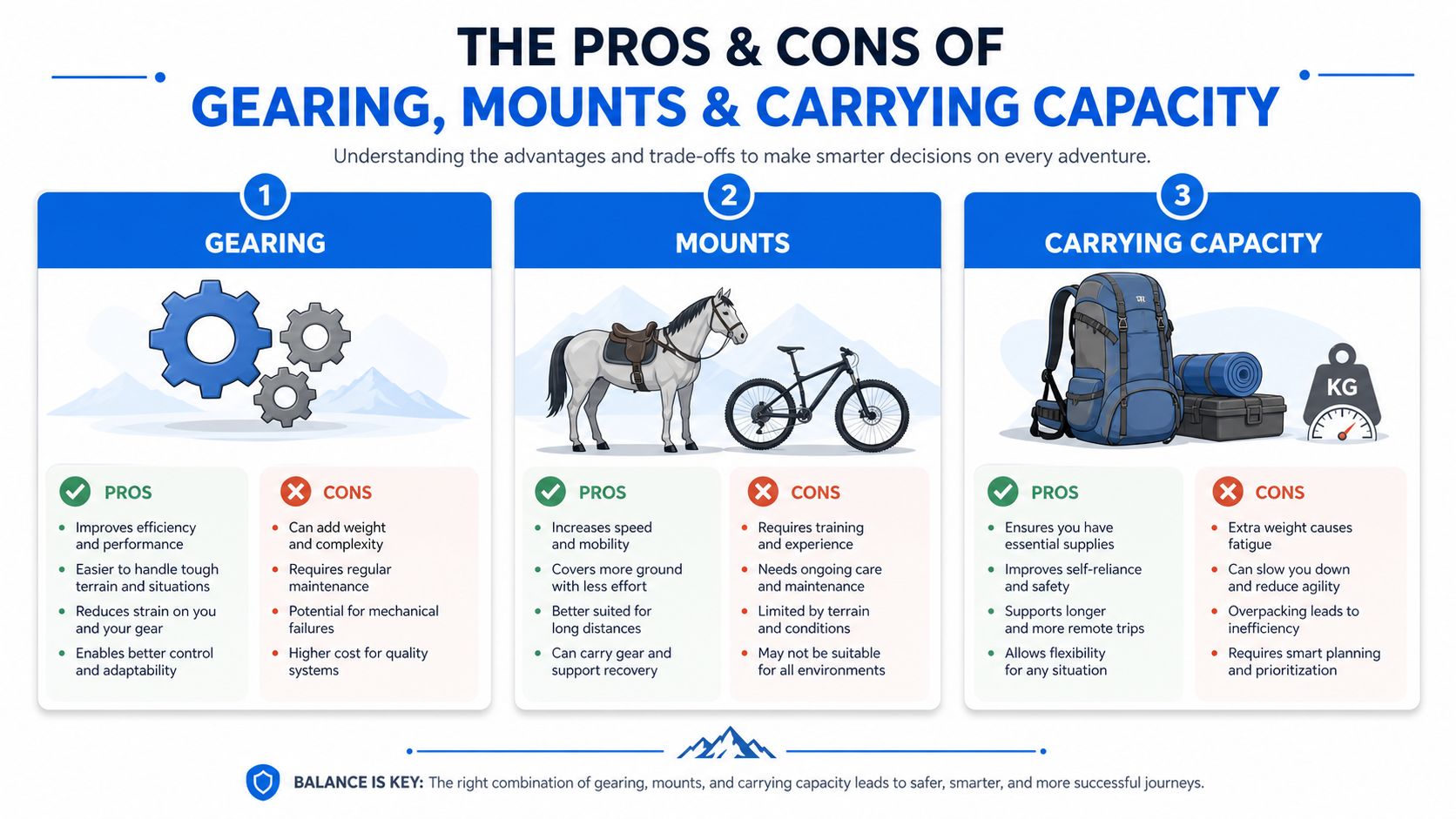
Race gravel usually favors tighter gearing and a drivetrain that keeps speed changes crisp. Adventure gravel usually favors a wider gear range so you can stay seated on steep, loose, or loaded climbs. If your route includes long punchy gradients or you are carrying bags, that difference matters more than many buyers expect. Drivetrain layout adds another layer to that decision, especially when comparing 1x vs 2x gravel drivetrains for racing, climbing, road transitions, and mixed terrain.
Why the hardware changes the use case
Mounts also separate the two categories. Adventure bikes commonly add room for bottle mounts, top-tube mounts, fork mounts, racks, fenders, and frame bags, while race bikes usually stay cleaner and lighter, with fewer attachment points. Not every adventure bike has every mount, and not every race bike is stripped down, so you still have to inspect the exact model.
Used listings need even more scrutiny here. Brand, model, year, generation, size, frame material, tire clearance, wheel standard, drivetrain, wheels, mounts, cockpit, suspension or dropper components, condition, fit, and listing completeness all shape value. A realistic offer range comes from comparable value minus condition risk minus fit uncertainty minus component risk minus listing uncertainty. That is the right way to avoid overpaying for a bike that looks premium but does not match the route or the rider.
Modern gravel categories increasingly overlap. Some race bikes now offer generous clearance and mounts, while some adventure bikes use lightweight frames and fast components. That makes exact-model comparison more important than relying on category labels alone. The result is a blurred middle, but the practical question remains the same, do you want race-first efficiency or adventure-first flexibility?
For riders comparing this choice against an endurance road setup, endurance road bike vs gravel bike is the right side-by-side to check. It helps separate road-like speed from gravel-specific clearance, mounts, and load carrying before you buy.
Rider and Event Scenarios Side by Side
A rider signs up for a long mixed-surface event and starts shopping race gravel because the opening miles look fast and smooth. Then the route file shows extended rough sectors, loose descents, washboard, and enough climbing that carrying comfort matters. That rider doesn't need a racier label, they need the bike that stays composed after hour three.
What changes the answer
Stack, reach, wheelbase, trail, head angle, chainstay, bottom bracket drop, and standover all push the bike toward either quick handling or planted stability. The rider who can stay comfortable on the race position and wants sharp accelerations will usually prefer the race side of that trade. The rider who wants calmer steering, more room for tires, and a more sustainable setup for the rider’s route, load, and preferred position should lean adventure.
The bike that feels quickest in a parking lot isn't always the one that finishes the route best.
For riders who are really deciding between an endurance road bike and gravel, the line can be close enough that the course decides it. That's why endurance road bike vs gravel bike is a useful neighboring comparison, but it's still a different question. Here, the decision is simpler, if the route is harsh or the day is long, stability and tire room usually beat pure pace.
How SYCLR Helps Compare Race and Adventure Gravel
SYCLR helps you compare race and adventure gravel listings using fit signals, geometry signals, model-year context, price context, listing quality, condition signals, and confidence signals. Start with height, bike type, and budget, then compare the fit and geometry details that change the ride. If you already know stack, reach, or have a fit report, use the advanced fit entry.
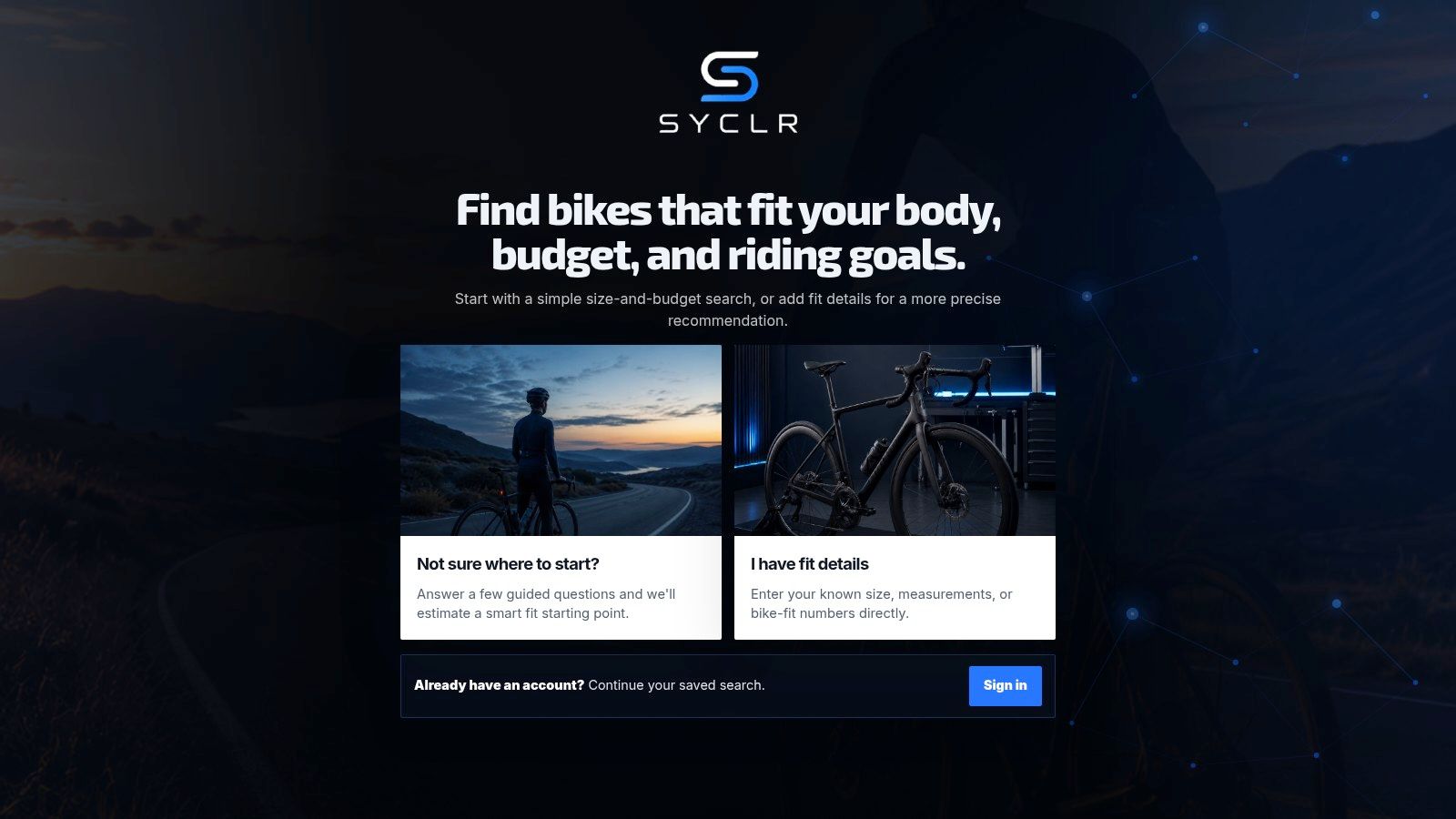
The point is not to treat every marketplace listing as equally useful. Some listings give enough geometry and model-year detail to compare well, others leave you guessing about clearance, condition, or component changes. SYCLR organizes those signals so you can shortlist better-fit gravel bikes before you click through to a seller.
| Decision factor | Race gravel bike | Adventure gravel bike | Better choice when |
|---|---|---|---|
| Primary purpose | Fast racing and performance-focused riding | Rough terrain, long rides, and broader versatility | Match the bike to the dominant route demands |
| Rider position | Often more performance oriented | Often more sustainable for long or loaded riding | Compare exact stack, reach, cockpit, and fit |
| Tire clearance | Often narrower, but model dependent | Often wider, but model dependent | Verify official clearance for the exact model year |
| Wheel compatibility | Often optimized around 700c speed | May offer broader 700c or 650b flexibility | Tire volume and terrain versatility matter |
| Handling | May prioritize responsiveness | May prioritize stability | Choose based on surface severity and pace |
| Gearing | May use tighter spacing or higher gearing | May use wider range and lower climbing gears | Steep, loose, or loaded riding is common |
| Mounts | May be limited | Often more extensive | Bags, racks, bottles, or tools are required |
| Carrying capacity | Usually lower priority | Usually higher priority | Longer unsupported rides are planned |
| Weight | May be lower | May be higher because of added capability | Weight is a meaningful priority |
| Rough terrain | Capable, depending on tires and geometry | Often the stronger specialization | Washboard, rocks, mud, and rough descents dominate |
| Long events | Strong on fast, smoother courses | Strong on rough, long, or loaded routes | Match the bike to course severity |
| Used-listing risk | Verify fit, clearance, gearing, and race wear | Verify fit, mounts, components, and loaded-use wear | Favor the clearer, better-documented listing |
| Overall value | Strong when speed-focused features will be used | Strong when versatility solves real route needs | The complete bike fits the rider and route better |
If you already know your target geometry, the advanced fit path is the cleaner entry. If you're still comparing category, budget, and route severity, the regular workflow is enough to reduce guesswork without pretending the listing has answered every question for you.
Race vs Adventure Gravel FAQs
What is the main difference between race and adventure gravel bikes?
Race gravel is built for speed, lower weight, and sharper handling. Adventure gravel is built for rougher terrain, more tire volume, more stability, and more carrying flexibility.
Is a race gravel bike faster?
Usually it feels faster on smooth or fast gravel because it's lighter and more responsive, but speed still depends on the exact bike, tires, rider position, wind, and terrain. It's not a universal advantage in every route.
Can an adventure gravel bike be raced?
Yes. Many adventure gravel bikes can race well on rougher courses or long events, especially when the rider values stability, clearance, and load capacity more than a razor-sharp front end.
Which bike has wider tire clearance?
Adventure gravel bikes usually do, but you still have to verify the manufacturer's maximum clearance on the exact model year. Don't judge by the tire already mounted on the bike.
Which geometry measurements matter most?
Start with stack and reach, then check wheelbase, front-center, trail, head tube angle, chainstay length, bottom bracket drop, standover, and cockpit design. The exact size and model year matter more than the category name.
Which bike is better for long gravel events?
It depends on route severity and carrying needs. If the event is fast and clean, race gravel can be the better tool. If the event is rough, long, or loaded, adventure gravel is usually the safer fit-aware choice.
Can SYCLR help compare race and adventure gravel bikes?
Yes. SYCLR helps you compare listings using fit signals, geometry signals, model-year context, price context, listing quality, condition signals, and confidence signals, so you can shortlist smarter before buying.
If you are comparing race and adventure gravel bikes, start with your height, bike type, and budget in the SYCLR app. Compare available fit signals, geometry signals, tire-clearance information, model-year context, price context, listing quality, condition signals, and confidence signals before building your shortlist.
Already know your stack, reach, current-bike geometry, or fit-report details? Use the advanced fit entry to improve your recommendations.