Road Bike vs Endurance Bike: Which One Fits You?
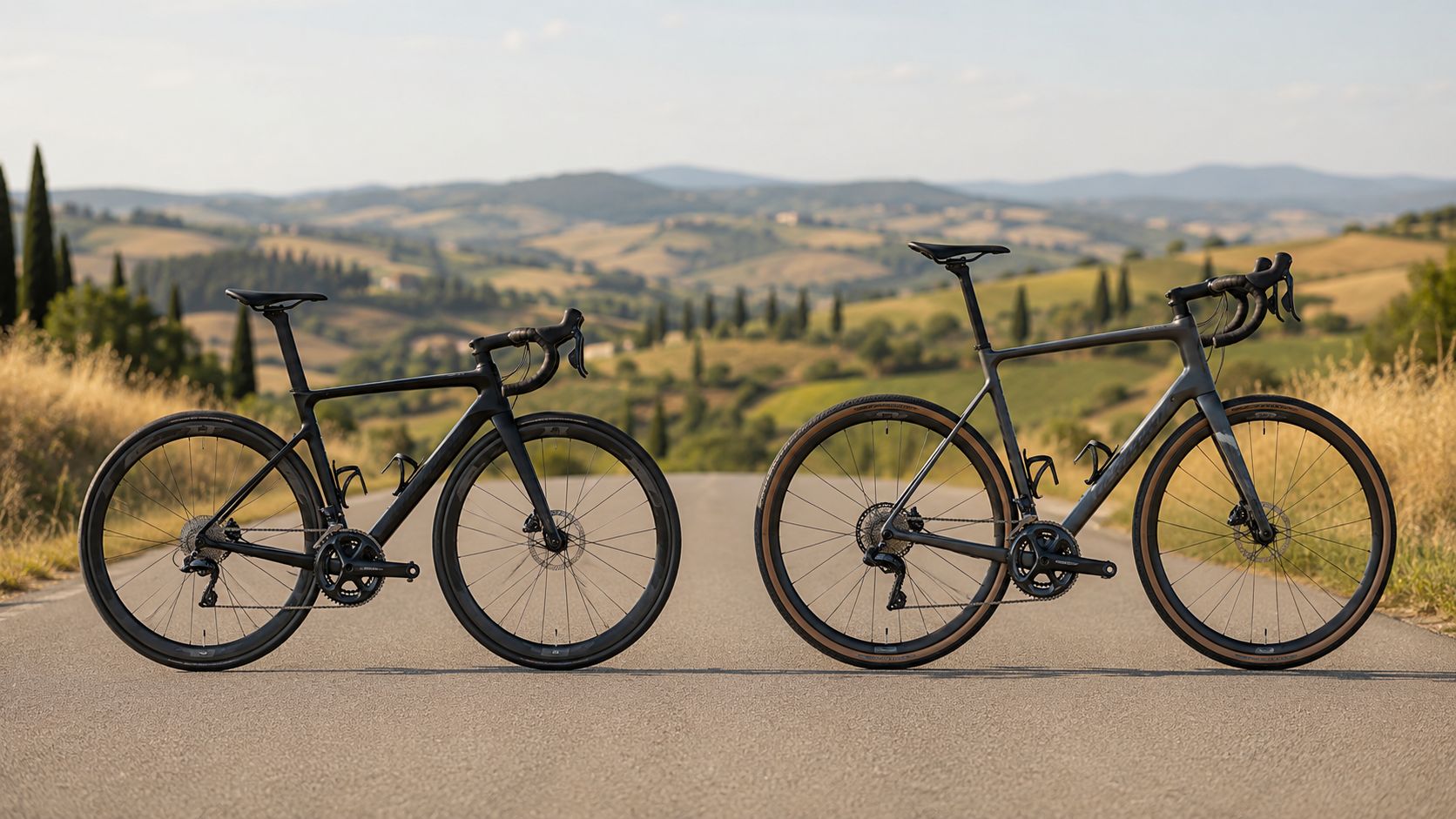
You’re probably staring at two listings right now. One looks faster, lower, and more serious. The other looks a little less aggressive, but the geometry, tire room, and ride position seem easier to trust on your actual roads.
That’s the essential road bike vs endurance bike decision. It’s not “fast versus slow,” and it’s not just about how the bike looks in a showroom photo. It’s about whether the bike’s fit signals and geometry signals match how you ride, where you ride, and how much position you can comfortably hold over time.
Table of Contents
What This Comparison Actually Covers
In this article, road bike means a race or performance road bike, not every drop-bar bike with skinny tires. That matters, because endurance bikes are also road bikes, just built around a different fit and ride-feel priority. The choice here is not whether to buy a road bike in general, it’s whether you should buy a sharper race bike or a more sustainable endurance bike.
The cleanest way to think about it is this. A race bike puts speed, responsiveness, and aggressive positioning first. An endurance bike puts long-ride comfort, stability, and real-world usability first. Neither category is automatically better, and neither label tells you enough on its own.
A lot of buyers get stuck on the wrong question. They ask which bike is “better” instead of asking which bike matches their body, terrain, and ride length. That’s exactly where fit-aware comparison matters, because a good deal is only a good deal if the bike works for you.
Practical rule: if you’re choosing between a race bike and an endurance bike, don’t start with paint, carbon layup, or brand pedigree. Start with fit, stack, reach, and tire clearance.
For riders who want a broader geometry overview, the deeper breakdown lives in SYCLR’s road bike geometry comparison guide. For this article, the job is narrower. It’s about choosing the right category before you get distracted by spec sheets and marketing language.
What a Race Road Bike Is Built to Do
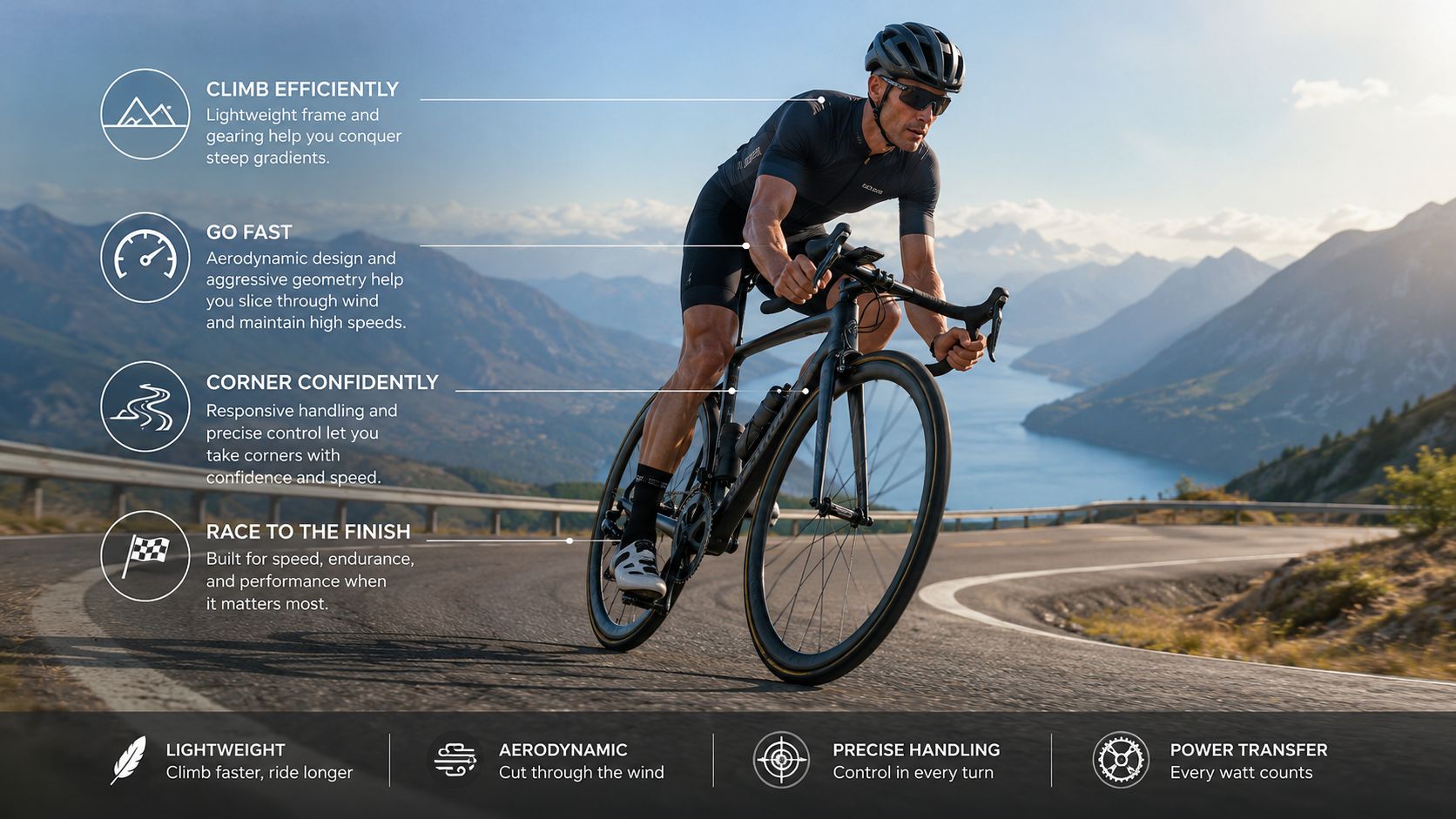
A race road bike is built to feel quick the moment you press on the pedals. It rewards an aggressive position, reacts sharply to steering input, and keeps the rider low enough to reduce frontal area. The whole package is aimed at speed, acceleration, and a direct connection between rider and road.
The position is the point
Race-oriented road bikes often use a lower front end, a more performance-focused cockpit, and quicker handling. Endurance bikes often provide a taller front end, more stable handling, and additional tire clearance. Exact geometry varies substantially by brand, model, size, and model year.
The trade-off is simple. You get a bike that feels lively and precise, but it asks more from your body position. That’s not a problem if your flexibility and current fit already support it. It is a problem if you’re forcing yourself into a low front end just because the bike looks fast.
Who it suits
Choose a race bike if you care about the feeling of speed as much as the number on the ride file. It makes more sense for riders who want aggressive road performance, efficient power transfer, and quicker handling on smoother pavement. It also fits riders who already know they can live in a lower cockpit without constantly wanting spacers, a shorter stem, or a more upright bar drop.
A race bike should feel like a tool, not a compromise. If it only feels good when the road is perfect and the ride is short, you’re buying the wrong kind of speed.
That doesn’t mean race bikes are niche toys. For the right rider, they’re exactly right. The mistake is assuming every serious road rider needs one.
What an Endurance Road Bike Is Built to Do
An endurance road bike is designed to keep you riding well after the novelty of a low, aggressive position wears off. It usually gives you a taller stack, shorter reach, calmer steering, and more room for bigger tires. That creates a more upright position that’s easier to live with over long rides, rough pavement, and imperfect roads.
The shape of the ride changes
A modern endurance bike often sits in a different part of the geometry spectrum than a race bike. The bars are higher, the cockpit feels less stretched, and the handling is calmer. Independent buying guidance also notes that modern endurance bikes commonly clear at least 32 mm tires, which gives you more room to tune comfort and grip than many race bikes allow, while race bikes keep the emphasis on aerodynamics and sharp response The Pro’s Closet.
One controlled comparison found only a small difference between the specific race and endurance bikes tested. That result should not be treated as a universal benchmark, but it illustrates an important point: on real roads, rider position, fatigue, tires, and fit can matter as much as the category label.
Why it often feels easier to own
An endurance bike makes more sense when you want a road bike for long rides, not just short hits of performance. The higher front end reduces how extreme the position feels, and the extra tire room lets you run a setup that’s less harsh over broken pavement. For many non-racers, that’s the right answer because it’s the bike they’ll want to ride again tomorrow.
A second reason endurance bikes keep winning buyers is utility. The category has moved beyond “comfort bikes” and into genuine road versatility. That shift matters because the best fit is often the one you can sustain across a wider range of roads, not the one that only feels ideal in a parking-lot test ride.
Geometry Differences That Actually Drive the Decision
The category label matters less than the geometry sheet. Two bikes with the same size name can fit and ride like different machines once you compare stack, reach, wheelbase, head tube angle, chainstay length, bottom bracket drop, standover, and tire clearance. For a broader breakdown of how race, endurance, and all-road frames differ, use the road bike geometry comparison guide.
Use stack and reach together
Stack and reach give you the fastest useful read on rider position. Race-oriented road bikes often place the rider lower and farther forward, while endurance bikes often create a taller, more manageable front end.
Do not rely on a single ratio or universal cutoff. Compare stack and reach together, then account for stem length, spacer height, handlebar reach, saddle position, and the exact model year. Two bikes with similar stack-to-reach ratios can still fit differently once the complete cockpit is considered.
The rest of the chassis matters too
Wheelbase changes how the bike behaves at speed. A shorter wheelbase usually gives the race bike quicker turn-in and a more immediate feel. A longer wheelbase usually makes the endurance bike calmer and more predictable.
Head tube angle and chainstay length add to that character. A steeper front end and shorter rear center tend to sharpen steering and make the bike feel more eager. A slacker setup with longer chainstays usually steadies the bike and keeps it composed when the pavement is rough or the pace settles down.
Tire clearance changes the bike after you buy it.
A race frame with tight clearance locks you into a narrower setup. An endurance frame with more room gives you room to choose tire width for broken pavement, winter roads, or just a less harsh ride. That matters more than paint, spec, or marketing language if your local roads are inconsistent.
For a cleaner side-by-side look at how those numbers separate real road bikes, use SYCLR’s road bike geometry comparison.
Here’s the structural view in one place, the kind of comparison that helps you shortlist better-fit bikes before you get attached to a listing.
| Decision factor | Race road bike | Endurance road bike | Better choice when |
|---|---|---|---|
| Primary goal | Speed, response, aggressive road feel | Long-ride comfort, stability, versatility | Your priority is performance or sustainability |
| Rider position | Lower, longer, more aerodynamic | Taller, shorter, more upright | You know what cockpit position you can hold |
| Stack and reach | Lower stack, longer reach | Taller stack, shorter reach | Fit, flexibility, and posture matter |
| Handling feel | Sharp, quick, direct | Calm, stable, predictable | You want twitchy response or steady control |
| Wheelbase | Shorter | Longer | You want fast turn-in or more planted behavior |
| Tire clearance | Usually narrower | Usually wider | You ride smooth roads or rough pavement |
| Long-ride comfort | Depends heavily on fit | Usually easier to sustain | You ride for hours, not just an hour |
| Rough pavement | Less forgiving | Better tolerance | Your roads are imperfect |
| Group rides | Fast, aggressive pace | Comfortable, controlled pace | You want to sit in or drive the pace |
| Racing or fast training | Strong match | Usable, but less specialized | You race or train hard |
| One-bike road versatility | More limited | More flexible | You want one road bike for more conditions |
| Used-listing considerations | Verify aggressive fit, cockpit integration, tire clearance, and component compatibility | Verify exact geometry, clearance, comfort features, and current setup | Choose the listing with clearer identity, fit data, and condition evidence |
If you want a wider geometry reference, the related bike geometry charts explain how to read the numbers without guessing.
Why Comfort Is Fit-Dependent, Not Category-Guaranteed
Endurance does not automatically mean comfortable. Race does not automatically mean punishing. Comfort is a result of the rider, the frame, the cockpit, the tires, and the terrain all lining up well enough that the bike disappears under you.
Two riders can want opposite things
A flexible rider who likes a low front end may feel great on a race bike. The bars are low, the reach is longer, and the position feels purposeful instead of cramped. That rider may find an endurance bike too upright, especially if it softens the response more than they want.
A less flexible rider can have the opposite experience. The same aggressive position that feels energetic to one buyer can feel like constant pressure to another. In that case, the endurance geometry is not a luxury. It's the difference between a bike that invites longer rides and a bike that starts feeling like work too early.
Fit signals matter more than frame badges
The right question is not “Is endurance comfortable?” The right question is whether the bike's stack, reach, cockpit setup, tire width, saddle position, and ride length support the position you can maintain. That's why a fit-aware buyer pays attention to geometry signals instead of assuming the category label tells the whole story.
If making the race bike workable requires major cockpit changes, unusually short components, or a tire setup the frame barely supports, an endurance model may provide a cleaner starting point.
A proper pre-buy check should include the numbers, not just the marketing copy. If you already know your fit details, SYCLR's bike fit guide is the cleaner place to start than a vague size guess. It's the kind of comparison that helps you shortlist smarter instead of chasing a label that doesn't match your body.
Tire Clearance and Real-World Road Surfaces
Tire clearance is one of the clearest ways to judge the road bike vs endurance bike choice. It affects what tires you can run, how much room you have for real roads, and whether the bike fits your riding surface or just your ideal route on a map.
Clearance changes the whole use case
Modern endurance bikes often offer more tire clearance than closely related race bikes, but the limits vary substantially. Always verify the manufacturer’s stated clearance for the exact model year, wheel size, and rim width rather than assuming the category guarantees a certain tire size.
That extra room changes how the bike behaves. You get more traction in corners, more stability on broken shoulders, and less of the harsh, skittery feel that narrow tires can give on rough surfaces. If your routes include patched pavement, debris, or frequent surface changes, clearance stops being a spec and starts being part of the ride quality.
A common buyer scenario
A rider looks at two bikes in the same listed size. The race bike has the lower front end, the sharper visual stance, and the quicker-looking profile. The endurance bike gives enough tire room for rough pavement and longer rides, while the race bike leaves little room to adapt the setup later.
The stronger buy is usually the endurance bike in that case. You are not buying comfort as a soft extra. You are buying a frame that matches the roads you ride and gives you usable range without forcing the bike into a setup it was never meant to carry.
Used-bike ads make this harder than it should be. Tire clearance is often missing, vague, or buried, so a bike can look more versatile than it really is. A buyer who wants a clean comparison should use compare bike geometry before treating two road bikes as if they can cover the same roads with the same tires.
Rider Profiles, Budget, and Model Year Context
Choose a race road bike if you care most about speed, fast group rides, racing, and a low, aggressive position that rewards a committed road posture. Choose an endurance road bike if you care more about long-ride comfort, stability, rough-road confidence, and a fit that's easier to live with. That's the cleanest split, and it's the one that keeps buyers from overbuying aggression they won't use.
Value depends on more than category
Budget and model year matter just as much as category. A used bike's value should be judged by brand, model year, frame material, brake type, groupset, wheelset, tire clearance, condition, fit match, and listing confidence. A newer race bike may have more integrated design and a more aggressive front end, while a newer endurance bike may prioritize clearance, comfort, and all-road flexibility.
A bike that fits your position and roads is worth more to you than a spec sheet that looks better in isolation.
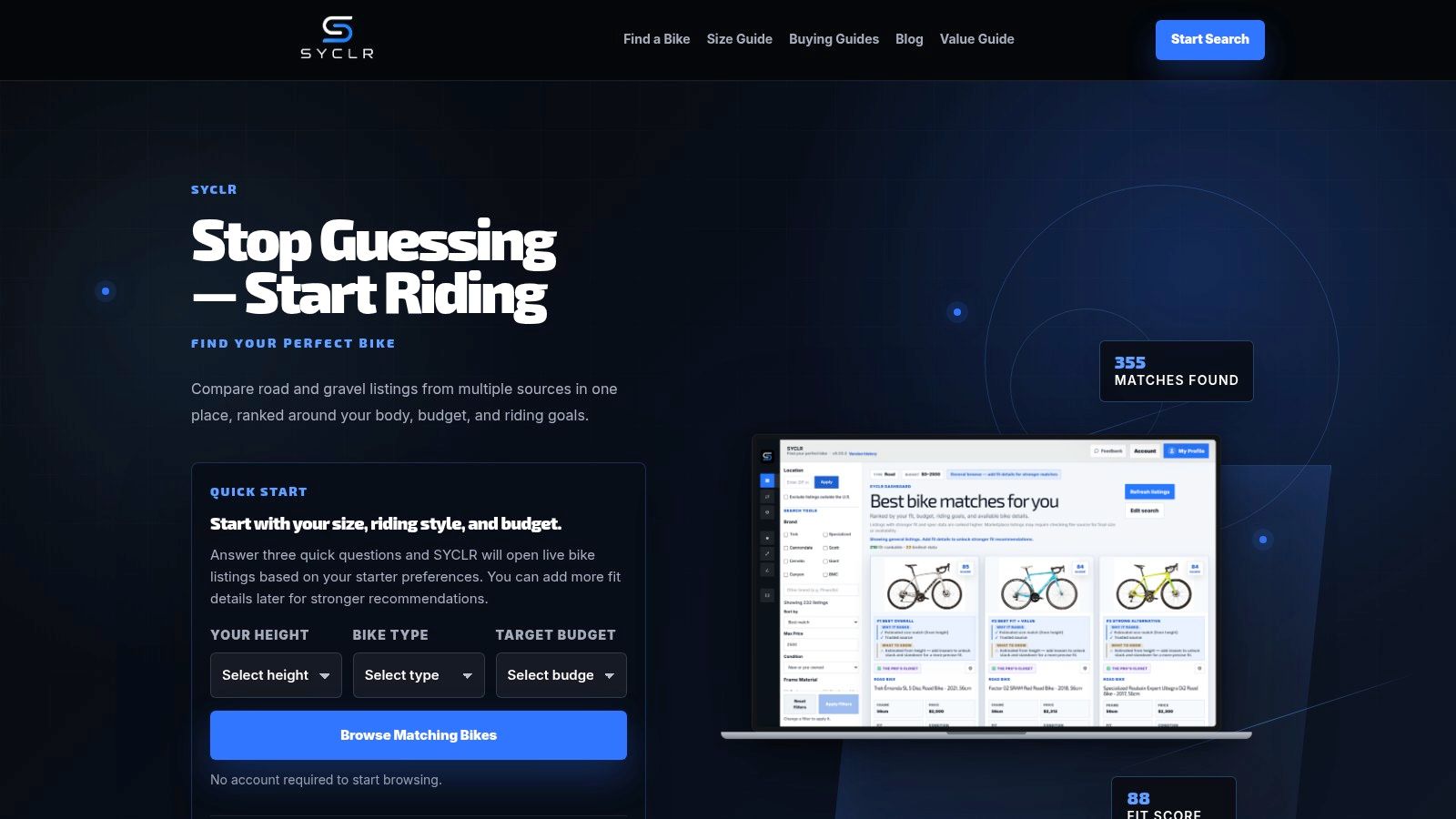
That's where a fit-aware listing comparison tool is useful. SYCLR combines fit details, geometry signals, model year context, price context, listing quality, and confidence signals so you can shortlist better-fit road bikes before you buy. It doesn't make the decision for you, and it shouldn't. It just reduces the noise that makes buyers overvalue the wrong things.
If you're comparing used listings, the photo, the specs, and the geometry all need to agree. When they don't, the bike's value drops fast, even if the brand name still looks strong on paper.
Road Bike vs Endurance Bike FAQ
What is the main difference between a race road bike and an endurance bike?
A race road bike usually prioritizes speed, sharp handling, and a more performance-focused position. An endurance bike usually prioritizes a more sustainable position, stability, tire clearance, and long-ride versatility.
Is an endurance bike slower than a race bike?
An endurance bike may be less specialized for racing or aerodynamic performance, but the real difference depends on rider position, tires, wheels, terrain, fit, and the exact models being compared.
Are endurance bikes more comfortable?
Endurance bikes are designed around a less aggressive use case, but comfort is not guaranteed by the category. Stack, reach, cockpit setup, tires, saddle position, rider flexibility, and road surface all matter.
Can you race on an endurance road bike?
Yes. An endurance bike can be used for racing, fast group rides, and performance-focused riding. A race bike may provide a sharper or more aggressive setup, but the endurance bike may be the stronger option for riders who perform better in a more sustainable position.
Which geometry numbers matter most?
Start with stack, reach, standover, wheelbase, head tube angle, chainstay length, bottom bracket drop, and tire clearance. Compare the exact model year rather than relying only on the category label.
Should a beginner choose an endurance bike?
Many beginners benefit from endurance geometry, but it is not automatically the correct answer. The rider’s proportions, flexibility, roads, goals, and preferred position should guide the choice.
Can SYCLR help compare race and endurance bikes?
SYCLR helps riders compare available road-bike listings using fit signals, geometry signals, model-year context, price context, listing quality, and confidence signals before buying.
Which One Should You Choose
Choose a race road bike if speed, sharp handling, and aggressive positioning are the point. Choose an endurance road bike if long-ride comfort, rough-road confidence, stability, and an easier fit matter more. If you're still unsure, compare stack, reach, tire clearance, model year, and your current-bike reference before you decide.
If you are comparing race and endurance road bikes now, start with your height, bike type, and budget in the SYCLR app. Compare available listings by fit signals, geometry signals, model-year context, price context, listing quality, and confidence signals before deciding which road-bike category belongs on your shortlist.
Already know your stack, reach, current-bike geometry, or fit-report details? Use the fit-details entry to improve your recommendations.