
Bike Frame Size Guide: Why Labels Are Only the Starting Point
The most common bike sizing advice is also the easiest to overtrust: find your height on a chart, match it to a frame label, and assume the bike will fit. That can help you narrow the range, but it should not make the decision for you.
A useful bike frame size guide does something more practical. It helps you move from a broad size estimate into a better comparison of height, inseam, standover, stack, reach, bike category, riding goals, and the actual geometry of the bike you are considering.
If you are shopping for a road or gravel bike, especially across mixed new and used listings, treat frame size as a starting label. The better-fitting bike may not be the one with the size sticker you expected.
Table of Contents
Why Frame Size Labels Are Not a Standard
A 56 cm bike is not a universal object. Neither is a Medium. Riders usually discover that the first time they compare geometry charts from different brands, or even different models from the same brand.
Why the sticker tells you less than you think
Basic height charts can be useful, but they often leave out the details that change fit in real life: inseam, torso length, arm length, flexibility, riding style, and the difference between race, endurance, and gravel geometry. That is why two riders of the same height can need different bikes.
One brand’s 56 cm endurance road bike can be taller in front and shorter in cockpit feel. Another brand’s 56 cm race bike can be lower and longer. Both wear the same label, but they can place the rider in very different positions.
Model year can add another layer. Brands change head tube lengths, front-end height, tire clearance, and intended use over time. A used bike from one year and a new bike from another can share a frame label and still feel very different once you are on the hoods.
According to Bicycling’s discussion of bike sizing limits, height-based sizing can be a useful first filter, but not the whole answer. That is the right way to think about labels too.
Practical rule: Use the frame label to narrow the search, then compare the bike’s actual geometry before you decide.
What a frame label does not capture
A frame label usually does not tell you enough about:
-
Riding category. Race, endurance, and gravel bikes use different geometry priorities.
-
Front-end height. A taller front end often suits riders who want a more upright position.
-
Cockpit length. A bike can look right on paper and still feel stretched.
-
Model family intent. An all-road frame and an aggressive race frame may share a nominal size but not a similar fit.
This is why shoppers often miss good options when they search only for one number like 54 cm or 56 cm.
If you are still narrowing your first range, category-specific references can help. Start with SYCLR’s Road Bike Size Chart or Gravel Bike Frame Size Chart for reference ranges, read What Size Road Bike Do I Need for road-specific sizing context, or use the Bike Size Calculator to estimate a personalized starting range from your measurements and riding preferences. Then come back to this guide to compare actual bikes more intelligently.
After you have a baseline, start with your height, bike type, and budget in SYCLR to shortlist better-fit bikes before you buy.
Start with Two Key Measurements: Height and Inseam
Height still matters. It just is not enough by itself. The most useful starting point for a bike frame size guide is height plus cycling inseam.
How to measure them at home
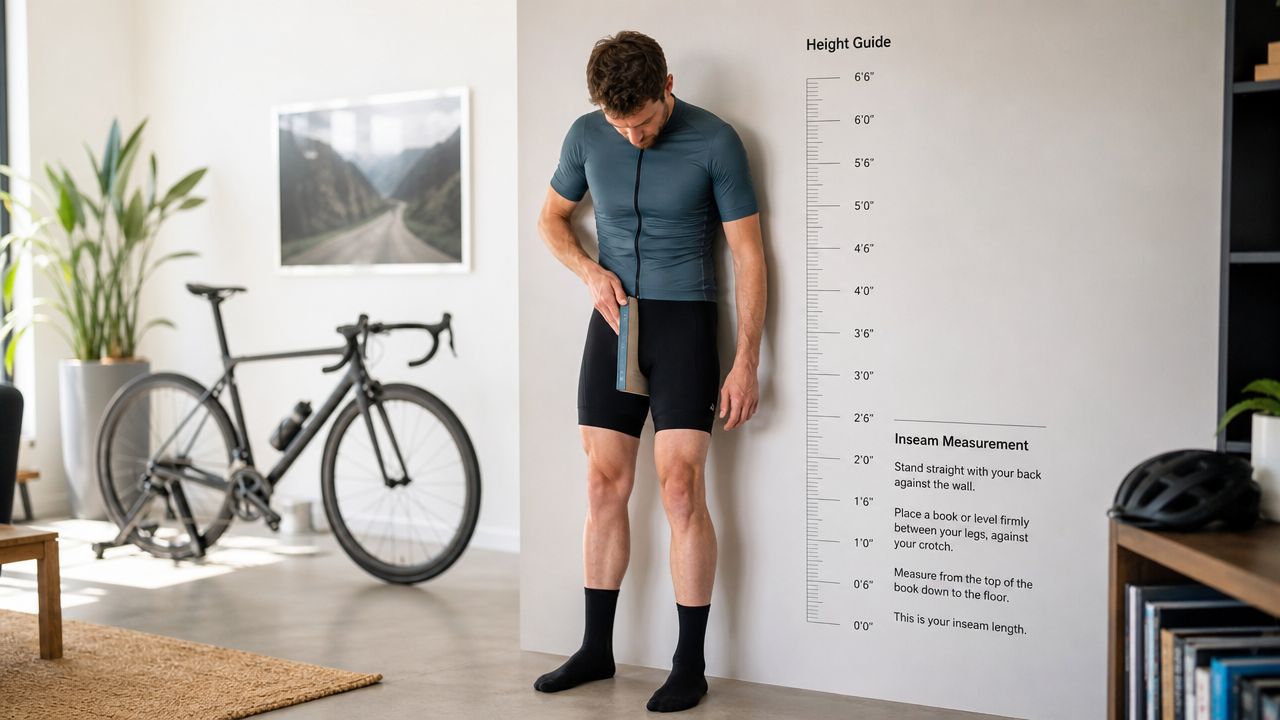
Your cycling inseam is not your jeans inseam. It is the floor-to-crotch measurement that gives you a better starting point for saddle height range and standover.
-
Measure height barefoot. Stand with your back against a wall, keep your head level, and mark the top of your head.
-
Measure inseam with a book. Stand barefoot against a wall, place a book firmly between your legs, and measure from the top of the book to the floor.
-
Record both numbers carefully. Small errors here can shift the size range you start with.
Some sizing methods use inseam-based formulas to estimate a starting frame range. Those formulas can help rule out obviously wrong sizes, but they should not override the actual bike’s standover, stack, reach, and geometry. For example, Mondince’s road bike frame sizing explanation shows how inseam-based estimates can be used as a starting point.
Standover is a practical clearance check, not the full fit decision. You want enough room to stand over the bike comfortably, especially if you are buying online or cannot test ride first.
For a deeper explanation of how to judge clearance, SYCLR’s standover height guide is the right next step before you compare listings.
A practical starting range
A good chart can narrow the field. It cannot choose the final bike.
For example, Bergfreunde’s bike frame size calculator shows how rider height and bike category can point you toward a reasonable starting range. That is useful when you are trying to rule out frames that are clearly too small or too large.
The key is to stop treating the chart as the last step. Once you have a likely range, compare the actual bikes inside it.
| Measurement or check | Why it matters | What to do |
|---|---|---|
| Height | Gives you a broad size range | Use it to narrow your first shortlist |
| Inseam | Improves your starting frame range and standover judgment | Measure carefully at home |
| Standover | Confirms practical clearance over the bike | Rule out bikes that are clearly too tall |
| Bike category | Changes fit expectations | Separate road, endurance road, and gravel before comparing |
Once you have those baseline numbers, compare road and gravel bike listings with SYCLR instead of opening dozens of geometry charts one by one.
Go Beyond Charts with Stack and Reach
Frame size is the label. Stack and reach are the measurements that tell you far more about how the bike will fit and feel.
What stack and reach actually mean
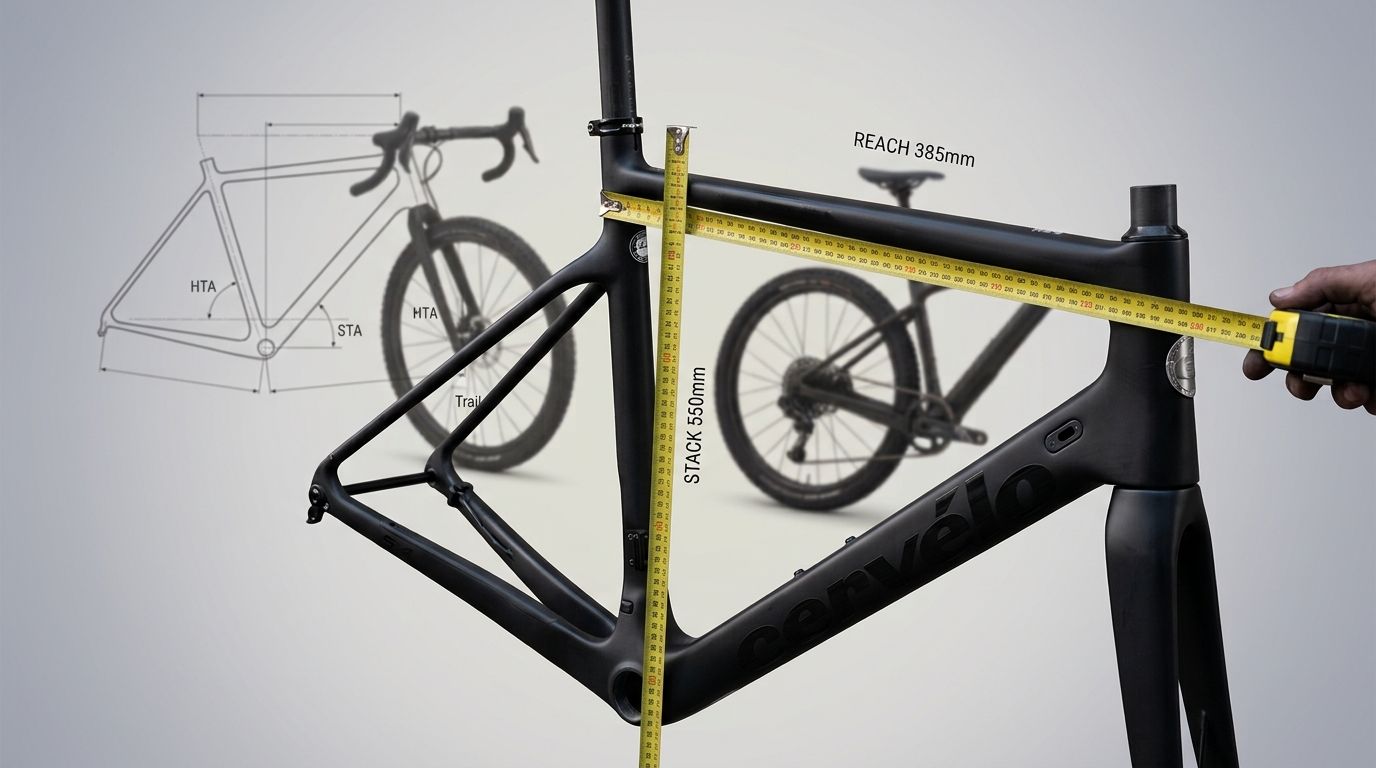
Stack is the vertical distance from the center of the bottom bracket to the top of the head tube reference point. A taller stack usually means a higher front end and a more upright position, while a shorter stack usually means a lower front end and a more aggressive posture, as explained by The Pro's Closet geometry overview.
Reach is the horizontal distance between those same reference points. It tells you more about how long the frame will feel than the seat tube label ever could.

A simple way to think about it:
-
Stack affects bar height feel
-
Reach affects cockpit length feel
-
Together they tell you whether the bike is likely to feel upright, balanced, stretched, or cramped
That is why two bikes labeled 54 cm can fit very differently. One may put the bars higher and closer. Another may push you lower and longer before any stem changes happen.
For a fuller breakdown, SYCLR's Stack and Reach Guide is the best companion piece to this article.
Why small geometry differences matter
Once a rider is close to the edge of a comfortable range, small geometry differences become more noticeable. A bike with slightly lower stack or slightly longer reach can feel much more aggressive, even when the frame label looks correct.
This matters in real shopping decisions. You might compare two listings that are both marked 56 cm. One has stronger components and a lower asking price. The other has geometry that better matches your comfort goals. In practice, the second bike can be the better buy because it starts from a better fit position.
Parts can fine-tune a close match. They usually cannot rescue a frame that starts too low, too long, or too tall.
Use this quick translation when you read geometry charts:
| Term | Simple meaning | What it changes |
|---|---|---|
| Frame size | Basic labeled size | Starting filter only |
| Stack | Front-end height | Upright vs aggressive posture |
| Reach | Frame length to the front | Compact vs stretched cockpit |
| Effective top tube | Traditional length reference | Useful context, but less reliable than stack and reach |
| Geometry | The full shape and dimensions of the frame | Overall fit and handling character |
If you already know your current-bike geometry or fit report, use your fit details to improve your recommendations.
Sizing Differences for Road and Gravel Bikes
A bike frame size guide has to account for category. A road race bike, an endurance road bike, and a gravel bike can all fit the same rider differently, even when the labels look close.
How geometry personality changes the ride
Road and gravel bikes share a lot, especially in the way riders first shop by size. But their geometry priorities often diverge.
A race bike usually aims for a lower front end and a longer, more aggressive position. An endurance bike often lifts the front end and shortens the cockpit feel a bit. A gravel bike usually balances drop-bar efficiency with more stable handling and a position many riders can sustain on mixed surfaces.
| Geometry Trait | Race Bike | Endurance Bike | Gravel Bike |
|---|---|---|---|
| Stack | Lower | Taller | Often taller or more neutral |
| Reach | Longer feel | Slightly shorter feel | Varies, often balanced for control |
| Rider position | More aggressive | More upright | Stable and all-day oriented |
| Best for | Fast road riding and riders comfortable low in front | Longer road rides and comfort-focused positioning | Mixed surfaces, rougher roads, and riders prioritizing stability |
| Label reliability | Low | Low | Low |
That last row matters. A 56 cm race bike and a 56 cm endurance bike may serve very different riders, even inside the same brand.
Bergfreunde’s calculator and chart also show that category changes size logic itself. Mountain bikes, for example, use different sizing conventions than road bikes because the geometry priorities are different. The same principle matters when you compare road and gravel bikes. Equal labels do not guarantee equal fit.
A few related resources help at this point:
-
Use the Road Bike Size Chart when you want a road-specific starting range.
-
Use the Gravel Bike Frame Size Chart when you want the gravel equivalent.
-
Use the Bike Fit Guide when you want to understand the body-position side of the decision.
Common Sizing Pitfalls When Buying a Used Bike
Used bikes are where fit mistakes get expensive quickly. The listing can look great, the price can look right, and the size can appear correct, while the geometry still turns out to be wrong for the rider.
The listing looks right and still fits wrong
A common scenario goes like this. A rider shops for a 56 cm road bike because a generic chart pointed them there. They find a used listing with a strong price, a recognizable brand, and the exact label they expected. On pickup, or after the first longer ride, the bike feels lower and longer than expected.
That happens because sellers usually list size, not fit. They may not include stack, reach, standover, or even the exact model year. On used bikes, model year matters because geometry can shift over time inside the same model family.
Buying a used bike by frame label alone is like buying shoes by brand alone. The category helps, but the actual shape still decides the fit.
A manufacturer chart can still be useful, but it is broad by design. It may not account for your inseam, torso length, flexibility, riding style, or whether the bike is race-oriented, endurance-oriented, or gravel-focused.
If you are evaluating online listings, SYCLR’s guide to buying a road bike online is a useful companion for checking both fit and listing quality.
What parts changes can and cannot fix
Parts changes are for refinement, not rescue.
A shorter stem, spacer adjustment, saddle setback change, or handlebar swap can help when a frame is already close. Those changes usually cannot fully solve:
-
A bike that is too tall to stand over comfortably
-
A cockpit that starts too long
-
A front end that starts too low for your comfort goals
-
A frame category that does not match how you ride
That matters even more on a budget. A good deal on a used bike is still the wrong buy if the geometry starts in the wrong place.
How SYCLR Helps You Shortlist Better-Fit Bikes
Reading a bike frame size guide is the easy part. Applying it across scattered retailer and marketplace listings is where most shoppers lose time.
From geometry theory to listing comparison

SYCLR is built for that gap. It helps riders compare road and gravel bike options using fit signals, geometry signals, price context, listing quality, model year, and confidence signals so the shortlist makes more sense before they click through to a seller.
That matters because the hard part of bike shopping usually is not finding bikes. It is interpreting them. A 54 cm from one brand and a 56 cm from another may both deserve a place on your shortlist. A general marketplace rarely makes that obvious. A fit-aware comparison tool can.
If you are starting from scratch, compare road and gravel bike listings with SYCLR and start with your height, bike type, and budget.
If you already know more than the basics, go one step further. Already know your fit details, current-bike geometry, stack, or reach targets? Use them to improve your recommendations.
A stronger shortlist usually comes from asking better questions:
-
Does this listing match my likely fit range, not just my expected frame label?
-
Is this geometry more race, endurance, or gravel-stable in feel?
-
Does the model year change the fit story?
-
Is the lower price worth it if the geometry looks off?
Frequently Asked Questions About Bike Sizing
Is height enough to choose a bike frame size?
No. Height is a useful starting point, but it is not enough for a precise decision. A stronger recommendation also uses inseam, standover, stack, reach, bike category, comfort preference, and riding goals.
Should I choose the smaller bike if I’m between sizes?
Often, the smaller option is easier to fine-tune if both sizes look plausible. But there is no automatic rule that beats checking the bike’s standover, stack, reach, and intended riding position.
What does frame size actually mean?
Frame size is the labeled size of the bike, often shown as Small, Medium, Large, or a centimeter value such as 54 cm or 56 cm. It is a starting filter, not a standardized fit measurement across brands.
What is stack in bike geometry?
Stack is the vertical distance from the center of the bottom bracket to the top of the head tube reference point. It helps describe how upright or aggressive the front end of the bike will feel.
What is reach in bike geometry?
Reach is the horizontal distance from the center of the bottom bracket to the same head tube reference point. It helps describe how long or compact the bike will feel at the front.
Can a stem change fix the wrong frame size?
Not completely. A stem or spacer change can refine a close fit, but it usually cannot solve a frame that starts too long, too low, too tall, or mismatched to your riding style.
Is a professional bike fit still worth it?
Yes. A professional fit can be very valuable, especially if you ride often, already have a bike that fits well, or want clearer stack and reach targets. Tools like SYCLR can help you apply those fit details while shopping, but they do not replace a fitter.
If you are shopping for a road or gravel bike and want to reduce guesswork before contacting sellers, start with your height, bike type, and budget to compare road and gravel bike listings with SYCLR. If you already know more precise numbers, use your fit details to shortlist better-fit bikes before you buy.